
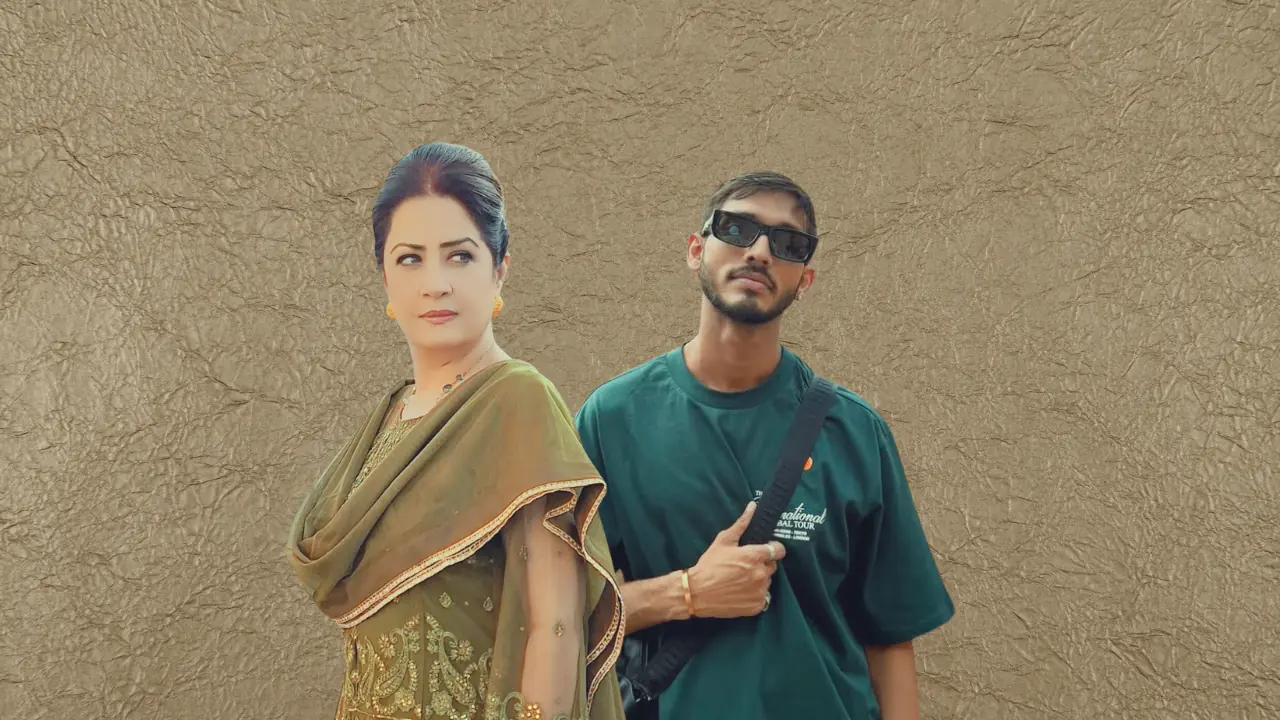
Atiqa Odho agrees with Talha Anjum on art being borderless — but not when it comes to India
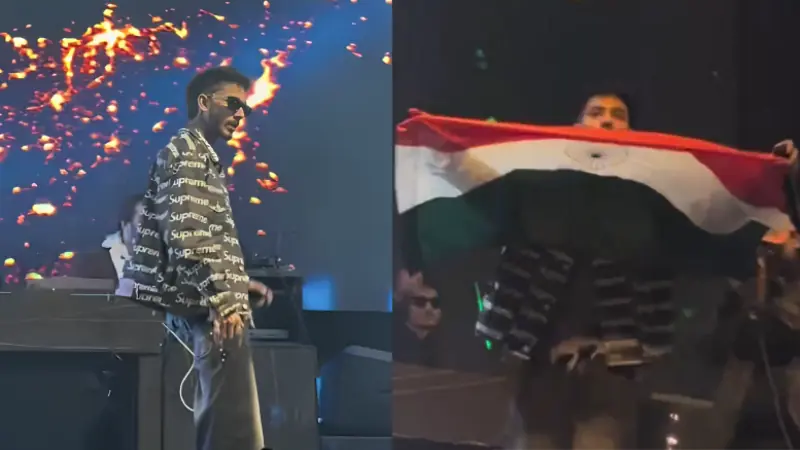
While she agrees with the idea of art being borderless, Atiqa Odho believes self respect is also important. She was sharing her two cents on the controversy surrounding rapper Talha Anjum draping an Indian flag over his shoulders at a Kathmandu concert back in November.
Odho appeared as a guest on The Current Podcast when she was asked about the incident by host Ismaeel Qasim. She replied she was “very divided on such issues“ because it struck two different ideas she believed in. Agreeing with Anjum‘s initial stance that “art has no borders,” she added that “you have to treat others how they treat you”.
Lamenting how politics gets in the way of art, the actor said any time Indian celebrities had come to Pakistan, “they left feeling like kings” and received nothing but “love and respect“. In contrast, she said, “They wouldn’t let our films screen [in their cinemas].”
“It has to be a bilateral relationship,” she emphasised at multiple points in the interview.
Odho, a former chairperson of the United Producers Association of Pakistan (UPA), said the organisation had taken steps to get Indian films banned in the country based on a tit-for-tat basis because “cultural exchange can’t be one-sided”. She regretted that “Maula Jatt, such a beautiful, well-made film, wasn’t shown in India for political reasons”.
Recounting an incident from her tenure as UPA chair, the actor said she had been approached by CNN India for comments when the organisation’s Indian counterpart announced they‘d fine any film producer hiring a Pakistani INR 5 million, which would have to be deposited to the Indian Army’s welfare fund. Fawad Khan and Mahira Khan, she recalled, were working in Bollywood at the time.
Odho questioned the message sent by the move, saying it implied that all the Pakistani actors and musicians working in India were terrorists and that they may only be hired after paying penance to the armed forces.
She said the reason for all these measures was crystal clear — Pakistani content on Indian screens “dilutes India’s narrative that all Pakistan produces are suicide bombers, because then their people see that we have art and culture here”.
She said there was “so much talent on both sides of the border” and that, “If our musicians, actors, filmmakers get together, we can take the world by storm.“ Speaking about how she hopes and prays that things open up again some day, Odho said, ”We have to be very clear, it has to be a two-way street.”
When Qasim tried to interject, saying that the actions of the Indian state can’t negate the love Indian fans have for our artists, Odho said, “Politics aside, we have a lot of fans in India, we want to please our fans on that side too, but the reaction on our side is understandable seeing the present situation.“ She said Anjum made a choice and was “going to have to deal with a lot of things” as a result.
Earlier in the show, the host asked the actor for her take on a show where host Rehan Tariq shamed TikTok creator Warda Malik for her content. Odho said everyone has a right to post what they wish within the limits of the law and that, “you and I are nobody’s morality gatekeepers”.
“I keep telling people, if you find something so objectionable, there are proper channels for that. There are government departments and agencies that monitor such things, take them down, ban them,” she said, adding that hosting platforms have moderation policies as well. “They have a review process.”
The actor said nobody is perfect and everyone has a different idea of what’s morally acceptable. She spoke about a case this year where a woman was abusing animals and posting videos of it. The authorities intervened and acted, as is their job, she said. “These news anchors, when they sit people down and become gatekeepers of morality, when they start humiliating people, that’s just them trying to get ratings,” she said.
Comments