
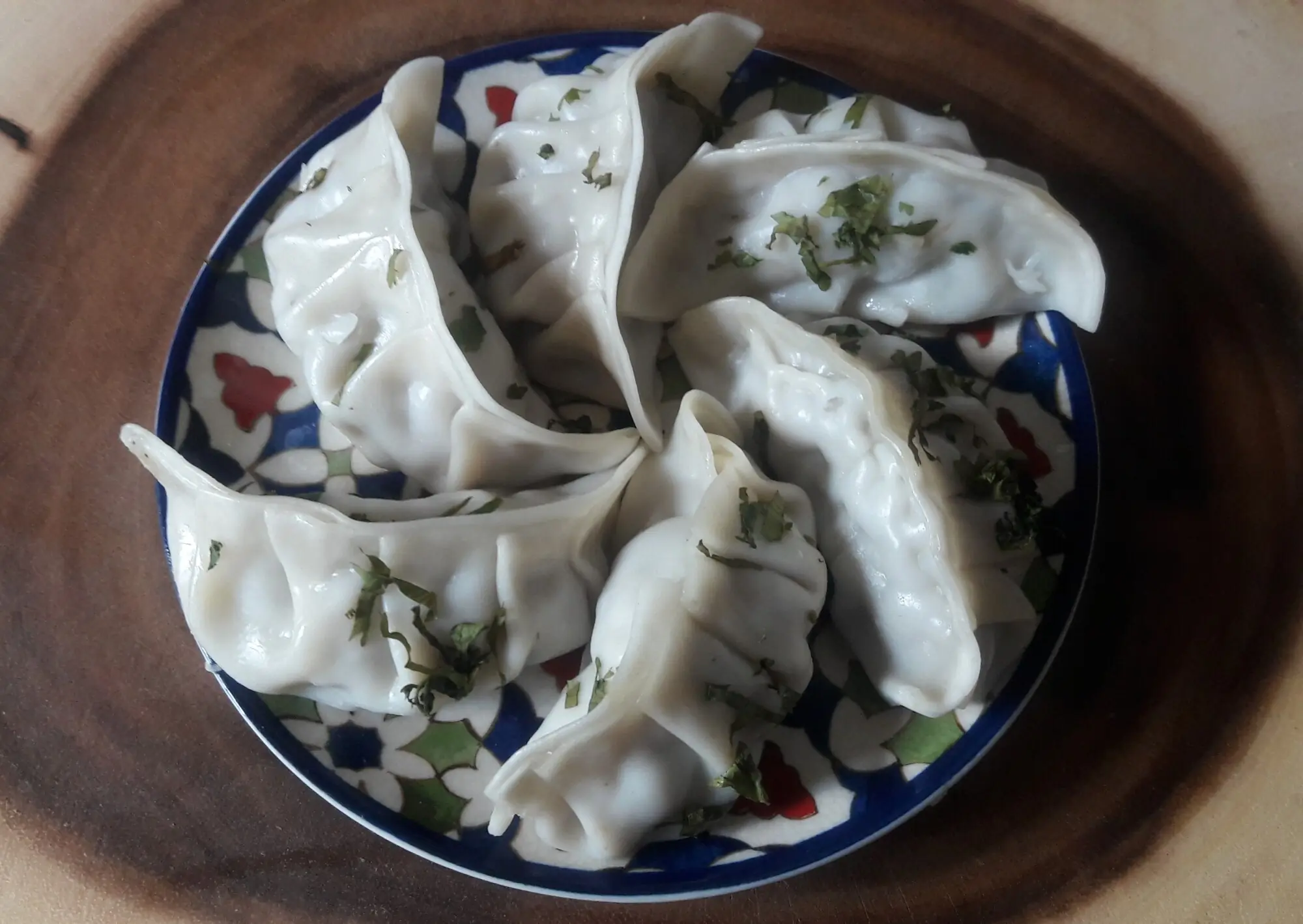
How to make some great momos at home
Immensely popular in Nepal and neighbouring India, momos are steamed dumplings traditionally made with minced chicken or lamb, and are as versatile as they are delicious. Served along with achars [pickles] and chutneys, momos make for great street food but can also be added to a spicy soup [jhol momos] for a nourishing meal.
While one can find all kinds of momos on the trendy food streets of Nazimabad, Karachi, it’s absent from the rest of the country’s foodscape, which is particularly surprising, given the craze for Korean bao [steamed buns] a couple of years ago. Momos, with their spicy fillings and chatpatta sauces, seem like bao’s natural heir, the next food obsession waiting in the wings.
Legend has it that the Nepali princess Bhrikuti introduced momos from Tibet to the country in the seventh century, alongside the spread of Buddhism. However, other food historians argue that this is unlikely, given that it is believed that dumplings were originally created in China and spread to Central Asia via the Mongols in the 13th century.
What is more likely is that merchants from the Newar community, a millennia-old ethnic group from Kathmandu Valley, came across the dish on their months-long trading trips to Tibet and brought the recipe for the dumplings back home.
From Tibetan trade routes to the bustling streets of Kathmandu, the humble momo has travelled across borders and generations…
The Nepali, of course, added their own local twists: their version of momos are spicier, while the original was only seasoned with salt. Nepali momos are also served with chatpata sauces. As the Nepali diaspora has grown, so has the popularity of momos, not only in the Subcontinent but also in the West.
Chicken Momos
Traditional momos are made with a fatty meat — either minced chicken or lamb — but feel free to experiment with the fillings, such as shrimp or a vegetarian one. If not immediately steaming, store the raw dumplings in an air-tight container in the freezer for two to three days. The dumplings can be pan-fried or deep-fried, after steaming for a crispier shell.
Momo
For the dough
2 cups flour
½ teaspoon salt
Water, as needed
For the filling
½ kg chicken or lamb
1 cup cabbage, finely chopped
1 cup onion, finely diced
2-3 small green chilies sliced
2 tablespoons ginger-garlic paste
1 teaspoon (or to taste) salt
1 teaspoon black pepper
1 teaspoon ground coriander seeds
½ teaspoon ground cumin seeds
1-2 teaspoons cilantro, chopped
1 green onion (for garnishing)
Cooking oil, as needed

Tomato chutney
7 tomatoes
4 whole dried red chillies (halve to make less spicy)
½ teaspoon rai [mustard] seeds
½ teaspoon kalonji [nigella] seeds
½ teaspoon salt
3 cloves garlic
Method
-
Make the momo dough shell. Sift flour and salt into a flat pan. Mix together. Add water a little at a time and rub the flour until a crumbly texture forms. Continue adding water and kneading the mixture until a dough forms. Shape the dough into a ball.
-
Flatten the ball and stretch the dough out. Press the dough and then fold it. Knead the dough a few times before rolling again into a ball. Place in a bowl and cover with clingfilm or a lid. Set aside in the fridge.
-
Make the filling. Heat oil in a pan. Sauté the ginger-garlic paste, cumin seeds and green chilies. Add the chopped onions and sauté until lightly browned. Add the spices and stir well. Add the cabbage and continue stirring. Add the minced chicken or lamb. Stir. Cook on medium heat until done. Add the chopped coriander on top and fold it into the filling. Set aside.
-
Grease a flat surface or a large flat pan with oil and sprinkle with flour. Take out the dough and break off a fistful of it and flatten it into a thin, flat disc. Repeat this step until all the dough is gone.
-
Spoon filling into the centre of each of the dough discs, leaving some space from the edge. Fold the shell in half and make sure the filling is completely covered. Pinch the edges together all along the side to ensure the dough shell is sealed. Pull the edges and bend to shape into a crescent if desired. Pinch along the sides of the crescent at intervals of roughly half a finger’s width to give a folded effect.
-
Steam the momos with water or soup (steaming with soup adds more flavour). Heat the water or soup in a pot. Place the steamer on top and put the momos an inch apart on it. Cover with a lid. Cook for 10 to 15 minutes or until done. Pan or deep fry the momos, if desired. Put on a plate and garnish with chopped green onions.
-
Make the tomato chutney. Grill the tomatoes — roast on each side for a couple of minutes. Mash the tomatoes with the back of a spoon. Transfer them to a saucepan and cook over low heat with half a cup of water for 10 minutes.
-
Roast the chillies and the spices on a tawa (griddle pan). Grind them with a mortar and pestle. Chop the garlic. Blend the cooked tomatoes with the remaining ingredients. Spoon out in a sauce bowl.
-
Serve the momos hot with the tomato chutney, chilli garlic sauce and a lemon wedge.
Originally published in Dawn, EOS, May 24th, 2026









Comments