
Images

Talha Anjum, the Indian flag and the problem with performative patriotism

Talha Anjum, the Indian flag and the problem with performative patriotism

Have we learned nothing of the consequences of weaponised patriotic rhetoric from across the border?
25 Nov, 2025

During the Subcontinent’s independence movement, Mahatma Gandhi and his non-violent philosophy of Satyagraha (truth-force) and Ahimsa (non-violence) played a crucial role. The British Empire employed typical colonial tactics to suppress dissent, used harsh laws, mass arrests, imprisonment, martial law, and physical force. Yet, none of this broke Gandhi’s resolve. His followers continued with non-violent protests, most notably the Salt March of 1930. These sustained peaceful agitations drew both international attention and condemnation of British atrocities in the Subcontinent, eventually contributing to the independence of both India and Pakistan.

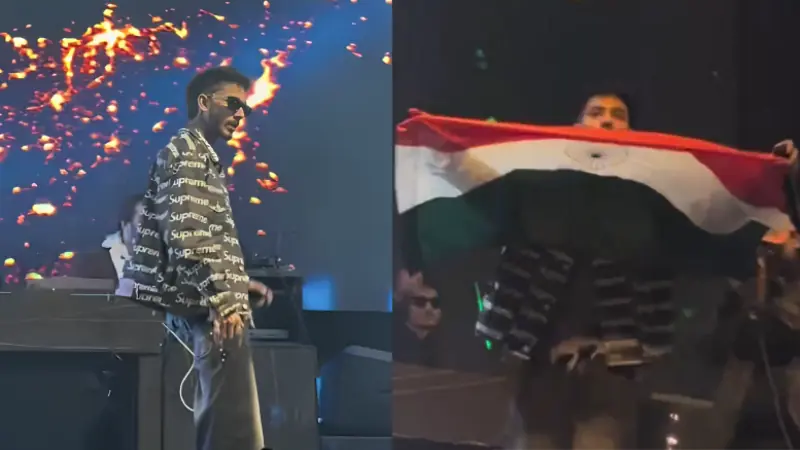
This movement demonstrated that sustained non-violent resistance, even when met with aggression, can achieve meaningful and lasting political change. In a similar spirit, this is what Talha Anjum attempted. His peaceful gesture — raising an Indian flag handed to him by a fan at a concert in Nepal — signified that art and culture transcend borders. It also reflected the deep socio-cultural bonds between the people of Pakistan and India, despite the rhetoric from extremist political groups such as the BJP. True to his character, Anjum stood against the odds and made a principled statement.

Importantly, his gesture aligned with Pakistan’s own state policy. The return of Indian pilot Abhinandan, the establishment of the Kartarpur Corridor, and Pakistan’s willingness to cooperate in the Pahalgam investigation were all measures rooted in a consistent approach: responding to hostility with gestures of peace. This reflects Pakistan’s stance of seeking permanent peace in South Asia for collective human development.

The criticism directed at Anjum — particularly the aggressive reaction of a certain TV host — was misplaced. Nadia Khan hurled unnecessary accusations at the celebrated young singer on her show Rise and Shine and barely allowed him to speak. To make matters worse, she, along with her co-host, repeatedly pushed for an “unconditional” apology from him for allegedly hurting “public sentiments” (read: her own interpretation of patriotism). Paradoxically, it was Anjum – the comparatively less “senior” celebrity – who displayed composure and restraint thoughout the segment.

My critique of the television host is deliberate. Her episode seemed less about personal opinion and more about provoking unnecessary outrage, inciting hostility against the artist, and exploiting patriotism for attention and ratings. Pakistanis are exhausted from such superficial displays of nationalism — weaponised patriotism for personal or commercial gain. If extremism in Pakistan concerns the liberal sensibilities of such commentators, then this shallow and performative display of patriotism should concern them equally.

Have we learned nothing of the consequences of such rhetoric across the border?

And more importantly: what distinguishes Pakistan from India if Pakistanis also resort to the same performative outrage and hostility? As argued at the start of this article, aggression cannot be defeated with more aggression. Only principled peace leads to a positive outcome.

Anjum’s gesture was not a threat to Pakistan’s identity but a reminder of our shared humanity with those across the border. In a region where nationalism is too often weaponised and dialogue discouraged, such symbolic acts matter. They challenge entrenched hostility and reclaim space for cultural connection — a space South Asia desperately needs if it is ever to move beyond cycles of suspicion and rivalry.

At the same time, we must ask ourselves why any hint of goodwill triggers disproportionate outrage. Perhaps the real issue is not why Anjum held the Indian flag, but why we are so eager to condemn anything that questions our performative patriotism. If we continue answering hate with hate, we risk becoming reflections of the very extremism we criticise across the border.

Anjum’s act was, ultimately, an invitation: to think, to reflect, and to choose empathy over hostility. Pakistan should not fear such gestures; it should embrace them. And above all, we must remember — we do not need Arnab Goswamis in Pakistan, aggressive, hyper-nationalist and engaging in shouting matches designed to fuel public outrage rather than informed discussion.
Comments

JAMIL SOOMRO Nov 25, 2025 04:49pm
I fully agree with Nadia Khan on Talha Anjum Issue. The Writer has mentioned (besides soft philosophical poetic phrases)Mohandas Gandhi who was murdered in cold blood when he was coming to Pakistan by a Hindu Militant. I hope he remembers it. Shame on Talha Anjum for what he did.
Recommend
Surinder Gill Nov 25, 2025 04:56pm
Very reasonable article. The problem between India and Pakistan is to show one step up. If honestly the both govts show the mutal tolerance and respect and the army officers instead of becoming media hero, remain only armed forces hero, is better.
Recommend
M. Saeed Nov 25, 2025 04:59pm
How many times we have seen Pakistani flags being waved in IOK, on victory of Pakistan against India? And still, India calls it her integral part!
Recommend
Saleem Mir,MD Nov 25, 2025 05:05pm
To cut the prevailing hatred across the divide we organized a combined India and Pakistan independence day celebration here in NY in which Indian and Pakistani flags were hurled and national anthems sung together by people from both sides. The perceived hatred must be met with deeper friendlier common bonds that exist between people of India and Pakistan.
Recommend
Sane Sapiens Nov 25, 2025 05:17pm
What a farce.
Recommend
Aamir Cheema Nov 25, 2025 06:26pm
By this standard , there is nothing wrong with waving Israeli or TTP flags too....one has to respect the local culture...Can any western artist , wave Nazi flag in a concert...please come out of admiring , publicity hungry artists.
Recommend
Umar Farooq Nov 25, 2025 06:57pm
Just can't agree more, we are hurting the country with the poison of fake patriotism. We need our neighbors. We need competition, we need to boost our shared values.
Recommend
Abdul Razzaq Nov 25, 2025 07:00pm
I don't understand why Gandhiji is criticized her in Pakistan. He was the biggest friend of Muslims in India, esp during partition. When there were riots in India he always protected Muslims and went against hindus many times. His heart was pure and was a Muslim at heart.
Recommend
Fawaz Ammar Nov 25, 2025 07:20pm
What does the Author of this article expect from the general population? Do we not have any self respect????? India used an aggressive stance and attacked and killed innocent Pakistan civilians, promised it would do more, refused to even do a simple act such as shake hands during sporting events, tried to remove international cricket from Pak, and yet we are to reply by hugging the Indian flag. Just imagine for a moment if an American celeb was caught embracing the Russian or Chinese flag. And those nations have not dropped one missile on USA
Recommend
Omar Ahmed Nov 25, 2025 07:49pm
This is a desperate attempt at justifying a traitor! He has no problem dissing out a curse filled rap when someone asks 'Talha Kuon' and now all of a sudden he is a peace maker? Give me a break!
Recommend
Imad Ali Nov 25, 2025 07:59pm
What a beautiful and audicious write-up!
Recommend
VivaciousVindictiveness Nov 26, 2025 12:25am
This is the exact reason why Pakistan gets a bad rep on the world stage. It's not that it's the fault of every single civilian, but a sense of complicity remains entrenched in some way. It's honestly preposterous as to why such jingoism, as I see it, and cultural or national xenophobia exists as much as it does in the contemporary era. Keep up with this, and you'll probably have nothing by the end of it. Yolo, I guess
Recommend
Ron Nov 26, 2025 03:54am
No comments
Recommend
amina zahir Nov 26, 2025 07:45am
Well said. Good to see sanity prevail at least somewhere.
Recommend
ZR Nov 26, 2025 08:53am
Democracy- Both are free to voice their opinions.
Recommend
Ahmed Nov 26, 2025 09:57am
Or maybe it was an invitation for a contract from India? Where do we draw the line. Can we hold the flag of Israel like this? After all not all Israelis are genocidal. Can we do this to the Nazi flag? There were good people amongst them aswell?
Recommend
Azharuh786 Nov 26, 2025 10:47am
Why such obsession with the Indians? Let’s just concentrate on our own upliftment focus on scientific temper for the youth. All else shall fall in place.
Recommend
Babar from mangolia Nov 26, 2025 11:36am
Saar we want dialogue but its conditional ie india must discuss kashmir. Gandhi and pakistan ..... shared humanity? Human development? Lol
Recommend
Dr. Salaria, Aamir Ahmad Nov 26, 2025 01:14pm
You reap what you sow.
Recommend
Nadeem Akram Nov 26, 2025 04:02pm
Excellent take! Most tv hosts are cringe worthy to watch, Nadia is amongst the top three
Recommend
Faiq Nov 26, 2025 09:10pm
The problem is that it was most probably premeditated. India has created problems with Nepal and just co-launched a coloured revolution in Nepal although hopefully it will go in the favour of the people of Nepal instead of the powers that be. The genZ who just overthrew the government have little love for India either. The whole thing was very strange. Raising the flag of a country aggressive towards your country in a country which has a similar relationship with the said country. Smells of propaganda. And anyone who has heard Talha knows he is no saint who just spreads love, his whole career is built on antagonism, yet we are supposed to believe that he is all about spreading love which is why he raised the Indian flag in a third and a very non-internationalized country.
Recommend
Sehban ismail Nov 26, 2025 10:27pm
The incident has stirred up a storm of biblical proportions .....However, the conversation has lost its lustre!
Recommend