
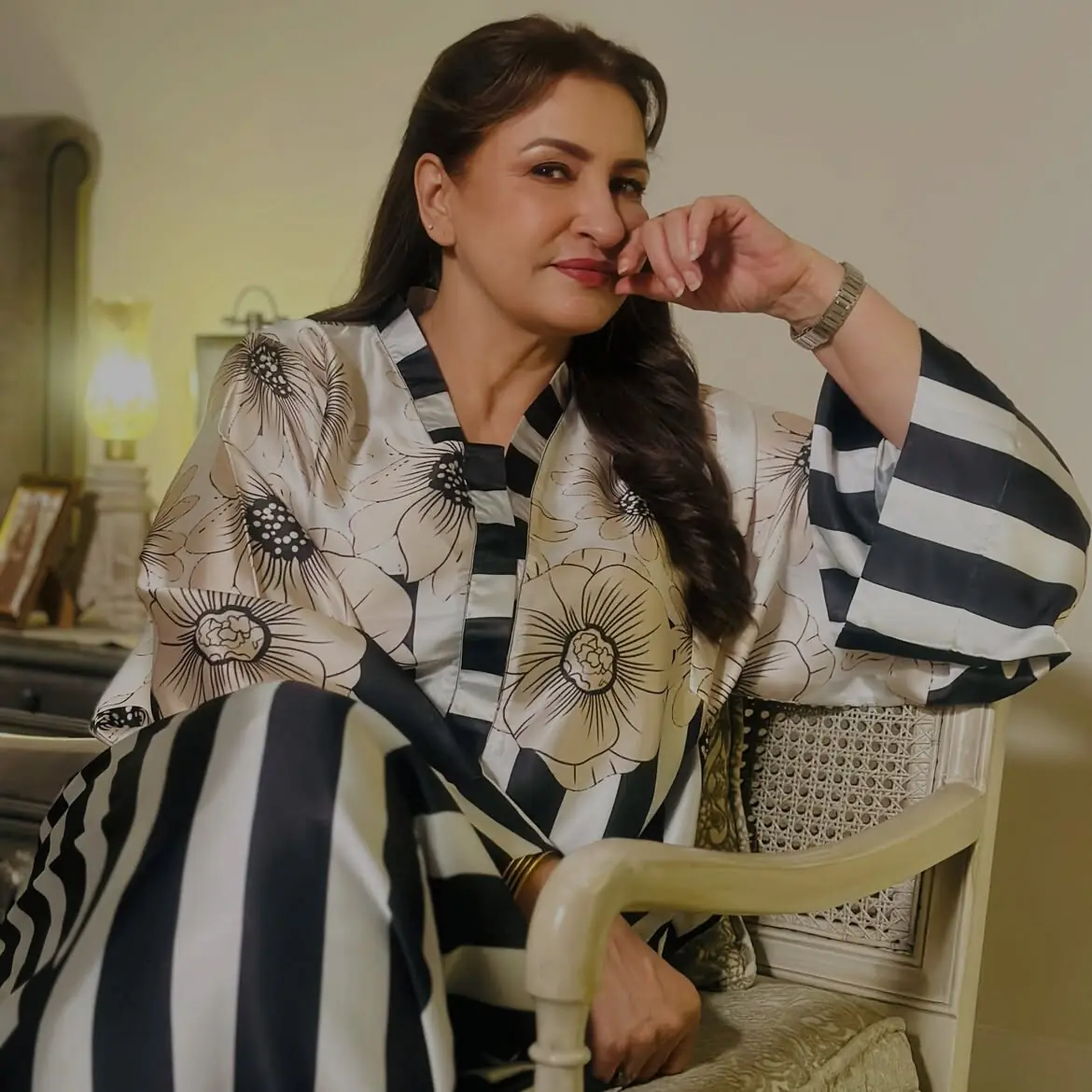
Saba Faisal's back at it with some regressive views on divorce and 'societal ruin'
Saba Faisal is in the news for all the wrong reasons again.
During an appearance on Samaa TV’s talk show Gup Shab on Tuesday, the actor complained about how women these days ‘quickly’ recover and heal from the process of divorce. In her opinion, this destigmatisation of divorce is leading to societal ‘ruin’.
Those who are aware of Faisal’s commentary on marriage know all too well how she enjoys making outdated (bordering on insidious) statements on marriage and women’s role in society. In fact, it’s become her brand.
Just months after advocating for more unchecked power for mothers-in-law, the actor sparked controversy in April by advising wives to remain ‘calm’ if their husbands are unfaithful.
Marriage, therefore, inevitably came up on Gup Shab as host Vasay Chaudhry pulled up a quote from Faisal’s vast portfolio of problematic views on the topic. The gist of that statement is that Faisal believes divorce rates are higher these days because “women compete with their husbands”.
Instead of taking this as an opportunity to reflect on the inanity of her words, Faisal chose to double down.
“Look, my mother, our elders used to say such things and I am a big supporter of this. And if today’s girls and today’s people don’t understand this, then it’s their perception. It’s not mine. This is mine,” she said, justifying her toxic narrative.
With a slight raise of her brows, Faisal went on to reiterate that a woman can’t compete with a man, cheekily adding this comment would go viral again.
As the audience clapped (yes, unfortunately this exchange appeared to be met with jovial approval), Chaudhry highlighted how divorce rates seem to be increasing by the year in Pakistan. This shifted the conversation towards how people view divorce differently now.
While there’s still a lot more progress to be made when it comes to the acceptance of divorced women in our society, they aren’t subjected to as much ostracisation as they used to be. For everyone reading: that’s a good thing.
Faisal, however, doesn’t view this as something good. In fact, she seems to want people to be miserable.
“Earlier, people would mourn for two to three months as a result of a divorce in the family. People would say in distress, ‘What has happened to our family? This shouldn’t have happened.’ The father couldn’t raise his head. The daughter, I mean, it was difficult [for her],” she said.
As if this wasn’t ridiculous enough, Faisal spoke of how some women even go for vacations after a divorce — as if wanting to heal from a tumultuous experience is a crime.
Perhaps what Faisal doesn’t realise is that as someone who’s made a name for herself as an enforcer of the most patriarchal and archaic views of marriage, she is not a likely candidate for anyone to go discuss their marital woes, or announce their divorce to. She thinks people aren’t sad after a divorce anymore, but maybe no one is going and weeping in her living room because they know exactly what kind of nonsense she’ll be spouting. That she believes she knows exactly what people who’ve been divorced are feeling or not is evidence of this.
When a marriage ends, people are inevitably sad. However, people also realise that ending a marriage is better than living a life of misery.
It goes without saying that Faisal’s views on women and marriage are harmful, especially in Pakistani society where divorce is still heavily stigmatised. That stigma, of course, disproportionately falls on the shoulders of women.
For many women, leaving a marriage means more than the end of a relationship. In a society where divorced women, to this day, are treated differently and, to a large extent, blamed for failing to fulfil societal expectations, divorce is not an easy choice to make.
Ostracisation from people who think just like Faisal isn’t something limited to media commentary — it’s very much a reality for divorced women.
Therefore, when people like Faisal imply that Pakistani women are cavalier about making the choice to end a marriage, they’re not making a comment rooted in facts — they’re just perpetrating pernicious stereotypes.
The fact that women no longer have to contend with as much moral policing after going through divorce should be considered progress.
Isn’t it a good thing that the fathers (or the family, in general) of divorced daughters no longer have to feel ashamed?
Why is Faisal offended by something that is positive and kind?
Granted, in the past divorce rates were lower but that was mainly due to heavy social stigma, women’s financial dependence, and it not being as easy to navigate the legal system. Many women faced abuse — physical, emotional and even financial — but not everyone had the means or support to seek a divorce because, much like Faisal, many people actually believed that women weren’t equal to men and that these issues could be overlooked. Just because a woman is trapped in a marriage does not mean it’s a happy one.
Bringing back these views, or blasting them from a position of privilege that Faisal possesses, is extremely harmful, especially amid an active femicide in Pakistan. Just last month, 45-year-old Hina Javed was found dead in the bathroom of her apartment in Rawalpindi. Her husband, Faisal Asghar, and an accomplice have been arrested in connection with her murder.
Considering how obsessed Pakistan is with marriage as a nation, it’s not unusual to come across controversial views. However, there is a line between being opinionated and spewing vitriol. Faisal, as her record suggests, always goes for vitriol. She couches her damaging views on marriage and women as education that was passed down to her by her elders, but that excuse no longer works — not when a woman with her resources, money and privilege has access to both exposure and information.
Faisal’s assertion that women’s independence is the reason behind societal ruin is almost criminal, especially in a country where a wife can be murdered for not “serving a hot meal”.








Comments