
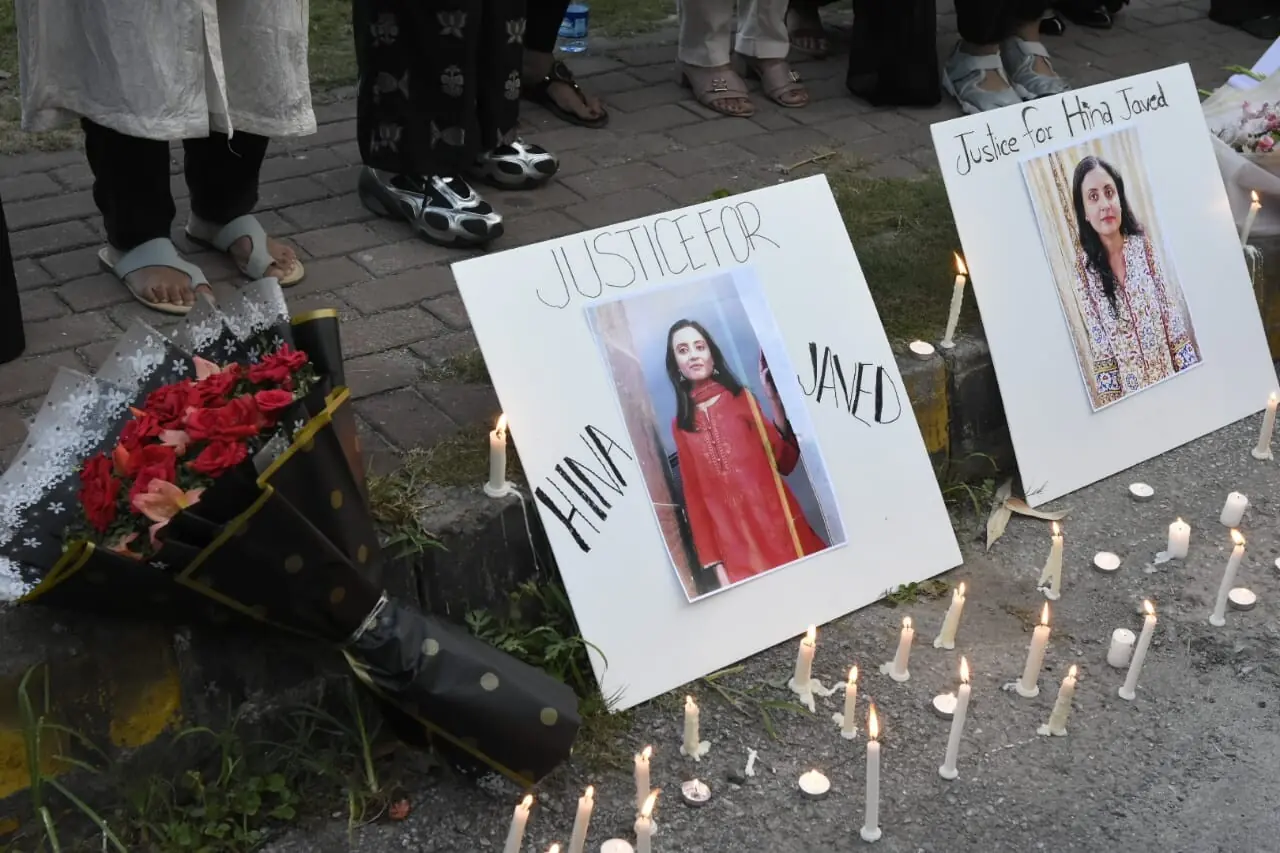
Islamabad mourns Hina Javed and the rise of femicide in Pakistan at candlelight vigil
A candlelight vigil held on Saturday evening outside the National Press Club in Islamabad to mourn the death of Hina Javed called for an end to femicide in Pakistan.
Javed’s body was found in her apartment in Rawalpindi last week bearing signs of torture. The police have arrested her husband and a domestic worker.
The vigil, largely attended by women, demanded an end to pervasive violence against women in the country and justice for Javed. Addressed by multiple speakers, the main demands were an “end to femicide,” better legislation to prevent domestic violence, and an end to a culture of impunity for perpetrators of violence.
Participants lit candles and placed flower bouquets next to pictures of Javed while chanting slogans calling for justice.
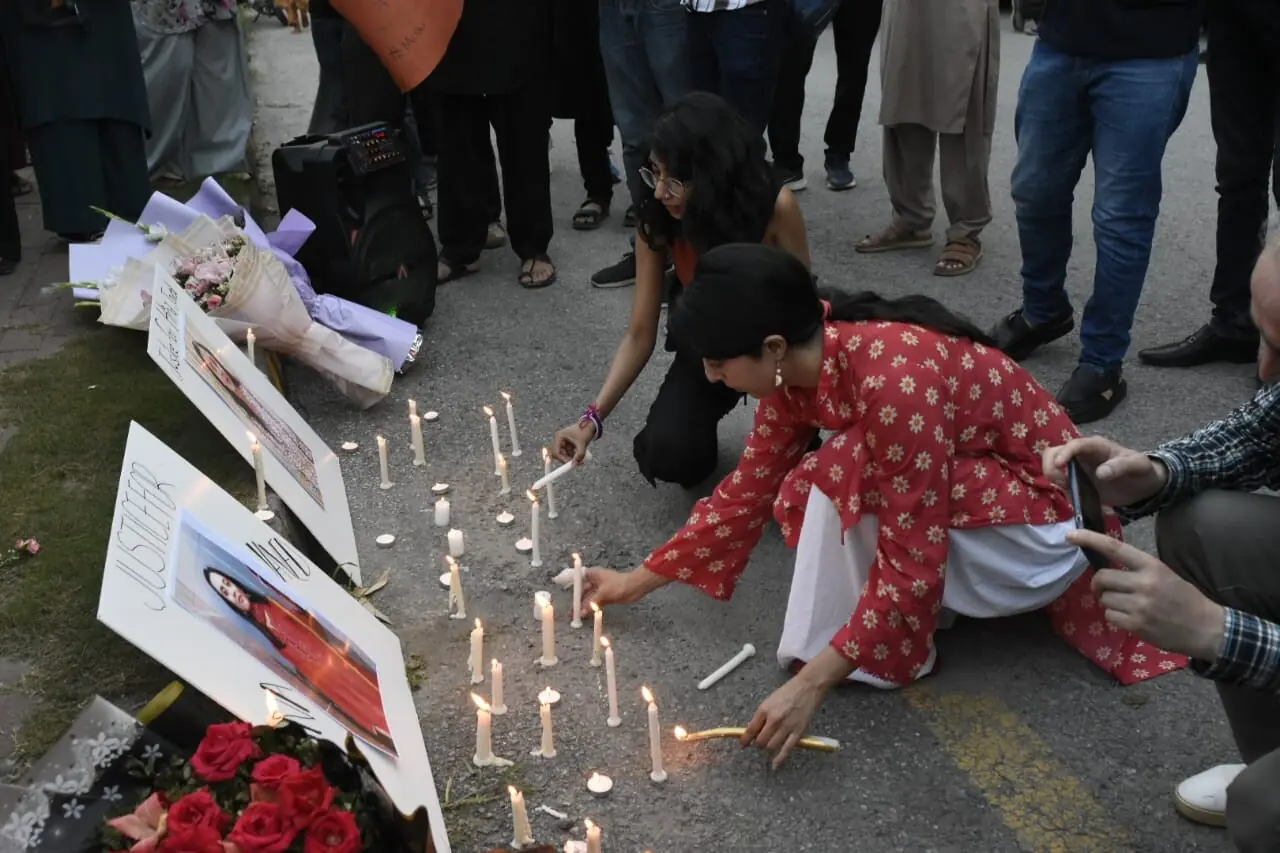
Addressing the gathering, Javed’s cousin Sarah Afreen Malik said it was a tragedy that 45-year-old Javed, who was very accomplished, was no longer here after only nine months of marriage. “Our family will never be the same; we are never going to recover.”
Another cousin, RJ and host Sabah Bano Malik, said the idea that violence against women was rare is outrageous. “We want Pakistan to declare gender-based violence an active femicide and to put resources towards it,” she said, adding that they did not want any other family to lose a daughter they love to femicide.
“…I am pushing so hard, the name ‘a femicide’, call it what it is so that resources go towards that, such as public media campaigns, education, these sorts of things, because to have a headline four times a day, you know, crying that another woman has died. That is a problem.”
A 29-year-old artist at the vigil said violence against women has been acceptable in society for a long time due to a patriarchal and misogynistic mindset, and in certain instances, even state officials have resorted to victim-blaming instead of providing justice. There is no place that is safe for women, she said, adding that Pakistan was at the bottom of the gender index.
She said so much needs to be changed, including laws and societal norms, but most of all, the culture of reducing women to ‘honour’ must change.
According to the UNFPA, in Pakistan, 28 per cent of women aged 15 to 49 have experienced physical violence, and 6pc have experienced sexual violence. The UN agency reports that 34pc of ever-married women have experienced spousal physical, sexual or emotional violence.
Sabah said she was not against marriage, but reducing women to just marriage is incredibly unfair. “I’m not against marriage or having children, but when a girl is born, if that’s all you’ve signed up for her, it’s incredibly unfair; we don’t look at girls and women as people with their own autonomy and their own minds.
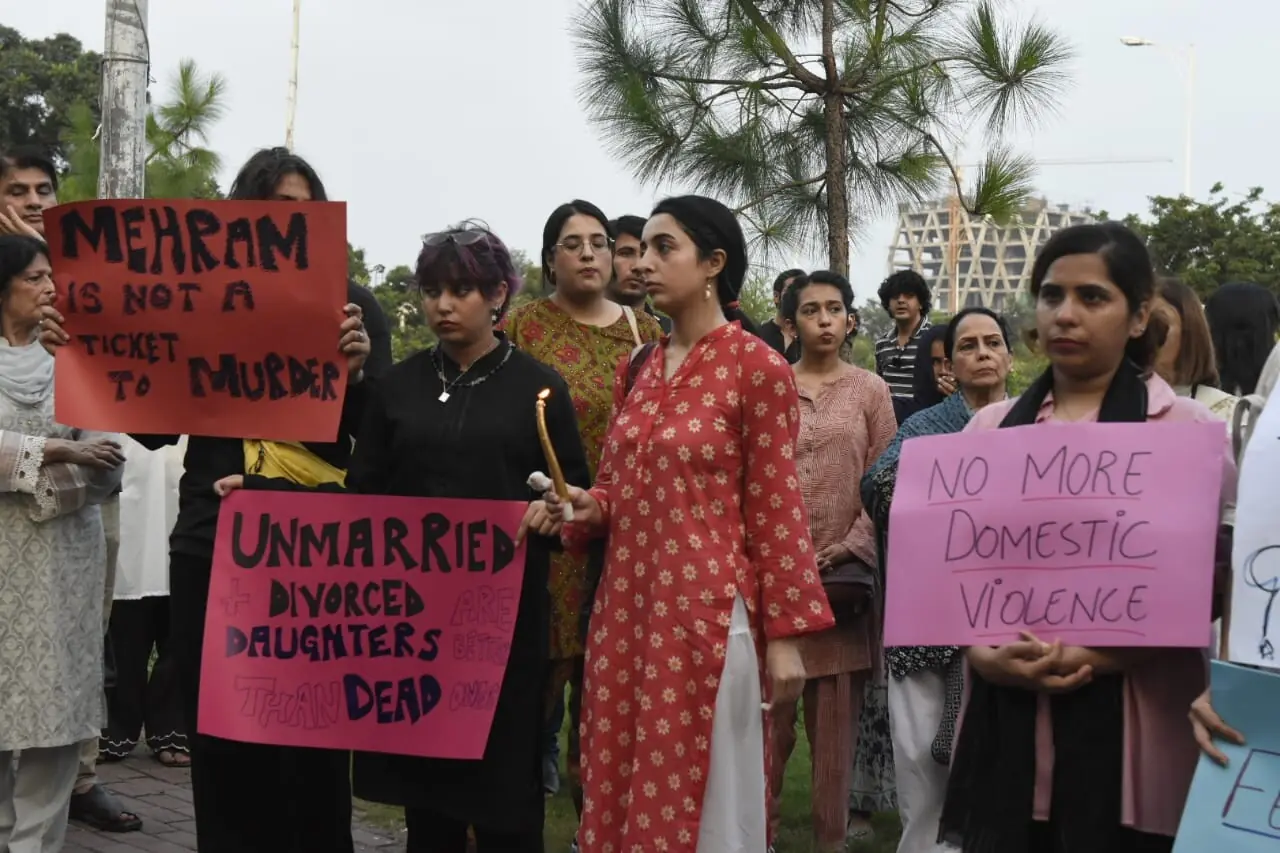
“We act like any step they take outside of our control is somehow a step against the family, against the country, against the religion, against the culture. We demonise them for having desires or wanting to like their husband. We literally will kill someone for choosing their husband,” she said
The RJ highlighted how, after marriage, no matter what is happening to women, they are asked to compromise because of ‘izzat’. “So then my question is, your daughter’s coming home beaten up. Where is your izzat then? Because that man doesn’t respect you, right? He’s beating up your daughter, and you clearly don’t respect yourself if you’re sending her back.”
Sabah said everyone plays a role in fostering this culture of impunity. However, when gender-based violence takes place, it is usually the women who are expected to figure it out and stand up for themselves, she said, adding that we need to acknowledge how serious this epidemic of gender-based violence is.
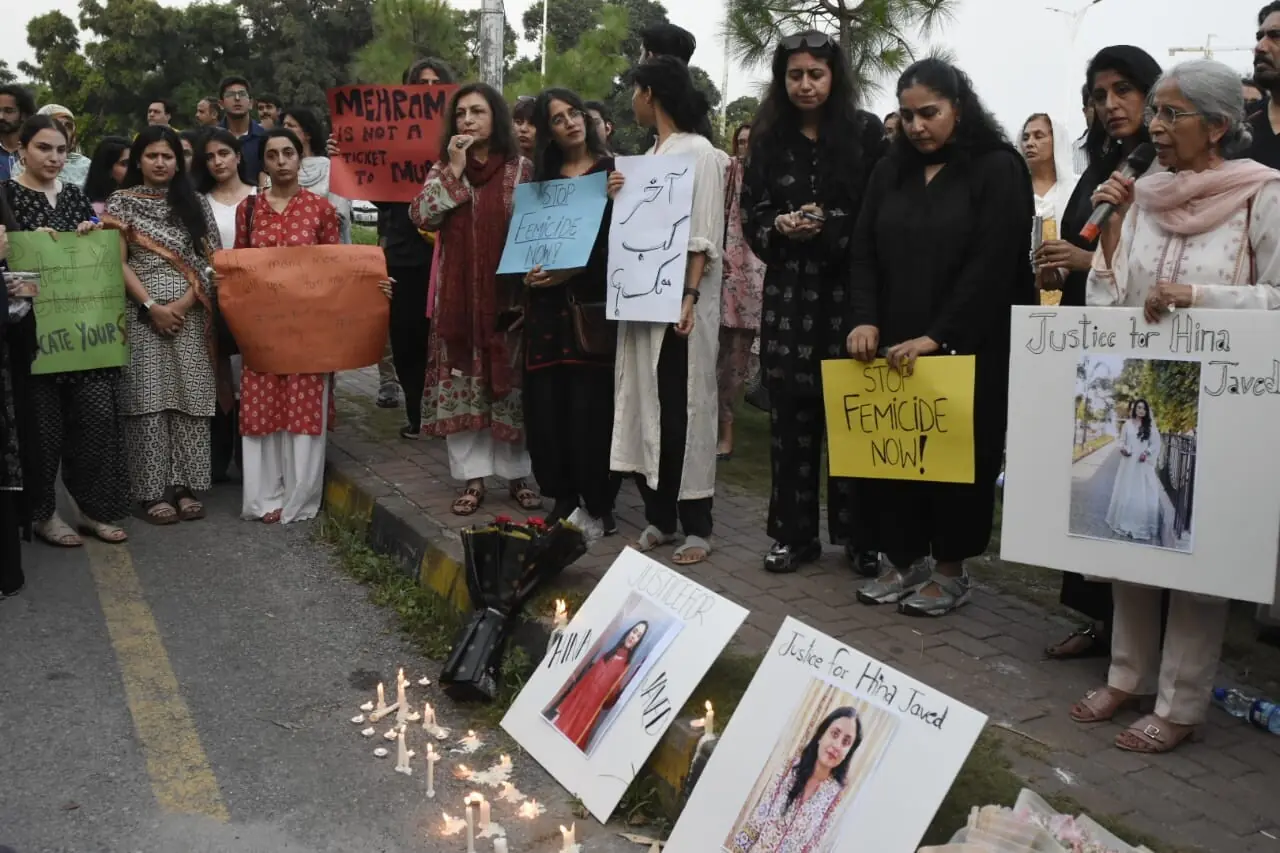
Barrister Irum Ali said Pakistani women are victims of a patriarchal system that perpetuates violence against them. “…All of this boils down to one issue: that a woman is not considered human; she is not considered a human being… men do not consider a woman their equal or a human being who can feel the same way, who can think the same way, who can act the same way, who can go out and do whatever she wants,” she said.
Ali said it was not even about competition — it’s about fragile male egos and toxic masculinity. The system, she believes, has failed women. The justice system has failed them, and their own families have failed them, because it’s their own people who kill them, she said.
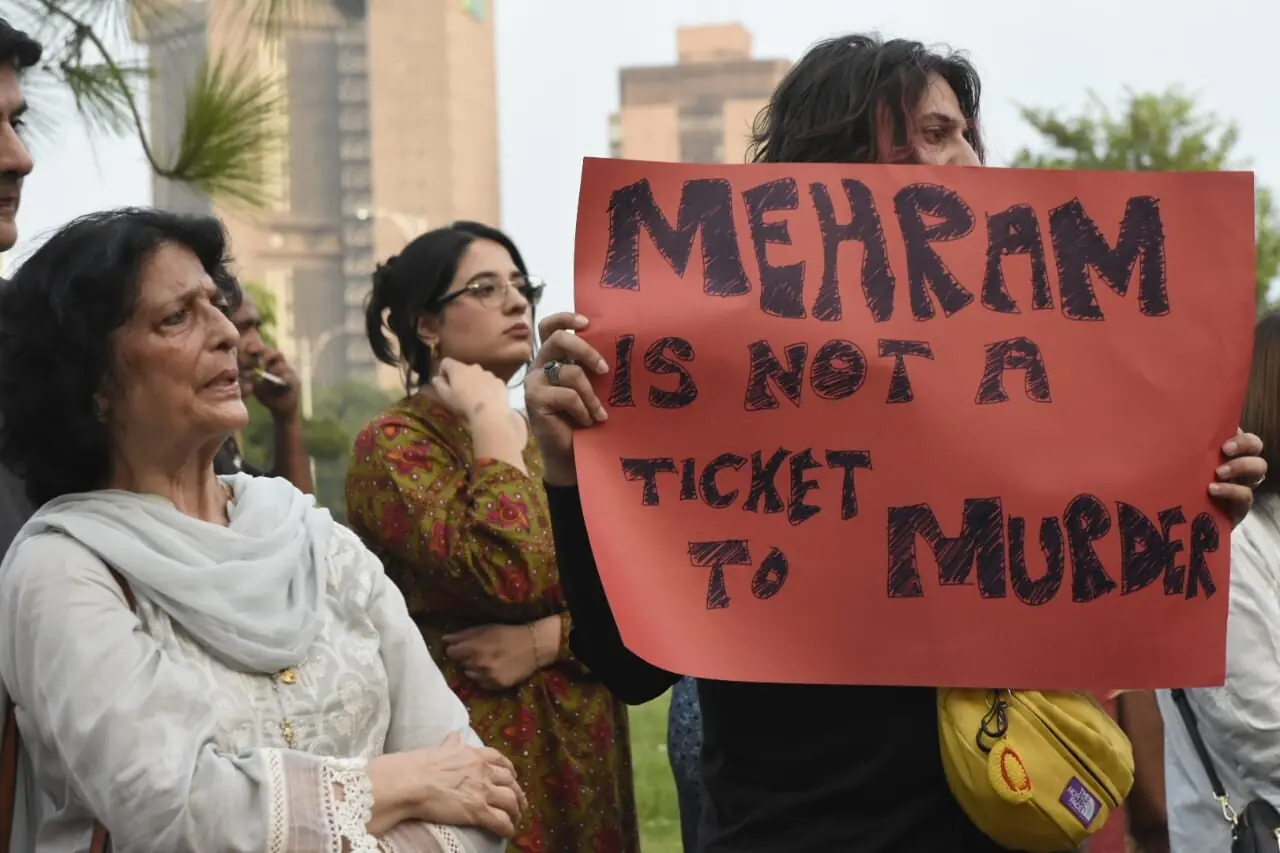
A software engineer at the vigil said both the state and society need to do a lot more against femicide and misogynistic culture, but they are currently failing miserably. He said there was a need to bring in cultural reforms, but all of it starts at home. “That is something that has to start at the family level, because the government cannot come into your home and change your parents’ minds. What they can do is influence the educational institutions, because that is the only avenue where they can change an adolescent’s mind for the better.”
A colleague of Javed’s told Images that society and the country have failed women. “We have failed to create a safe environment for women, with violence having become rampant across the world,” he said, adding that unless boys are taught from an early age to respect women as equals, things will not change.
Cover photo: Tanveer Shahzad/White Star






Comments