Netizens horrified after report claims kids’ HIV outbreak in Punjab’s Taunsa caused by reusing syringes
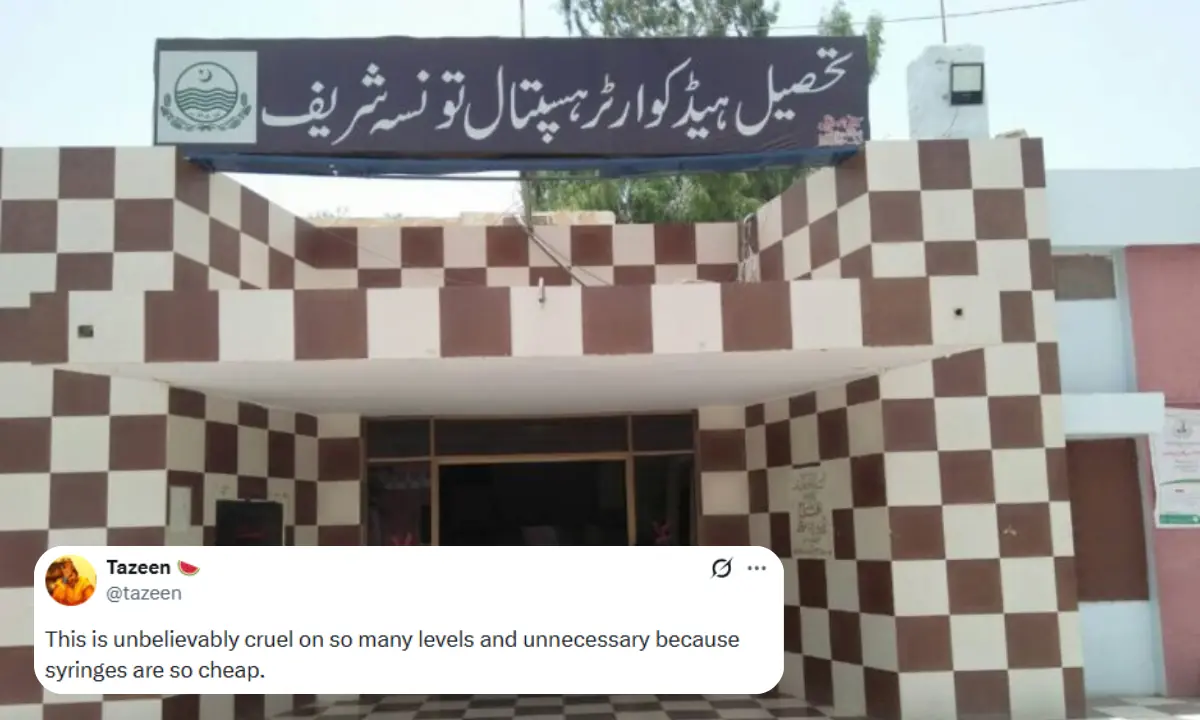
Pakistanis were shaken to their core on Tuesday after a damning report from the BBC alleged severe malpractice at the Tehsil Headquarter (THQ) Hospital in Punjab’s Taunsa led to an outbreak of HIV in local children.
The exposé, filmed over the course of several weeks in late 2025 after insider information said malpractice continued after a similar outbreak in 2024, claimed to have identified 331 children infected with the disease, linking the spread of the virus to syringes being reused at the hospital.
Netizens were outraged at the continued endangerment of young lives, calling the incident “sick” and “criminal”.
One user questioned what the government was doing about the repeated violations of basic medical ethics at a public hospital. He also said the use of disposable syringes had been banned in Pakistan, which poses another question of how this could happen.
He wasn’t alone in demanding answers, many users on X wanted to know what action was to be taken in light of the revelations.
One user called the situation “unbelievably cruel on so many levels”, decrying how “unnecessary” it was because of the low cost of syringes.
One user recalled that a similar story unfolded in Jalalpur Jattan. He lamented how nothing had changed in 18 years.
Activist Zulfikar Ali Bhutto Jr also spoke out on the issue, mentioning past outbreaks in Sindh and how there were free programmes for patients to treat the disease.
He also cleared up some misconceptions people have regarding HIV. He clarified that the virus only spreads through injections and unprotected sexual activity.
He reiterated how regular human contact with a patient cannot result in HIV transmission. Unfortunately, as the report from the BBC pointed out, many of the children infected in Taunsa were facing societal stigma because of their illness.
Meanwhile, provincial authorities insisted corrective measures had been taken at THQ Hospital Taunsa after 11 HIV-positive patients were brought to Dera Ghazi Khan from the area.
They said a subsequent screening mission had identified 331 patients under the age of 12 and a permanent AIDS treatment facility was established at the hospital to deal with any further cases.
Without naming the BBC, the authorities said details of the corrective measures had been shared with the international broadcaster. The provincial health department said failure to include these steps in the report was “against the principles of responsible journalism”.