
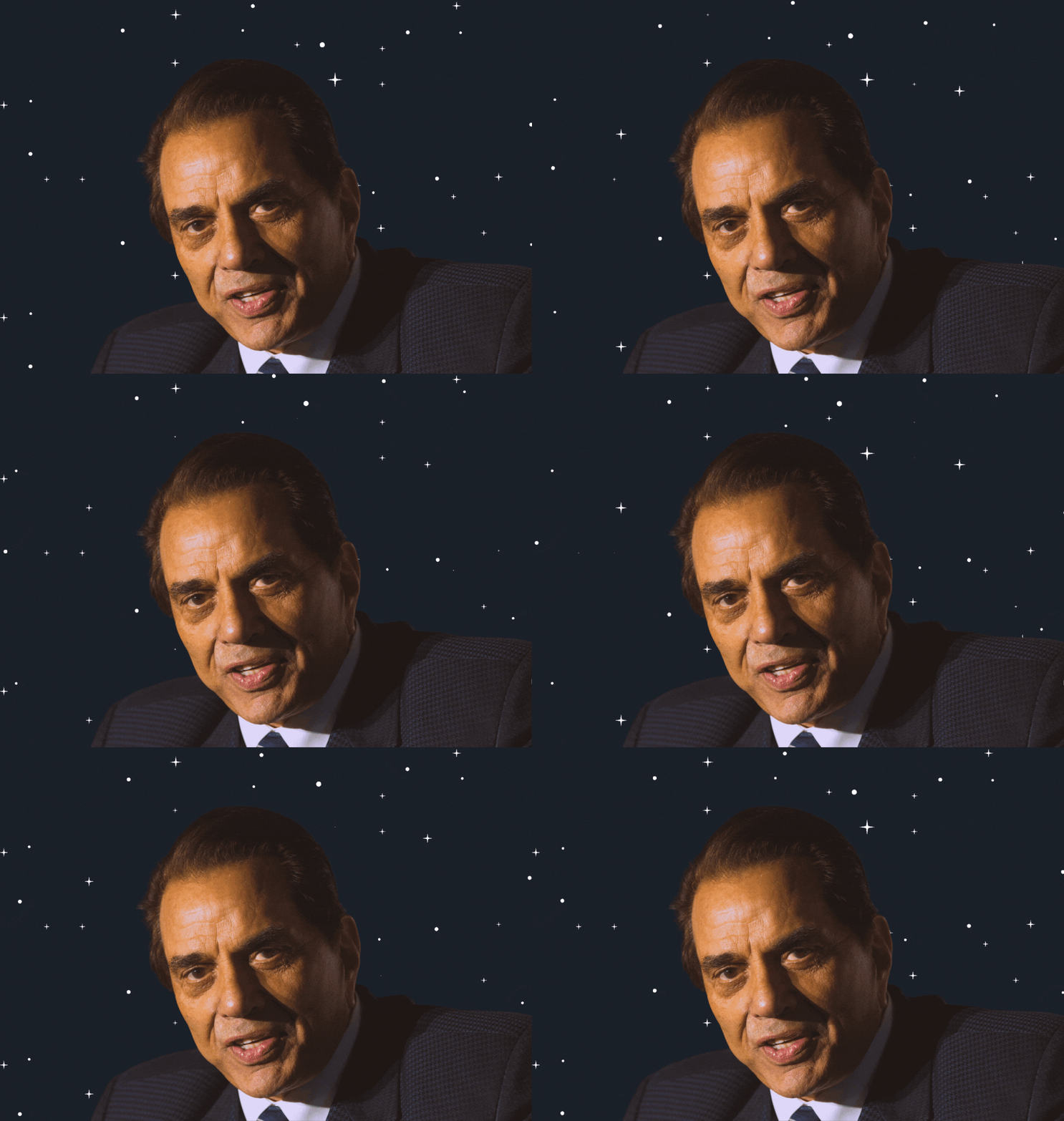
Dharmendra was more than an admired actor — he was a reminder of a shared past
During the shooting of the Bollywood film Apne, Pakistani actor Javed Sheikh found himself struggling with the script — not because of the lines, but because they were written in Roman Urdu. A Vijayta Films production, the movie had all the Deols acting together for the very first time. Playing a friend of the lead character, Baldev Singh Chaudhary, who had just returned from the US, Sheikh requested the script be given to him written in Urdu instead and told the production assistant to take his time with it.
To his surprise, the Urdu script arrived within minutes. Curious, he asked how it was done so quickly, only to learn that the actor playing Baldev Singh Chaudhary also needed his dialogue in Urdu because he couldn’t read Hindi.
That actor was none other than Dharamendra — the legendary He-Man of Bollywood, producer of the film, and, much like Sheikh, completely at ease with the Urdu language.
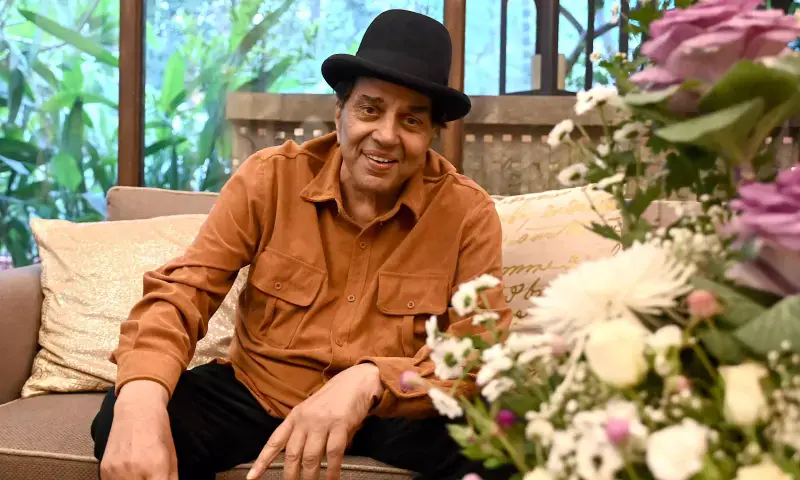
Dharamendra would have turned 90 today (December 8). The legendary actor-producer passed away on November 24 and, despite the ban on showing Indian content on TV, remained in the headlines for hours. Generations who grew up in the 70s and 80s admired and connected with him through his work.
Born 12 years before Partition, Dharamendra spent his childhood in a village in Punjab in undivided India, where he formed close friendships with many Muslims, cherishing the easy coexistence between Hindus and Muslims. In an interview many, many years ago, he recalled that when the atmosphere began to change in 1947, he even begged his favourite teacher, Master Ruknuddin, not to leave India — clinging to his knees in desperation. But the inevitable happened, and the world around him changed forever.
Dharam Singh Deol came to Mumbai in the late 50s, after winning a talent contest, and soon the doors for acting opened for him. He became “Dharamendra” at a time when Indian films were banned in Pakistan and, with very few knowing his charisma on the other side, Pakistani filmmakers never attempted his brand of action.
By the mid-70s, however, Bollywood films had found their way into the drawing rooms of the elite, and Dharamendra became a household name. The same happened in India, where Punjabi and Urdu films from Pakistan were watched, studied and often adapted.
Film producer Rashid Khawaja shared a hilarious incident from the family screening of the Bobby Deol–Aishwarya Rai starrer Aur Pyaar Ho Gaya (1997). Khawaja had spent most of the 1980s in the US and wasn’t very familiar with local cinema trends, but the moment Dharamendra learned he was from Pakistan, the veteran star grew animated. He excitedly began reciting dialogues he had memorised from old Pakistani films.
“I was there as a friend of the producer, and Dharamji was there because it was Bobby’s second film. That’s when I learned that the entire Deol clan were huge fans of films of Munawwar Zarif. They even remade one of his classics — Naukar Wohti Da (1974) — as Naukar Biwi Ka (1983). He used to get teary-eyed at the mention of Pakistan and always remained a well-wisher,” Khawaja told me.
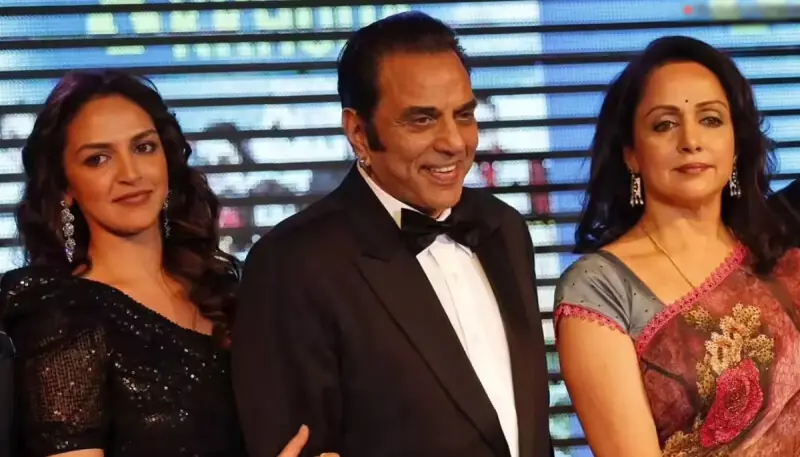
The producer, who later played a key role in introducing Lollywood films to the 1990s generation through NTM and SPTV, recalled the moment as both funny and unexpectedly heartfelt. His son, actor Faizan Khawaja, happened to be a classfellow of Ahana Deol — Dharamendra and Hema Malini’s youngest daughter — at Whistling Woods International in Mumbai. Faizan was even invited to Ahana’s wedding and went to pay his regards.
Another Punjabi film adapted on Dharamji’s insistence was Maula Jatt (1979). It was remade as Jeenay Nahi Doonga (1984), with Dharamendra taking on Sultan Rahi’s role, Shatrughan Sinha becoming Mustafa Qureshi’s Noori Natt, and Raj Babbar playing Mooda, originally portrayed by Kaifi.
When he met Qureshi in London, Dharamendra told him he had actually wanted to play Noori Natt. “I got a call from Dharamendra when I was in London, and he came to pick me up after taking my address. He took me to his place and, after praising our films, showed me his library of Punjabi films. He said he loved watching them. He told me he had picked the role of Noori Natt for himself but the director wanted him to enact Sultan Rahi’s character.”
Syed Noor — a man who has been writing films for nearly 50 years — once planned a project that would bring actor Nadeem and Dharamendra together on screen. He had crafted a story in the 2010s about two friends reuniting for the first time after Partition. He revealed to me that Dharamji agreed to the film with great enthusiasm, but soon after, his health began to decline.
A major back surgery eventually put the dream project on hold, though Noor still cherishes every meeting they shared.
“When we first met,” Noor recalled, “I teasingly said, meri film copy kar li (you copied my film).” He was referring to Sangdil (1982), written by Noor and directed by Hasan Tariq, which was later adapted in India as Jhoota Sach (1984). Dharamendra played the role originally performed by Nadeem. But instead of being defensive, Dharamji simply smiled and said, “Yaar, Nadeem ko mera pyar dena. Bohat acha kaam kiya tha uss ne (Give Nadeem my love. He did a great job).”
That was the man he was — disarming, warm and full of grace. He often said, “If India is my mother, then Pakistan is my mausi,” the loving aunt. A simple line, yet it captured the generosity of his heart more than any film ever could.
Noor’s other film, Bobby (1984), was also adapted in India as Dadagiri (1987), with Dharamendra playing the role originally done by Muhammad Ali. The film featured Sabeeta and Javed Sheikh, both of whom shared a close bond with the actor.
Sheikh told me that Dharamendra always had a very soft corner for Pakistan. “I was involved in the shooting of Apne and travelled to Bangkok, Canada and Delhi, along with Mumbai [for it]. He was very loving, and whenever artistes came over from Pakistan, he received them with affection.”
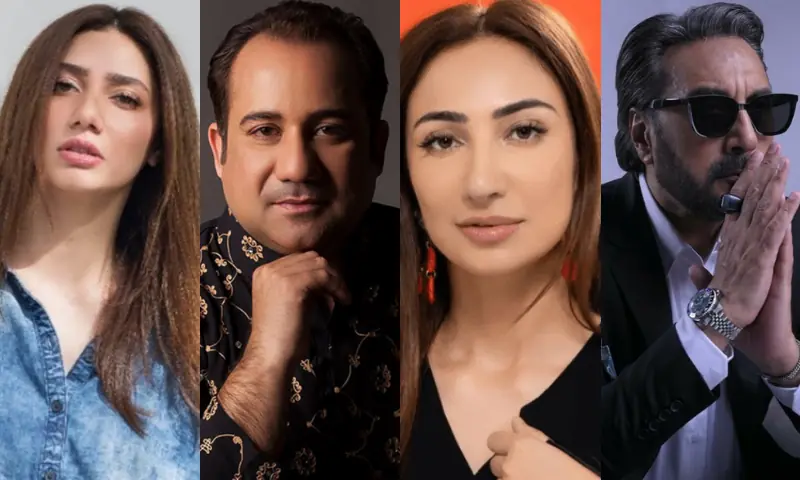
In the end, Dharamendra represented something far bigger than stardom. Despite being the father of Sunny Deol — often portrayed as the on-screen face of hyper-patriotism — Dharamendra’s heart beat to a softer, more human rhythm. Whenever Pakistani artists crossed his path, whether it was Shamim Ara’s team abroad, Babra Sharif, Reema Khan or Rahat Fateh Ali Khan, he welcomed them with warmth, respect and an affection that felt almost familial.
Dharamendra also had a collection of Kamal Ahmed Rizvi’s Alif Noon and was always amused by Nanha’s acting. It was reported in Shama magazine that upon learning of Nanha’s death, he became anxious and cancelled his shoot. Dharamji was reportedly visibly upset, as if someone very close to him had passed away.
For many of us, he wasn’t just an actor we admired; he was a reminder of a shared past that still flickers beneath the noise of politics. Watching him grow old, and now watching him leave, feels like losing the last bridge that quietly connected our countries.
Dharamendra was the final, comforting ray of hope — the kind that made us believe, even for a moment, that India and Pakistan could one day find their way back to each other.

Comments