

‘Bol Meri Machhli, Kitna Pani?’ — A children’s game and the rising tide of climate crisis
There was a game many girls of my generation played — simple, lyrical, and mysterious.
A circle of girls would surround one girl in the centre, the “machhli,” or fish. They would chant: “Hara Samander, Gopi Chandar, Bol meri machhli, kitna pani (Green Ocean, Gopi Chandar, My Fish, Tell us how much water)?” In response, the girl would lower her hands to her feet and slowly raise them — chest, shoulders, head — until she stretched them high above, declaring with gesture alone: “Itna pani” or this much water.
It was a playful game, but now, as the planet warms and waters rise, that chant takes on an eerie resonance. What once was harmless mimicry of swimming or sinking now feels prophetic. What was once giggles and rhyme becomes warning.
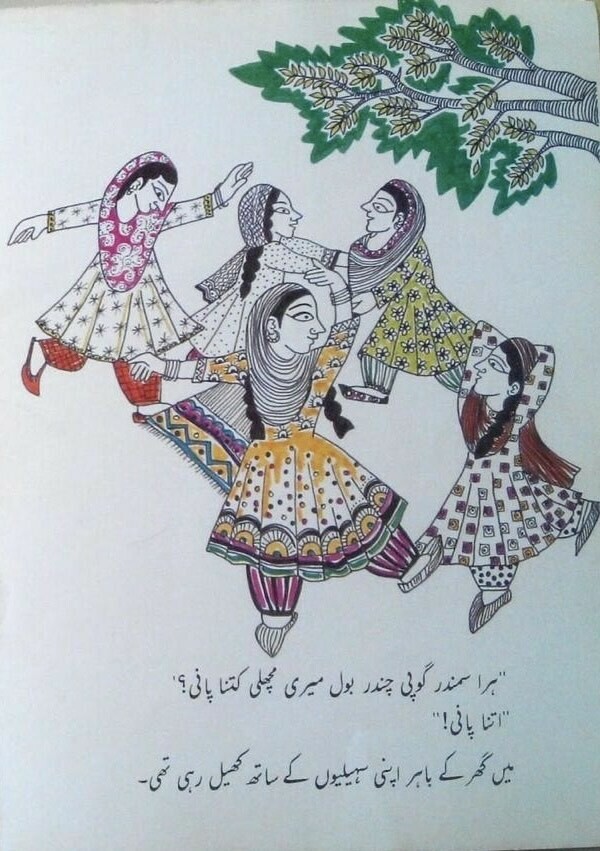
The chant begins with two names: Hara Samander (Green Ocean) and Gopi Chandar. The first is a dreamlike phrase, evocative of vastness, mystery, and nature’s beauty. Green, instead of blue for the ocean, adding to the mystery. The second — Gopi Chandar — is a name pulled from folk memory, a semi-mythical king turned yogi, known in Punjabi and Rajasthani oral epics. He renounced his kingdom to follow a spiritual path, often associated with rivers, inner reflection, and detachment. His presence in a girls’ game suggests something deeper. Perhaps an ancestral whisper, an echo of forgotten tales where water was sacred and wisdom lay in respecting the elements.
Today, however, we have done the opposite. We have tried to conquer nature and are now drowning in the consequences. When the girl in the centre stretches her arms high above her head, showing how high the water has risen, it becomes an unintentional allegory for the climate catastrophes engulfing us. In 2022, Pakistan experienced floods that submerged a third of the country. Entire villages disappeared underwater. It is happening once again.
The “machhli” of today is no longer a child at play but millions of displaced families, trapped and surrounded. The chant of the group: “Bol meri machhli, kitna pani?” could well be the chorus of the world asking the vulnerable how deep the damage has gone. The rising hands offer the terrifying answer.
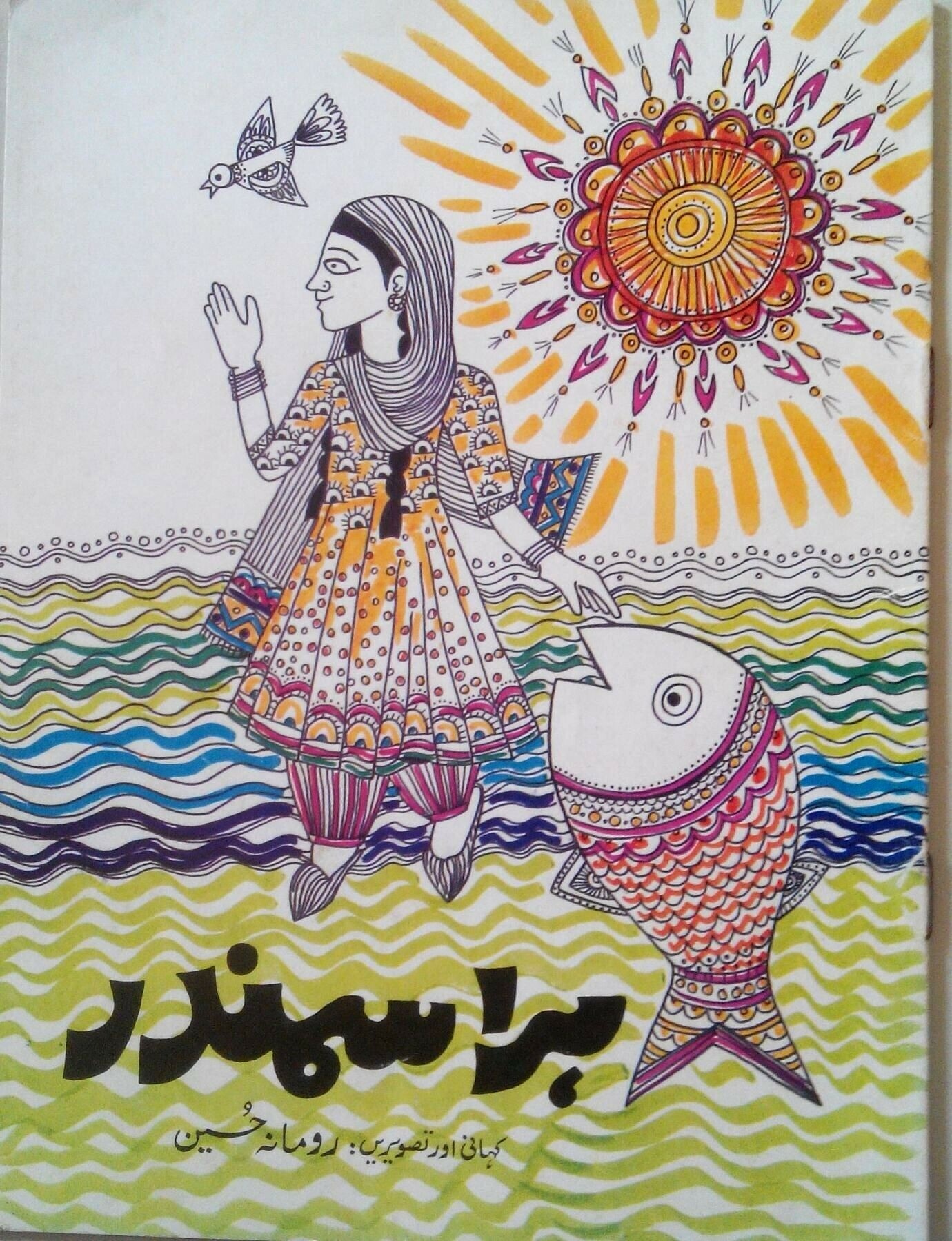
Many years ago, I wrote a children’s story titled Hara Samander and illustrated it as well. The story began with a girl playing the Hara Samander, Gopi Chandar game with her friends, but on the surface, it was about the value of books themselves. How written words open the mind to vast worlds and wisdoms waiting to be explored. But perhaps, even then, a deeper concern pulsed below the narrative: my long-held consciousness of the environment and the fragility of our planet. In a way, the green ocean of the title was symbolic — not just of imagination, but of nature’s immense and endangered beauty.
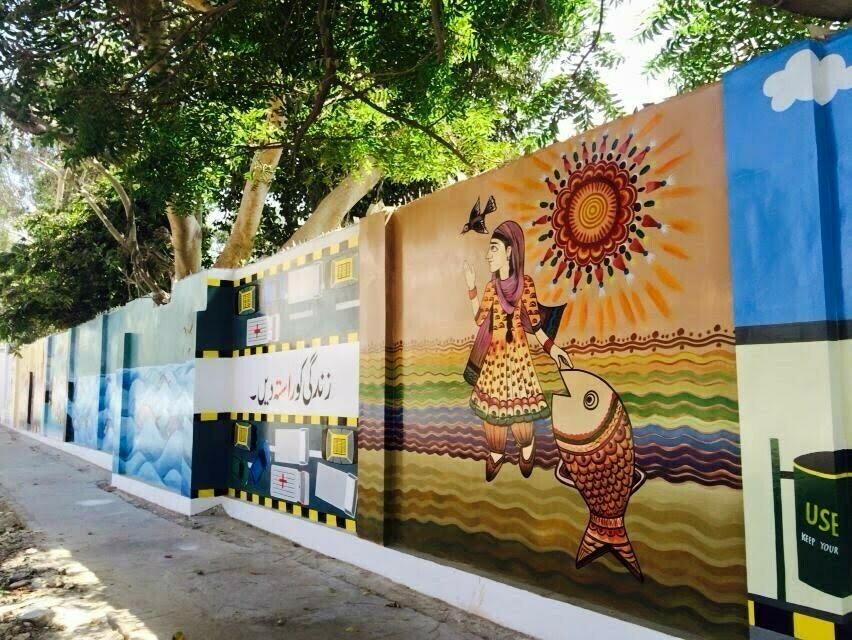
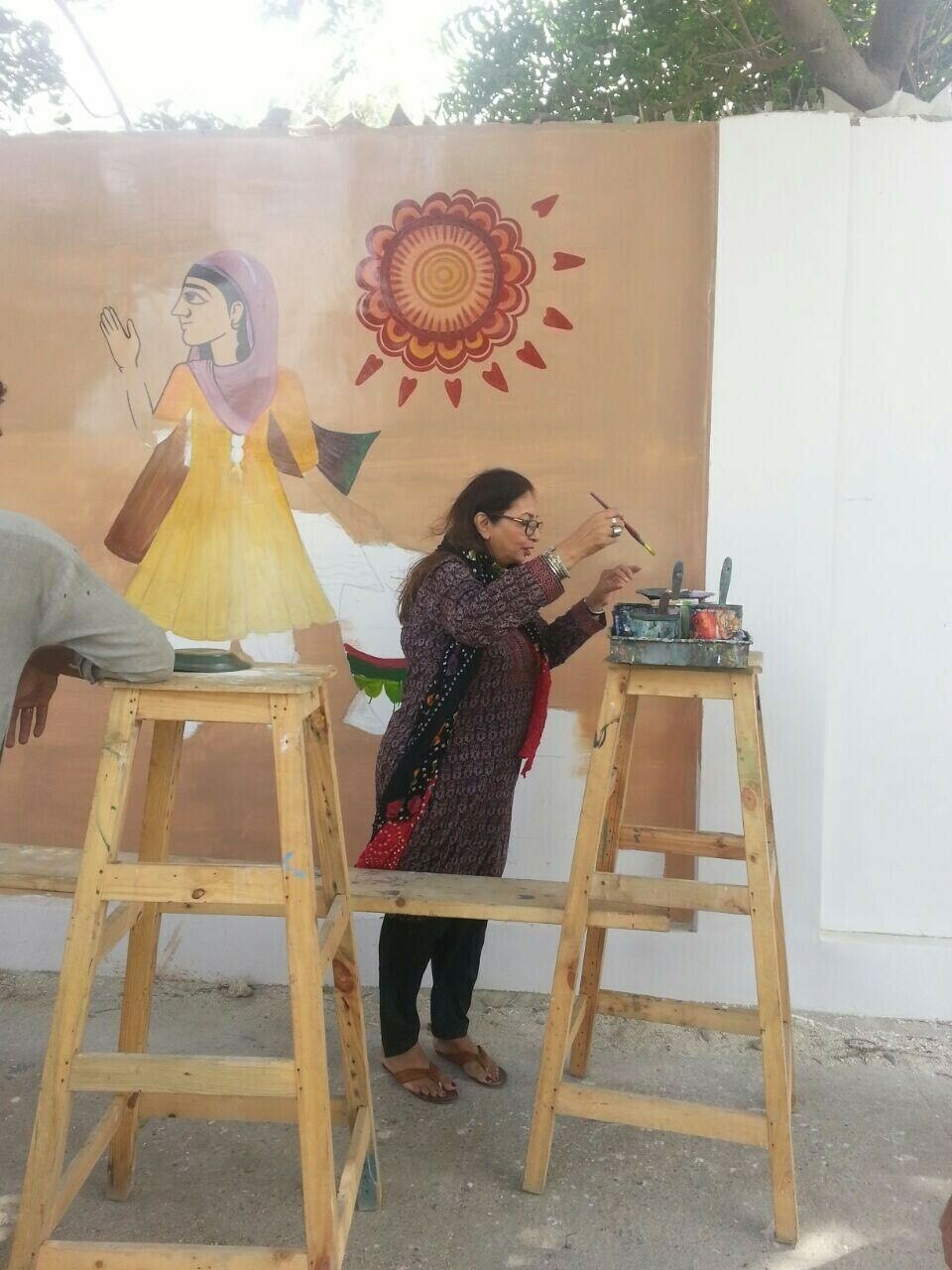
Years later, to bring this story into public view, I had the cover of Hara Samander painted as a mural on Hoshang Road in Karachi. It became a public artwork as part of the I Am Karachi movement of which I was a part, and project champion of the wall murals in the city. The artwork quietly converses with passers-by about reading, dreaming, and perhaps looking back now about the rising tides we face.
That we invoked Gopi Chandar in this game is no accident. Perhaps it was a lingering trace of collective memory. The king who abandoned worldly pleasures to pursue spiritual knowledge understood the futility of resisting nature’s order. His life was a lesson in humility and balance. In forgetting him, in reducing him to a misremembered name in a playground chant, we may have also forgotten how to live within our ecological limits.
In South Asia, so much of women’s cultural work, lullabies, games, kitchen songs, and embroidery patterns, carried ecological and spiritual meaning. They were never just diversions — they were the way knowledge survived. The imagery of the game: a lone fish surrounded by a chanting circle also mirrors the current moment. Vulnerable communities, already suffering from poverty or displacement, are now surrounded by climate injustice. The circle tightens. Those inside are left to fend for themselves, while those outside are the powerful, the comfortable, who continue to chant, to question, but not to act. We are all now inside that circle.
If we were to reimagine this game for our children today, what would it look like? Perhaps instead of asking “Kitna pani?” (How much water?), we would ask “Kitna waqt?”(How much time is left?) Or perhaps we must still ask “Kitna pani?”, but with the seriousness it now demands. Not as a game, but as a call to action. Because the water has risen. And the machhli can no longer swim.






Comments