Lahooti Melo co-founder Saif Samejo distances himself from a ‘self-proclaimed saviour’
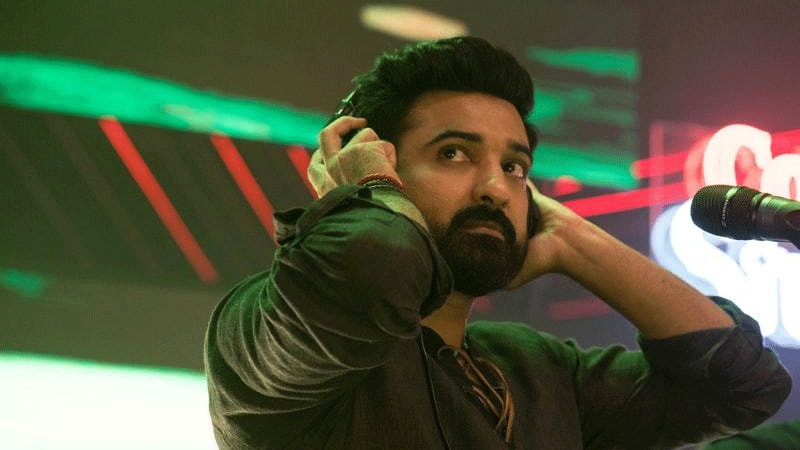
Sketches frontman and Lahooti Melo co-founder Saif Samejo has shared a statement on Instagram addressing what he believes is the misuse of advocacy and the retraumatisation of survivors in the name of justice. In a separate statement, director Jamshed Mehmood Raza, aka Jami, spoke about standing by your principles even when it’s hard.
In a carousel post titled “Truth Beyond Noise”, Samejo said, “In Pakistan’s fractured ecosystem of justice and activism, it has become far too easy for the loudest man in the room to be mistaken for the bravest.”
While neither Samejo nor Jami named anyone, their statements come on the heels of Jami’s conviction in a defamation case filed by director Sohail Javed in 2019. The case involved a letter Jami read from an anonymous sexual assault survivor at the Lahooti Melo that year. The contents of the letter were also posted to his Facebook page. He was sentenced to two years in jail by a Karachi court and has since been granted interim bail by the Sindh High Court.
Samejo, in his post, referred to a 2019 letter that was “meant for collective reflection” and was “carefully crafted to heal, not to harm.” Samejo stated that the letter named no names and carried no accusations, but was later “uploaded online without consent, stripped of its context, and turned into a guessing game.”
“Rather than protecting survivors, it exposed them,” he wrote. “Leaked messages, voice notes, and private details retraumatised those who had already carried so much.”
He called for a form of advocacy that does not violate consent or twist truths. “This isn’t allyship. It’s harm wearing the mask of activism,” one slide read.
In the caption accompanying the post, Samejo explained why he had chosen to stay silent for years — “not out of fear, but because I believed some spaces deserved to be held with care.” He went on to describe a “self-proclaimed saviour” who he claimed had “sought private settlements for the ‘victims’ protection’ but later branded the same people as apologists.”
According to Samejo, this “saviour” also “operated anonymous accounts to launch attacks and spread confusion, blackmailed survivors and leaked private communications, weaponised religious and linguistic sensitivities, and led public boycotts of grassroots platforms like Lahooti Melo.”
He added that he will not be naming the said “saviour” in his post because he does not wish to start a guessing game and “those who know, already know.” To conclude, he wrote, “True healing requires neither predators nor saviours but spaces where dignity, consent, and accountability are non-negotiable.”
Meanwhile, in a statement provided to Images, Jami called out people who for years “stood shoulder to shoulder in solidarity, amplifying voices, praising courage, and calling for justice”.
“They called it ‘bravery’ when a survivor’s letter was read publicly. They said it had opened the doors for a long-overdue conversation about sexual violence. They wrote op-eds, made posts, and condemned the silence of others.”
He said that now, “when the cost of that courage has come due, the same people are rewriting history”.
“They speak of ‘consent,’ ‘context,’ and ‘trauma’ as if none of those mattered back when the letter was handed over. They speak of ‘healing,’ while choosing this exact moment to distance themselves. If protection of survivors was the goal, where was this concern when the letter was first shared? When applause was easy, everyone clapped. Now that the stakes are real, the backpedaling begins,” he wrote.
“Worse, the same individuals who once condemned legal bullying, mocked defamation threats, and ridiculed performative masculinity are now legitimising the very institutions they once discredited,” said the director.
“Let’s be clear: truth isn’t seasonal. Allyship isn’t optics. And silence in moments of injustice is not grace, it’s convenience.This isn’t about one man or another. This is about standing by your principles even when it’s hard. Especially when it’s hard.”
The case
The letter that Jami read out was from an unnamed survivor who described being assaulted by a very well-known figure in the entertainment industry but did not name the alleged abuser. After the festival, on February 14, 2019, Jami took to Facebook to share the text of this letter, saying: “This is the letter I tried reading at Lahooti Melo. This letter is from a survivor of sexual assault. A young survivor of a brutal attack by a music video and TVC Director.”
In the letter, the assault survivor described their ordeal in detail. Jami didn’t name the alleged abuser in this Facebook post either.
Javed argued that in the comment section of the post, many people named him as the perpetrator, and Jami did nothing to stop the speculation or deny the accusation.
He said the letter contained “specific references” such as addressing the alleged abuser as a “music video and TVC director”, saying “he was a panellist at a festival in Hyderabad”, “he introduced his 23 or 24-year-old son to me, who worked in the same profession as mine” and “descriptions of personal stories shared by the alleged predator [that] led people to believe that [Javed] is the subject of the accusation.”
He argued that this caused irreparable damage to his reputation. Javed served Jami a legal notice in February of 2019, asking him to tender an “unconditional public apology on the same/equal forum” which was used to publish the letter.
Jami’s legal team responded to the notice on March 9 denying the accusations. The same day, Javed filed a defamation lawsuit against Jami, asking for the aforementioned posts to be removed as well as Rs500 million in damages and Rs500 million for mental torture.
Jami denied the accusations and said the letter was handed to him by the organiser of the Lahooti Melo, Samejo, and he did not know the content at the time of reading it.
Following Jami’s conviction, Aurat March also released a statement in his defence, expressing concern about Pakistan’s criminal defamation laws being “weaponised” to silence dissent. The movement said these laws had been “a powerful tool to silence survivors of sexual violence and their allies. Jami’s conviction under these unjust laws is a reminder that the legal system does not support survivors; it punishes them.”
The organisers added, “Aurat March stands with Jami and all survivors. We demand that all charges against him be dropped and all criminal defamation laws be repealed.”
In a follow-up comment under his post, Samejo had also said, “I’ve maintained grace by not naming him, but if needed in the future, I will. I also plan to meet women-led groups and ask why they supported him when real victims openly tagged them on social media, saying he was blackmailing them, and yet they stayed silent. How does this silence serve the cause they claim to stand for?
This isn’t solidarity; it’s nepotism, and it harms the very people they’re meant to protect.“
While Samejo’s comments come on the heels of Jami’s conviction, it is not clear and cannot be assumed that he is referring to the Javed-Jami case or Aurat March’s statement in defence of the latter.