
Pakistan's architectural heritage finds a voice in Qatar with Yasmeen Lari, Nayyar Ali Dada's unique practices
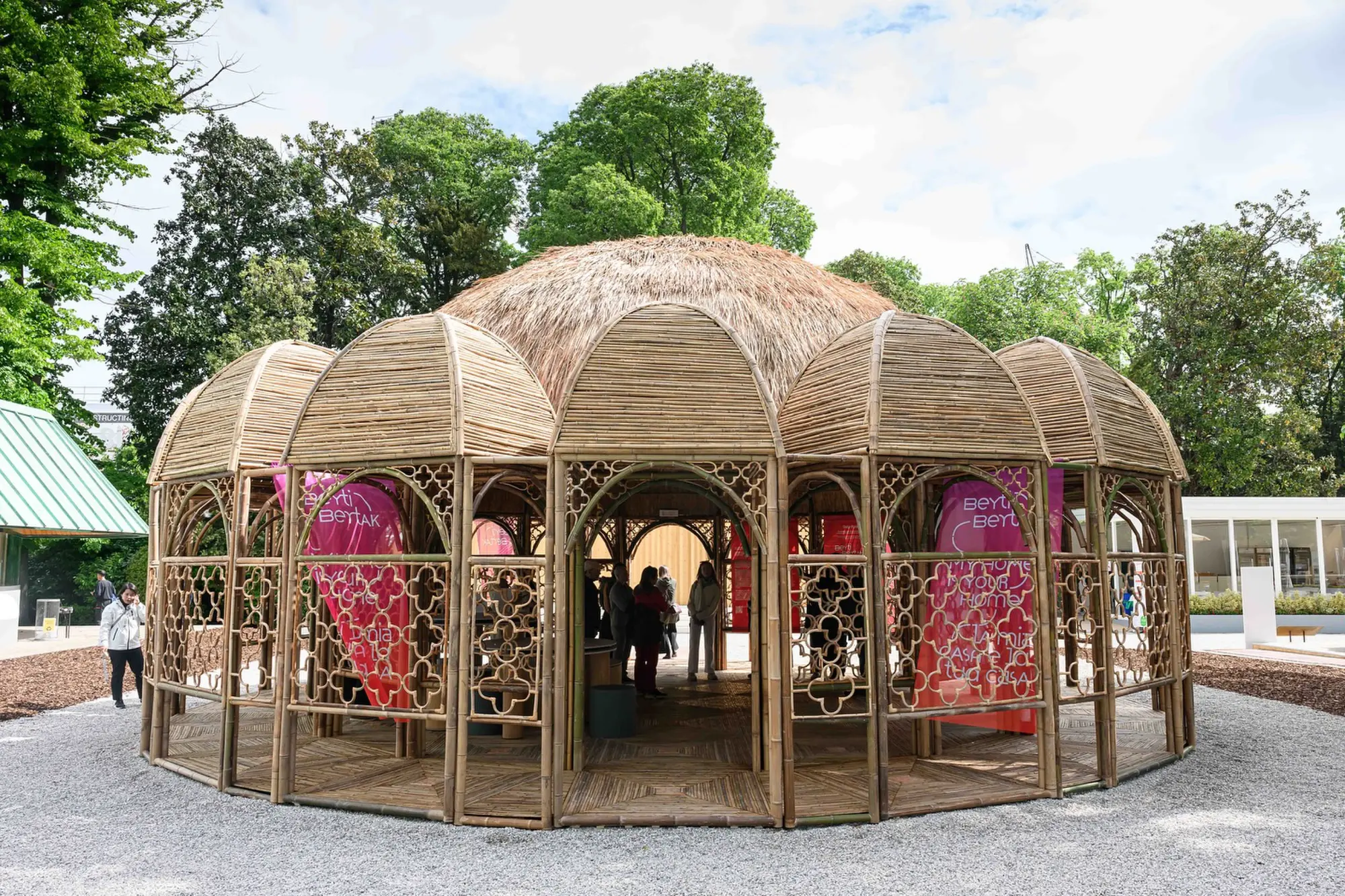
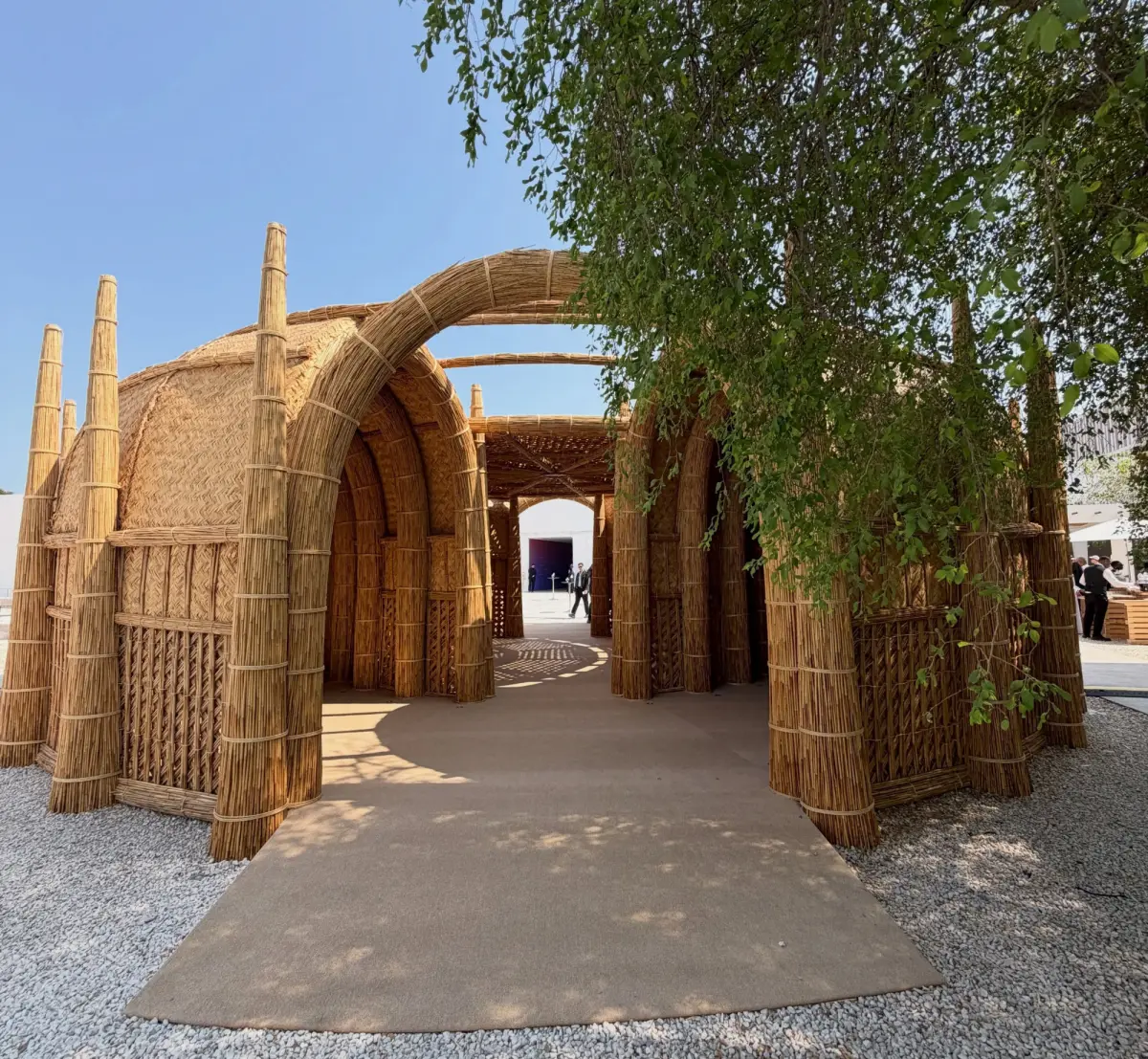
I first laid eyes upon Yasmeen Lari’s ‘Community Centre’ (2024) in the stately inner courtyard of the National Museum of Qatar exactly two years ago. Back then, Lari’s work was presented as part of the all-encompassing exhibition MANZAR: Art and Architecture from Pakistan 1940s to Today which took on the herculean task of distilling into a single show what the expansive title promised. Lari’s ‘Community Centre’ had been a popular attraction for visitors, with its convivial bamboo exterior and interior, perimeter veranda and dome structure topped with a waterproof palm frond roof.
In fact, it was so well-liked that, since then, the structure has taken on a life of its own. Last year, for Qatar’s first participation in the Venice Architecture Biennale, ‘Community Centre’ was featured as an installation at the historic Giardini della Biennale to mark the site for the permanent Qatar Pavilion. Clearly, Lari has found a host of admirers in Qatar, but so too have other architects and urban designers from Pakistan.
This is evidenced by Beyti Beytak: My Home Is Your Home, an exhibition in Doha that opened its doors to the public on October 26, 2026, and is being presented as part of Qatar Creates’ Fall/Winter 2026-27 programming.
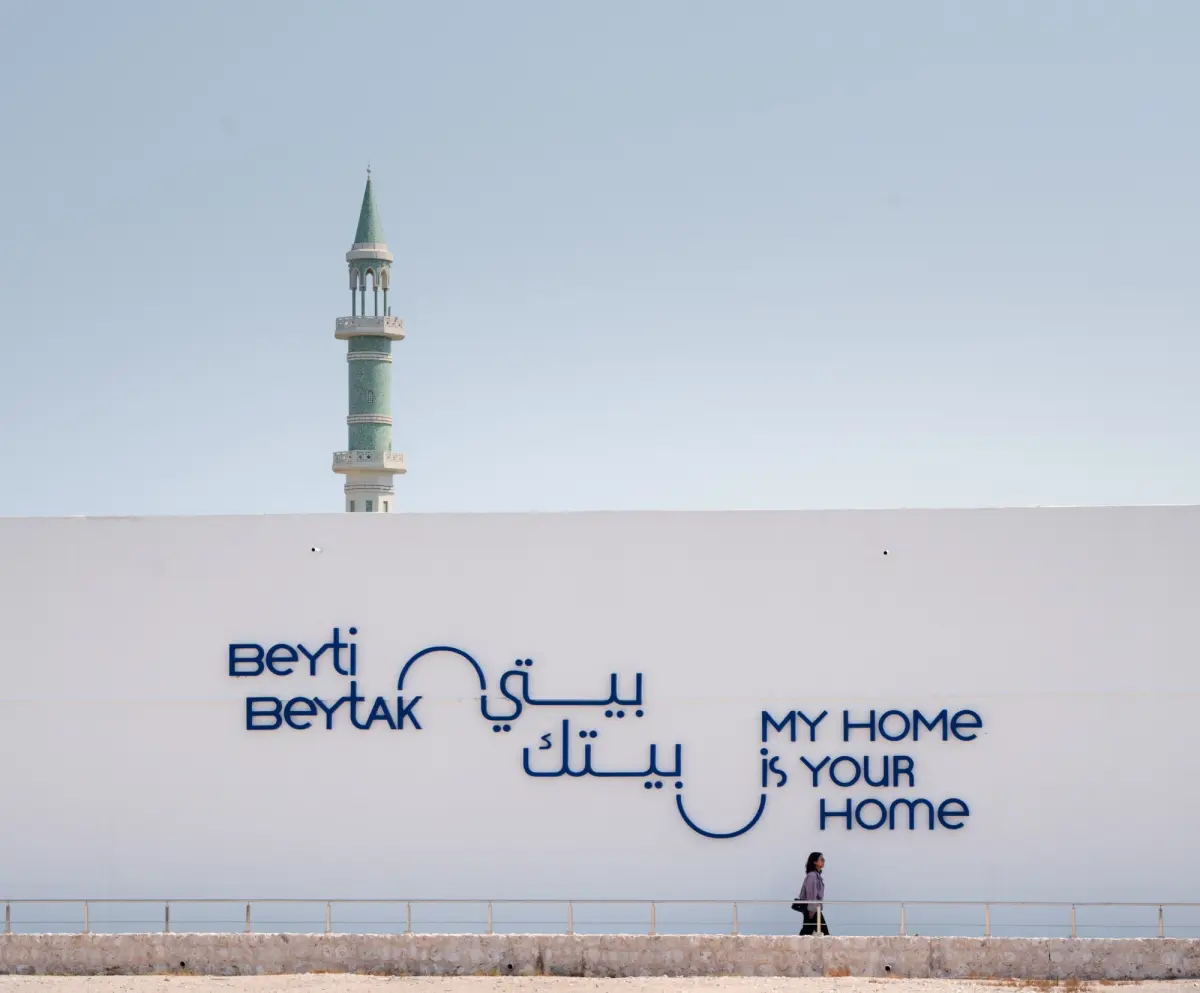
Bringing together architects, designers and practitioners from across the Middle East, North Africa and South Asia (MENASA), the exhibition organised by Qatar’s Art Mill Museum explores the relationship between architecture, culture, belonging and collective responsibility.
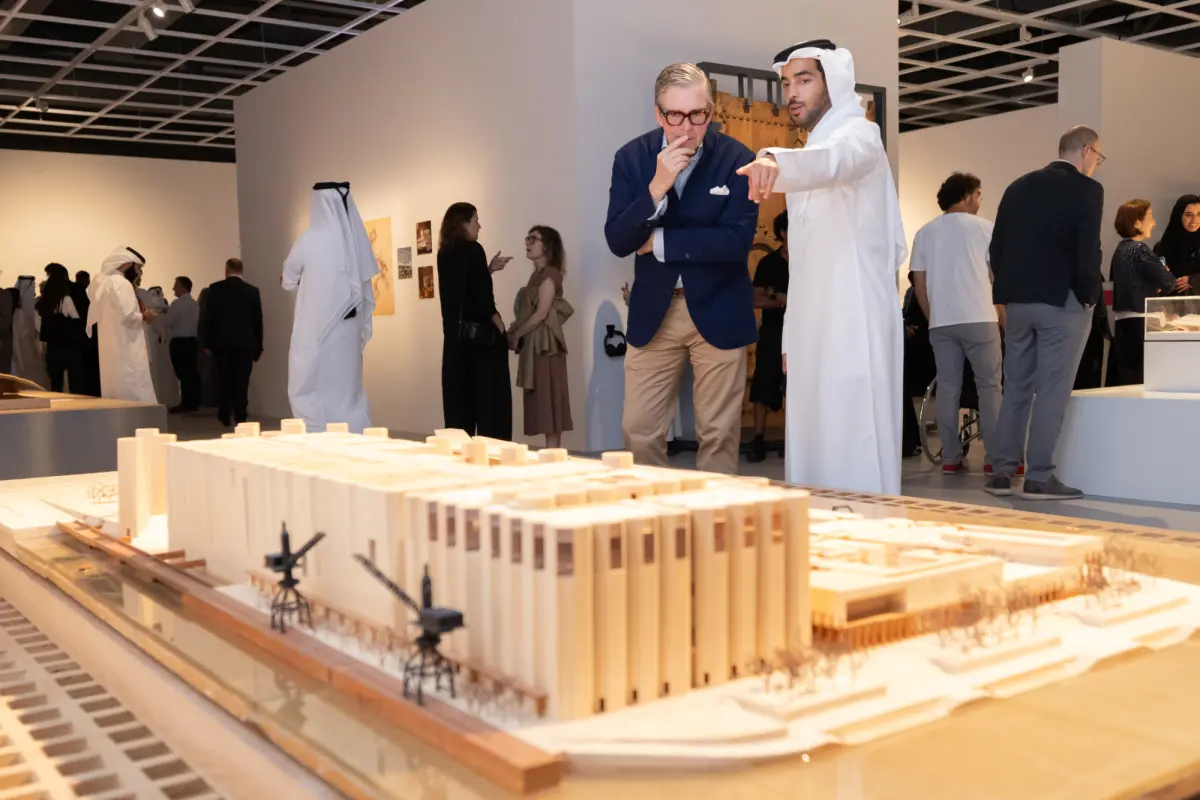
First showcased at the 19th Venice Architecture Biennale, Beyti Beytak has now arrived in Doha in an expanded form. Housed within the historic Fahad bin Ali Palace, the show presents architectural models, drawings, archival material and installations across various thematic sections.
The show asks: what makes a building meaningful? Is it the ingenuity of its design, the materials from which it is constructed or the lives it accommodates?
Among its participants are two of Pakistan’s most consequential architects — Lari and Nayyar Ali Dada — whose respective practices offer distinct but complementary perspectives on the social possibilities of architecture.
For Lari, architecture has increasingly become an instrument of humanitarian intervention, environmental sustainability and community empowerment.
Nayyar Ali Dada, meanwhile, has developed a practice concerned with the relationship between contemporary architectural expression, civic institutions and preserving a city’s inherent cultural fabric.
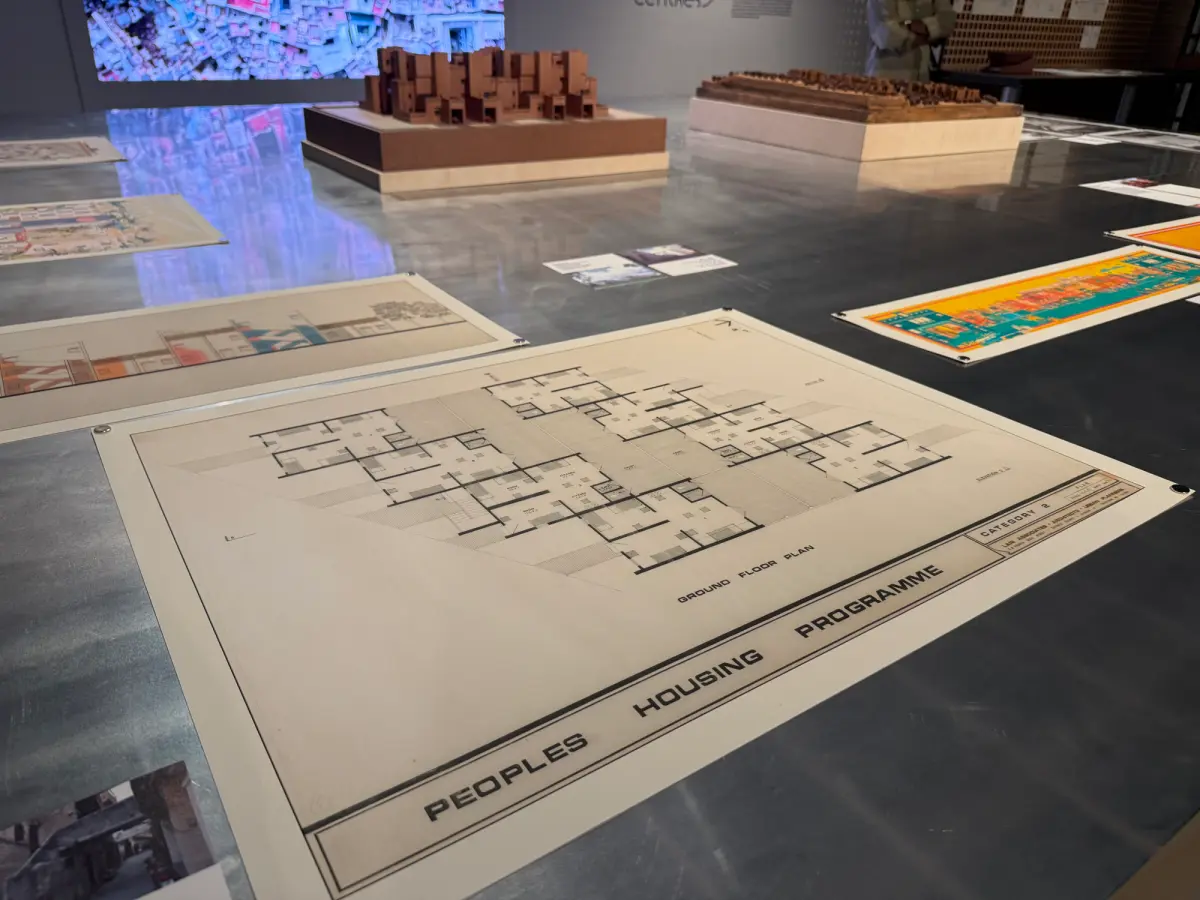
Lari’s contribution for Beyti Beytak provides an opportunity to trace the evolution of a practice that has undergone a considerable transformation over several decades. The exhibition presents her ‘Angoori Bagh Peoples Housing Programme’, developed in Lahore in 1975. The project offers an early point of reference for understanding her engagement with housing, and the relationship between domestic architecture and the needs of urban communities.
Her subsequent work has increasingly focused on sustainable construction and disaster resilience through what she calls “a process of unlearning.”
Following the 2005 Kashmir earthquake, Lari chose to move away from conventional, carbon-intensive building methods towards locally sourced materials and community-led and women-centred construction. Working through the Heritage Foundation of Pakistan, which she co-founded, Lari has advocated the use of bamboo, lime and mud, combining traditional building knowledge with contemporary responses to environmental vulnerability.
The exhibition also documents Lari’s ‘Zero Carbon Cultural Centre’, completed in 2017 at the Makli Necropolis in Sindh. Constructed from prefabricated structural bamboo panels, the warehouse-like building forms part of a larger zero-carbon campus near the Unesco-listed archaeological site. Beyond its function as a venue for conferences and gatherings, the centre operates as a training facility where artisans, students and community members learn sustainable construction techniques.
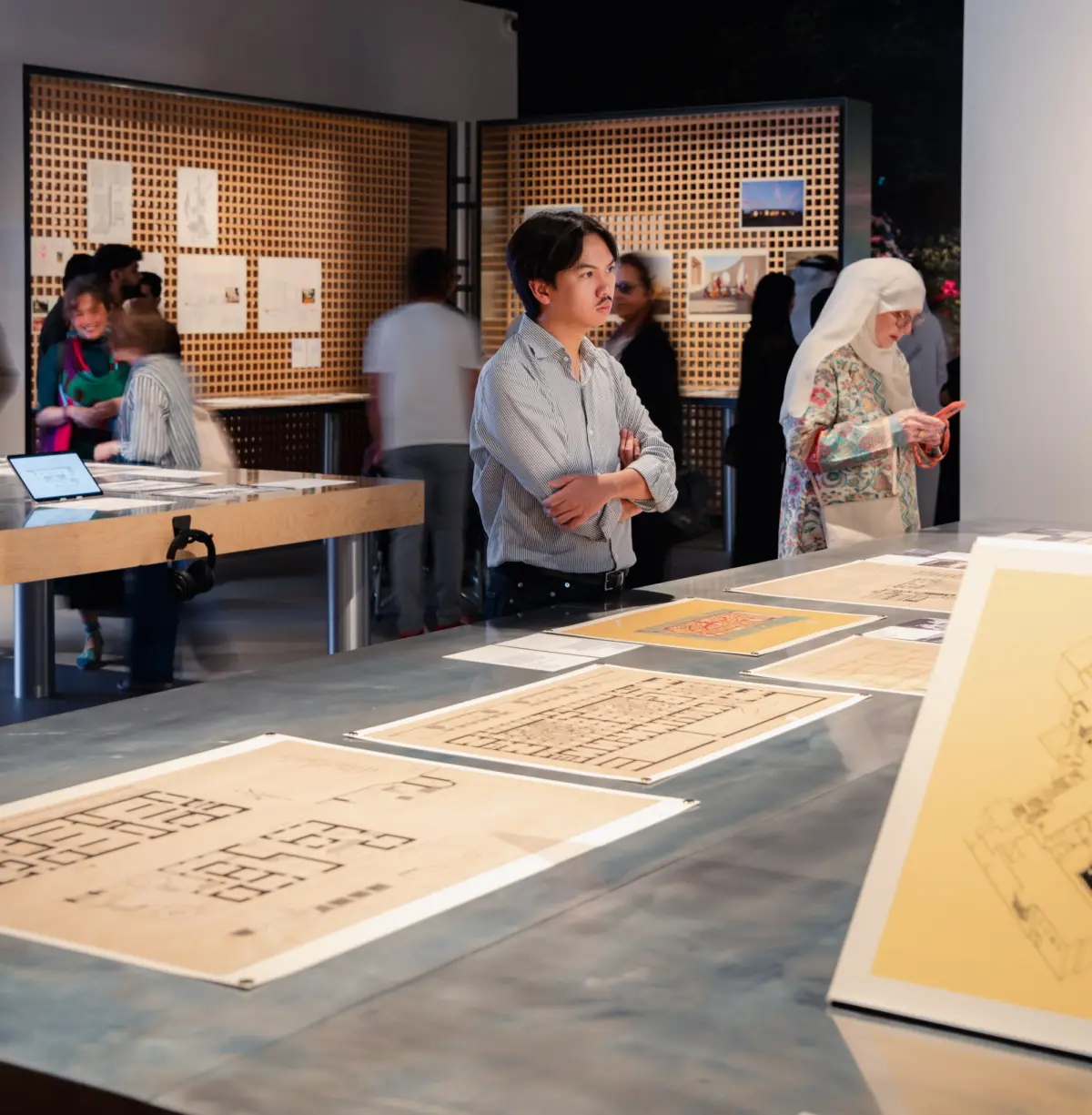
Aurélien Lemonier, the curator of Beyti Beytak, is well-versed in Pakistani art and architecture, especially given his work on MANZAR in 2024. Lemonier, who is enthusiastic about Lari’s practice, says: “One of the leading figures who exemplifies the questions this exhibition is grappling with is Yasmeen Lari. She is, for me, and for many, many, many people, a strong example of a possible future of architecture.”
Lari’s approach, as demonstrated by the archival material on display at Beyti Beytak, challenges conventional hierarchies between architect and builder, professional expertise and inherited knowledge. As Lemonier puts it, “The methodology she [Lari] employs is absolutely an example of how to build a relationship with the community. Through such an approach, you provide the community with a kind of knowledge of construction and craft. Hence, suddenly they have another vision of themselves and they become more autonomous.”
It is also heartening to see the approach that Lari exemplifies echoed in the works of younger architects in the MENASA region. A new work by Iraqi architect Ola Znad, on display at Beyti Beytak, draws on traditional, sustainable reed construction to honour the women in southern Iraq’s marshlands who have carried knowledge of weaving and dyeing across generations. Znad’s dense reed structure would seem at home standing along Lari’s Community Centre.
Nayyar Ali Dada’s contribution approaches the relationship between architecture and society from a slightly different direction. A wooden architectural model of Lahore’s Alhamra Arts Council housed at the exhibition showcases how its architect envisioned the building as a setting for artistic expression and public engagement, demonstrating how architecture can become an extension of a city’s cultural life.
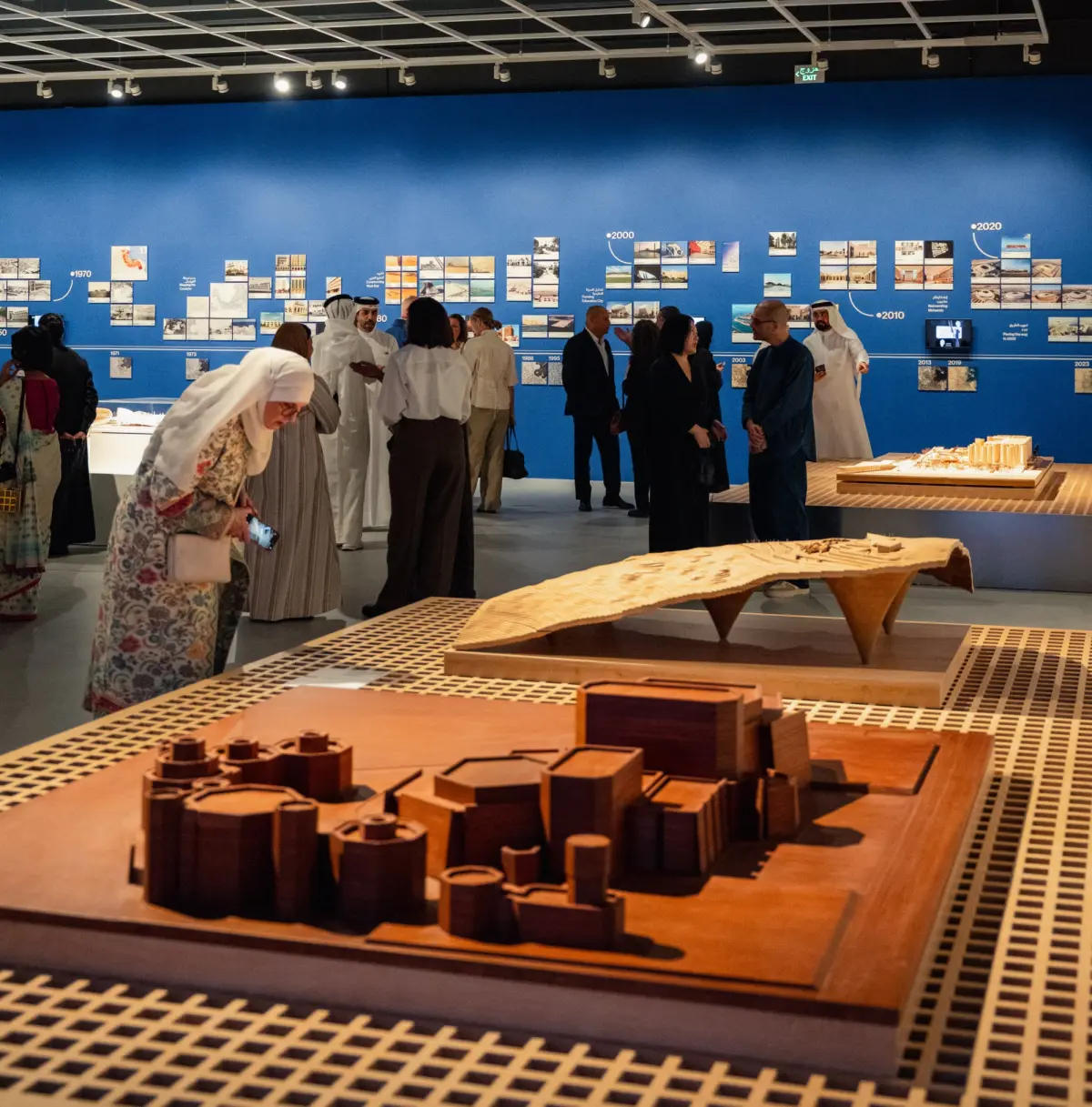
“Nayyar Ali Dada,” according to Lemonier, “Has this great talent to be local and international at the same time. As a Pakistan architect, his architecture is very rooted in that tradition, particularly with his usage of brick. But it is also, simultaneously, universal.”
This approach to institutional architecture is also evident in his son, Raza Ali Dada’s work, which is also part of the Beyti Beytak catalogue. The British Council Library, completed in 2016 under Raza Ali Dada’s watchful eye, replaced an earlier non-functional building while incorporating materials from the former structure into its contemporary design. Drawing on the surrounding historic fabric, the library combines exposed concrete, brick surfaces and a restrained material palette. Across these works, the recurring concern is the capacity of architecture to accommodate public activity and strengthen the civic life of the community.
Raza Ali Dada’s words reinforce this sentiment: “In a region whose historic traditions are inherently sustainable, empathetic and attuned to climate, we have a responsibility to uphold these values and extend them logically into the future. For me, this means shaping the built environment that cares for people and place with equal intention.”
Another Pakistani whose work has drawn interest and inclusion from the Art Mill Museum is Karachi-based architectural designer and urban researcher Namra Khalid, whose ongoing Karachi Cartography project investigates the city’s water systems, drainage data, historical landscapes and climate vulnerabilities through maps and community-sourced archives.
Rooted in the reality of the climate catastrophes that routinely plague the region, Khalid argues, “In a submerging Karachi, historical cartography and hydrology are not archival. They are infrastructural: foundations for sustainable solutions, climate resilience and survival. And so is true for a submerging Pakistan and for a submerging South Asia.”
Ultimately, Beyti Beytak offers a compelling perspective on architecture in the MENASA region, and particularly in Pakistan, proposing that architecture should be understood through the communities it serves, the knowledge it preserves and the relationships it makes possible.
Beyti Beytak: My Home Is Your Home is on display at Fahad bin Ali Palace, Doha, from October 26, 2026-May 29, 2027
Cover image: Yasmeen Lari’s Community Centre was showcased at the MANZAR exhibition in Qatar as well as the 19th Venice Architecture Biennale. — Photo courtesy Qatar Museums
Comments