
Why do people keep giving Rajab Butt a microphone?
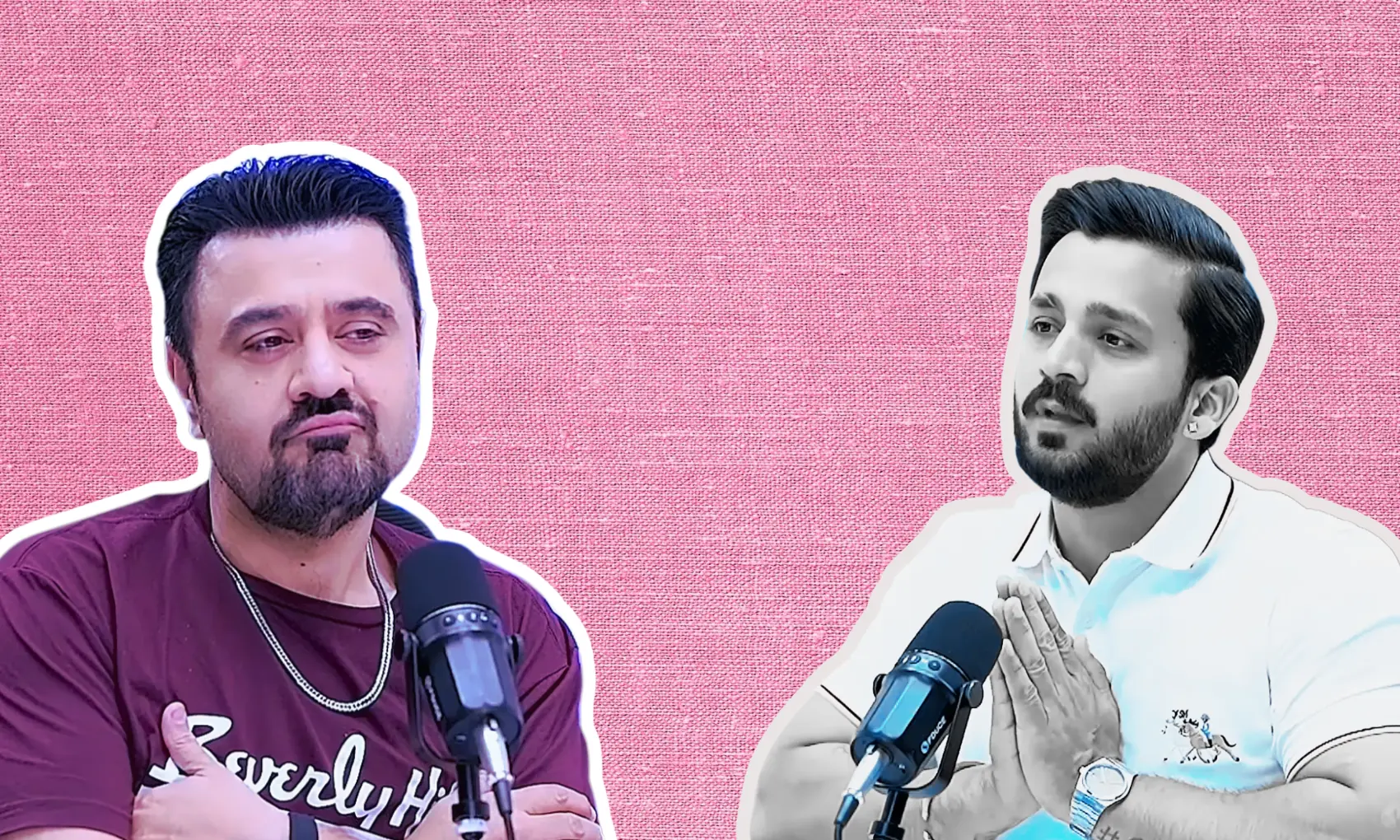
Ahmed Ali Butt invited YouTuber Rajab Butt on his podcast on Friday and anyone even remotely familiar with Rajab could have foreseen what followed. What we don’t understand is why a person with a reputation such as his was given a platform at all.
During the podcast, which touched on Rajab’s new film, his anger issues and fatherhood, among other topics, Ahmed also read out a list of names of public figures and asked his guest to name the first food item that came to mind for each. When he got to actor Durefishan Saleem, Rajab said “ras malai”, because she’s “gol matol” (plump, round). Yes, he fat shamed her.
But then, this is Rajab Butt, an internet personality whose conduct has drawn so much negative attention that the authorities have had to step in more than once.
You may be wondering what Ahmed was thinking, but then again, you don’t hand a microphone to someone with a proven record of offensive remarks and then act surprised when he offends. And you certainly don’t do it with someone like Rajab, who has made a whole career off profiting from outrage, not even sparing his own family from getting caught up in the negative attention.
The comment was repulsive, yes. But what was equally repulsive was the host’s reaction, which was to say there was no reaction at all. Ahmed let it pass without pushing back, as though body shaming were simply a normal part of the conversation. But Ahmed should know better as he has spoken about being on the receiving end of it in the entertainment industry.
Just last month, Rajab made headlines for an inappropriate ‘joke’ about child sexual abuse during a TikTok Live session with fellow creator Zaid Ali — a remark so far beyond the pale that it should have ended any possibility of having him as a guest on any respectable public platform again.
Yes, he apologised later, but only after the social media backlash grew intense enough that several celebrities, including Sehar Khan (of Aik Aur Pakeezah fame), called him out. Instead of doing any soul-searching, he responded to Sehar by arrogantly claiming that his vlogs pull higher viewership than her dramas. His deflection was a classic move in the arsenal of people looking to avoid accountability.
Rajab’s track record of controversies isn’t confined to the inappropriate words that come out of his mouth. He has faced several cases, including on charges of promoting online gambling applications, hurting religious sentiments and the unlawful custody of a lion cub. The first two cases are still ongoing, while he was sentenced to a year of community service in the lion cub case.
And yet, within weeks of his latest controversy, he was sitting in a podcast studio with a microphone in front of him and a well-known host lending him credibility. That is the problem here — not just what he does, but that people with platforms keep lending him theirs.
It makes sense to have him on if we take views into account. Rajab has one of the larger fan followings in Pakistan — well over nine million subscribers on YouTube and a further three million on Instagram — and that following is precisely what makes him bookable. But where should interviewers draw the line in the race for views?
Rajab is entitled to say what he likes on his own channels and his audience is entitled to judge him for it, but inviting someone with a documented history of offensive remarks onto a podcast isn’t an exercise in free speech; it’s a business move.
The host gains outrage-driven views. The guest gains legitimacy and, probably, a new audience. The target of the remark — in this case, Saleem— gains nothing but a fresh insult delivered in front of a larger audience.
This is what can make platforming worse than trolling itself. A notorious purveyor of the attention economy posting into the void reaches his (often) like-minded audience. The same person seated across from a recognised host reaches everyone the host reaches.
Every time a broadcaster or podcaster treats this behaviour as unremarkable, it normalises it. Listeners learn that a man can joke about child sexual abuse, rack up court cases, body shame women and face no meaningful consequences and actually be rewarded by sitting down for an interview where he isn’t even taken to task for his atrocious views.
That is the lesson being taught, whether the host intends it or not.
The fix is not complicated: hosts can not feature these people, producers can ask basic questions about a guest’s recent record and when a remark like “gol matol” is made about an actor on air, the host can say that it was unacceptable. At the very least.
Silence, in this context, can be considered endorsement.
Rajab will keep being Rajab; that much is predictable. What shouldn’t be normalised is the queue of people with platforms waiting to hand him yet another microphone.



Comments