
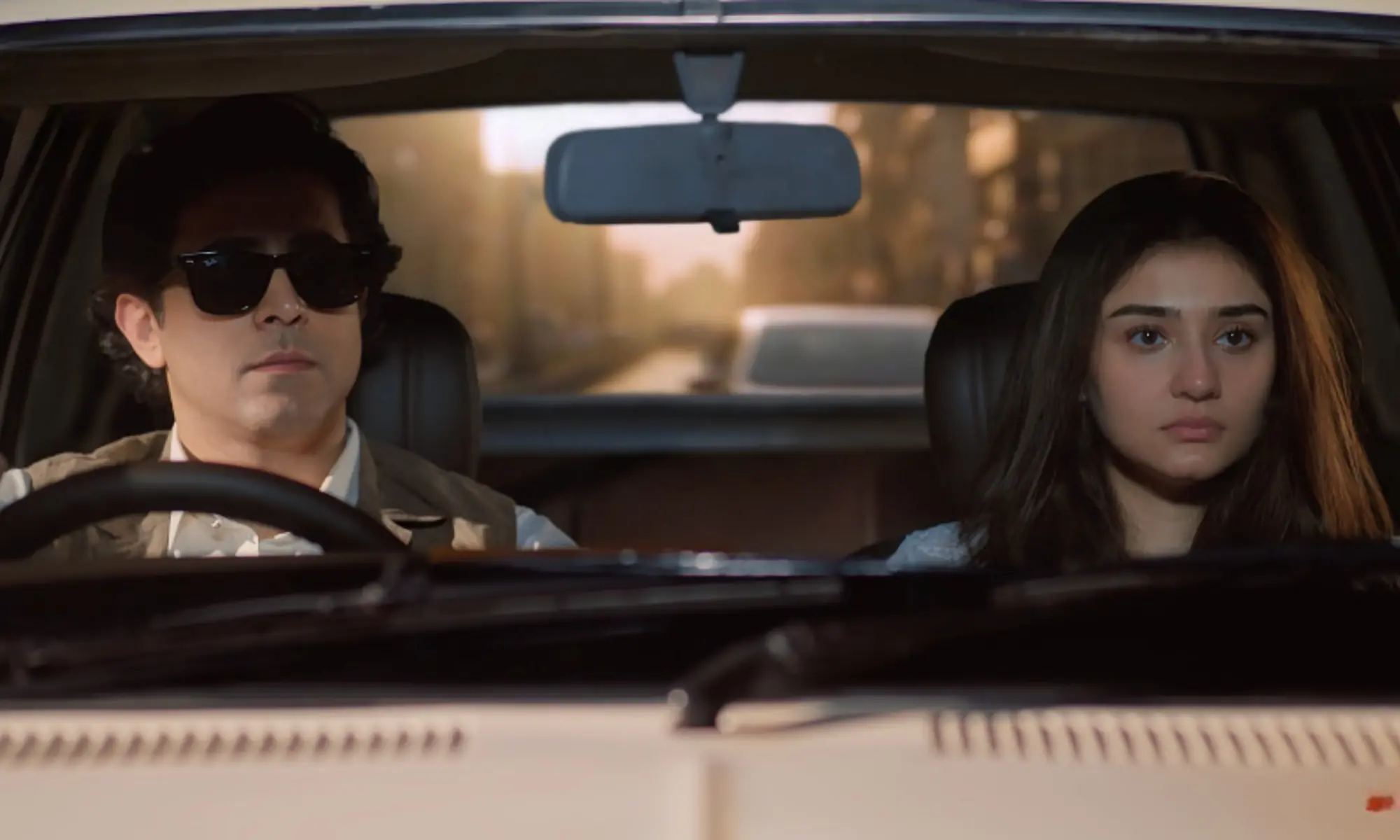
Durefishan Saleem says Dar-e-Nijaat questions the double standards around redemption
Durefishan Saleem wants Dar-e-Nijaat viewers to stop thinking of it as a drama that tells women how to heal.
Responding to criticism regarding the latest turn of events in the story, the actor took to Instagram on Sunday to talk about what, according to her, the main message of the drama actually is.
“The story is less about telling women that they can’t or shouldn’t, heal on their own, and more about questioning the double standard around redemption — how easily a man can make mistakes, seek redemption and be given another chance, while women are often expected to carry the weight of their choices for much longer,” the actor wrote.
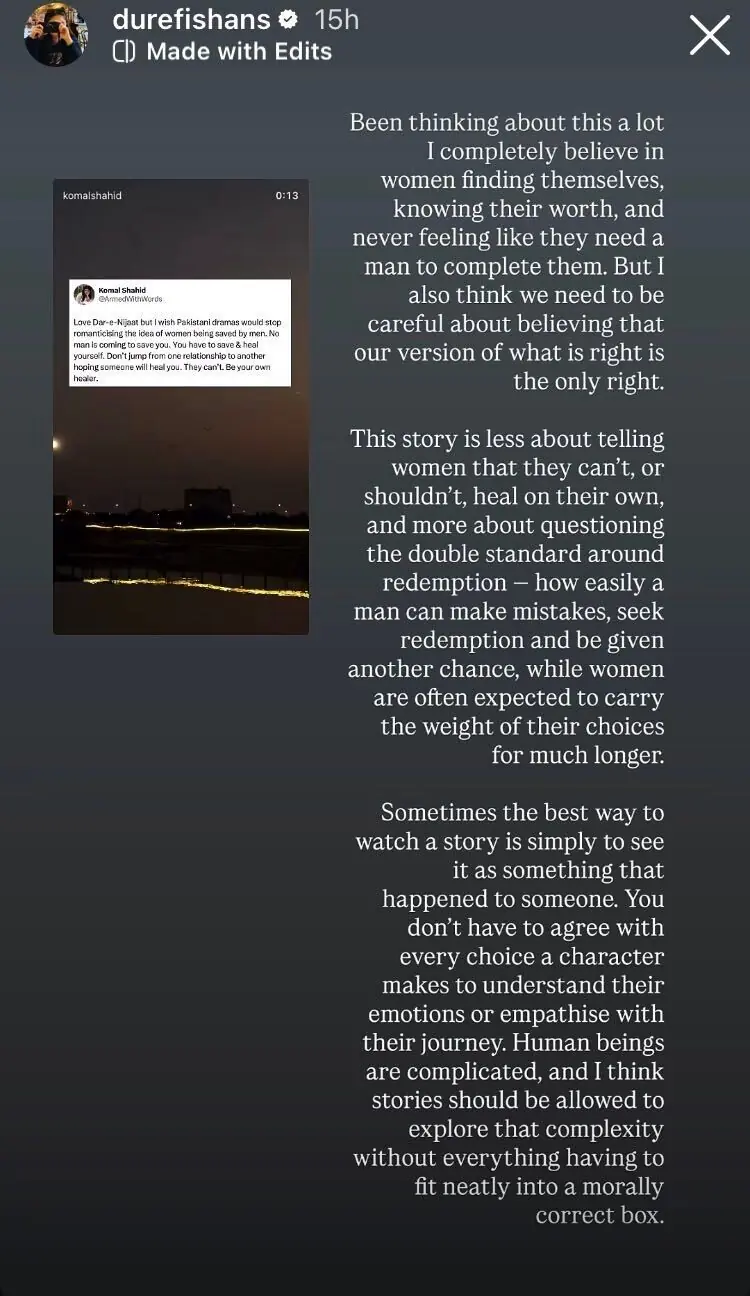
“Sometimes, the best way to watch a story is simply to watch it as something that happened to someone. You don’t have to agree with every choice a character makes to understand their emotions or empathise with their journey,” she added, before pointing out how human beings are complicated and not everything needs to “fit neatly into a morally correct” standard.
In another Instagram story, Saleem shared a post that said Dar-e-Nijaat is a journey about a woman finding herself — not a man.
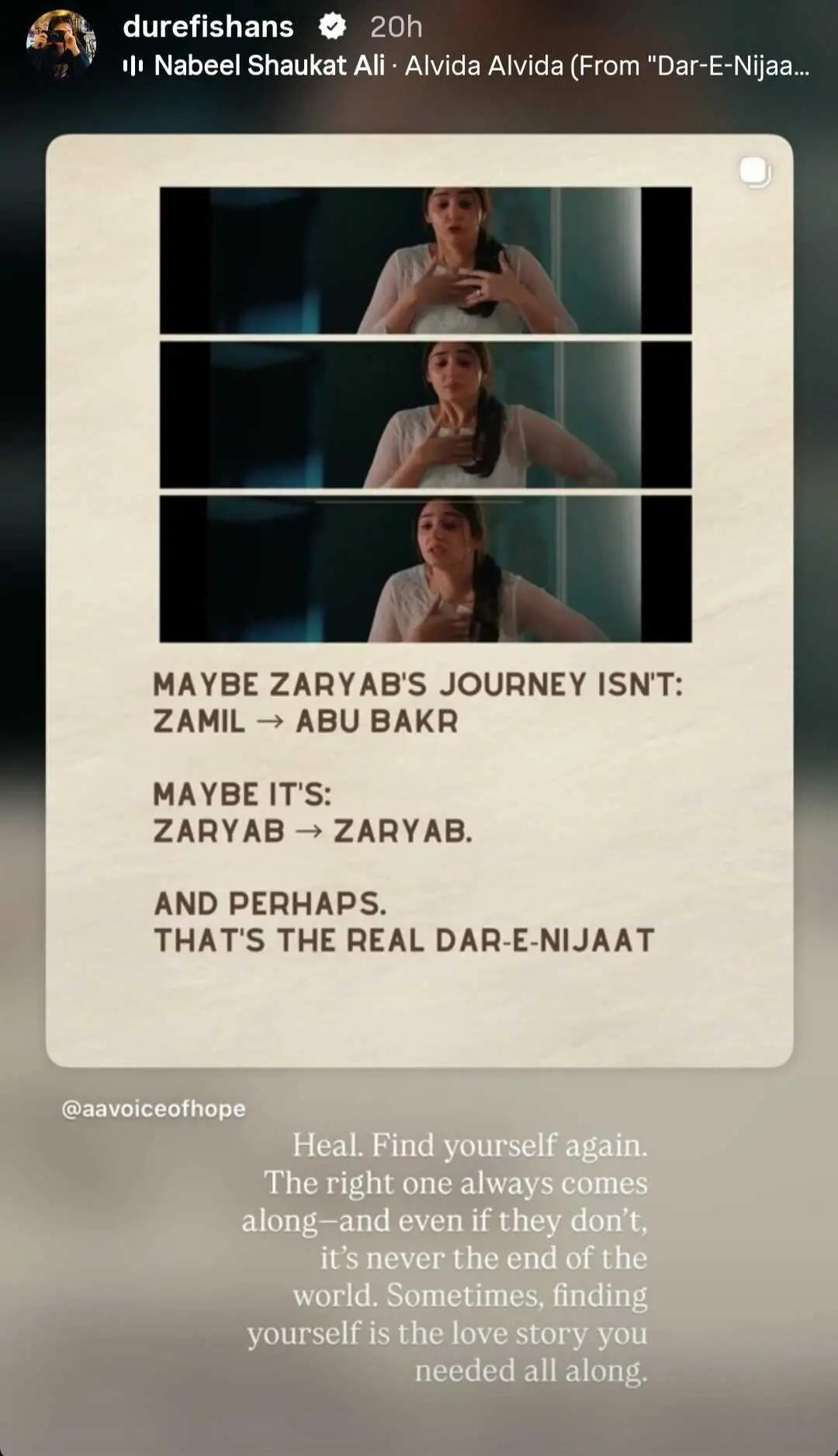
“Sometimes, finding yourself is the love story you needed all along,” Saleem wrote in accompanying text.
For some context: the latest episodes of Dar-e-Nijaat mainly revolved around the lead character, Zaryab, who has been experiencing anxiety and depression as a result of being betrayed and ditched by her long-time boyfriend and childhood sweetheart Zamil (played by Nameer Khan).
In episodes 14 and 15, which aired on Friday and Saturday, Zaryab experiences what appears to be a panic attack. Her family tries to calm her down, but she doesn’t seem to get any better. It is only after her prospective love interest, Abu Bakr (played by actor Sheheryar Munawar) enters the picture, recites verses from the Holy Quran to bless a glass of water and gently helps her drink it that she is able to get up and walk.
This particular scene, as it turns out, didn’t go down so well with some viewers, who believe the drama is sending a problematic message: that women experiencing heartbreak need the support of a man to heal and recover.
This user on X pointed out that Zaryab’s character needs therapy — not a man.
Another believes the drama seems to be romanticising the idea of women being saved by men. She argued instead that one must be their own healer.
One user said the part about Abu Bakar “coming to save” Zaryab is unrealistic.
But that, as Saleem pointed out, isn’t the point. Instead, the drama focuses on how much more difficult the path of religious redemption is for women compared to men.
On one hand, we’ve got Zaryab, who seems to be struggling to move on with her life because she feels guilty for living with Zamil without marriage. On the other hand, we have Zamil, who cruelly and swiftly broke up with Zaryab as soon as he rediscovered religion, claiming he is entitled to turn over a new leaf while she isn’t. He married someone he thought was a pious enough partner for him, without any self-reflection whatsoever and, going by some conversations in the last two episodes, he will soon be able to live with his family again.
Meanwhile, Zaryab is in the pits of despair, reconsidering all her life choices. She is unable to move forward, or even think about marrying someone else, because she feels her sin is bigger than Zamil’s.
This imbalance in the feeling of guilt and subsequent self-reflection between the woman and the man, according to Saleem, is the point of the story.





Comments