
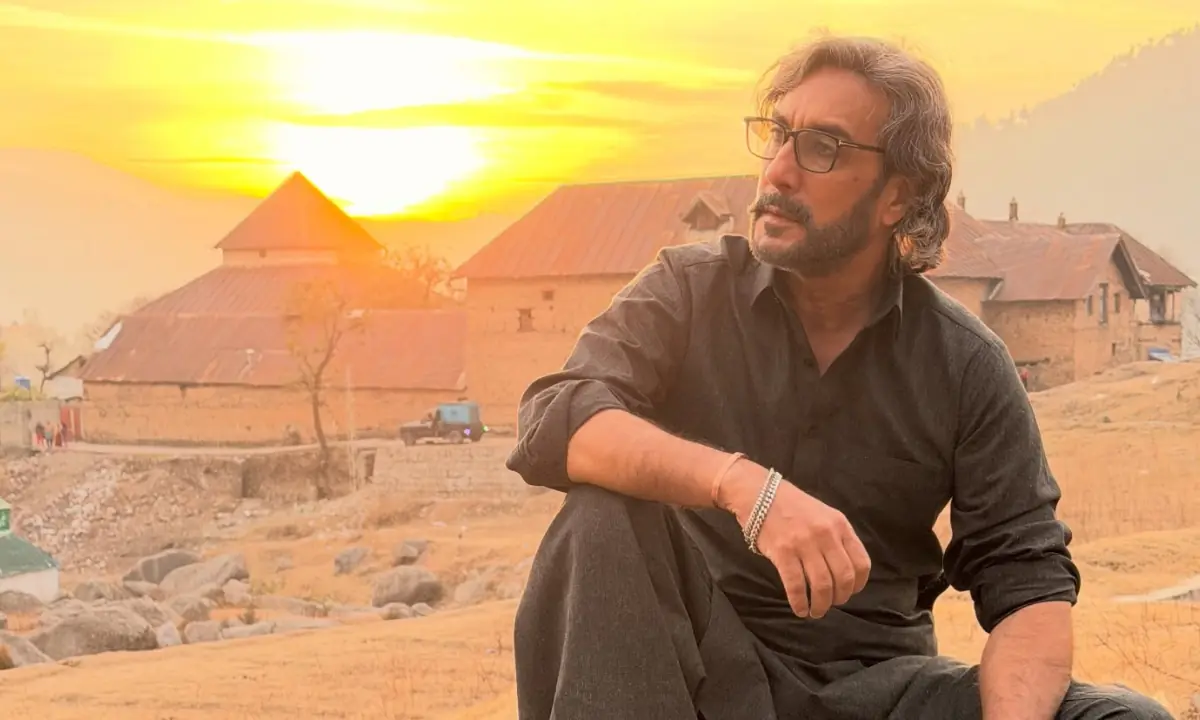
In Adnan Siddiqui's Tamasha, the 'bro code' reigns supreme
I first started watching Tamasha three weeks ago upon a friend’s insistence that it would be entertaining. However, instead of being entertained, actor and the show’s host Adnan Siddiqui left countless viewers like me feeling downright offended.
For anyone reading this who hasn’t yet had the displeasure of witnessing Tamasha Ghar deteriorate into Pakistan’s archetypal Pidarshahana Ghar or Patriarchal House, let me walk you through the rage that birthed this article.
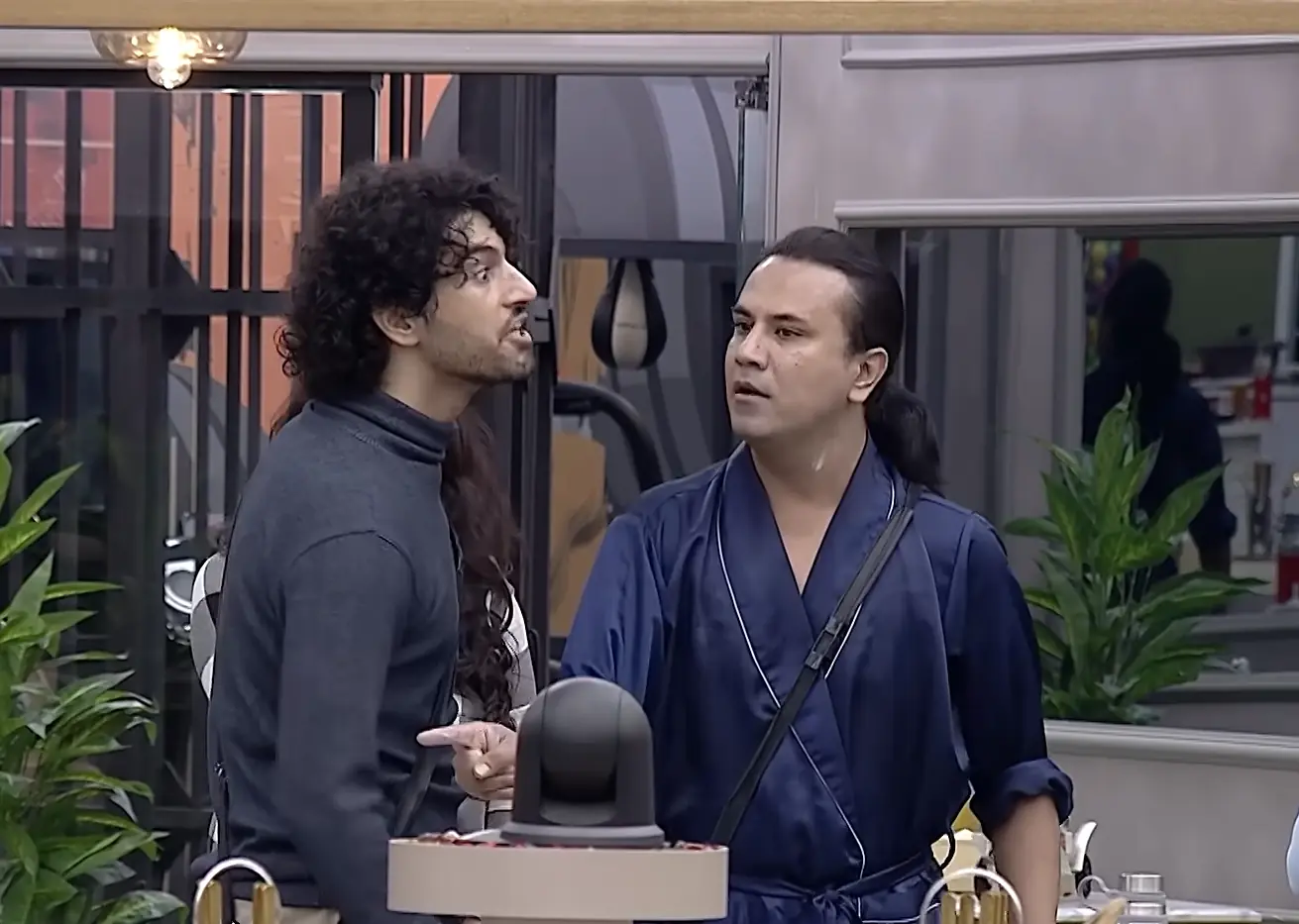
It all started in the late hours of August 29, when a fight broke out between two contestants — Hamza Joher and Dr Sikandar Zaman Khan (popularly known as Dr Zee Khan).
Fights are common in — and even part and parcel of — reality television competitions like Tamasha and Bigg Boss which operate under the Big Brother format, so that was not the concerning part. What stood out was Joher’s apparent hatred for women.
Hatred is a strong word, and I do not use it lightly. In fact, I feel upset using it to describe the politics of a man who had so far appeared progressive, often talking about how much he misses his wife while living in the Tamasha Ghar. Misogyny is all around us, but when it comes from (supposedly) Nice Men™, it pierces more sharply.
The fight started when Joher heard from another contestant that Dr Zee accused him of making inappropriate comments about women. Joher instantly rushed to the wardrobe area where Dr Zee was, getting in his face and demanding to know what he was being accused of saying. What followed was a repetitive, circular exchange, with Joher demanding clarification on his alleged remarks and Dr Zee insisting that Joher recall what he had said in Pashto while they were in the bathroom.
The confrontation quickly intensified with Joher threatening Dr Zee with physical violence over what he perceived was character assassination. At that point, two other contestants intervened, resulting in the altercation shifting to the central lounge area where it pulled more people into its fold. A few minutes later, Dr Zee finally revealed the misogynistic comments Joher had made about the clothing choices and bodies of Tamasha’s women.
Dr Zee’s repetition of those comments was muted in the episode broadcast, presumably because they were too problematic to air on national television, so we don’t know exactly what he said. However, viewers have since analysed what might have been said based on his lip movements and the context shared in the uncensored parts, and the online consensus is that Joher criticised the “revealing dressing” of women on the show, along with making crude, derogatory remarks about the size of someone’s hips.
Somewhere in between, the same Joher who had so far aggressively been asserting that he was being defamed by Dr Zee ended up blurting out, “What’s wrong with what I said?”
Him slut-shaming women was thus reduced to only half the problem; that he did not see anything wrong with it became the other half.
Throughout all of this, he glared at Dr Zee with a rage that felt frightening to many of us watching from the other side of the screen. That rage persisted, despite him being the one in the wrong, which made it all the scarier, and also eerily familiar owing to its hyper-masculine undertones similar to what we see a lot of men in our society exhibiting.
That rage was ignored by the Badshah Salamat (King of the House), Adnan Siddiqui. Instead, he chose to reprimand Dr Zee. His crime? Informing the women around him of what was going on. Or, in the words of the Badshah Salamat himself, breaking the “bro code”.
The day after this confrontation happened, Siddiqui visited the house like he does every day to personally interact with (read: lecture) the contestants. He appeared to be on a mission to publicly humiliate Dr Zee, as he started off by employing a disciplinary tactic seen in schools, forcing Dr Zee to repeatedly stand up and then sit down in front of his assembled housemates.
Then segueing into a discussion on the fight, Siddiqui remarked, “Let me ask you a question, man to man. We tend to say a lot of things like these to each other, right? Do we discuss that [in front of women]… if they are inappropriate? Man to man? There is something known as the ‘bro code’.”
Okay, Adnan, way to publicly confess your covert misogyny. In what came to me as a pleasant surprise, Dr Zee attempted to politely disrupt Siddiqui’s patriarchal line of questioning by declaring that it was Joher who broke the bro code, not him. By so doing, Khan prioritised an ethical reframing of the traditionally misogynistic bro code as something that should push men to become better versions of themselves. That reframed version would obviously not include them engaging in locker-room talk.
Siddiqui, however, didn’t seem to be interested in reframing a problematic social phenomena. His concern was with establishing secrecy around any such conversations that may take place in the future, instead of fostering a culture where there is no room left for these comments to begin with, and he made this quite clear in his subsequent cross-questioning.
He also expressed disapproval over some women not swallowing the blatant disrespect silently. “I am surprised about the way some women became part of the conversation,” he said in reference to the only two women — film star Laila and Rabia Javaid Sheikh — who called out Joher the previous day. He followed it up by saying, “Unko mauqa mil gaya (they got an opportunity).”
The suggestion that the women gained “an opportunity” by being spoken about in that vulgar way reeks of deeply-ingrained misogyny, as if this was some sinister ploy to further their supposedly malicious gameplay, and not a very human and natural reaction to finding out that they were being objectified and demeaned by someone they had no choice but to continuously share physical space with.
Perhaps anticipating public backlash over this, he concluded the tribunal with an acknowledgement of Joher’s fault in passing such comments and advising him to leave these matters to the production management moving forward.
The brief nature of this criticism, coupled with how diluted it was in comparison to what the others received relegated it to being nothing more than a token. And while Tamasha can now claim that they did indeed condemn Joher’s wrongdoing, the fact that this surface-level condemnation was wrapped up in a load of retrogressive, male chauvinist rhetoric by an industry veteran makes me wonder: when will the tamasha of Pakistani men invoking patriarchal concepts like the ‘bro code’ come to an end?







Comments