
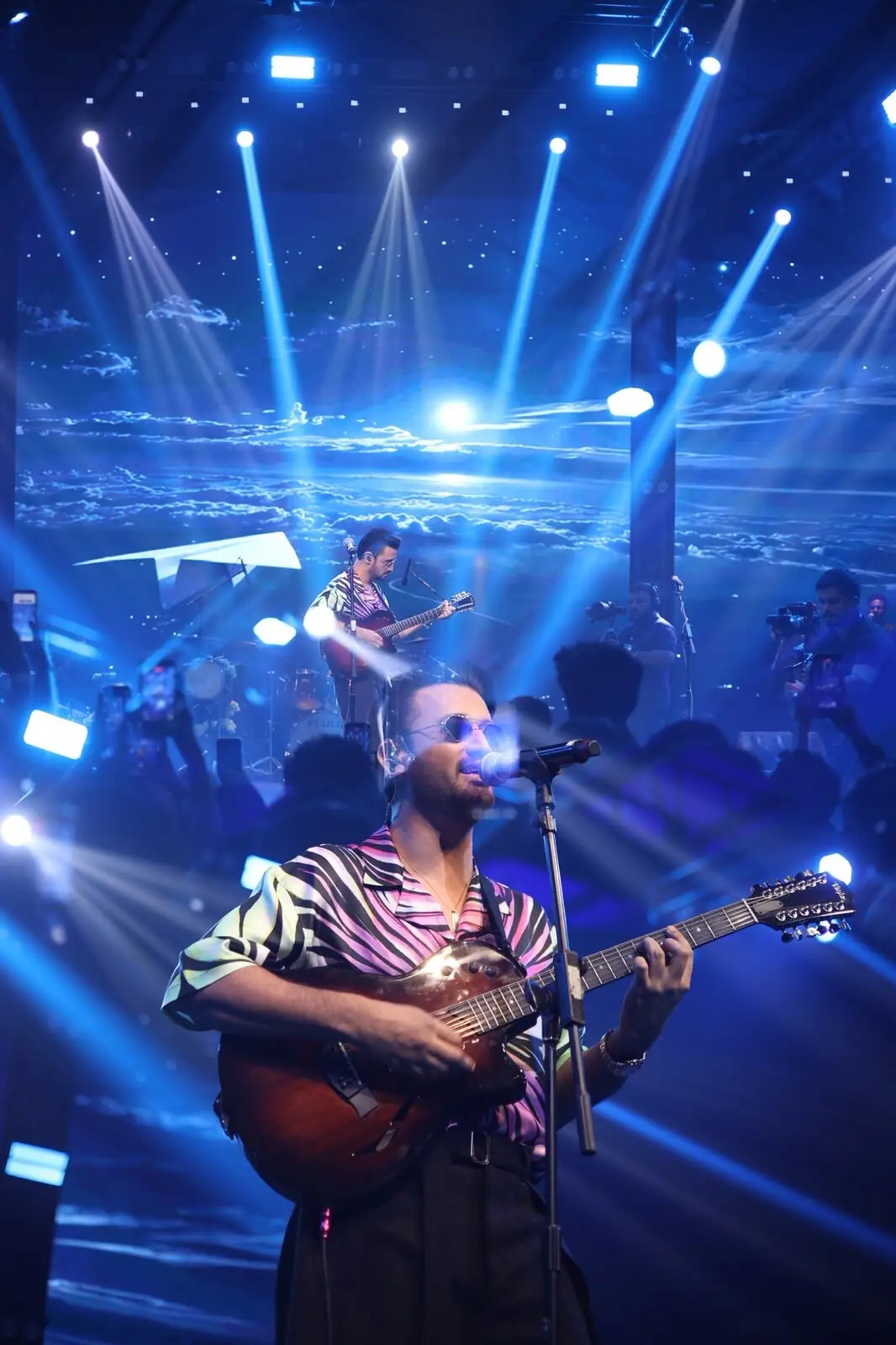
Atif Aslam wanted to 'break away from convention' with his new album, Subah Aye Na
Atif Aslam is back after an 18-year gap between albums with Subah Aye Na at a point when music is increasingly being consumed through algorithms, short-form videos and rapidly changing digital trends.
At the Subah Aye Na promo launch on Friday at the Karamax Studio in Karachi’s Korangi, the singer, who shot to fame with Aadat as the then lead vocalist of Jal - The Band, reflected on creating music without restrictions, the elusive nature of timeless music, his relationship with Aadeez and why genuine art should never be reduced to a formula.
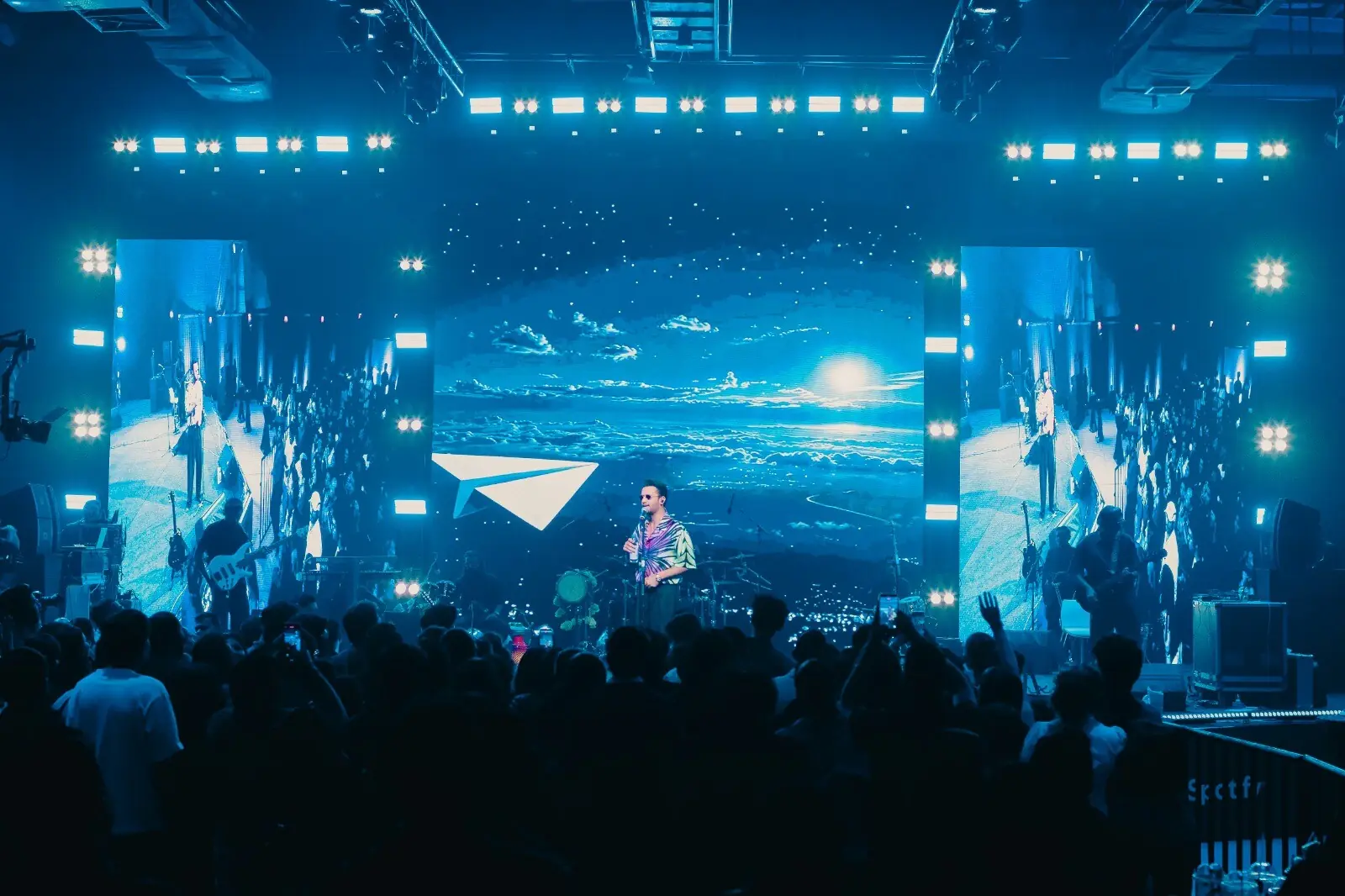
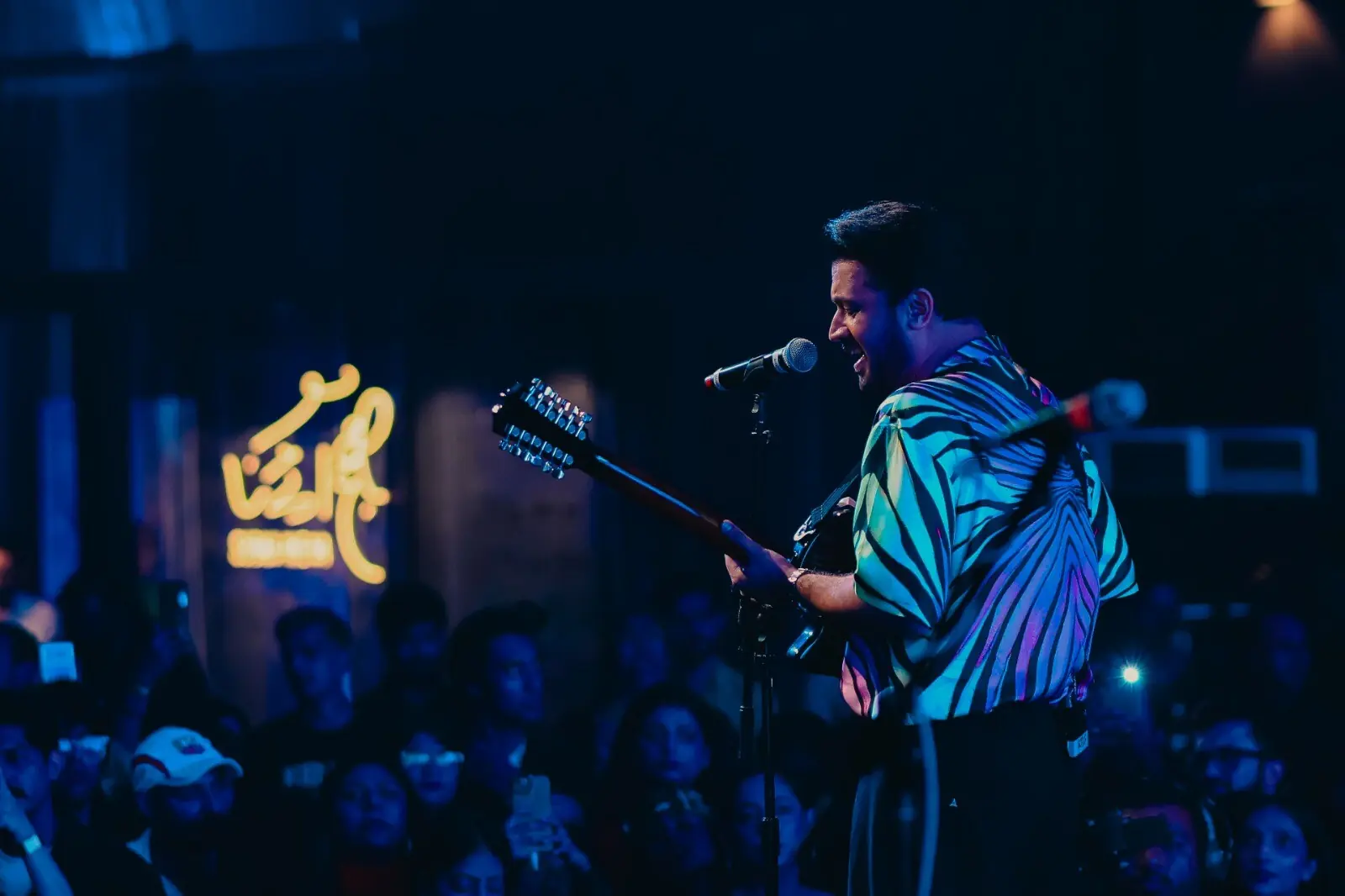
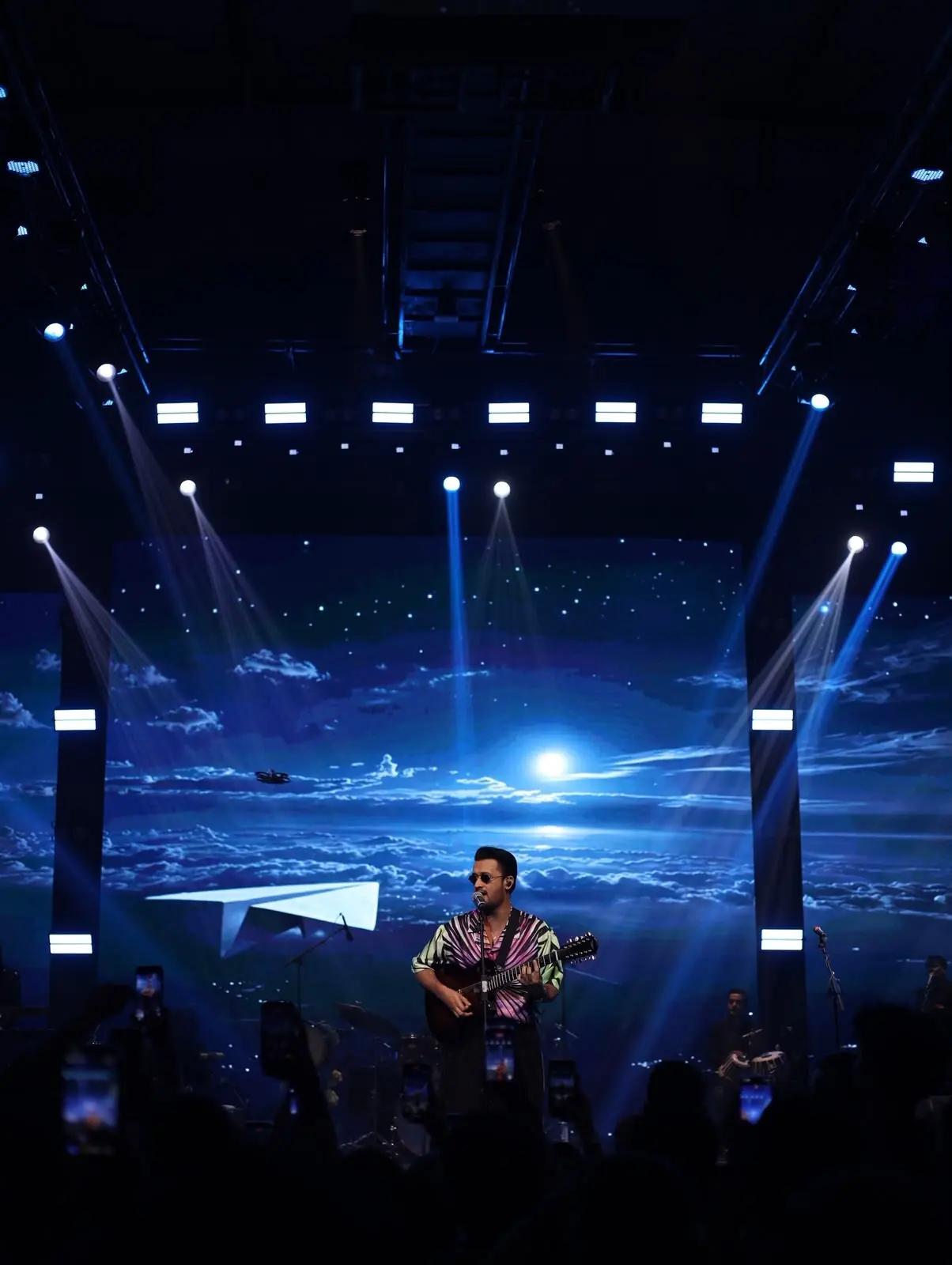
Monitoring the pre-launch goings-on from an aerial vantage point overlooking the main stage, Aslam was finally ushered in way past the slated time and immediately started off with his popular anthem ‘Meri Kahani’, followed by ‘Woh Lamhe’ after which he dove straight into newer numbers ‘Let’s Have Some Fun’ and ‘Hoon Tere Liye’ before reverting to yesteryear people-pleasers such as ‘Jalpari’, ‘Doorie’, ‘Hona Tha Pyar’ and ‘Hum Kis Gali Ja Rahe Hain’, before finishing off with the new title track ‘Subah Aye Na’.
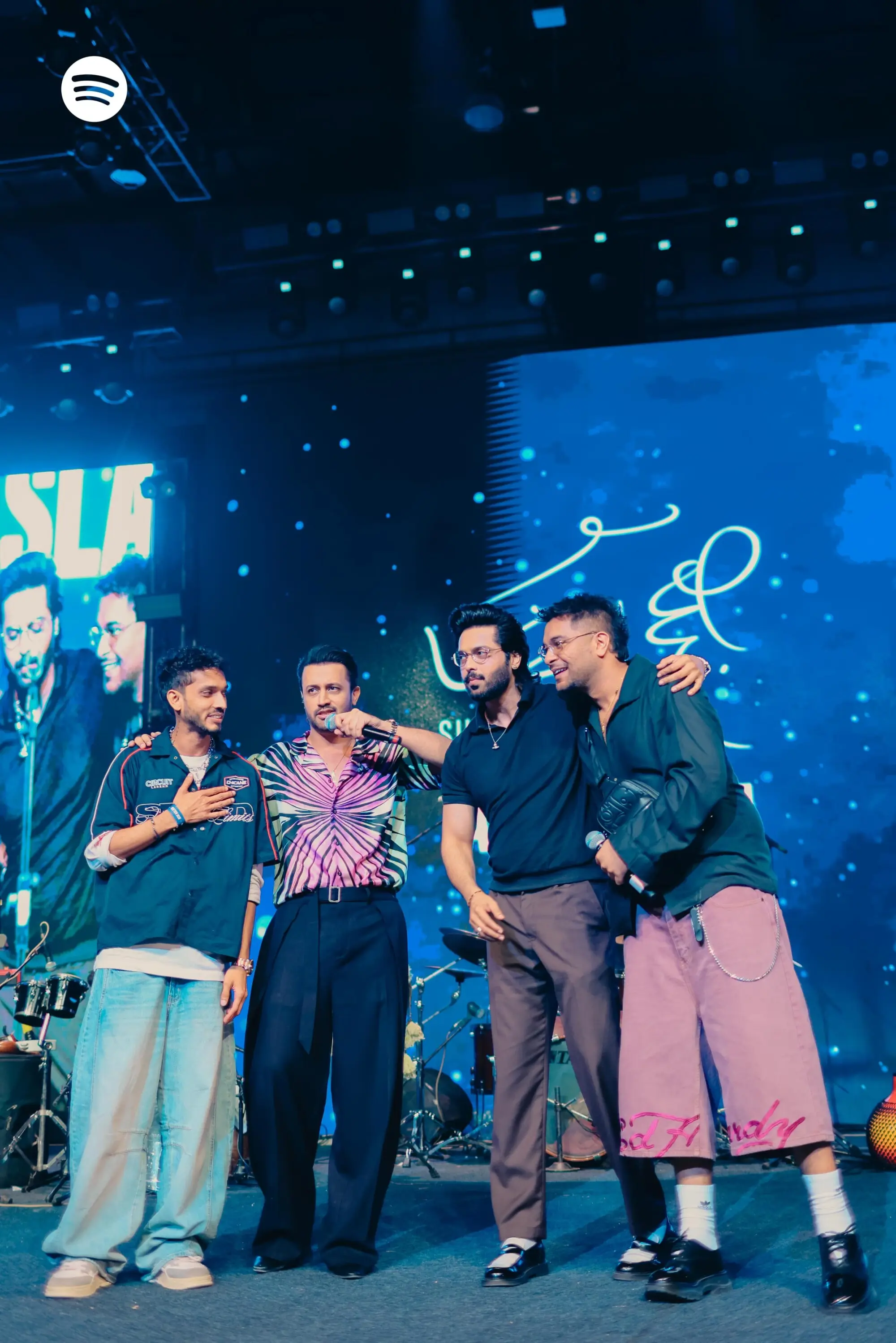
He was joined on stage by Fahad Mustafa, Asim Azhar and Talha Anjum, who requested him to perform ‘Tere Liye’ from the soundtrack of the Indian film Prince (2010). He ultimately gave in and delivered a few verses of a medley with ‘O Mere Khuda’ and ‘Tere Liye’.
Afterwards, the crowds cheered him on for an unplugged version of ‘Aadat’* to which he conceded by crooning a few verses before signing off for the night
While sitting down with Aslam for a brief tête-à-tête before the show, it’s apparent the singer is well-grounded and willing to speak his mind, while reflecting on the various experiences and opportunities that have moulded him into the person that he is today.
Speaking about the return to the album format after nearly two decades, Aslam said, “When you start following people too closely, you gradually begin creating a certain set of rules in your own mind, and start believing that you should only wear the clothes people expect you to wear, create the kind of music they already like, or only do things that are likely to receive approval.”
The singer said, without even realising it, you begin restricting yourself according to other people’s expectations. He wants to break that pattern.
“It was not a planned rebellion. It came from the same instinct that made me begin creating music in the first place. When I started off, I wanted to move away from the typical sounds and predictable structures that were all around me. I wanted to break away from convention,” he explained.
“The same urge has now led me to create this album, Subah Aye Na. It was something I really needed to do. For me, the decision was not dependent on how people consume it; whether they listen to each song, connect with only a few tracks or experience the album differently. All that is secondary. The very act of creating it had to come first.”
Aslam looks to some of the greatest artists of all time, saying that not every piece of work they created became universally loved. “Not every song by a legendary musician is considered amazing by every listener, and not every painting by a celebrated artist resonates equally with everyone,” he explained, citing the example of Picasso, who is widely recognised because of a number of iconic paintings. “But there is an enormous body of his work that many people may never have seen,” he said. “That does not make the rest of Picasso’s work meaningless.”
To him, Subah Aye Na exists in opposition to the idea that art must always be shaped according to the way people are expected to consume it. “We as artists should never stop creating art simply because people’s attention spans are undergoing a change. We should also not create art only to satisfy an audience. An artist must first create for the self.“
The question that then arises is whether timeless music can be manufactured.
“Personally, I do not believe there is an algorithm or a fixed formula for success. People connect with something, and their connection eventually makes it successful. It is as simple as that — and as unpredictable as that!”
He said there are many pieces of music he considers deeply meaningful and exceptionally beautiful. “Some of them are very close to my heart, yet they have never received widespread attention. They may not be visible in the mainstream conversation at all. That does not diminish their artistic value,“ he said sagely.
“At the same time, I do not think we can place the entire responsibility on algorithms. Of course, we are living in an age where social media has become central to how music is promoted, discovered and consumed. We have all been using these platforms extensively,” he said.
“Because of that, it has become difficult for many people to understand and manage the relationship between short-form content and complete musical experiences. Audiences sometimes want 15 seconds of a song, and then they are ready to move on,” the singer said.
“However, that is not the entire picture. There are still bands out there such as Bayaan, whose listeners are willing to engage with meaningful, layered music. There are still people who deeply appreciate the poetry of Mirza Ghalib and Faiz Ahmed Faiz. Thoughtful writing, meaningful poetry and substantial music continue to have an audience.”
Every artist and every form of expression has its own niche, theorised the singer. “I am not here to conquer the world; I do not wish to conquer the world. I would rather reach a few hearts in a genuine way. If something I create brings about a meaningful change in even a small number of people, that is a real victory for me. Perhaps those people will go on to inspire millions in their own ways. That possibility is beautiful enough.“
When asked why certain songs go on to become timeless, Aslam had a different approach — which is not to measure music based on its prospective appeal. “The moment art is created by calculating who will like it and who will not, it stops being completely honest. When an artist begins by asking, ’Will this appeal to everyone?’, the work risks becoming an exercise in approval rather than an expression of something genuine,” he explained.
“There are pieces that artists themselves love very deeply, but those pieces may not connect with a wider audience,” he reiterated, adding that this doesn’t mean the songs are bad. “It simply means it has not found — or may never find — the audience people expect it to have.”
He also addressed some criticism from across the border. “When we discuss comments coming from across the border, particularly from another artist, I would like to make one point very clearly: how can someone be expected to respect an artist from across the border when that person does not respect another artist from his own country?” he asked.
Coming back to the question of what makes a song timeless, he said there is no reliable, guaranteed formula. “Consider the music of Mehdi Hassan Khan sahab. There are generations of listeners who understand and appreciate the depth of his work. But if you played the same music for a group of children growing up in today’s environment, perhaps four out of five would connect with it while one would not. That would not be the child’s fault, and it certainly would not be Mehdi Hassan Khan sahab’s fault. It would simply demonstrate that every form of music — and every piece of art — has its own audience.“
“Secondly, it is possible that the person was never given the correct information. Perhaps nobody explained to that person that my songs first became successful here in Pakistan. My album first became a hit here, among my own people.
“It was only after that that I received a call from India. They contacted me and asked whether they could use my song in a film. It was a request. They asked for permission. I went there after being invited and after they had approached me for the music. Only then did I go,” he clarified.
Recently, Spotify allowed fans to explore which kind of Atif Aslam fans they are on the app. When asked what he enjoyed most about seeing those different sides of his fan community represented through the Discover Your Inner Aadeez feature, Aslam said, “There have not been many occasions when I have been able to thank my fans publicly in a more organised and visible manner, so this experience created that opportunity for me. Spotify had discussed the different fan personas with me, and I felt that it would be wonderful to do something like this. It allowed us to celebrate the many different kinds of people who have connected with my music over the years.”
Some fans, he said, have been there from the very beginning — the original Aadeez. “Others have discovered the music at different stages, in different places and through completely different experiences. For me, personally, it is beautiful to see how diverse the community has become!“



Comments