

For Atif Aslam, the pitfalls that come your way don’t define you or your art
Atif Aslam’s feet are firmly placed on the ground.
That’s quite a feat, considering that he is arguably the country’s biggest superstar, loved across generations, idolised around the world, and capable of causing audiences in packed arenas to break out into euphoric roars when he steps up on stage and begins to sing.
What must it feel like to start singing a song, only for an entire audience to join in, word by word? And to be greeted by crowds of fans wherever you go? To receive emails and messages every day from thousands of people around the world who love you, are inspired by you, or rely on your music to get through the day?
A lesser person would probably succumb to extreme megalomania. But Atif, for as long as I have known him — all the while chronicling his journey through interviews during his 22-year-long career — has always been humble. Now, more than ever, he exudes a sense of peace. He loves what he does, and he has reached a point in his career where he no longer needs to prove anything to anyone.
At some point during our most recent conversation, he says, “For a considerable time during my career, I was on a quest to win over the world, sell a certain number of records and perform at particular venues. There comes a time, though, when you realise that nothing will ever be enough. I decided that I didn’t want to get into the race. I wanted to sit back and enjoy everything I had achieved.”
He may not be obsessing about winning races, but that does not mean that life for Atif is any less hectic.
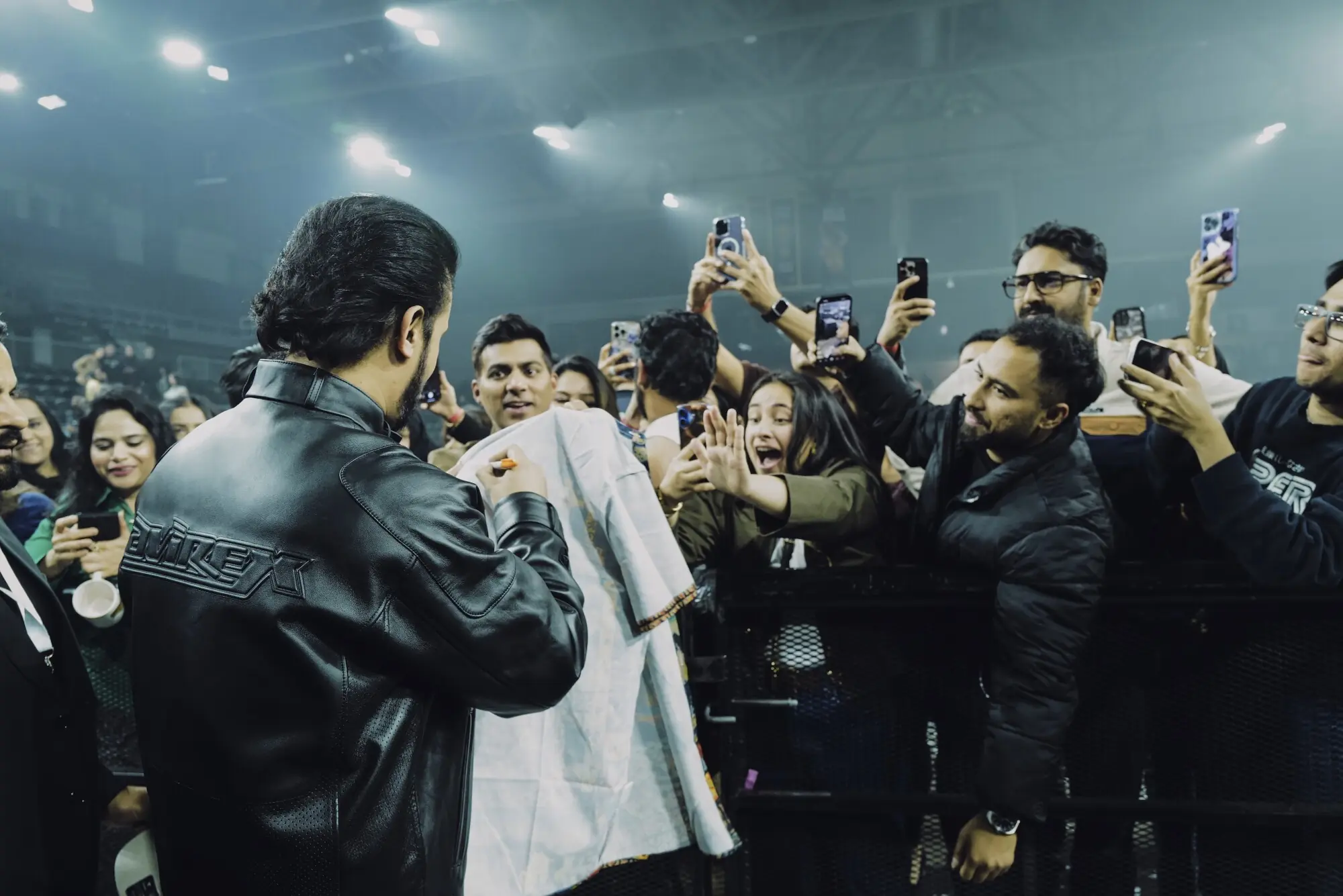
I meet him at a time when he has been on the go for months, travelling the world for an extensive concert tour. It’s one country one day, and another the next. When I meet him, he is nursing a sore throat, taking heavy medication and is scheduled to perform in Karachi the next day. A week after this, he tells me, he will be performing in Dubai. He doesn’t look tired, but I observe out loud that he must be.
“There have been times when my schedule has been much more hectic, times when we would be going crazy!” he tells Icon. “People just think that my schedule is hectic now because we are documenting everything and sharing it on social media.”
His Instagram account has certainly become more active over the last year, I point out. He agrees.
“I like to include my fans in whatever I’m doing, and they are always asking me to be more active on Instagram. Also, when I look back at videos and images from the past, I can relive those experiences. Maybe, after 10 years, when I look at videos from my recent North American tour, I will remember everything that happened there.”
The videos he mentions are powerful ones — the sort that many people would watch on repeat — where Atif, on stage, turns the microphone towards the audience and they sing the songs in unison, instead of him. How does it feel at that point?
“I really can’t define the moment,” he says. “There are all these people singing with you, telling you that, hey, your life matters, your music matters, what you have done for us matters. It is the most perfect form of love that you can ever receive.”
Atif has always been very appreciative of his fans — a colossal number who have dubbed themselves ‘Aadeez’. He smiles, shaking his head in wonder.
“They are incredible. You may have talent, but it is the love of the public, the fans, that shapes who you are,” he says. “Loving them back is very important. Only then can you understand why you do what you do. For instance, when someone tells you that you changed their life, that your music gave someone hope and stopped them from committing suicide, or that they start their day with your recitation of The 99 Names of Allah — it makes you feel that perhaps God chose you to do this work.”
He adds: “My fans will find an old social media post from 10 years ago and mix it with recent comments and make reels. And they jump to my defence, choosing to answer comments meant for me, even when I am ignoring a rumour or fake news!”
I agree that he is often the victim of fake news and that his celebrity stature is used as clickbait frequently to ensure virality. It is only much later that the news turns out to be untrue. Why doesn’t he ever speak out?
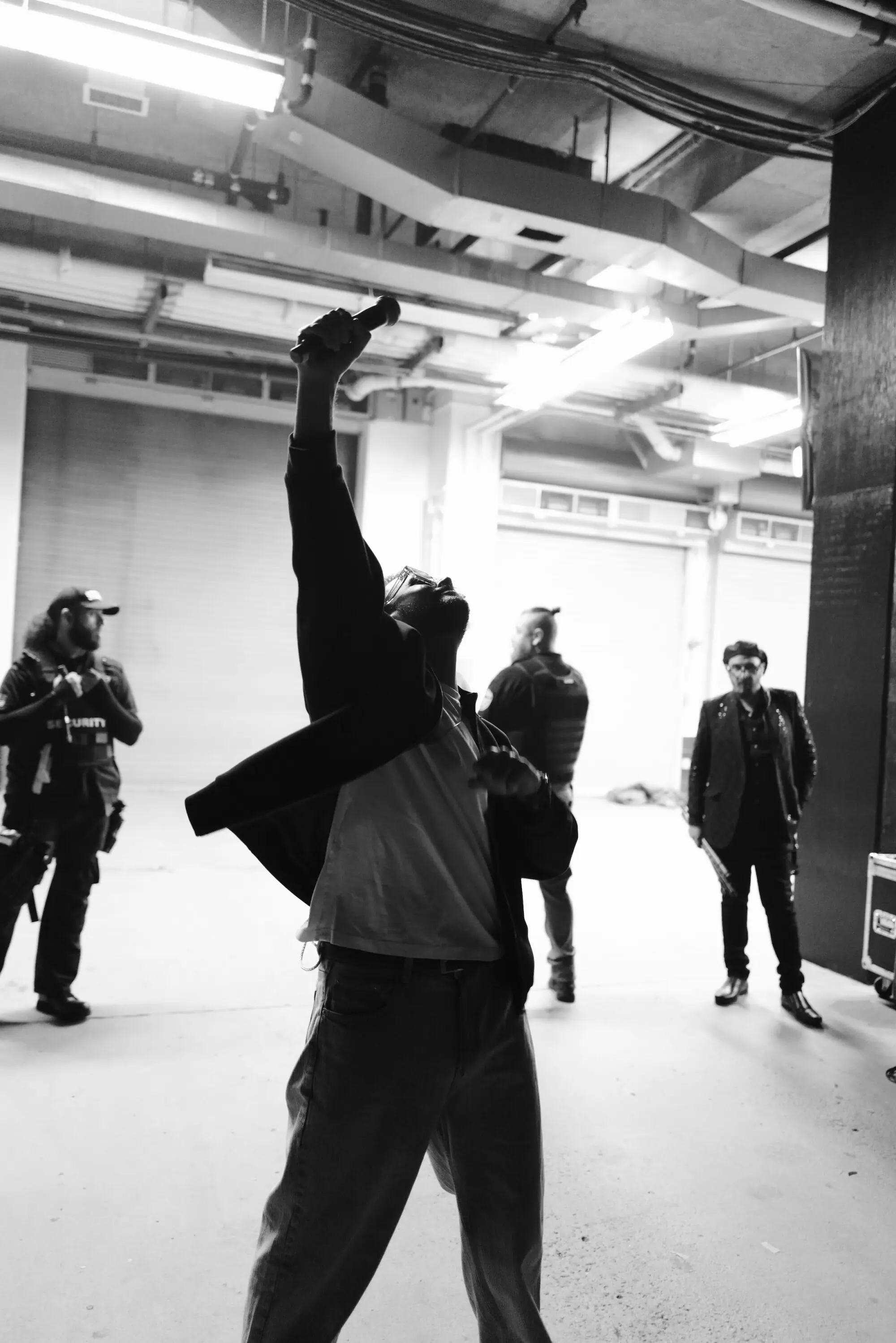
“I choose to be indifferent,” he says. “I’d rather sit on my keyboard and make music! All around us, there is so much in this world that we don’t want to see, negativity that we don’t want to endorse. There are always people trying to tell you what to do or how you should be. But why should I listen to them when I can turn to Allah for guidance? I don’t need anybody else.”
Was he always so spiritual? “I think I became like this over a period of time,” he responds. “My parents have played a part in this, and there have been so many times when I have asked Allah questions and I have received answers. He has gotten me out of situations that you can’t imagine.”
And spiritualism makes him stronger. “Over these past years, I have seen people’s changing faces and attitudes. There are ups and downs in every career, and I am always ready for the downs. I am just thankful to God for all that He has given me.”
I ask him what kind of downs he is talking about. “I think a major down that I experienced was at the beginning of my career, when the band that I was part of broke up.” I interject, pointing out that it was a time when the entire world was listening to ‘Aadat’ and asking, ‘Who’s that guy singing this song?’
“Yes, people were saying that, but I was experiencing a lot of uncertainty. If I hadn’t accepted that pathos, welcomed that discomfort, I couldn’t have put the pieces back together again.”
He continues, “This is something that young musicians need to understand. The pitfalls that come your way don’t define you or your art. If a song is not a hit, make a new one. Don’t give up. There will always be people looking out for the chance to pull you down, but you need to move on.”
I steer the conversation to the days when cross-border tensions were somewhat subdued and he was constantly recording Bollywood songs. Was it easier, singing songs that were composed and produced for him, as opposed to now, when he has to handle such things himself?
He muses, “It was not so much an easier time as it was one for learning. It was all very hectic. We would sometimes record three film songs in a day, going from one studio to another and working with different music producers. I was just singing songs, touring the world, and making the most of it. But I wasn’t writing anything like I used to when I started my career.
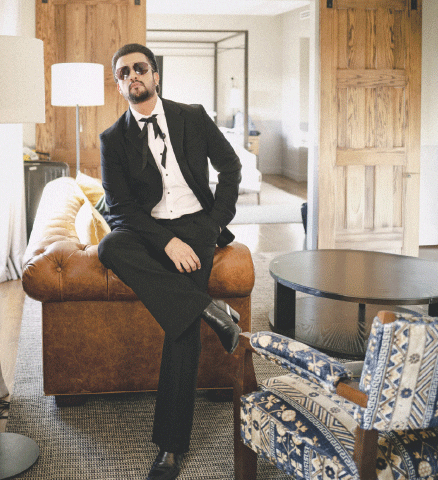
“Ultimately, breaking off from Bollywood turned out to be a blessing in disguise. It was God’s way of giving me a chance to return to who I had been before, the Atif Aslam who inspired the youth and made them believe that they could pursue a career in music. I enjoyed the Bollywood days, and I enjoy where my career is now.”
While working in Bollywood, did he inadvertently avoid mentioning his own country, considering the perpetual underlying tensions between India and Pakistan? “No, wherever we work, it is clear that we are Pakistanis. There were times when I would be living in India and working there regularly, but I was always introduced as a Pakistani. And I am proud of that tag.”
He adds: “When I perform at concerts abroad, I say ‘Salaam’ to my audience and they respond with a loud ‘Walaikum Asssalaam.’ I always ask how many Pakistanis are there at the concert, and there are always so many!”
He also has a lot of Indian fans. Is that fan following still running strong despite political strains?
He smiles. “At least 50 to 60 per cent of the audience members at my concerts in America were Indian. When I talk to them, they tell me that they love me and my music. ‘We don’t know what is happening and we’re not part of it,’ they say. The people who sit at their keyboards and spread hatred are different. Anyone who appreciates my art and wants to attend my concerts will do so.”
There are many people in Pakistan who have tried to shrug away their nationality once they have made it big internationally — perhaps to distance themselves from any negative publicity surrounding their country. I pose a rhetorical question to him: he seems to have always owned being a Pakistani. “Yes,” he agrees, “and there is nothing like Pakistan. What has this country not given us? We were born here, and we belong to this soil. I think that there are only a handful of Pakistanis who are recognised internationally, and I am just thankful and honoured that I have the chance to be one of them.”
His career requires him to be on the move, sometimes for months. How does he balance his work and family life?
“It can be tough sometimes,” he says. “When I am away on a long tour, I miss my family and want to see my children. Recently, my father passed away, and I was in the middle of a tour. I wanted to take some time off but I couldn’t, because the concerts had already been announced. My wife is very supportive, and that helps me immensely. Recently, on her birthday, I met her in Dubai to celebrate. I sang her favourite song for her — she used to play it all the time before we got married,” he reminisces with a smile.
Yes, we have all heard that song, I tell him, referring to his rendition of Vital Signs’ ‘Yeh Shaam Phir Nahin Aayegi’, which he had uploaded in an Instagram reel on his wife’s birthday. This leads me to ask him about how he upped his Instagram reel game for a while, posting light-hearted, often funny videos on Instagram. Some people loved the content while others felt that an artist of his stature should not be indulging in such frivolity.
He nods. “I didn’t create those reels just because I wanted people to see them. I get bored easily and I just decided to try something new. I have always had this fun, ‘pookie’ side to me, and that’s what you saw in the reels. Recently, I met a group of teens at the airport, and they were asking me to make more. I probably will, soon.”
So, he wasn’t dissuaded by the critiques against the videos? “No,” he says. “After achieving so much and getting to a certain point in your career, do you need to prove to the world that you’re cool? Are you supposed to always show the world a certain side of your personality but not who you really are?”
On a similar tangent, is it difficult to be himself when he is out in public places with his family, I ask him. He replies, “There was a time, perhaps, when I was younger, that I would worry that I wouldn’t be able to go anywhere. But now, I don’t mind if there may be cameras everywhere — I am human, I will yawn, perhaps I will scratch my head, and I will kiss my children. I don’t want to live a sad life and see my career as a burden. I want to be happy.”
We return to discussing his career. Last year, he launched Borderless World, introducing it as a platform that would “bring together artists, sounds and stories from around the world.” Is this his way of mentoring new musicians? “I am not big enough to be a mentor,” he says, “but yes, I want to use the platform to give back to people — musicians, actors, choreographers, make-up artists, lyricists… all of them.”
Three years ago, he had also made his acting debut in dramas with Sang-i-Mah, but did not sign any other project afterwards and I ask him why this is the case. “I really enjoyed playing Hilmand,” he says, referring to the character he played in the drama. “But after that, nothing exciting came my way. Also, no one could afford me!” He grins, then adds, “But if an acting role that is truly challenging is offered to me, I would be willing to charge less.”
The jaded, Shakespearean Hilmand had been a difficult character to take on — especially for a debut — and Atif proceeds to recall the experience: “I had read the script and felt that this crazy man was a lot like me,” he quips. “I started practising the role and understanding his relationship with the other characters. There was no five-star hotel in the region and, by then, I was very spoiled, living in comfortable rooms and travelling in luxury cars. The shooting took place in a village and I stayed at a guesthouse.
“On my first night there, it was very cold. The mattress and the pillow were very hard, there was no heater and there was a cold draft coming in through the window. After about half an hour of trying to get comfortable, I reminded myself that I had survived similar circumstances when I had started out. If I had been able to manage without such facilities then, I could do so now. And I did!”
He reasserts, “I am open to acting again — in a movie or drama or theatre — as long as the project interests me.”
And in the meantime, he’s recording songs and performing at some of the world’s most prestigious locations in sold-out concerts. He smiles. “Dolby Theatre, the ‘House of Oscars’ — we’re performing there solo.”
Although Atif Aslam professes that he isn’t running a race, he’s still winning.
Originally published in Dawn, ICON, November 16th, 2025
Comments