
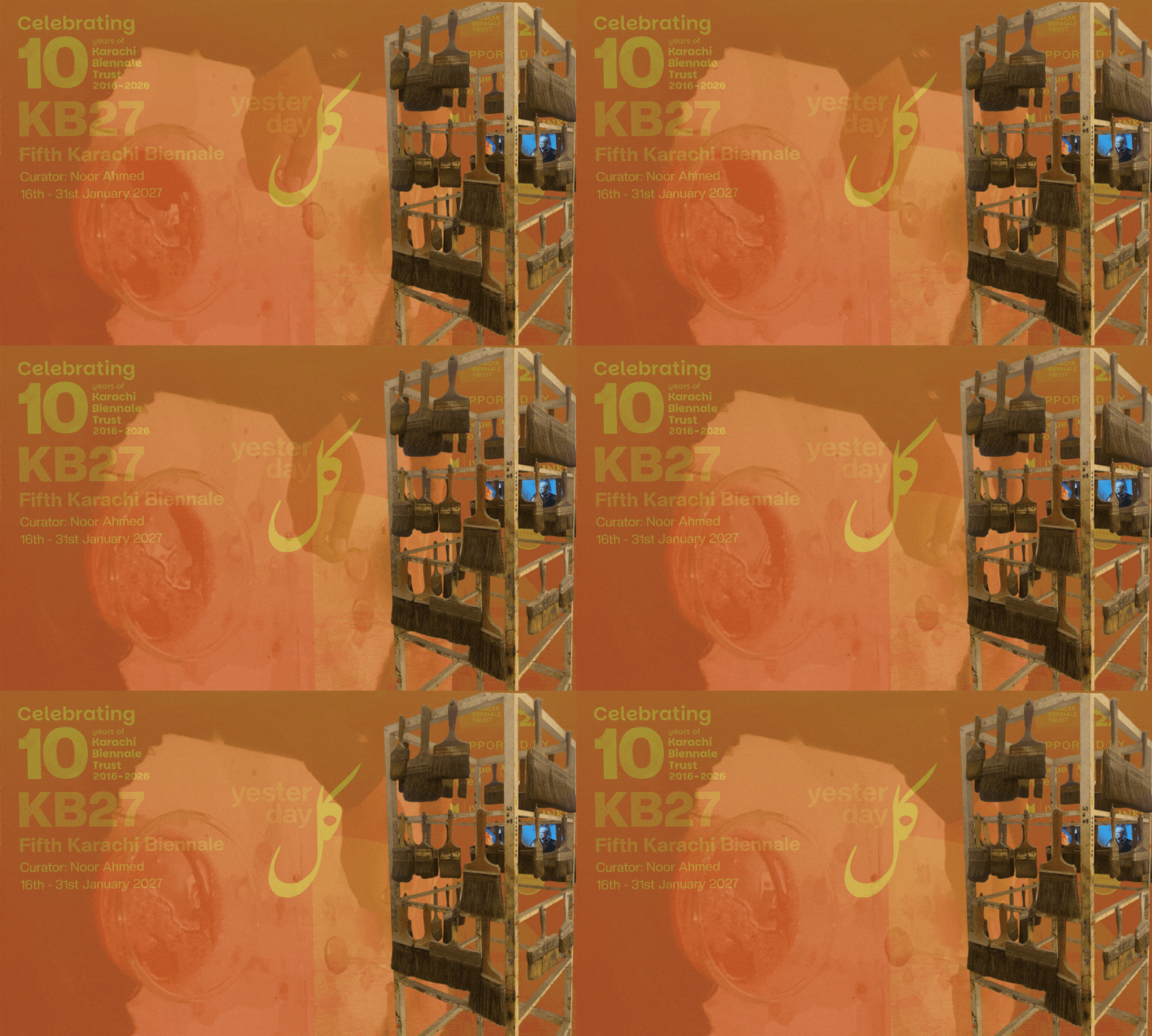
A prelude in motion: Inside the curtain-raiser for the Karachi Biennale 2027
The loud, full laughter of artist Amin Gulgee and his friends travelled across the lawn before I even reached the seating area. Somewhere near the tablescape, Gulgee’s voice rang out — “Eat!” — enthusiastically directing every new arrival towards a beautifully curated spread of homemade dhoklas, khattay aloo and chaat, all served on a bed of rose petals.
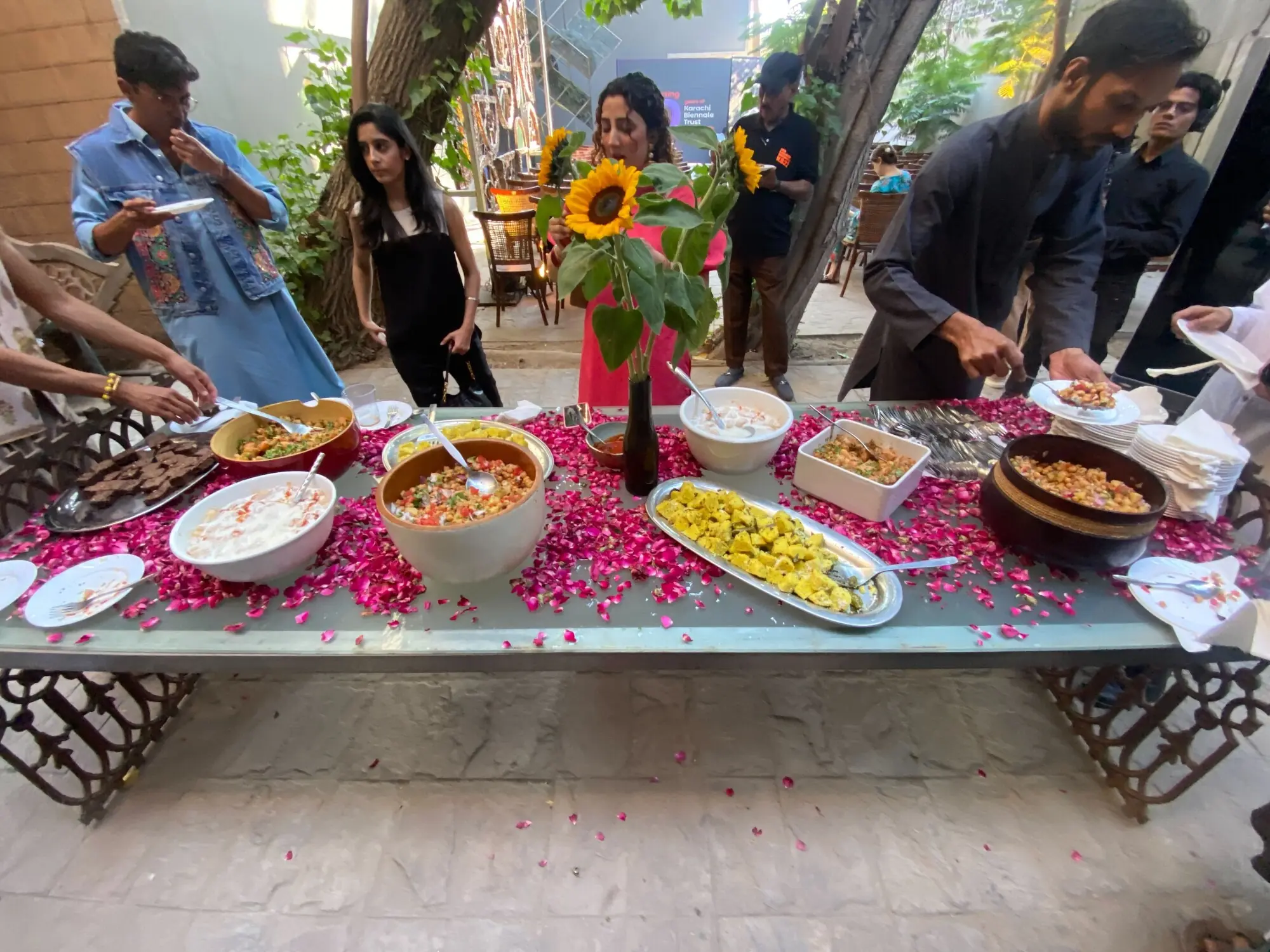
It felt less like a press conference and more like walking into a gathering already alive with anticipation and Gulgee’s energy.
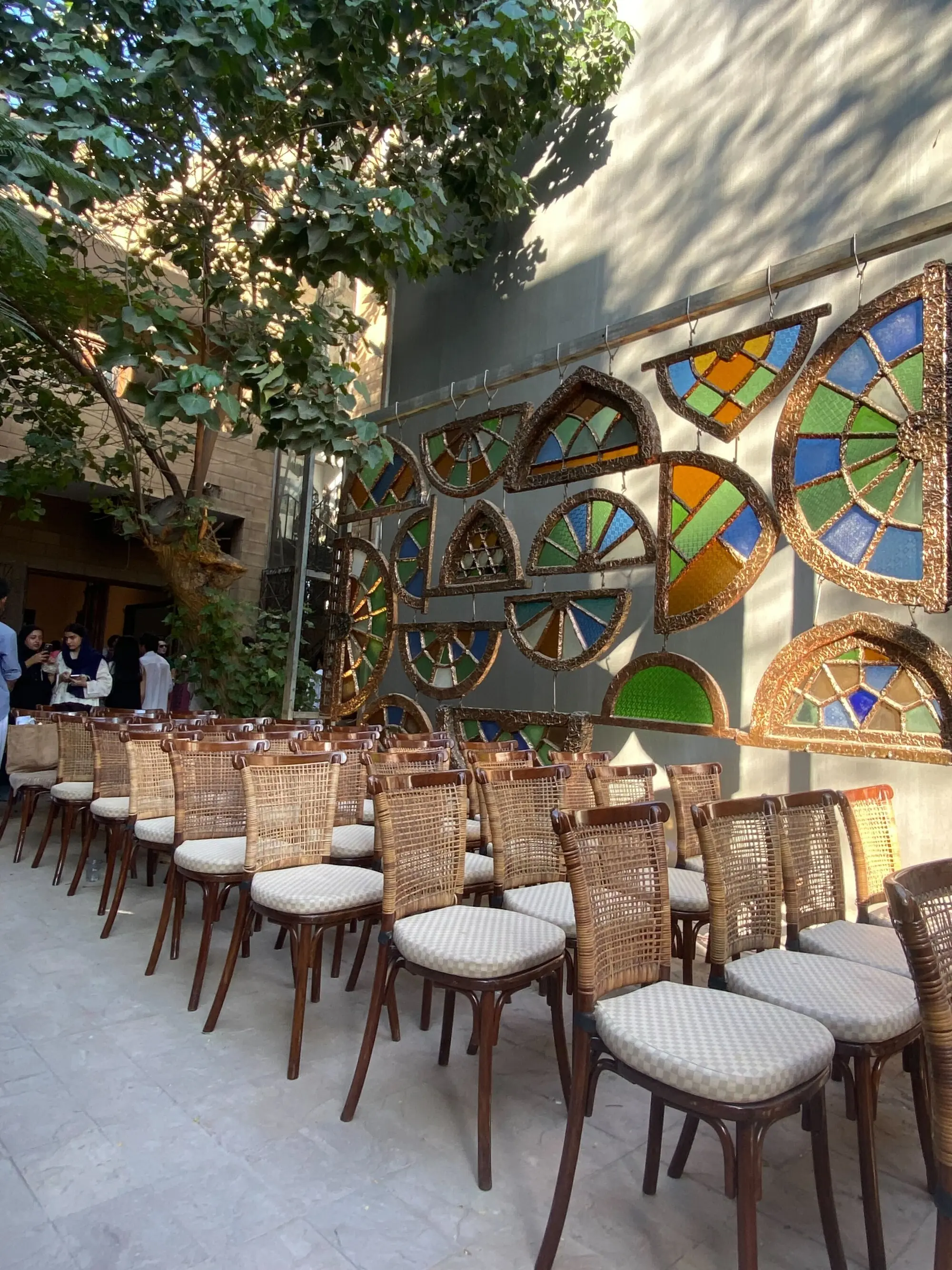
I took my seat along the aisle of the third row, chairs aligned neatly in rows of four on either side of the Gulgee Museum’s central seating area. On one side, stained glass and towering metal installations stood, quietly demanding attention as guests settled in for the Karachi Biennale 2027 curtain-raiser — a celebration marking 10 years of the Karachi Biennale and offering a first glimpse of what lies ahead.
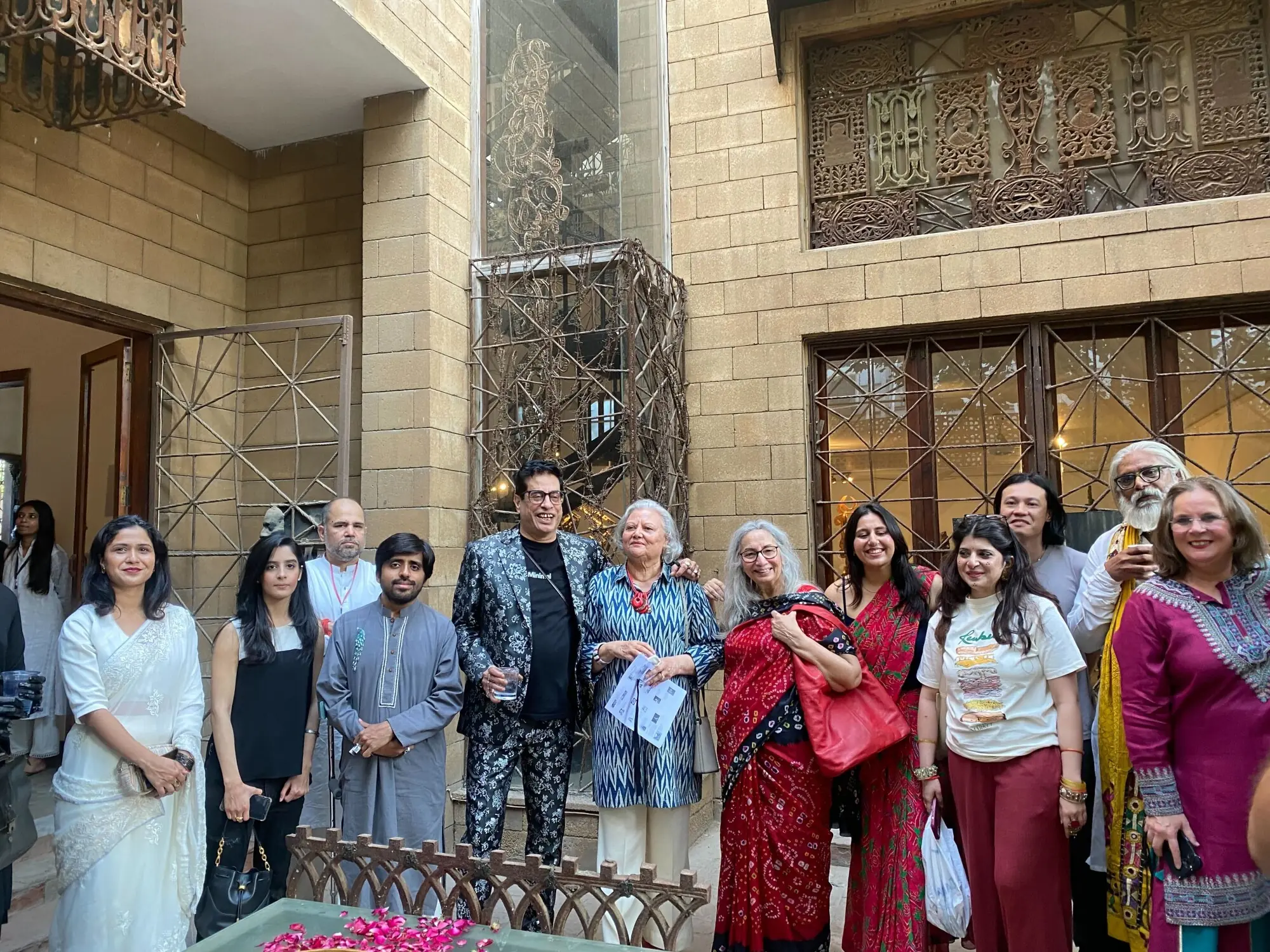
Hosted on Friday by Gulgee and the event’s curator, Noor Ahmed, the evening brought together artists, critics and enthusiasts for a 77-minute preview featuring works by 72 artists from 18 countries — a prelude to Karachi Biennale 2027, scheduled to run from January 16 to 31 next year.
A decade of dialogue
The programme, hosted by KB’s new chairperson Atteqa Malik, opened with a retrospective film tracing a decade of the Biennale, reminding us of how public art interventions have gradually reshaped Karachi’s cultural landscape.
Shanaz Ramzi, stepping in as managing trustee in place of renowned curator Niilofur Farrukh, reflected on the Biennale’s larger purpose: moving art beyond decoration and into dialogue. Bringing together artists, architects and thinkers from across the world, she said, allows art to become a vehicle to “discover, discuss, and respond to accessibility” in Karachi.
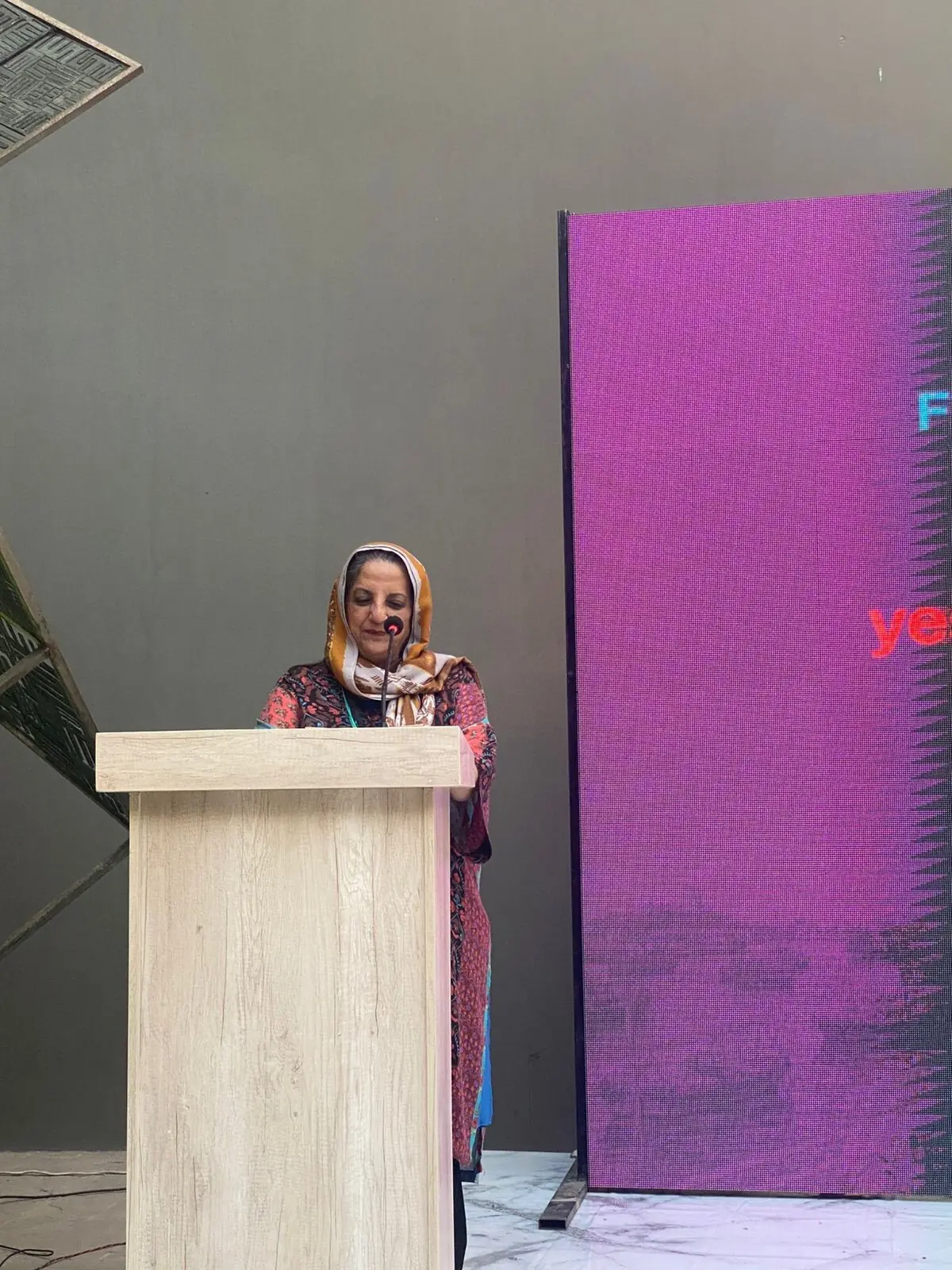
“At 10 years, the Karachi Biennale Trust stands as a testament to what sustained cultural collaboration can build for a city,” she said. “As we look toward KB27, we reaffirm our commitment to making art publicly accessible while creating global conversations rooted in Karachi’s realities.”
Artistic director Bushra Hussain traced the journey of earlier editions before introducing Ahmed — the youngest curator in the Biennale’s history — describing her vision as one that balances continuity with experimentation.
Ahmed framed the upcoming edition through its theme, Aaj aur Kal: Yesterday/Today/Tomorrow.
“Karachi Biennale 2027 with its theme Kal: Yesterday and Tomorrow, positions Karachi not merely as a backdrop but as a protagonist in the global conversation on art and its responsibilities,” she said.
@dawn_images Noor Ahmed, curator of the upcoming Karachi Biennale 2027, speaks at the curtan raiser event in Karachi. #karachibiennale #dawnimages #pakistaniartist ♬ original sound - Dawn IMAGES
“The thematic of the Biennale invokes the hope of a first journey but redirects this first journey away from conquest and commerce towards inclusivity and imagination. This is not a voyage of return to an originary past but of departure into the possible futures.”
Even amid ecological precarity, she added, Karachi remains a “locus of invention,” with exhibitions planned across public spaces, ports and parks, celebrating diasporic exchanges, indigenous knowledge and the languages and skills of the sea.
Adding to her remarks, Gulgee described Aaj aur Kal as an exhibition of performance art, new media and installation, inviting audiences to move through works shaped by time.
“These performative works, all happening simultaneously today, speak of rituals, relationships, narratives, and hierarchies. They channel memories of yesterday as well as fears and dreams of tomorrow,” he said, before inviting guests to explore the museum.
Walking through time
The exhibition unfolded like a tasting menu — brief encounters hinting at something far greater to come.
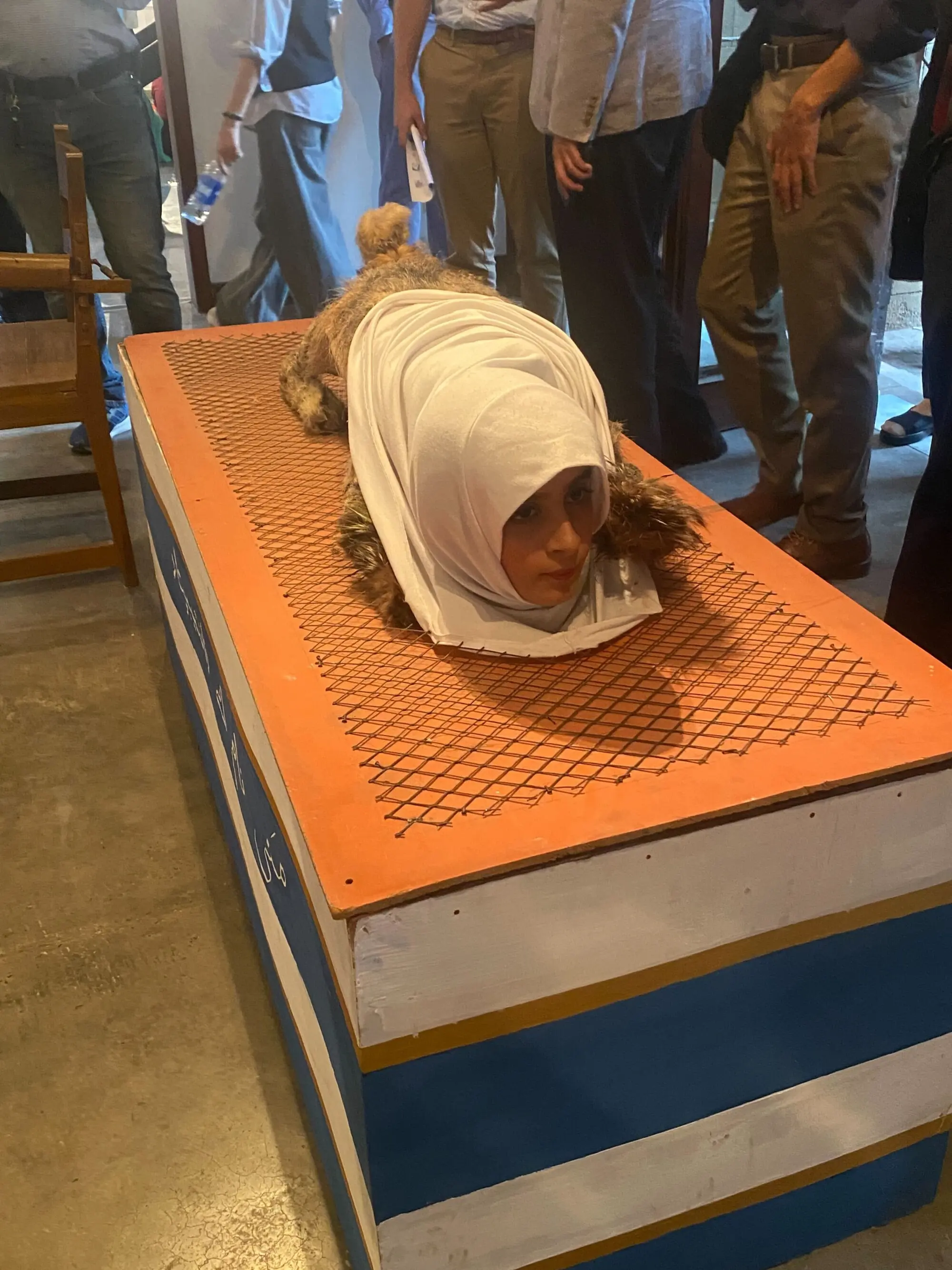
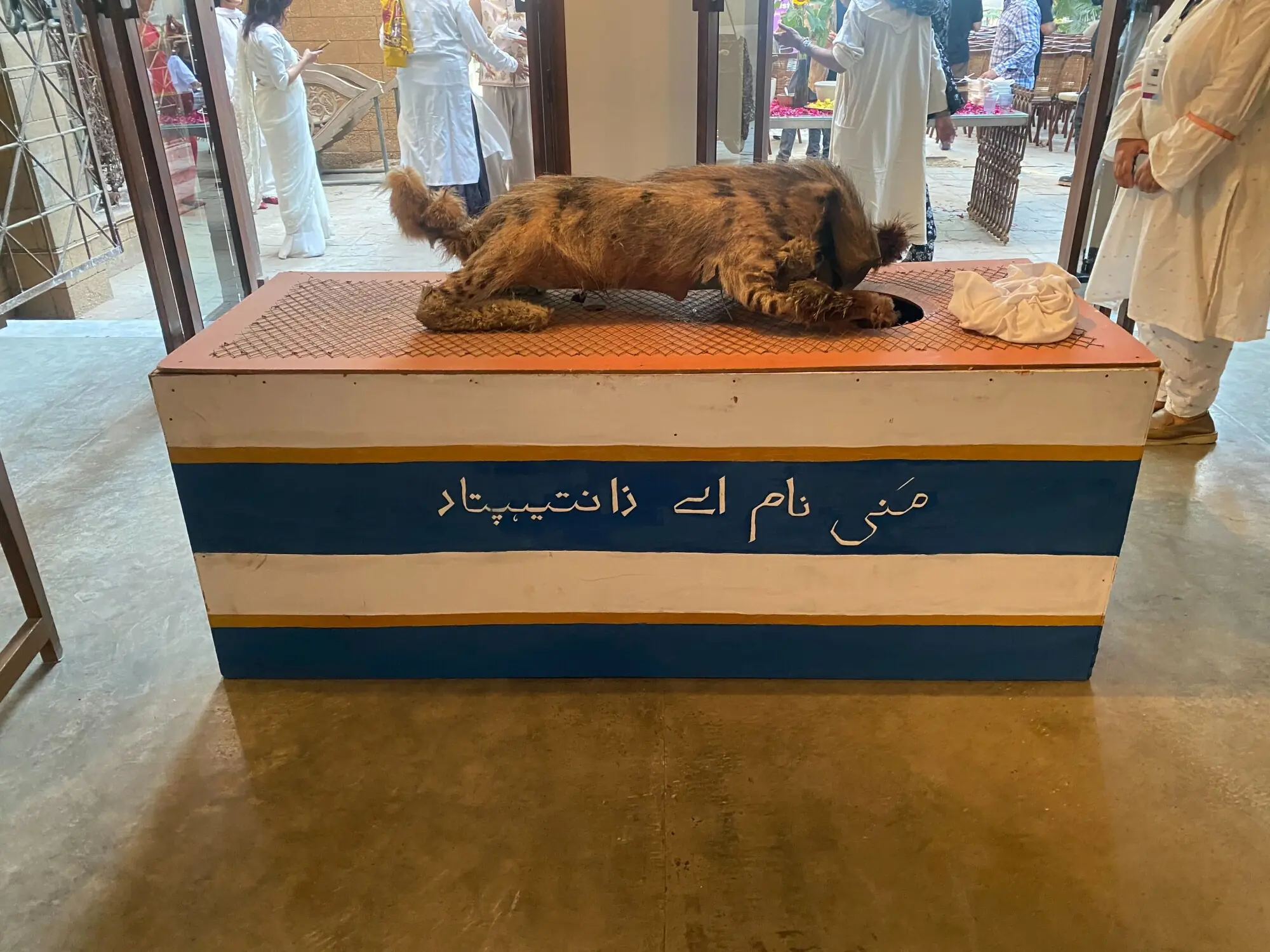
My walk began in the side gallery with Lahore-based artist Zantiana Iqbal’s unsettling performance installation, where she appeared as a feline body crowned with a human head — an image reminiscent of Mumtaz Begum, the Karachi Zoo’s infamous half-human, half-fox.
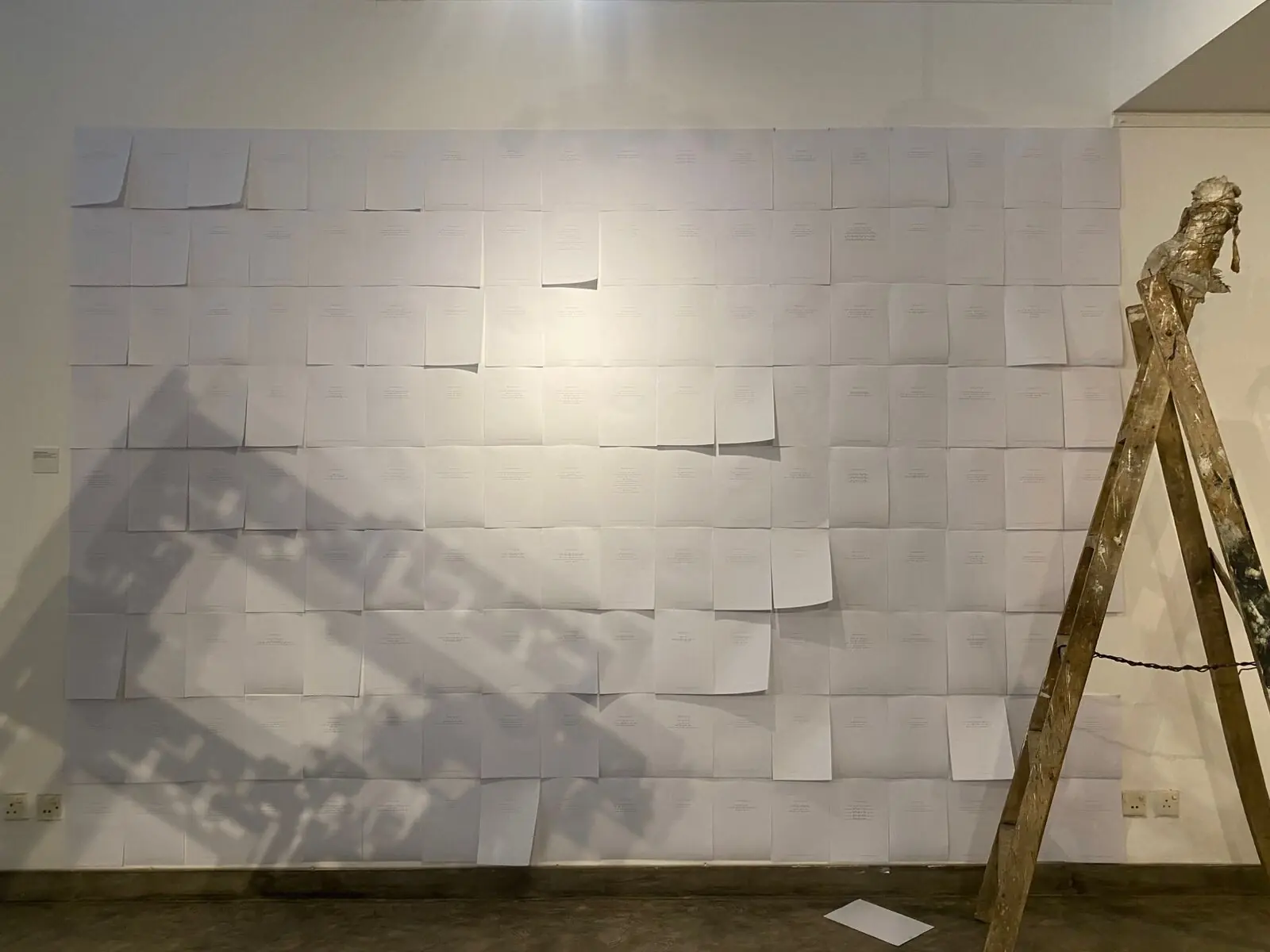
In the main gallery, works by local and international artists — Danish Raza, Heide Hatry, Veera Rustomji and Thailand’s Natthaphone Chaiworawat — unfolded simultaneously. Chaiworawat’s instructional performance Living Trace, Think Out Loud lingered longest in memory as he scattered handwritten reflections while repeating “Action, reaction,” turning cause and effect into a rhythmic mantra, walking through the two-floored Gulgee Museum constantly.
Elsewhere, Rumana Husain’s Mai jo Ghaggo — Legend of the Red Dress drew viewers into a slower rhythm. Draped in a red dress with a black chunri draped around her and seated amid portraits of women in crimson, she narrated an interactive story, pulling objects in her story from a chunri bag beside her, evoking the intimacy of a woman telling stories to her gathered grandchildren.
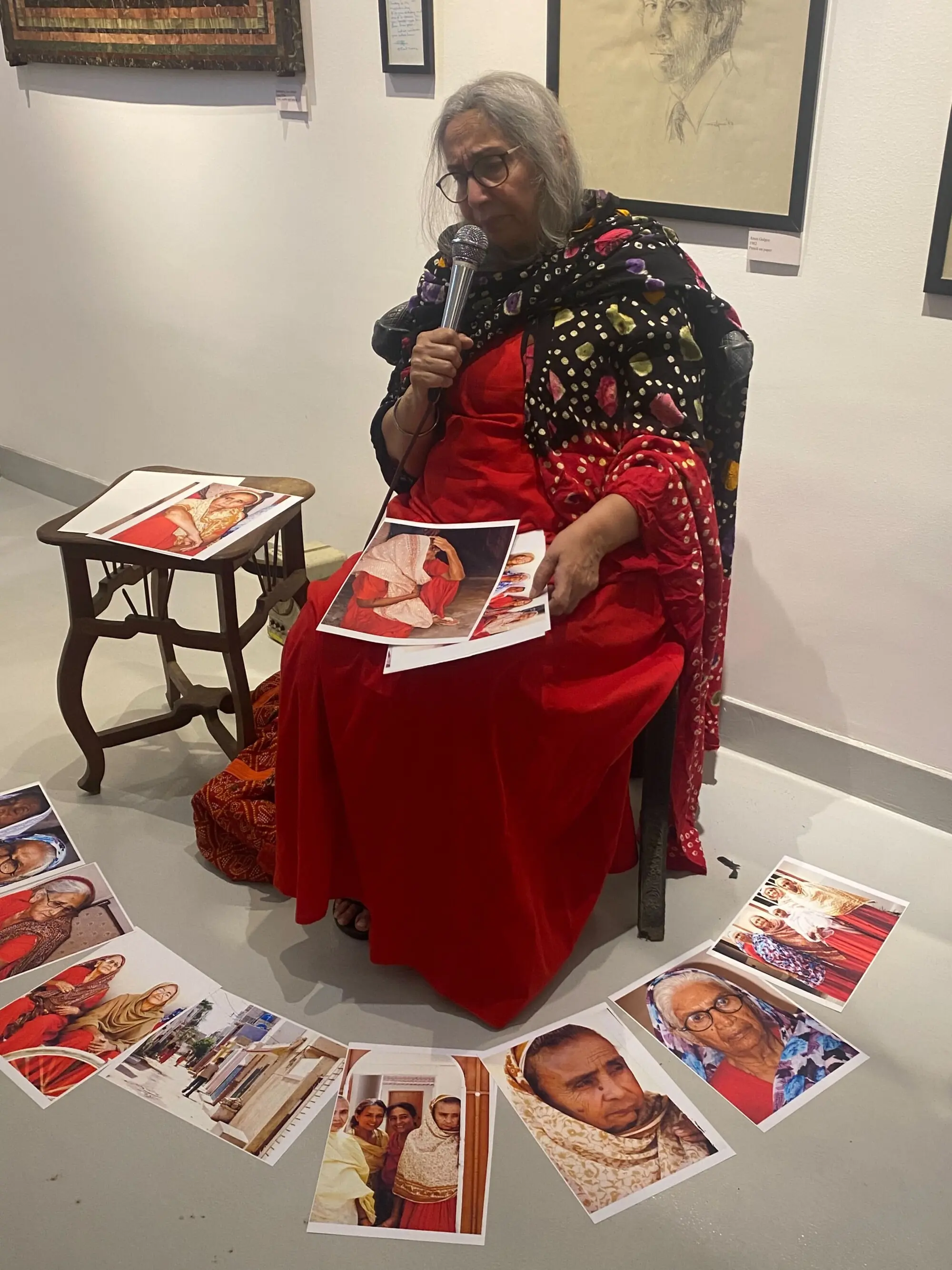
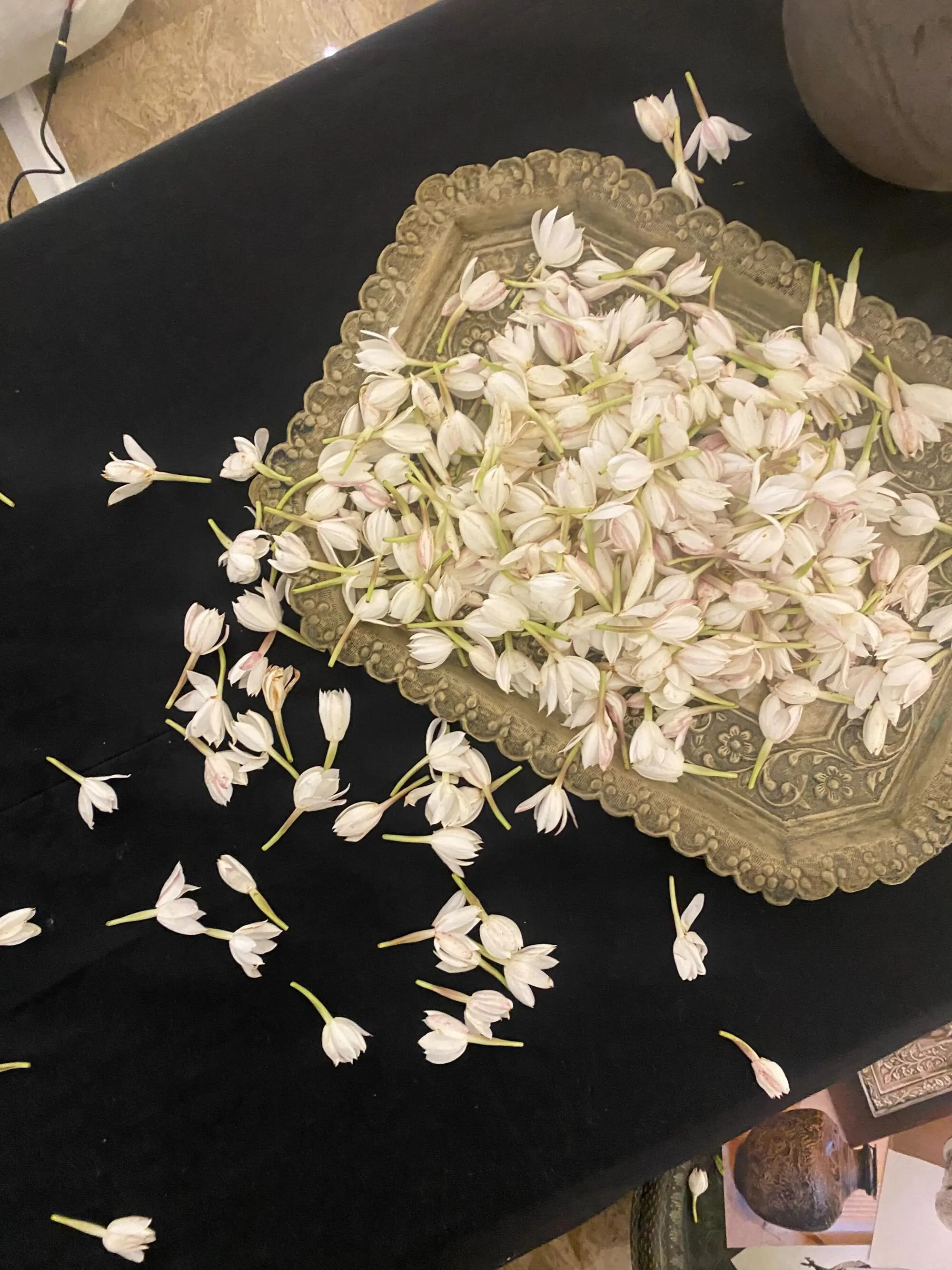
Every room carried its own sensory identity. Sound and scent guided movement as much as sight: bukhoor in one space, motia in another, henna lingering elsewhere.
Artist Meher Afroz, who was born in Lucknow in 1948, had a visual-sound installation, Meher ki Kahani, which felt like stepping into memory itself; silver paandaans and vessels arranged like relics, while the fragrance of motia lingered in the air.
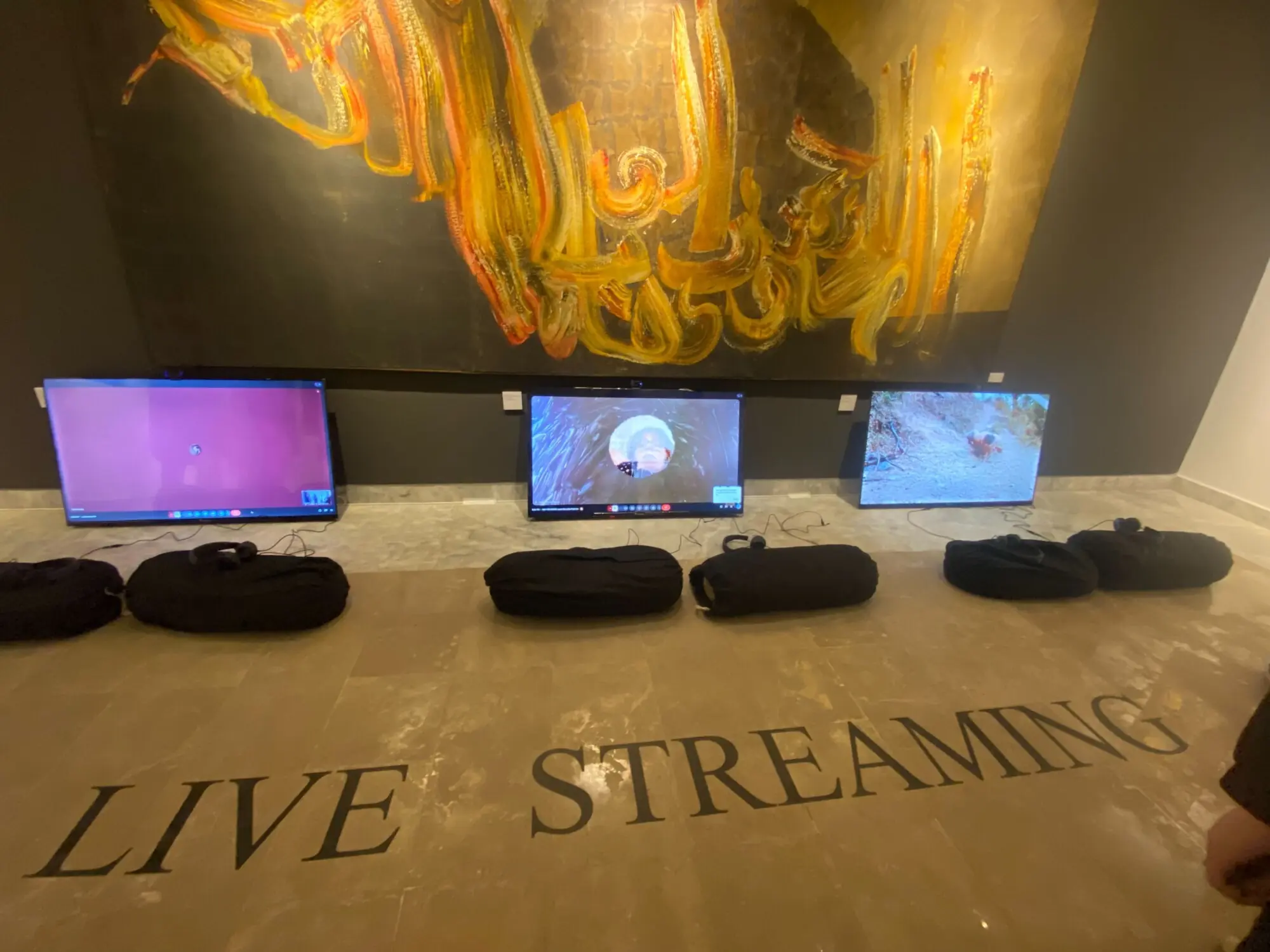
The exhibition also extended beyond physical walls through livestreamed performances, including Satadru Sovan Banduri’s Cartography of the In-Between, where his body’s interaction with wilderness reflected on landscapes altered by development.
Itinerant performers moved through the museum, drawing the viewers to pause and pay attention. Kathak dancer and activist Sheema Kirmani, performing Aaj aur Kal, crossed rooms chanting “No to hate,” while British artist Anne Wood’s violin performance Fiddle Talk conversed wordlessly with passing audiences.
@dawn_images British artist, Anne Wood performs at the Karachi Biennale 2027 curtain raiser. #dawnimages #karachiarts #karachibiennale ♬ original sound - Dawn IMAGES
A taste before the feast
Seventy-seven minutes passed quickly — deliberately so.
The experience felt like sampling a feast still being prepared: 72 distinct works, each evoking a different emotion, thought or memory. There was simply too much to stay with for long. Moving from room to room, trying to see everything meant never fully settling into one piece.
At first, the pace felt frustrating.
But walking away, that restlessness transformed into hunger, a desire to return, to spend more time, to sit longer with the works glimpsed only briefly.
And perhaps that was the point. Not completion, but anticipation.
A reminder that this was only the prelude.




Comments