
From Manora to Colombo: Artists, researchers gather in Sri Lanka to explore ties to the Indian Ocean
Shortly after landing in Colombo, Sri Lanka, I found myself at a dinner seated opposite the internationally-renowned Pakistani visual artist Naiza Khan. We were flanked by artists, researchers and curators from India, Iran, Sri Lanka, the Middle East, South Africa and Pakistan, to name a few countries. Most of us gathered at this dinner had one thing in common: we were, in one way or another, bound together by the tides of the Indian Ocean.
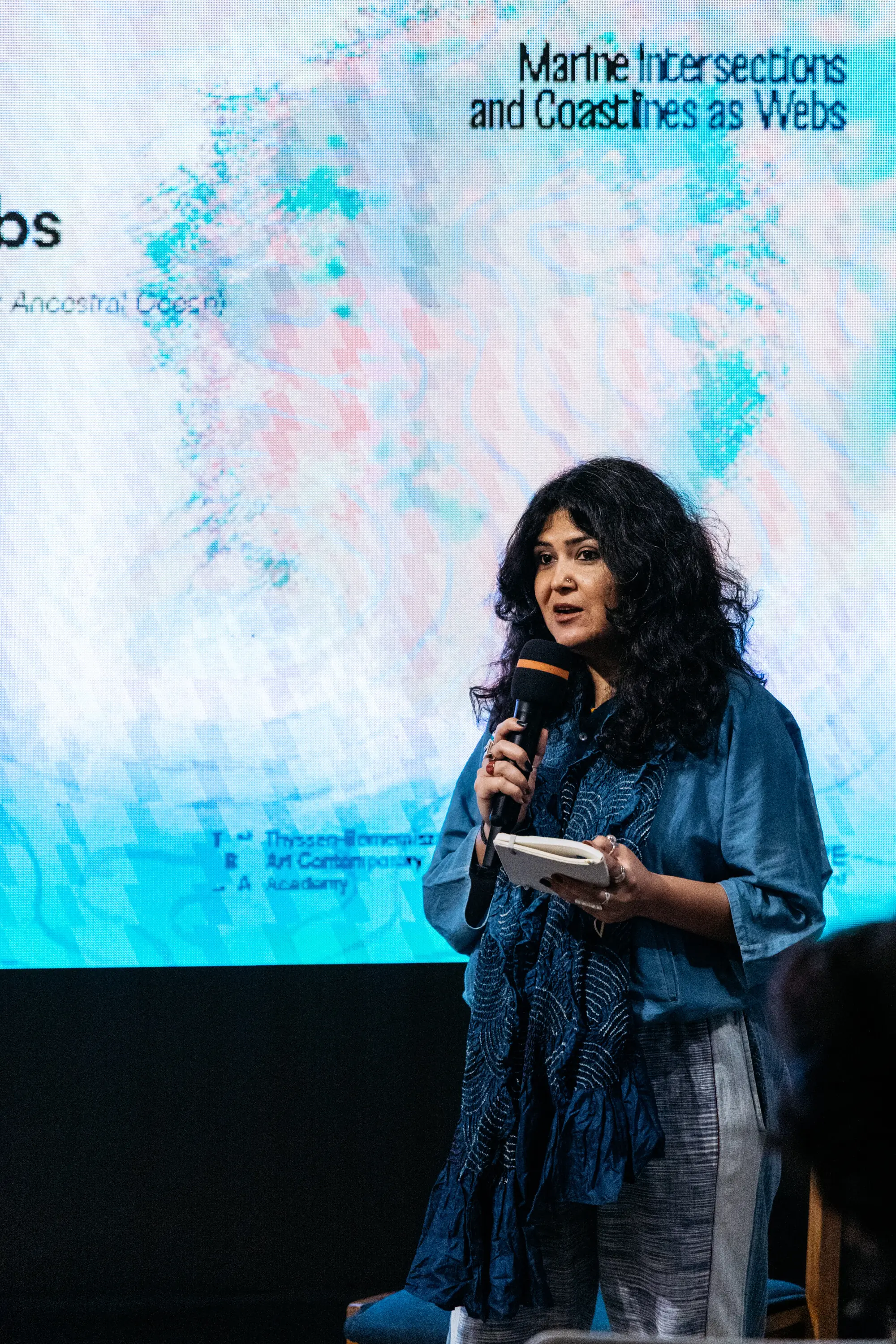
This binding thread seemed rather fitting given that Colombo was the location for The Current V: Ancestral Ocean’s inaugural convening, Marine Intersections and Coastlines as Webs, led by celebrated curator Natasha Ginwala.
An initiative of the Spain-based international art and cultural foundation TBA21 Thyssen-Bornemisza Art Contemporary’s TBA21—Academy, and taking place alongside the Colomboscope arts festival, this convening explored cultural languages, maritime stories and marine historiographies prevalent in and across the Indian Ocean. This central theme is a prescient one, particularly for those of us belonging to the ‘Global South’.
Which is why it is all the more crucial that the guest curator of this year’s Colomboscope, Hajra Haider Karrar, understands so intimately how this central theme relates to ‘our part of the world.’ Karrar — who established her curatorial practice in Pakistan and is now based in Germany as the curator at SAVVY Contemporary: The Laboratory of Form-Ideas, Berlin — has a long and continued engagement with the Indian Ocean and coastal geographies. This has also been one of the key entry points for her work on this edition of Colomboscope, hence making TBA21’s involvement here even more relevant.
So, for a few days in January, Colombo became a harbour for a trans-oceanic gathering, inviting participants to move through Colombo’s ports, wetlands and cultural spaces and treat them as living archives.
The convening’s round of talks at Radicle Gallery, housed in a colonial-era building, saw Ginwala touch upon “water bankruptcy” and other concerns being faced by communities whose livelihood is centred around the Indian Ocean in her opening remarks. This thread was poignantly carried forward in one of the sessions that followed titled Artist Encounters Across Coastal Spheres.
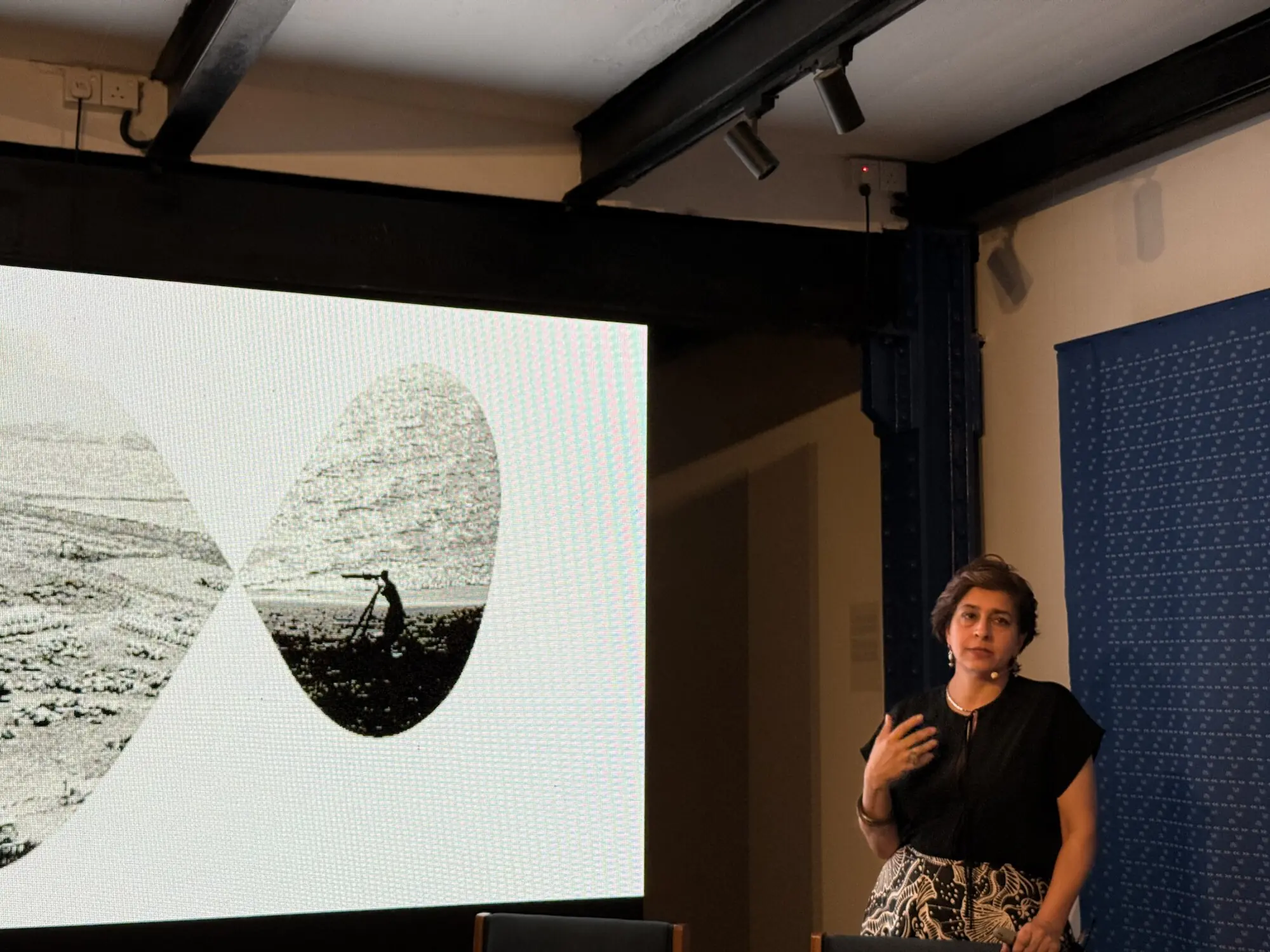
This conversation between artists Naiza Khan and Charwei Tsai, moderated by Karrar, traced affinities between distant coastlines marked by dispossession and resilience. Both artists have long worked with island geographies: Naiza has incorporated Pakistan’s Manora Island into many of her works, and Tsai has done the same with Taiwan’s Lanyu Island.
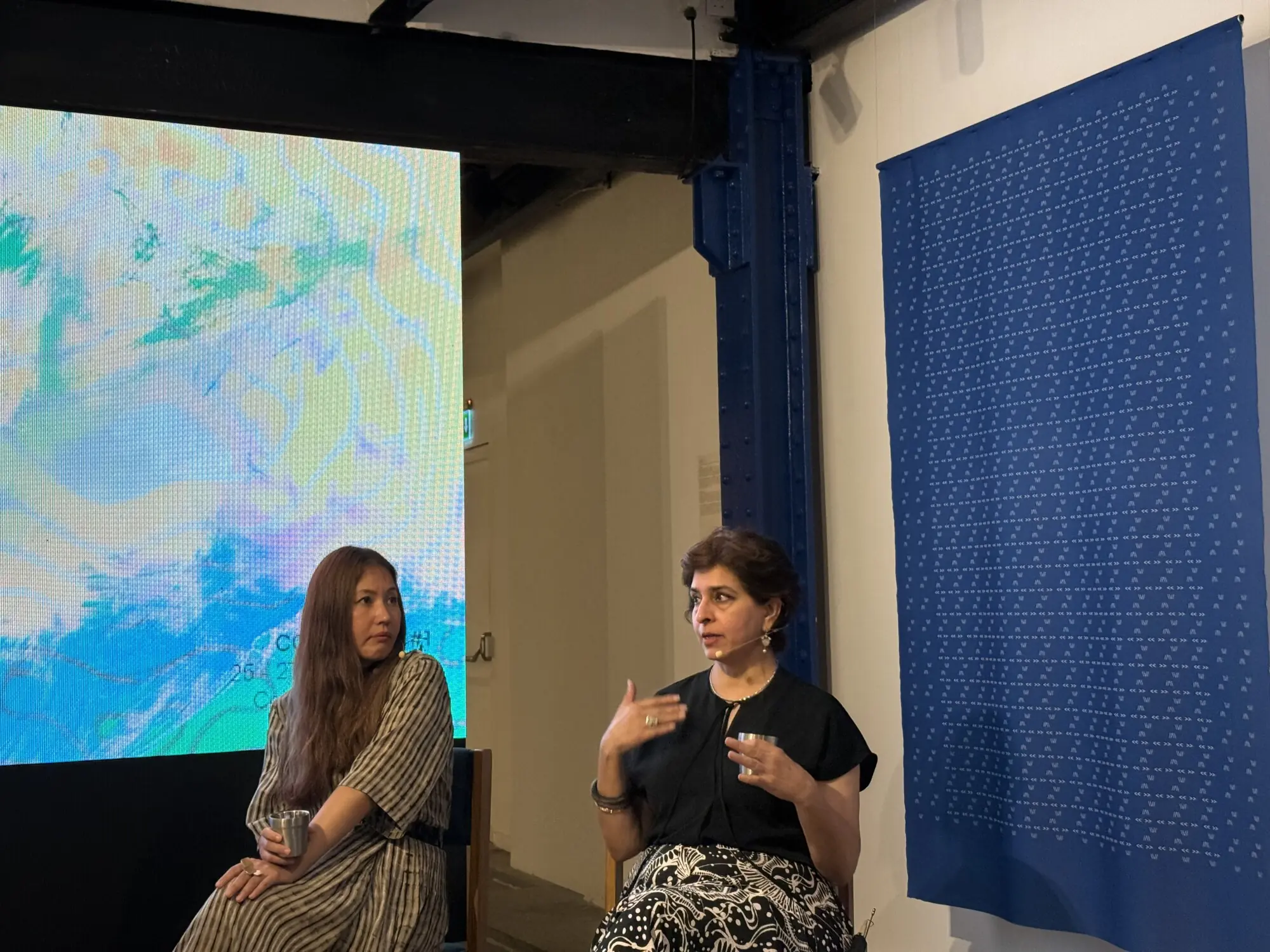
Naiza’s filmic installation Sticky Rice and Other Stories, partly screened during this session, showcased several artisans on Manora Island creating models of various historical boats from the region. Her work provided a window into an art form and way of life that is slowly eroding. She spoke about how Sufi shrines, a church, a Hindu temple and a Sikh gurdwara have all coexisted on Manora Island.
But the evolving indigenous relation to the coastline is now under threat due to climate change — a phenomenon Pakistan is all too familiar with. Speaking of ritual, cartography and the slow violence of climate change, both Naiza and Tsai modelled precisely the kind of cross-coastal thinking the convening sought to cultivate.
In a similar vein, the screening of Fana Fraser’s video work Nesting provided a powerful reminder of the ecologies that are currently under threat across the Indian Ocean. Drawing on the migratory life of leatherback turtles, Fraser’s choreography wove Black Atlantic histories into Indian Ocean imaginaries, suggesting that these waters are interconnected theatres of displacement and survival.
This balance between the conceptual and the applied continued in On Ports as Portals, Coasts as Companions, a conversation between academics Laleh Khalili and Dr Neelima Jeychandran, moderated by Setareh Noorani. Here, the Indian Ocean emerged as a dense mesh of labour routes, devotional networks and logistical infrastructures. Khalili’s work on maritime economies and Dr Jeychandran’s research on Malabar coast histories wrestled with the romantic vision of oceanic cosmopolitanism.
The sea, they reminded the audience, is as much a site of militarisation and debt as of exchange and belonging. This point was affirmed by Naiza, when she spoke of how Manora Island has, over the years, become increasingly militarised due to its use as a naval base.
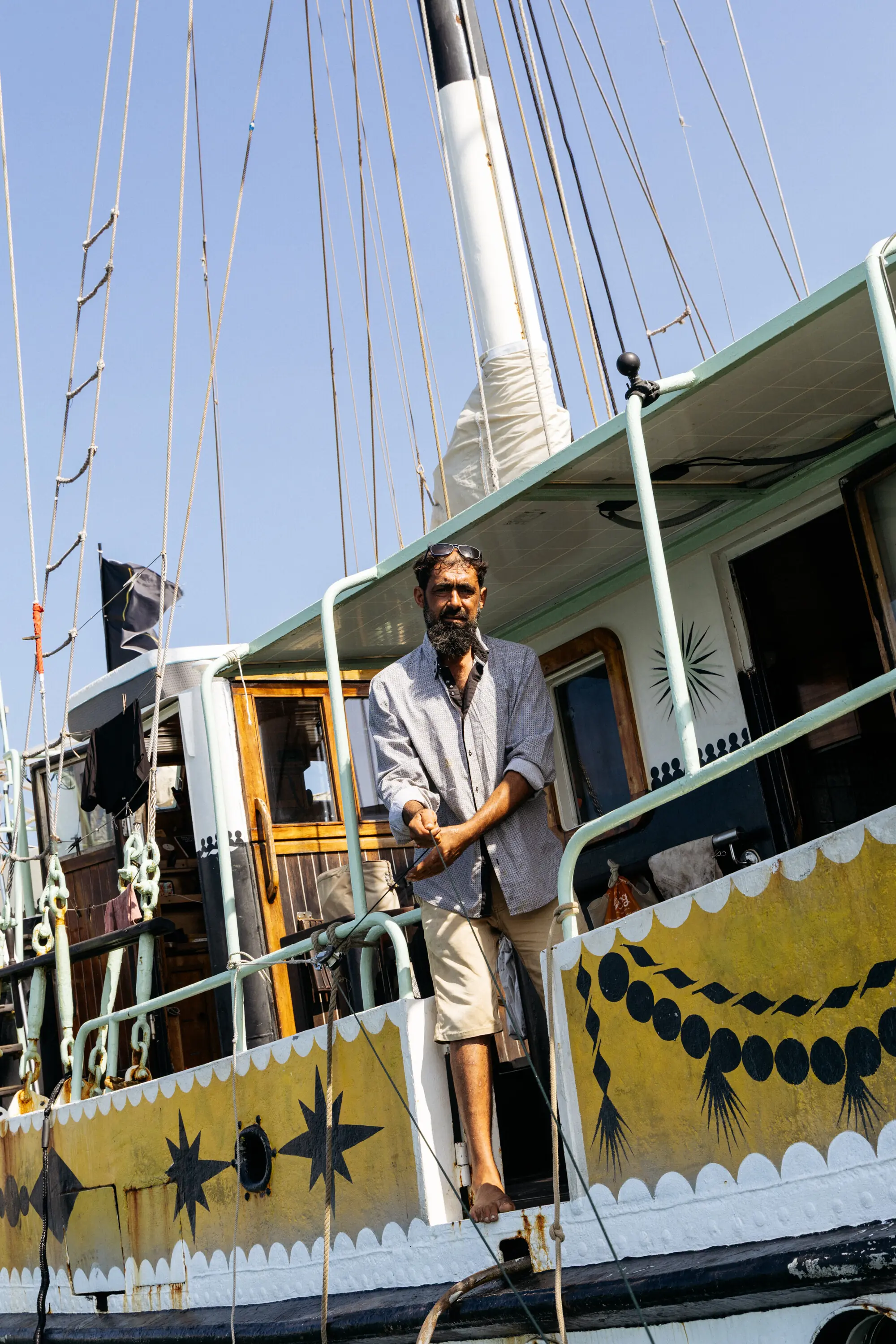
But lived experience was just as important at this convening as discourse. This was exemplified by the Arka Kinari: a 60-tonne sailing ship built in 1947 that now sails across the world as a “laboratory of sustainability”.
While the ship was docked at Colombo’s Port City, Arka Kinari’s crew members Raka Ibrahim, Grey Filastine and Nova Ruth spoke about the ship’s voyage across international waters in its quest to promote environmental sustainability. Having begun its journey in 2019, the ship has already sailed across the Atlantic Ocean, the Pacific Ocean and now, having visited Sri Lanka, will be heading to India next.
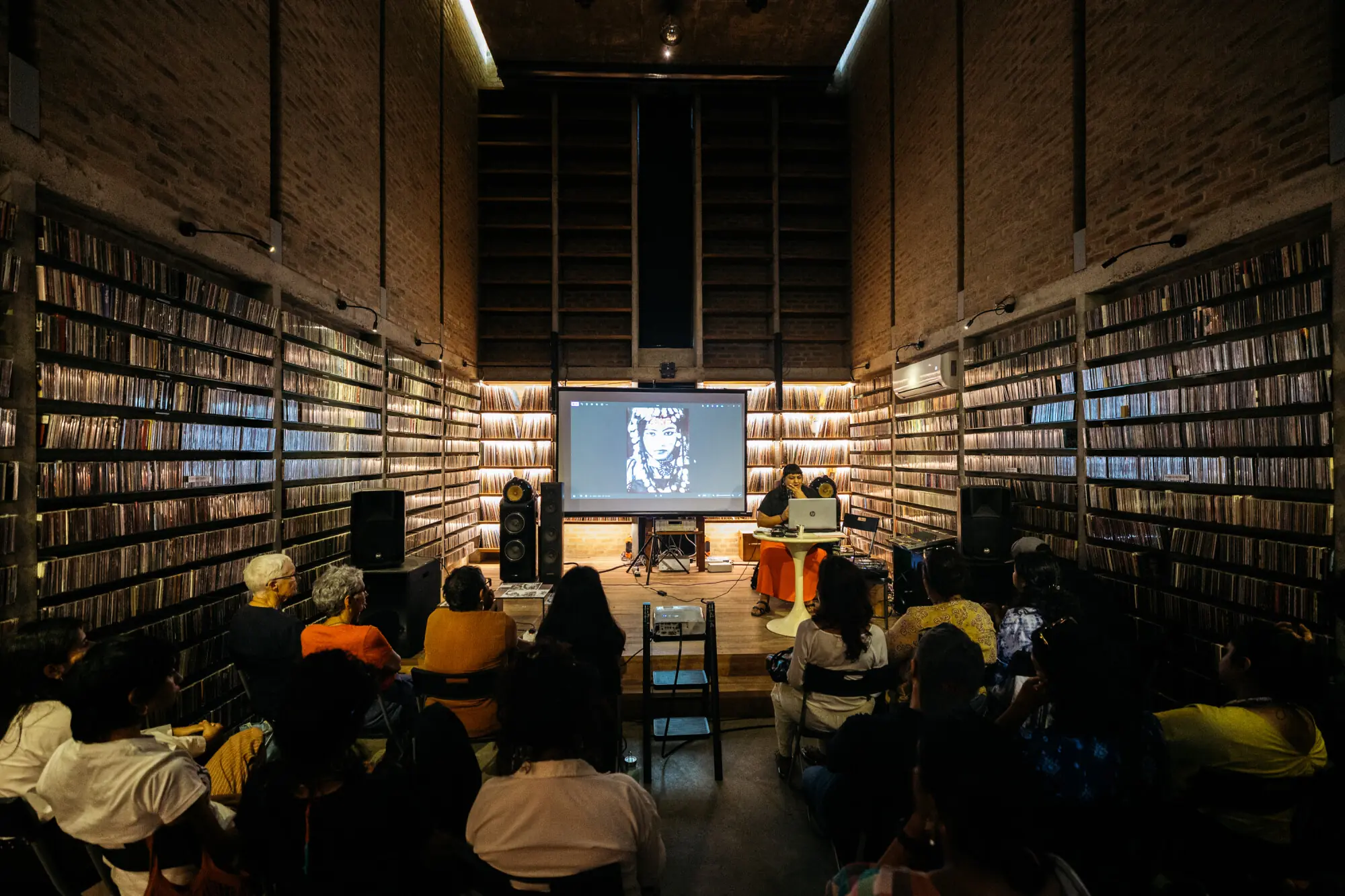
Meanwhile, South African sound researcher Atiyyah Khan led Rotations of Bismillah at Colombo’s Soul Studio. In her investigation of As-Shams Records, a small but significant Cape Town label that functioned in the shadow of apartheid, Atiyyah uncovered a layered cultural history.
Drawing on personal and archival research, she mapped the journeys that carried communities from South Asia to South Africa through systems of migrations and colonial indenture, and considered how those movements shaped new forms of belonging. Within this landscape, jazz emerged in her work as a shared language that enabled unexpected alliances to flourish during a time defined by rigid racial boundaries.
Part listening session, part archival workshop, Atiyyah’s pedagogy invited participants to handle materials, hear field recordings and reflect on archival sounds. It was here that the ethos of “deep listening” felt most genuinely enacted, in large part due to Atiyyah’s infectious enthusiasm for her subject matter.

On the other hand, Berlin-based sound artist Joseph Kamaru, better known as KMRU, provided a more atmospheric and abstract musical experience at the Musicmatters Soundroom. His work L25 unfolded as an immersive study in field recordings gathered across the Indian Ocean. The work resisted narrative clarity, and its refusal of easy representation mirrored the convening’s broader insistence that oceans cannot be neatly translated into language.
The convening also grounded participants in the ecology of Colombo. A guided wetland walk at the Beddagana Wetland Park, conceived by biologists Anjallee Prabhakaran and Anya Ratnayaka of Small Cat Advocacy and Research, introduced visitors to the remarkable biodiversity of the city’s urban wetlands. From housing migratory birds to Asian water monitors, the park exemplified why safeguarding the natural habitats that the Indian Ocean gives rise to is vital.
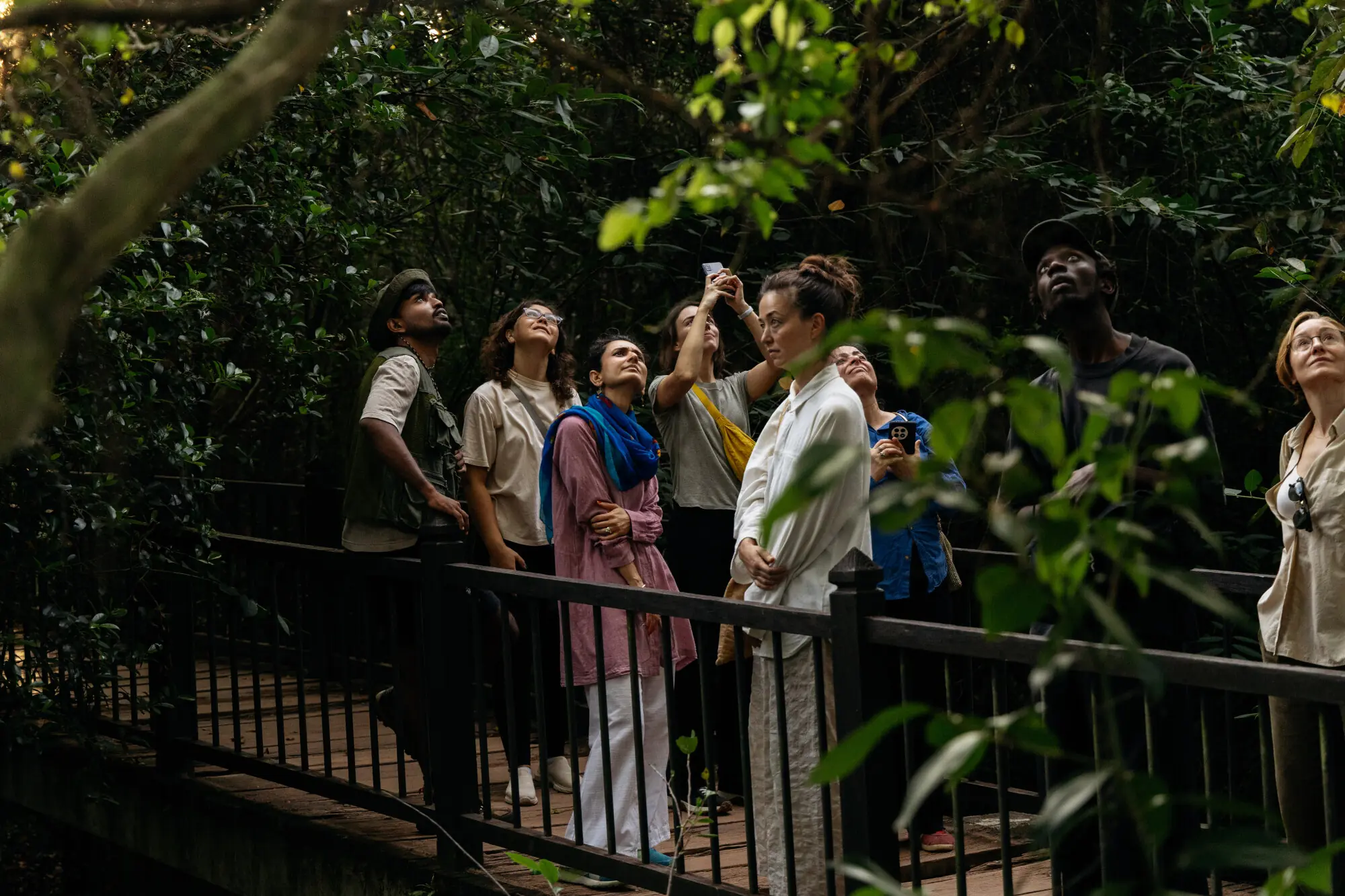
Evidently, the convening wished to treat the ocean as an active interlocutor of stories — regardless of whether those stories came from Pakistan, India, Sri Lanka, or any other land touched by the wide embrace of the Indian Ocean. The programme’s structure, acting as part symposium, part workshop and part performance series, mirrored its thesis that coastlines are webs rather than borders.
The climatic conundrums we in Pakistan are facing are the same ones our neighbours are confronted with. In light of this shared plight, TBA21’s convening sought to propose a method for thinking and gathering in an age of ecological uncertainty. Through art, conversations, workshops and walks, it imagined the Indian Ocean as an ancestral commons that is layered with violence, beauty and, above all, hope.
Cover: Atiyyah Khan’s Rotations of Bismillah. Photo by Ryan Wijayaratne
Comments