
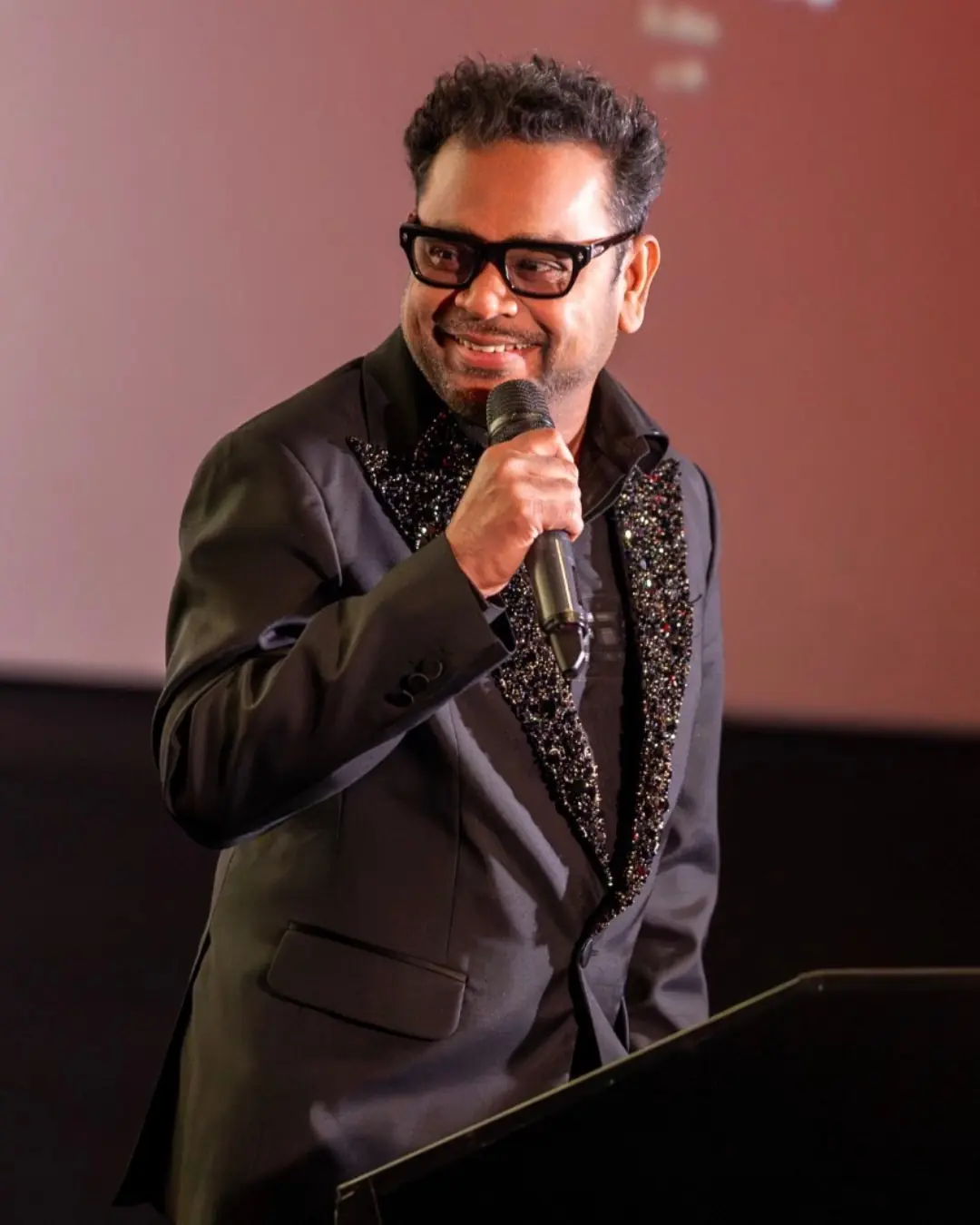
‘People are smarter than that’: A R Rahman on signing Bollywood films like Chhaava with anti-Muslim tropes
When A R Rahman says he tries to avoid films made with “bad intentions”, you want to believe him. Not just because he’s spent decades being Bollywood’s most globally respected export, but because he’s also one of the few industry heavyweights who’s even willing to acknowledge that intent is now a problem worth discussing.
That conversation came up in a recent interview with BBC Asian Network’s Haroon Rashid, who put to Rahman what many audiences — especially Muslim audiences — have been muttering for years: that it has become increasingly difficult to separate “historical drama” from outright political messaging in Hindi cinema, and that Muslim identity is often used as a visual and verbal shorthand for villainy.
Rashid pointed out that 10 or 15 years ago, a composer could sign onto a film without worrying too much about whether it was quietly selling a particular ideology. Today, that’s no longer a safe assumption. Rahman agreed, saying some films are made with bad intentions and that he tries to avoid those.
But then the conversation turned to Chhaava, a film Rahman has publicly praised for its soundtrack — and which many viewers and critics have also flagged as leaning heavily into divisive, communally charged tropes.
Rahman didn’t deny the divisiveness. He said the film “crashed on divisiveness” but argued that its core was about bravery and that it had an “enjoyable finish”. More importantly, he suggested that audiences are smarter than filmmakers sometimes give them credit for. People, he said, have an internal conscience and are not so easily influenced by what they see on screen.
“Do you think people are going to get influenced by movies? They have something called an internal conscience, which knows what the truth is,” he said.
It’s a comforting thought. It’s also one that feels increasingly out of step with how propaganda actually works — not by convincing everyone, all at once, but by normalising certain associations until they start to feel routine, even inevitable.
Despite Rahman’s confidence in viewers’ discernment, Chhaava was cited by political leaders as a spark for real violence. After protests by right-wing groups over the tomb of Mughal emperor Aurangzeb in Nagpur, Maharashtra, the state’s chief minister publicly said the film had “ignited people’s anger” against the 17th-century ruler, linking it to widespread clashes over his burial site that left vehicles torched, police and civilians injured and curfews imposed in parts of the city.
Authorities and local media reported that members of the Vishva Hindu Parishad had set fire to an effigy of Aurangzeb and his tomb while chanting slogans, and that the unrest quickly spiralled into arrests and damage to property — a grim reminder of how cinema can be woven into communal flashpoints on the ground.
Rashid pushed back Rahman’s argument, pointing to a detail that’s become depressingly familiar in contemporary Bollywood: every time a character commits a negative act, they’re also shown chanting phrases like “Alhamdulillah” or “SubhanAllah”, as if religiosity itself is part of the menace. Rahman called it a cliché, which it absolutely is — but clichés don’t stop being harmful just because they’re clichés. In fact, their power lies in repetition, in how easily they slip past as background noise.
Rahman returned to his faith in audiences, saying he has great respect for people and doesn’t believe they’re foolish enough to accept false information as truth. When Rashid asked whether that doesn’t place even more responsibility on artists to be conscious of the choices they make, Rahman agreed, saying, “I do. I do.”
That awareness, though, sits awkwardly beside the reality of an industry that has, over the past decade, increasingly aligned itself with majoritarian narratives. Films marketed as nationalist or historical spectacles routinely flatten complex histories into simple binaries. Even when the plot pretends to be about courage or sacrifice, the visual language does considerable ideological work in the background.
Rashid noted that we’re living in a world more divisive than before, where people are more afraid of what they don’t understand. Rahman agreed — “what you don’t understand, you fear more” — which almost makes the earlier defence of audience immunity feel contradictory. If fear thrives on unfamiliarity, and films keep presenting Muslims as the threatening unknown, then it’s not unreasonable to worry about the cumulative effect.
The conversation then shifted to Rahman’s upcoming work on the Ramayana. Rashid pointed out that some people might object to a man with a Muslim name being associated with such a foundational Hindu text. Rahman’s response was characteristically humanist: he talked about having studied in a Brahmin school, about knowing the story well, and about valuing goodness wherever it exists. He mentioned that Hans Zimmer, who is Jewish, is also part of the project, and framed the collaboration as something being offered “to humanity”, not to any one religious group.
It’s a generous sentiment, and one that feels very much in line with the Rahman many fans want to believe in — the composer who transcends borders, politics and sectarian lines.
But the uncomfortable truth is that not everyone consuming these films does so with that same openness. In a cultural environment already primed to see Muslims as perpetual outsiders, even well-intentioned participation in mythological or historical epics can end up feeding narratives that exclude rather than include.
What made the interview striking wasn’t that Rahman is unaware of these tensions — he clearly is — but that his faith in personal conscience seems to outweigh his concern about collective conditioning. It’s a familiar artist’s defence: that art can’t be held responsible for how people choose to interpret it. And yet, when the same patterns appear again and again across mainstream cinema, it becomes harder to pretend those interpretations are purely accidental.





Comments