

The spotlight is finally on Gaza, but is renewed celebrity concern coming too late?
In the past few months we have seen a striking shift, with high-profile names from the realms of music, film, and culture publicly decrying Israel’s war on Gaza after years of silence. From Jennifer Lawrence calling what’s unfolding “no less than a genocide” to Madonna urging Pope Leo to visit Gaza “before it’s too late”, 2025 appears to be the year celebrities broke cover.
But this sudden chorus leads us to wonder whether this belated moral clarity is too late to matter. Does speaking up now make a difference, or is it a safe gesture in a moment when silence is no longer tenable?
One of the most forceful public interventions came in late September at the San Sebastián Film Festival. Lawrence responded to questions on Palestine with shocking directness. “I’m terrified. It’s mortifying. What’s happening is no less than a genocide, and it’s terrible,” she said. “I’m terrified for my children, for all of our children…what makes me so sad is the disrespect in the discourse of American politics right now.”
However, Lawrence also reminded the journalists in the room that the onus shouldn’t be on artists to fix the world’s political problems. “I wish that there was something I could say, something that I could do to fix this extremely complex and disgraceful situation. It breaks my heart. But the reality is, our fear in speaking too much or answering too many of these questions is that my words will just be used to add more fire and rhetoric to something that is in the hands of our elected officials.“
She continued, “I just want people to stay focused on who is responsible and the things that they can do and when they need to show up and vote, and not let the actors and the artists who are trying to express freedom of art, freedom of speech take the heat for the individuals that are actually responsible.”
Was Lawrence wrong in saying that the onus of making the world better for everyone should be on politicians, not artists? Not entirely. At the end of the day, public declarations from famous people rarely change policy on their own. Sometimes, these declarations are twisted, as Lawrence pointed out. That is what happened with Emma Watson in 2022 when she tried to make a statement about Palestine and was hit with the ‘antisemite’ label, as has been the case with so many celebrities, including Bella Hadid, Gigi Hadid and Dua Lipa, among others.
Celebrities have even lost out on jobs and projects for supporting the Palestinian cause and speaking up against Israel. As we all know or have had to learn, the result of being on the right of history and speaking up for what matters isn’t always pretty.
But does that mean celebrities bear no responsibility at all when mass slaughter, famine, and genocide unfold, documented thousands of times and presented to us on our phones? As Khaled Beydoun said in a Prism article on Gaza being the world’s first digital genocide, it’s not something one can scroll past and be indifferent to unless one is adamant on being morally corrupt or brain-dead.
Maybe that is the reason why so many celebrities finally spoke up this year. Perhaps they could no longer pretend to be blissfully unaware. Perhaps, mass protests across the world built enough momentum for them to finally realise they couldn’t attend the Met Gala and the Oscars or Emmys on one side of the world while children were being deliberately starved and slaughtered on the other.
Here is a chronological timeline of performers, actors and musicians who finally showed up. Disclaimer: this is not every celebrity who posted and spoke up, but a curated timeline of widely covered statements, high-visibility moments, and collective actions.
Chronological timeline of notable celebrity statements in 2025
Early in July, Lana Del Rey wrote on Instagram, “We pray for Palestine every day,” while continuing to call the genocide a “conflict”, something she faced a lot of heat for.
Later in the month, Ariana Grande posted an Instagram story backing the Red Line for Gaza campaign. The post read, “Starving people to death is a red line. The Israeli government is crossing this red line before our eyes.” She linked to donations and urged followers to act.
On August 10, Irish band U2 broke its silence on Gaza with separate notes from each of the band’s members — Bono, The Edge, Adam Clayton and Larry Mullen Jr. Their messages, however, fell flat for fans disappointed with the language used, even after delayed acknowledgement.
Bono said Israel’s attacks made him “as nauseous as everyone”, but he reminded himself that “Hamas had deliberately positioned themselves under civilian targets, having tunnelled their way from school to mosque to hospital”. His words echoed Israel’s claims of “tunnels” beneath civilian structures in the Gaza Strip, claims they’ve used to destroy this vital infrastructure without any repentance. The destruction of hospitals and medical facilities during armed conflicts is considered a war crime.
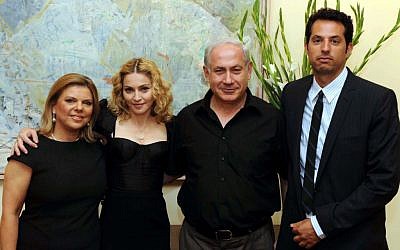
A day after that, Madonna shared a post asking Pope Leo to visit Gaza and “bring his light to the children”. Of course, she was also called out for being a little too late for someone with her reach and influence and a little too muted for someone who has been photographed with Israeli Prime Minister Benjamin Netanyahu and his wife, Sara Netanyahu, at their Jerusalem residence on September 4, 2009, for a Shabbat dinner.
Mid-September, the star-studded Together For Palestine benefit concert, organised by Brian Eno and collaborators at the Wembley Arena in London, saw many artists and actors participate in person or via pre-recorded segments.
This event mostly saw actors and artists who have been consistently vocal about Palestine, including Nicola Coughlan. It also featured Billie Eilish, Cillian Murphy, Joaquin Phoenix, Javier Bardem, Brian Cox and a number of other celebrities who appeared in a video with a clear message: “It’s important to speak out now, not when this is over. Right now, while it’s happening. Pressurise your government, lend your support to those who are peacefully campaigning. Call for a ceasefire. Stop the killing.”
In September, Grammy winner Charlie XCX shared a UN post declaring Israel’s assault on Gaza amounted to a genocide. Rapper A$AP Rocky’s song ‘Both Eyes Closed’ featured the lyrics, “Seen some shit that made me cry, baby die from genocide. Middle finger to the man, f*** the Klan, I know you hate my kind.” While some believed him to be hinting at the Palestinian genocide, others felt it was too generic a statement to link it to Gaza.
Singer Eilish amplified her advocacy for Gaza by joining Ms Rachel’s appeal to US lawmakers, demanding that baby formula, food, and other aid be delivered to people in Gaza. In July, she had called Netenyahu’s plan to relocate Palestinians in Gaza to a camp “horrifying”.
Perhaps one of the most prominent instances of renewed support for Palestine was from Watson, who spoke up about being labeled an antisemite in 2022 by Israeli envoy Danny Danon for sharing a post that included a picture of pro-Palestinian supporters with the quote “solidarity is a verb”. The post’s caption included a poem by British-Australian scholar Sara Ahmed about what solidarity truly entails.
In her first-ever podcast appearance, she said she was concerned, even at the time, about the way the term anti-semite was used to create a duality where you can’t condemn terrorism and simultaneously worry about “the genocide that’s happening in Palestine”.
Speaking about the present scenario, where controversy is routinely generated over statements in support of Palestine, she said, “Both things have to be allowed to be true. You have to be allowed to care about 50,000 civilians dying, 17,000 of [whom] are children and care deeply about the victims of this awful terrorist attack.”
On October 1, Lorde, the New Zealand-born pop star, yelled “free f***ing Palestine” during a concert in New York City’s Madison Square, becoming the latest celebrity to join the chorus of voices rising for Palestine.
Lorde followed up her Madison Square statement with removing her songs from Apple Music Israel as part of the No Music For Genocide movement, which calls for blocking Israel from various streaming services, and includes hundreds of artists, including Björk, Primal Scream, and Paramore.
In 2017, Lorde cancelled a planned show in Israel after facing backlash and said, “I’m not too proud to admit I didn’t make the right call on this one.”
Most recently, Jenna Ortega said she sees the people of Palestine as her heroes because they are “continuously using their voices” despite the world ignoring their pleas. But this wasn’t the first time the Wednesday star made her stance on Palestine clear. In June, she posted about several issues on Instagram, including Israel’s actions in Iran and Palestine. She said her “thoughts are heavy” and “Palestinian cries are being buried in everyday media”.
Ortega also left midway through the shooting of Scream VII in 2023, just a day after her co-star Melissa Barrera was fired for making pro-Palestine social media posts; the studio has, however, denied any connection between the two events and said Ortega departed due to scheduling conflicts.
While these statements mark a visible shift, from silence or muted statements in past years to a cascade of high-profile actors using their platforms to address the genocide, one can’t help but ask whether their statements even matter anymore, or whether the moment to speak has already passed.
Timing, impact and optics
Gaza is already devastated, homes flattened, health systems collapsed, over 67,000 dead, famine declared, and genocide confirmed. Public opinion, international courts, and humanitarian appeals have already been active for years. To some, a celebrity’s post now feels like catching up after the fact, a symbolic apology rather than a genuine attempt to build pressure.
Yet, moral and expressive gestures carry value even late. In moments of media fatigue, shifting narratives require fresh voices. When a mainstream artist speaks up, it can puncture indifference. If it revives attention, prompts new donations or reignites pressure on institutions, it’s more than empty optics.
A statement on its own is weak leverage. But when coupled with fundraising, organised campaigns, or institutional pressure, it becomes harder to dismiss. Case in point, the Emmys’ concentrated messaging, via many actors wearing pins and speaking out, turned a televised event into a political moment. That kind of coordination amplifies each voice.
The Film Workers for Palestine pledge not to work with Israeli film institutions complicit in genocide is another example. It transformed individual moral statements into a collective industry commitment. When many actors refuse to work with specific institutions, money and reputations are at stake. That is why a studio as big as Paramount had to put out a statement condemning the pledge and over 1,200 Hollywood figures, including Liev Schreiber, Mayim Bialik and Sharon Osbourne, signed a new letter rejecting the growing boycott calls.
Grande and Eilish’s posts — the first directing her massive audience to donation channels, blurring the line between “speaking out” and activist mobilisation, and the second amplifying pressure on Congress to facilitate the delivery of essential aid to Gaza — are also examples of solidarity with a kick.
At the end of the day, celebrity statements must catalyse sustained pressure: whether fans persist in demanding accountability, whether policy institutions are forced to respond, or whether media coverage shifts to the lived realities in Gaza rather than optics.
As Greta Thunberg said in her most recent video after returning from her attempt to break the Israeli siege, “I am not the story.”
It’s also fair to ask whether this new wave of celebrities speaking up for Gaza is born of conviction or compulsion. After two years of overwhelming sorrow, global circulation of images, fan backlash, youth engagement and growing moral consensus, remaining silent becomes risky. Celebrities are part of the attention economy, their reputations rely in part on staying aligned with the values the public expects. That is exactly why we can never adore celebrities like Taylor Swift the way we did before. We can’t ignore Rihanna’s continued silence after [one][26] meek, diplomatic post in 2021. We can’t help but wonder why celebrities like Beyoncé and Eminem still don’t speak up.
But we’ve learnt that there’s no use waiting for our favourite stars to talk about the most pressing social issue of our time anymore. And even the ones that have aren’t all equal. The ones most likely to be genuine share certain traits like consistency, specificity (calling out Israel, naming organisations, calling for concrete measures like ceasefire, breaking the siege, linking to fundraisers), taking action like joining benefit events, fundraising, boycotts or leveraging institutional pressure, as well as amplifying Palestinian voices.
Conversely, a vague “thinking of Gaza” post is easily swallowed by the feed.
Importantly, moral critiques should not obscure trust. Genuine care can sometimes be late too, such as Lorde’s. But to shift from gesture to force, celebrities must do more than post; that includes refusing to work with complicit entities (Malala, we’re looking at you), joining benefit shows, and making grants to local humanitarian groups.
Final verdict: late, but not worthless
Yes, much of this celebrity engagement is delayed. The moral urgency has felt obvious for years, and many voices remained silent when it mattered most. But silence is itself a choice. The shift in 2025 suggests that remaining silent has also become untenable for public figures.
That doesn’t mean all statements are created equal. We must distinguish between hollow PR and meaningful activism. The most useful interventions will be those that convert visibility into financial aid, institutional pressure and public accountability, and last but not least, freedom for Palestine.
Comments