

‘45 days felt like 45 years’: Palestinian journalist Plestia Alaqad publishes memoir of her reporting in Gaza
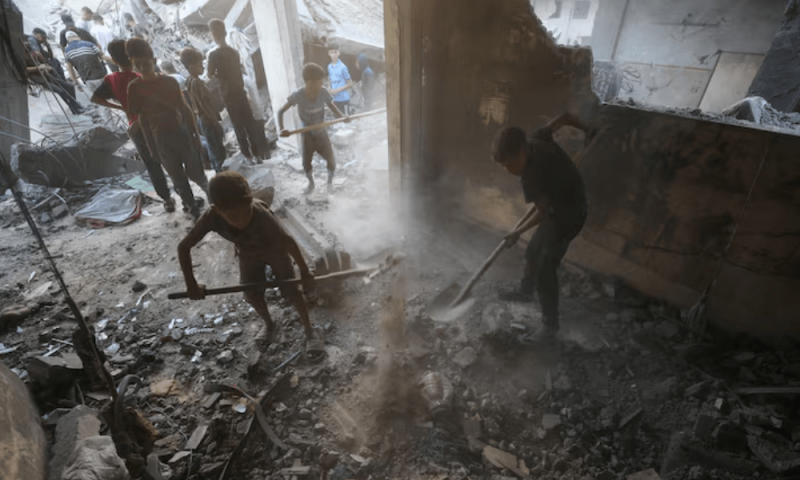
Plestia Alaqad was 21 in October 2023 when Israeli bombs began raining down on her home in Gaza. She spent 45 days documenting the carnage in at the start of the war on Gaza before being evacuated to Australia where she continued her studies. Her first book, The Eyes of Gaza: A Diary of Resilience, documents her days inside the war zone in the form of diary entries she wrote at the time.
Speaking to Teen Vogue, Alaqad said she was triggered when rereading her diaries for the book, remembering a time she was moving from shelter to temporary shelter, trying to keep track of her friends and family, all while struggling to process the sheer horror she was surrounded by. “Every time I read it, I just feel disbelief, like, is this real? Did I really live that? Are there still thousands of people in Gaza living that?”
In the interview, the young author rejected the idea of a “conflict” in Gaza, choosing to call Israel’s mass slaughter what it is: “genocide”. She said it was “cowardly” for people to continue calling it a conflict and asked “why are kids and babies, women and elderly people and men getting killed and starved,” if the fight really is between Israel and Hamas?
The “war”, she wrote in her diary, ended on October 18, 2023, after Israel bombed a hospital, killing 500 people in a single attack. She said she’d thought the barbarity might push the world to intervene and stop Israel, but it was just the beginning of what was to come.

Alaqad expressed great frustration at how the media treated Palestine, talking about how we lived in a “dystopian world” where people died in the thousands and journalists like her had to be careful how they broke news of their deaths for fear of being silenced and shadow banned. She questioned why the world expected Palestinians to be “the perfect victims” and mentioned interviews she’d given to the press which were never aired or had her words altered, cutoff or skipped over entirely.
In such times, the author said, she found hope in the world’s youth — particularly US students — protesting for her people. “I’m glad the world now knows about us and about our struggle,” she said, adding, “I wish to live in a world where the world didn’t need to know us or about our struggles — or for this book not to even be written in the first place.”
She said she’d initially thought she would feel safer speaking about Israeli atrocities abroad than she did while in Gaza. Now, she said, she realises she was most free at home, “because outside of Gaza, you’re a visitor”. Alaqad said she didn’t even bother applying for a US visa to promote her book because of the high chances it would be rejected.
Speaking about the abysmal conditions people endure in Gaza, the journalist told Teen Vogue menstrual hygiene products were almost non-existent, with any remaining products being sold at astronomical premiums. People, she said, couldn’t find tents to sleep in. Those who found tents, couldn’t find a clean bathroom.

“It’s heartbreaking that children aren’t allowed to be children and young people aren’t allowed to be young people in Gaza,” Alaqad said, because the responsibilities of adulthood had fallen on the shoulders of so many who had lost their parents to Israeli fire.
The author said “the genocide made us feel grateful for the life before the genocide, even if it wasn’t perfect” when asked about wearing the keffiyeh at public appearances. She declined to dive any further into cultural norms and significance in a time as perilous as this. History, she said, didn’t start on October 7, “but you can’t talk about culture and your people in a genocide”.
Even as stories like Alaqad’s come out, horrifying everyone who reads them, Gazans say Israel continues its attacks after an agreement was seemingly reached between them and Hamas for a ceasefire and prisoner exchange. US President Donald Trump appealed for Israel to “stop the bombing of Gaza”.
Reports from Israel suggest the Israel Defence Forces are preparing to dial down offensive operations in Gaza as the world hopes for an end to the violence, which has killed over 66,000 Palestinians in its 729 days.
Cover photo: Plestia Alaqad/Instagram







Comments