
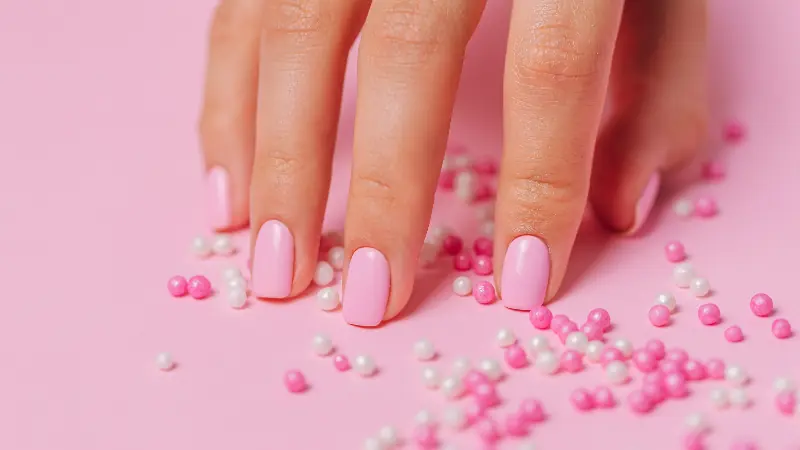
A key ingredient in gel nail polish has been banned in Europe over possible side effects
Gel manicures are a beauty staple, lasting weeks without chips and staying glossy through work, workouts and everything in between. People typically get them when travelling because of their longevity. They’re also a great choice for clumsy people who bump into things, causing nail breakage, to give them extra padding and strength. But as it turns out, not all that glitters is gold, at least not in the European Union.
As of September 1, the EU has officially banned trimethylbenzoyl diphenylphosphine oxide, or TPO, a chemical found in gel nail colours, reported Fox News — meaning that gel nail polishes with TPO can no longer be sold or used by nail technicians in Europe. The chemical reacts under UV light to make the polish harden quickly and gives it its ultra-glossy finish.
TPO isn’t in every gel formula, but it’s pretty common. Nail salons in any of the EU’s 27 member states, as well as other countries that mirror the trade bloc’s regulations, such as Norway and Switzerland, have been asked to ditch their inventory immediately, with no grace period and no exceptions, reported The Independent.
Salons and retailers must safely dispose of all their current stock, while manufacturers must reformulate their products to be TPO-free.
The decision stems from several studies linking TPO exposure to fertility issues. These studies often focused on animals, not humans, but the EU uses a strict “better safe than sorry” approach when it comes to cosmetics.
Dermatologist Dr Hannah Kopelman told Wellness Pulse that the EU’s decision is “more of a precautionary move rather than a response to strong human evidence,” since most of the research on TPO’s health effects has been limited to animal studies.
Meanwhile, TPO remains legal and unregulated in the US, where more than 100 million women use nail products. You can walk into most salons today and get a TPO-heavy manicure without anyone blinking, reported VICE News.
The EU’s ban could still disrupt the American beauty industry if companies sourcing their products from Europe are affected by knock-on supply shortages. And those that reformulate their gels in Europe may do the same in the US in order to avoid making two separate versions of the product, per The Independent.
Even products that were restricted to professional use in the EU — capped at five per cent TPO concentration — are still floating around American salons and retailers.
In Pakistan, most, if not all of our gel nail polish is imported as there aren’t any big name brands that produce the product.
Many in Europe oppose the ban, with Belgian wholesaler ASAP Nails and Beauty Supply setting up a protest website and arguing it would cause “major economic damage” to small businesses and was based on “no human evidence of danger”.
There are ways to reduce TPO exposure, per VICE. Brands like OPI’s Intelli-Gel, Aprés Nail, and Aimeili offer TPO-free options. Experts also suggest spacing out gel appointments, choosing well-ventilated salons, and using a protective base coat.
There’s more to worry about than what’s in the formula, per the outlet. UV-curing devices have raised concerns about skin cancer risk, and letting gel polish “grow out” can cause bacterial infections. Experts warn that the hardened gel, cured with a UV or LED lamp, can harbour dangerous bacteria.
To protect oneself when getting manicures, the American Academy of Dermatology recommends applying broad-spectrum sunscreen to the hands before using the UV device, not to wear nail polish for one to two weeks or longer, and not to pick gel nail polish. When the colour begins to come off, make an appointment with your manicurist to have it removed, and consider opting for regular nail polish over gel.










Comments