
Pakistani dramas want you to believe mental illness is a punishment for bad behaviour — it’s not
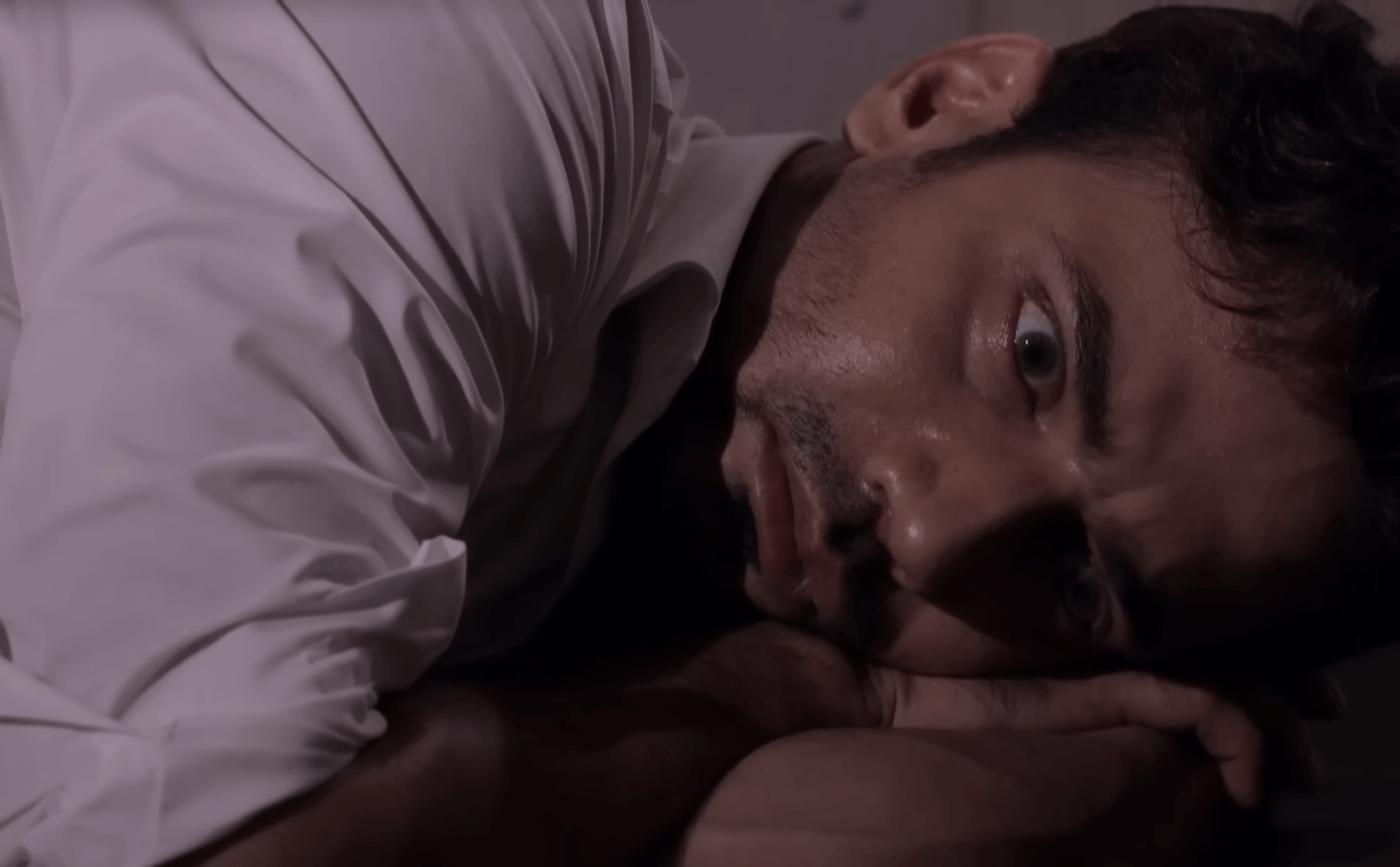
Gun pointed toward his wife, in a state of emotional and mental breakdown, Zahid Ahmed’s character battles his alternate personality for control, going as far as to say that Sameera is not the manifestation of his love, rather, “you are my illness. In fact, you were my illness.”
While it was a sincere attempt to raise awareness about the reality of those living with dissociative identity disorder, it was ultimately misguided. The creators of Ishq Zahe Naseeb (2019) essentially end up reiterating the same misconceptions and stereotypes about already exist: that they are a danger to others and themselves.
This narrative choice, among other things, is part of a bigger problem in Pakistani television, which is that Pakistani writers, at their best, don’t understand mental illness, and at their worst, conflate mental illness with morality.
The morality and the personal responsibility of those who suffer from psychological concerns is a topic that is often debated in many scientific and judicial circles, but the point of apprehension is how morality is woven into mental illness as a form of punishment in Pakistani dramas.
Teaching a lesson
A clear message is sent when the fight between good and evil in a drama ends with the bad or immoral character succumbing to madness due to their hubris. Here, mental illness serves as a plot point, a moral lesson for the audience. The mental illness exhibited is not a component of a wider whole of the character, but rather a consequence of their own actions. In Madness & Civilisation: A History of Insanity in Age of Reason, Michel Foucalt differentiates this ailment from mental illness, and calls it a madness that is a social construct, that is meant to serve a purpose. In our dramas, the purpose is caution.
Those who err will be served divine justice. They might escape the law but they won’t escape God, which is why Syed Jibran’s character goes mad in Chup Raho (2014) — it is divine retribution for sexually assaulting his sister-in-law played by Sajal Aly. Similarly, Riz Kamali’s character in Bubbly Kya Chahti Hai starts losing her mental bearings after being divorced by her husband (played by Shahzad Raza) for her infidelity, only to then be immediately be rejected by her lover (played by Salahuddin Tunio) too. Her madness is the consequence of her own greed and duplicity. Both of these characters’ lunacy is their punishment for all the wrong they’ve done and the sins they committed against other people.
Losing faith and culture is also often shown as a downfall. The modern, westernised woman — outspoken, greedy, and ambitious — is painted as unstable compared to her quiet, modest, and religious counterpart. One is seen as ‘bad’ for being too bold, the other as ‘good’ for sticking to tradition. Weak faith equals weak identity in these stories, making the modern woman seem neurotic and fragile; someone who can’t handle failure or disappointment.
This lesson is driven home by the suicides of Naveen Waqar and Aisha Malik’s characters in Humsafar (2011) and Mann Mayal (2016) respectively. Sara (Waqar) is shown to wear western clothes, work at an office and belong to a upper class background, in contrast to her rival (Mahira Khan), who is seen with her head covered in a dupatta, teaches tuition at home and belongs to a lower-middle class background. In the same vein, Jeena (Malik) is a woman who works at an office, has no family and hence is self-reliant, very unlike her rival (Maya Ali) who is simplistic, eastern, docile and often shown praying. After repeated failures and rejection in their pursuit of love, Sara and Jeena find no solution except taking their lives, while their rivals persevere through their hardships with patience, faith and humility.
By repeatedly presenting mental illness as ‘punishment’ for immorality and injustice, or a consequence of weak faith or weak mind, mental illness itself becomes synonymous with immorality, and mentally ill individuals become wicked and feeble minded.
Women and madness
Under the patriarchy, being “feeble-minded” has long been linked with being a woman. For centuries, women have been stereotyped as emotional, irrational, and a bit too simple. So it’s no surprise that when stories show someone “going mad,” it’s usually a woman.
Even psychology (a field built to understand people) has a history of labelling women’s feelings and experiences as problems that need ‘fixing’.
Women losing their minds has been a go-to trope for ages, it has even been used by Shakespeare — think of Ophelia’s fate in Hamlet. That’s because madness is often seen as the opposite of masculine logic and control. And since society treats emotion and delicacy as “feminine,” it’s easy to link mental illness with womanhood. Women are viewed as closer to guilt, melancholia, and hysteria, which makes them easy targets for being labeled as mentally unstable. In a way, madness has become feminised: seen as something women naturally fall into just by being who they are.
Phyllis Chesler theorises in Women & Madness that men are typically allowed a broader range of acceptable behaviours than their female counterparts: “Thus, since women are allowed fewer total behaviours and are more strictly confined to their role-sphere than men are, women… will commit more behaviours that are seen as ill or unacceptable.”
When it comes to traditional gender roles, women are expected to be soft-spoken, kind, and dependent on men. Those who deviate from these expectations are often portrayed as antagonists, characterised by traits like cunning and ambition. Such female characters engage in manipulation and deceit, leading the more naive characters to fall victim to their schemes.
Meanwhile, men who make mistakes don’t always face the same judgment. In fact, they’re often given the chance to grow, redeem themselves, or just walk away from their mistakes. Take Bashar Momin (2014), for instance, whose titular character is a money launderer, an arrogant and egoistic man prone to fits of anger who mistreats his employees and his wife alike. At the end of the show, after some self-reflection, he is a changed man, soft-spoken, respectful and loving.
The narrative suggests that women who violate societal norms face severe repercussions, often culminating in their madness or victimisation like Nimra in Jhooti (2020), Nisha in Jalan (2020), Gohar in Nand (2020) or Nayla in Titli (2017), while men frequently evade punishment. In 2017’s Khani Feroze Khan’s character may have committed murder, but he found God at the end of the show, and hence gets to be redeemed, highlighting the harsher penalties imposed by the patriarchy on women. Consequently, ‘bad women’ are portrayed as irredeemable figures, stripped of nuance and rationality, learning the weight of their transgressions solely through divine retribution.
A heavy crown (for the ladies)
The antagonists/anti-heroes in Jhooti, Jalan, Titli and Nand are power hungry, which is impermissible in a patriarchal society. Iqra Aziz’s character in Jhooti is a greedy woman, who will use any means necessary to marry rich, whether she has to lie, cheat, steal or harass her sisters-in-law, even causing a miscarriage. Similarly, Minal Khan’s character in Jalan is incessantly and obsessively jealous of her sister, whose husband she is in love with, eventually scheming her way into marrying him while her sister sets herself on fire in grief.
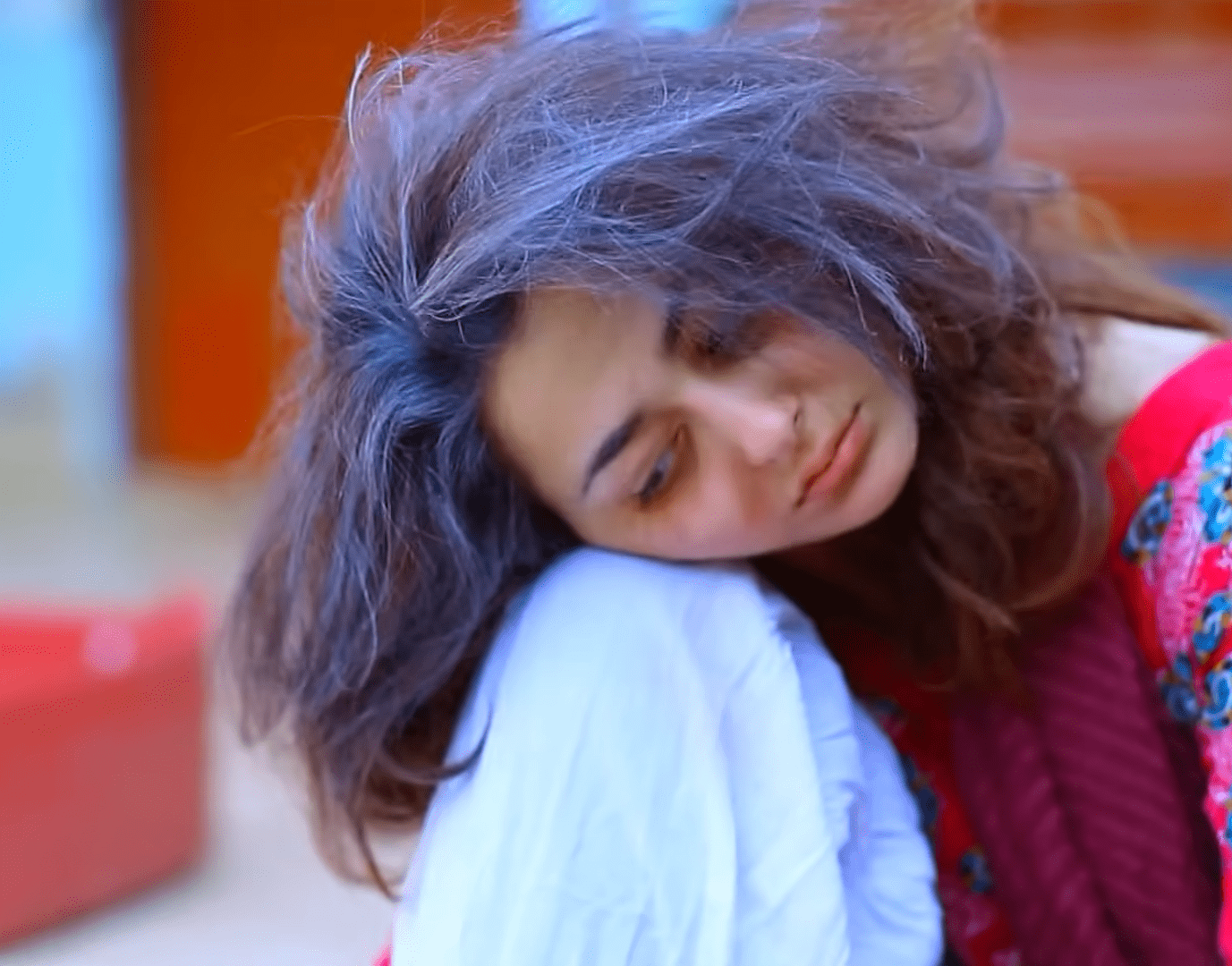
Bewilderingly, despite having an equal part in the affair that lead to Mishu’s (Areeba Habib) death, Emmad Irfani’s character doesn’t go mad like Nisha, and simply dies. Faiza Hasan’s character in Nand (2020) ruins her brothers’ married lives through her manipulative tactics, while Hania Aamir’s character in Titli (2017) is vain and greedy and eventually abandons her husband and children to be with another man, culminating in her downfall.
The message is clear: women who seek control are seen as irrational, and their punishment is madness. Because power, in these stories, is still treated as a male trait.
Virtuous women are docile, while unconscionable women are ambitious, as aptly shown in Kasak (2020), in which the ‘good’ woman (Iqra Aziz), obediently accepts her marriage to man who has a young son, while the ‘bad’ woman (Ayesha Toor) is a modern working woman who is both a bad mother and wife.
The only time women seem to be shown using their agency is when they’re trying to control other people (or their own lives) and then they’re punished for it by being driven to madness. This demonises the mere thought of women’s agency. The domination of men’s lives by women is unacceptable, like in Balaa (2019), in which Ushna Shah’s character slowly kills Taimoor’s (Bilal Abbas) entire family to be the only thing he has. However, the domination of women’s lives by men can be exonerated, such as in Mann Mast Malaang (2025), in which Danish Taimoor’s character ties up the female lead to keep her from leaving him, or in Ishq Hai (2021), where he kidnaps his lover and forces her into marriage.
The patriarchy puts women in a tight box. If a woman reaches for power, she’s seen as not feminine enough and is often portrayed as going mad — like Gohar in Nand, who is controlling and overbearing, which are ‘unfeminine’ qualities. On the flip side, if she sticks to traditional femininity, she’s seen as weak and ends up breaking down emotionally — Mahira Khan’s character in Hum Kahan Ke Sachay Thay (2021) who is a victim of her cousin’s schemes and envy, but too innocent to know how to be taken seriously, has a slow mental breakdown; or like Samina Peerzada’s character in Balaa (2019), who goes mad with grief because of her daughters’ deaths.
But what about men?
Mental illness in men is heavily stigmatised because of toxic ideas about masculinity; showing emotion is seen as weak or a loss of control. Since mental health struggles are mostly shown through women’s stories, it makes these issues seem “feminine,” which can make men feel ashamed or less manly for going through the same thing.
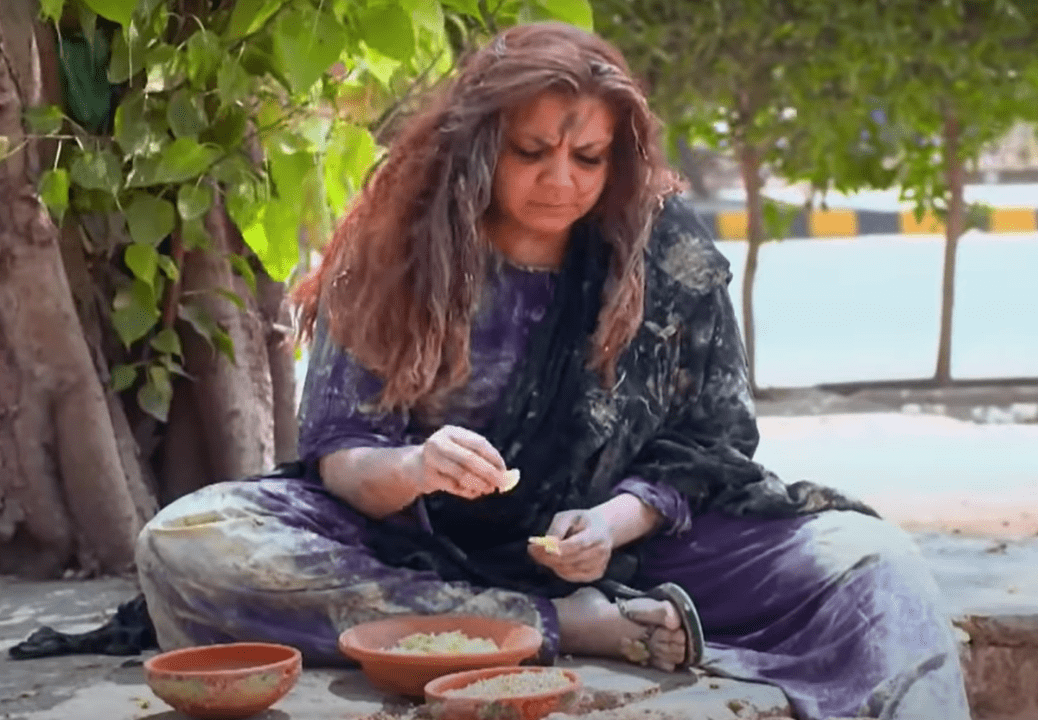
We do see women dealing with trauma — like in Chup Raho and Dar Si Jati Hai Sila (2018), whose protagonists are survivors of sexual violence — but men who also face serious trauma, such as soldiers, victims of community violence or car crash survivors, rarely get that same attention, even though they’re just as likely to suffer from PTSD. This further erases men’s mental health issues.
The bare minimum
Even when dramas do attempt to portray mental illness as part of a greater whole, the representation is reductive and simplistic. Depression is only sadness and constant sobbing, anxiety is being fidgety and scared, PTSD is temporary.
Characters with autism are infantalised and presented as intellectually impaired —like Imran Ashraf’s Bhola in Ranjha Ranjha Kardi (2018), who is coded autistically and shown like a child in an adult’s body — despite the fact that autism is a spectrum. Female characters are often seen fainting and immediately diagnosed with a “nervous breakdown” (an outdated term) after being driven to their emotional limits.
To top it all off, there is rarely any representation of treatment, which ties back to themes of morality; bad people get punished, and good people recover on their own — like how Bhola’s intellectual impairment seems to improve on its own. With this lesson, madness is a desired outcome, a fitting punishment befalling the sinner.
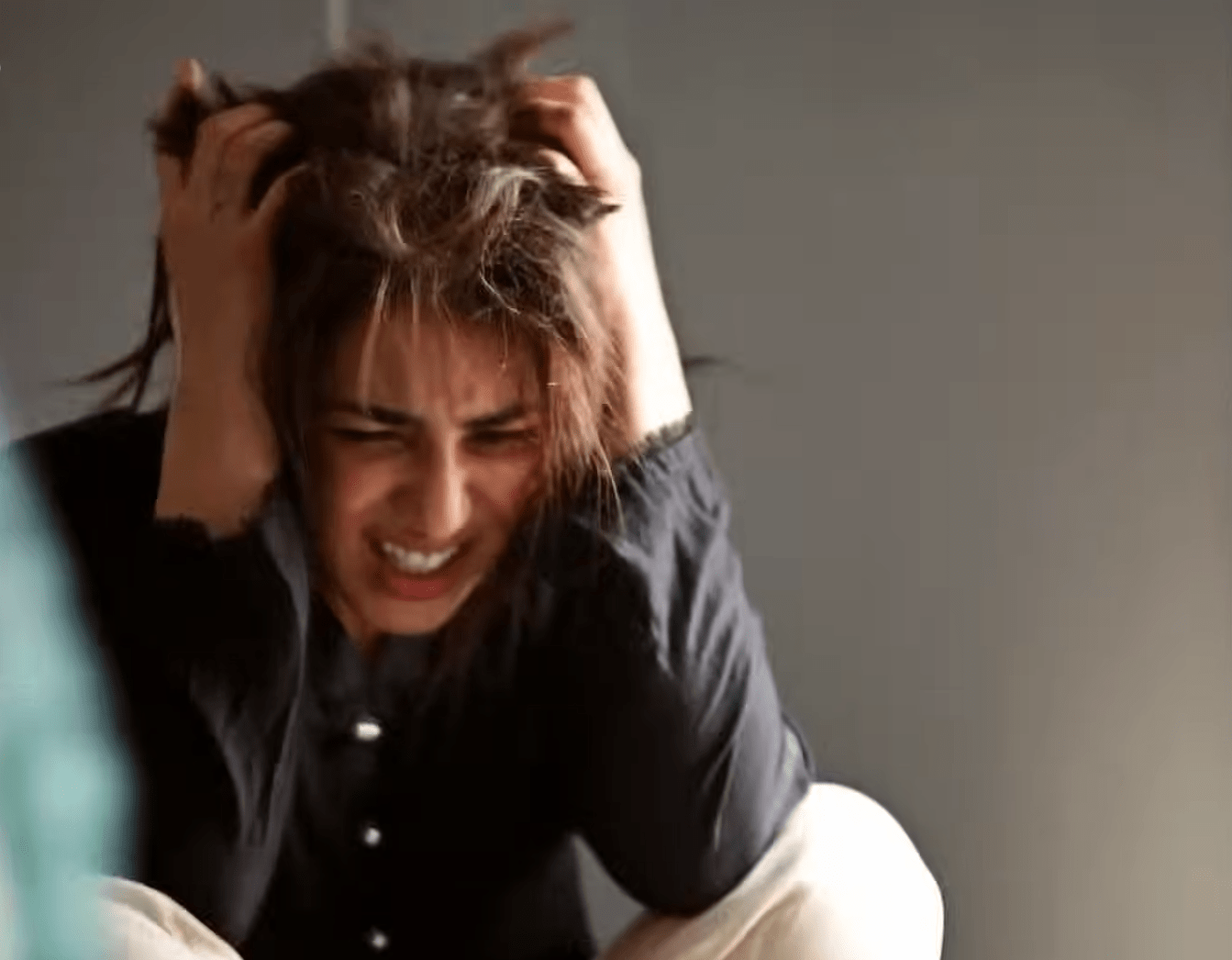
When Taimoor drives Nigar mad towards the end of Balaa, the audience feels vindicated, further discouraging them from feeling compassion towards individuals with mental illness; immoral people deserve it, and moral people don’t remain mentally ill, divorcing treatment entirely from the conversation.
Why does this matter?
These kinds of portrayals just add to the stigma around mental illness in our culture. Seeing the same negative images again and again makes people afraid of mental health issues and of those dealing with them.
A 2023 review by James Goodwin and Laura Behan found that media stereotypes lead the public to hold biased views and keep their distance from people who use mental health services. A study from the Czech Republic also showed that these portrayals can stop people from getting help. They lower self-esteem, make it harder to stick with treatment, and get in the way of recovery.
Good mental health representation shouldn’t be a second thought, but the most primal part of the drama the writers set out to create. A critical media lens is essential in challenging harmful portrayals and advocating for more compassionate, realistic depictions of psychological struggles, because these portrayals have real life consequences. Pakistani television is still in the early stages of offering good representation of mental illness, for both men and women. If Pakistani creators must insist on portraying mental illness, they can at least take a page out of international media like Midsommar (2019), which explores female madness through a critical feminist lens.
Mental health issues aren’t ‘good’ or ‘bad’ nor are they the consequences of someone’s actions — they just are. Offering nuanced stories where mental illness doesn’t exist solely to serve a moral narrative is the only way to dismantle the taboos of our culture.
Comments