
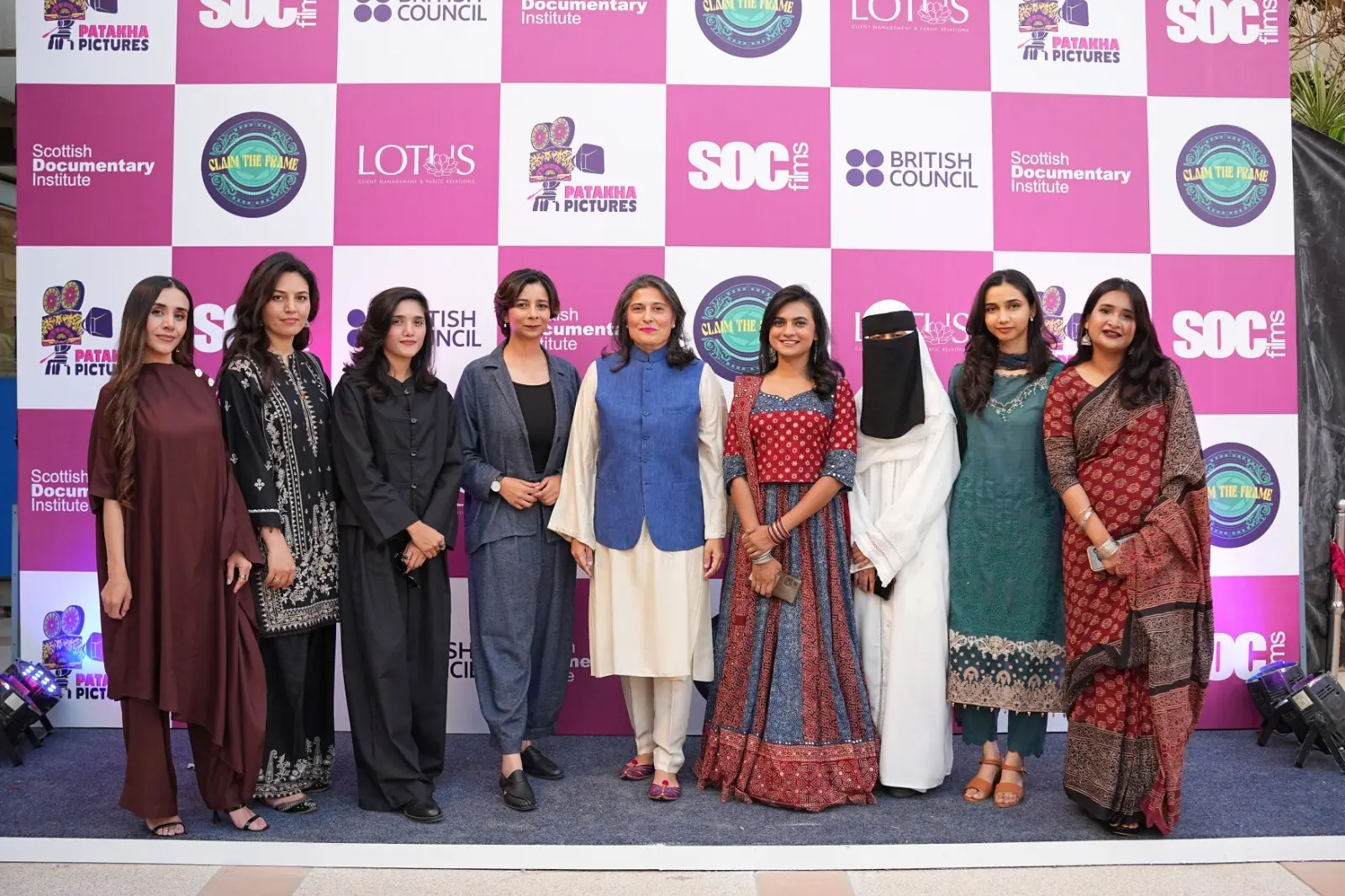
Women filmmakers showcase rare stories at Sharmeen Obaid-Chinoy's special event
‘Claim the Frame’, a special event, celebrating five years of Patakha Pictures, an initiative of two-time Academy Award-winning filmmaker Sharmeen Obaid-Chinoy and SOC Films, shared a sneak peek of four documentaries by eight young women mentee filmmakers from all over the country in partnership with the British Council and the Scottish Documentary Institute here on Monday.
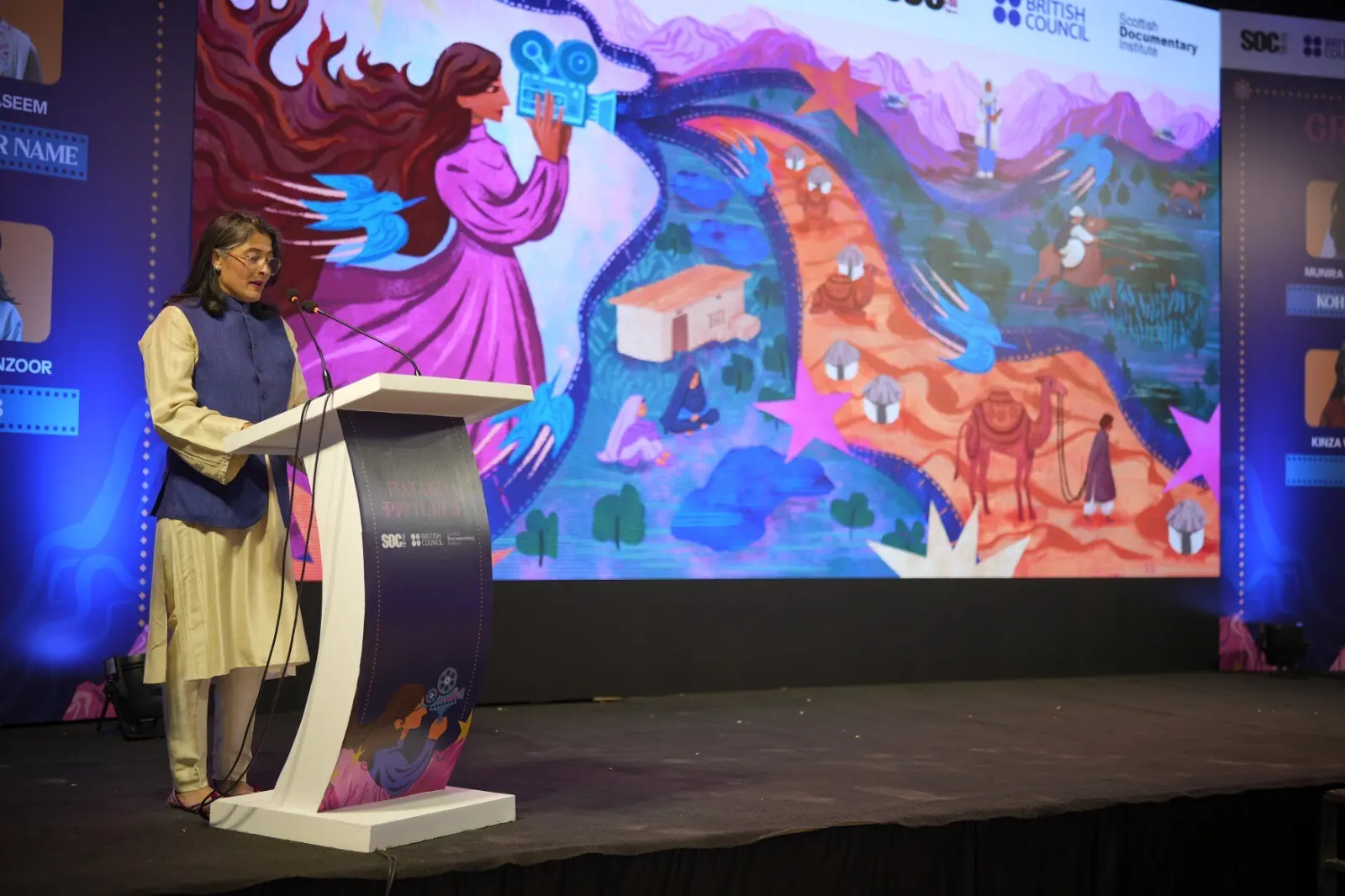
Dedicated to supporting the next generation of documentary storytellers in Pakistan, Patakha Pictures so far has supported 76 emerging filmmakers, whose work has collectively received more than 22 awards and screened at over 100 film festivals worldwide.
This year, eight women filmmakers from Punjab, Sindh and Gilgit-Baltistan made four creative pairs, whose documentaries explore women breaking barriers in traditionally male spaces, climate change and child marriage, survival and artistic tradition in Cholistan and generations of women providing healthcare in one of Pakistan’s most remote valleys.
The five-month training and mentorship programme saw the fellows receiving production funding, weekly online mentorship, an intensive in-person edit week in Karachi along with specialised workshops spanning storytelling, camera techniques, editing and other practical aspects of documentary filmmaking.
Returning for the fifth time as an international mentor was acclaimed documentary filmmaker and Scottish Documentary Institute founder Noe Mendelle, joined by filmmaker and cinematographer Nadir Siddiqui, nonfiction and animation producer Huma Murad Shah, award-winning journalist and documentary filmmaker Maryam Ishani Thompson, Edit Mentor Husain Qaizar and sound engineer and producer Sameer Khan, bringing expertise across cinematography, documentary production and ethics, journalism and sound design.
While speaking on the occasion, Sharmeen Obaid-Chinoy said that five years of Patakha Pictures have reaffirmed a fundamental belief that talent is universal, but opportunity is not. “Together with the British Council Pakistan and the Scottish Documentary Institute, we have seen how access to funding, mentorship and creative freedom can transform the journeys of women filmmakers,” she said.
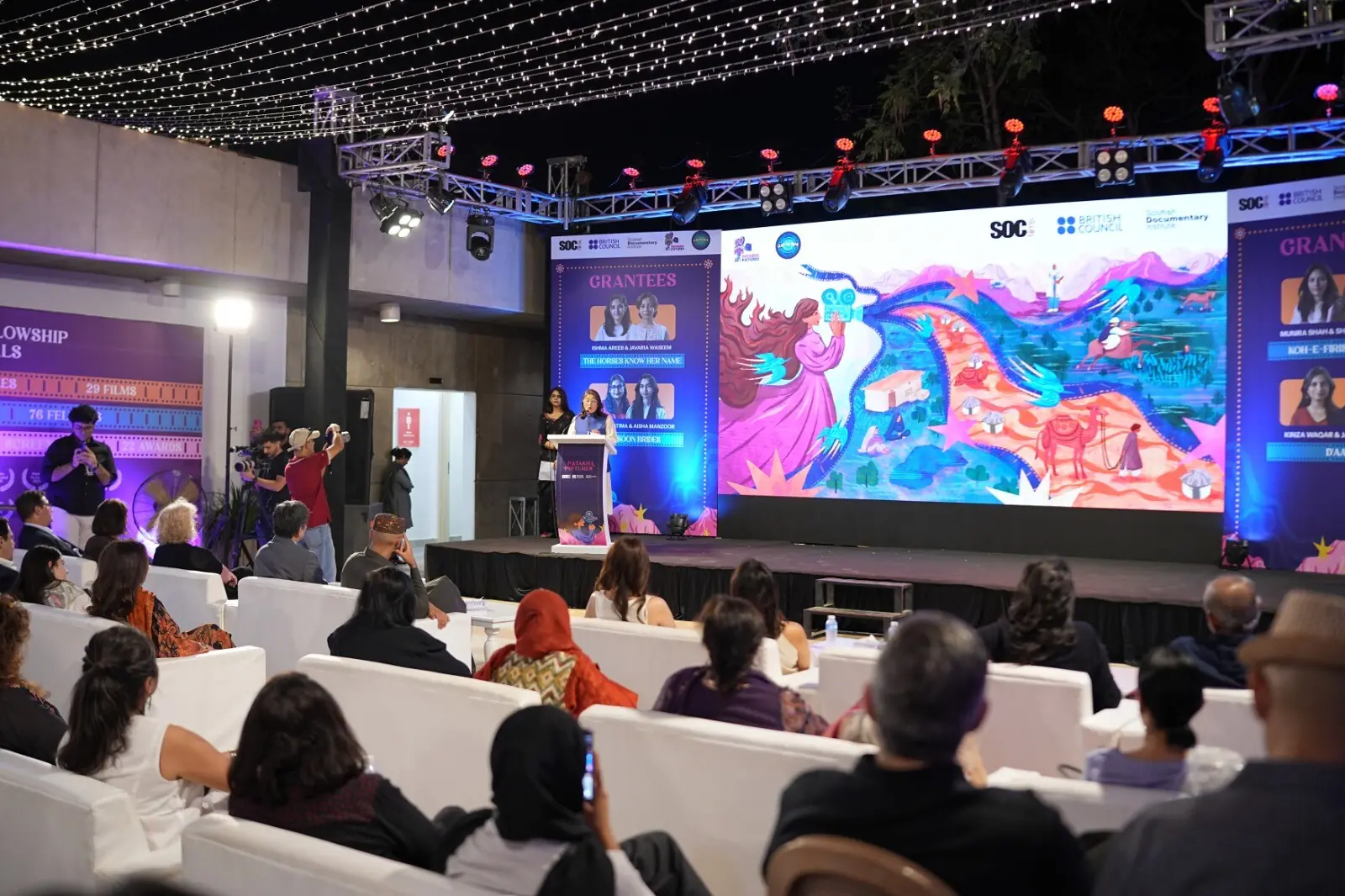
“Through successive cycles, Patakha Pictures fellows have received funding, international mentorship, practical filmmaking support and opportunities to develop stories rooted in their own communities,” she said.
“You are not the beneficiaries of this programme. You are for whom this programme exists. At the beginning of my career, there were many people who have held my hand to help me find my way. Now we are here to hold the hands of the next generation,” she smiled before calling to the stage to introduce this year’s filmmakers and their documentaries.
The first pair, Shagufta Rasool and Munira Shah, from Gilgit-Baltistan and Khyber Pakhtunkhwa, respectively, have made the documentary titled Koh-i-Firishtayesht, which traces the legacy of Lal Pari, a retired healthcare worker and midwife who spent decades reaching women across the remote Shimshal Valley.
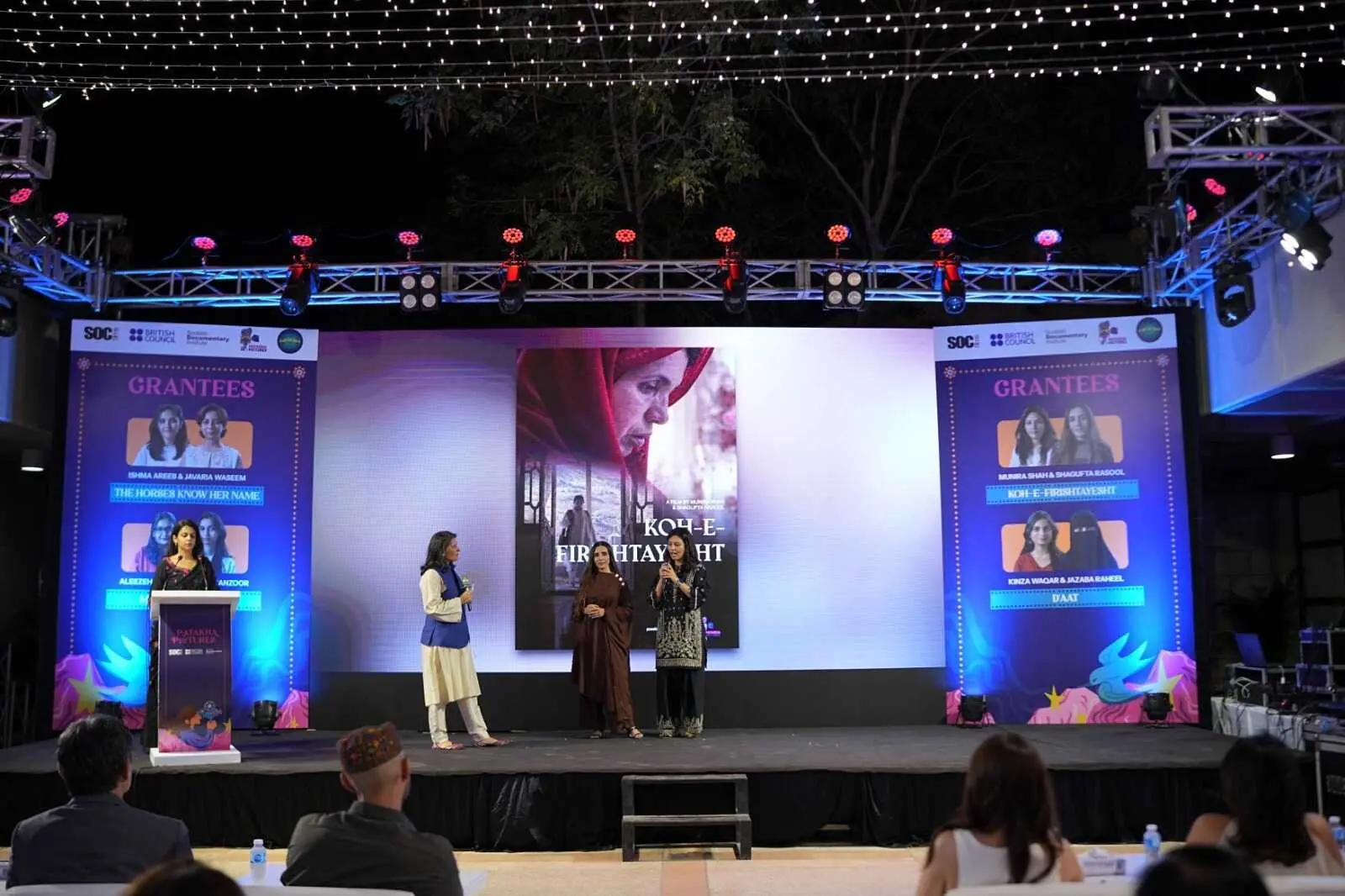
The second pair, Kinza Waqar and Jazaba Raheel, from Bahawalpur and Lahore, respectively, have made the documentary D’aat, which follows the story of a camel barber, Bakht Ali, who makes beautiful designs with his scissors and razor on the camels’ coats in the Cholistan desert.
Next, there was a documentary Monsoon Brides, which tackles a very sensitive subject of the relationship between climate change, poverty and child marriage in rural Sindh by filmmakers and journalists Aleezeh Fatima and Aisha Manzoor of Karachi.
“It was an eye-opening and humbling experience to approach the story with sensitivity,” said Aleezeh about the film.
The fourth pair of Ishma Areeb and Javaria Waseem from Lahore have made the documentary titled The Horses Know Her Name, which explores the story of Anum Shakoor, a woman who found strength and healing through horses before entering the overwhelmingly male world of tent pegging.
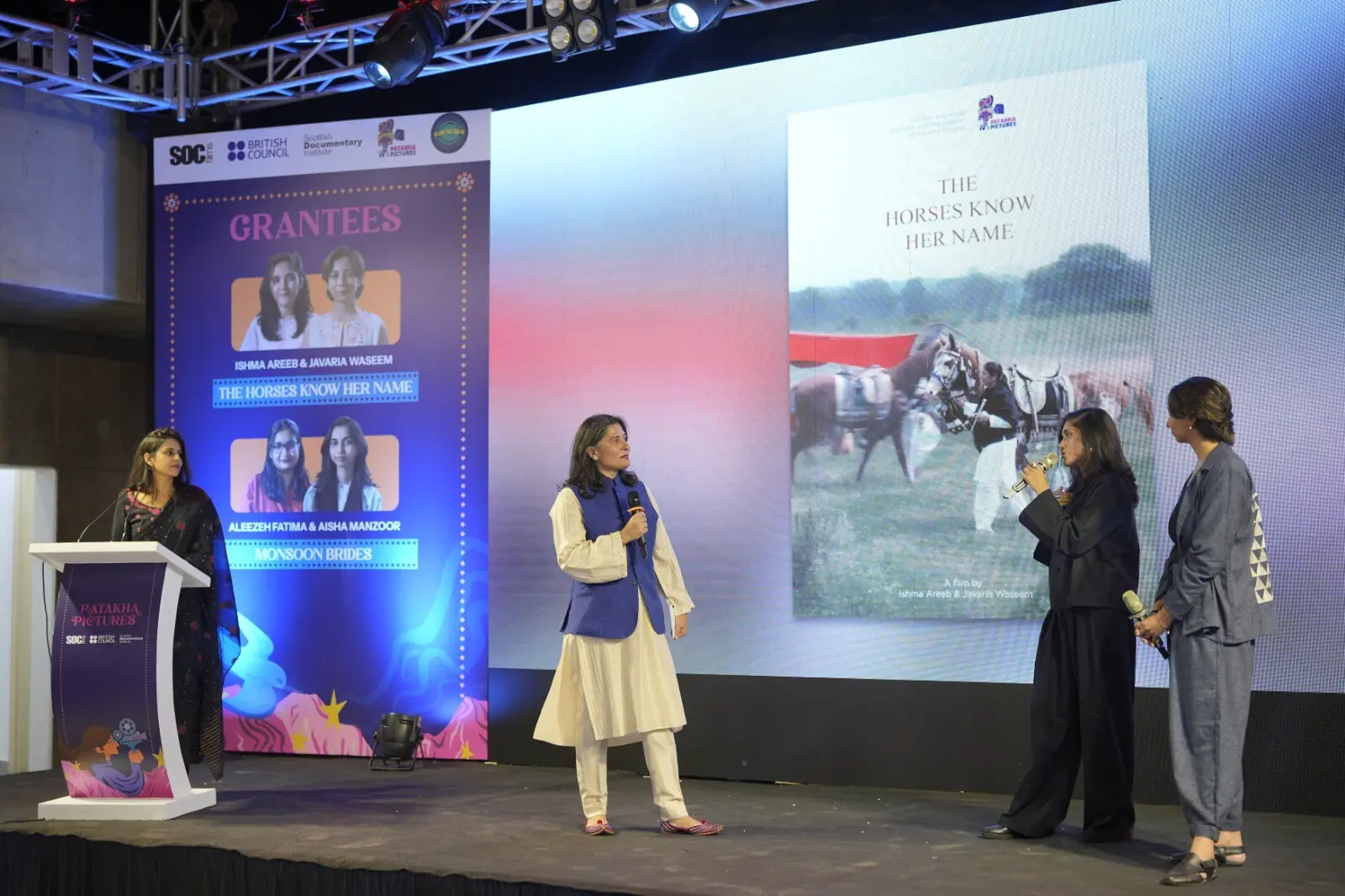
Earlier, British Council Pakistan’s Arts Director, Laila Jamil, said that Sharmeen’s tenacity and vision bring the British Council and SOC Films to work together again and again across multiple art forms. “That’s how emerging filmmakers are supported, mentored and funded to ignite the firecracker that we know as Patakha Pictures,” she concluded.
Originally published in Dawn, October 20th, 2026






Comments