

Zhalay Sarhadi takes aim at abuse of power behind rape culture
Zhalay Sarhadi addressed the pervasive reality of sexual violence while also calling out the patriarchal structures that enable it.
In a scathing Instagram story posted on Sunday, the actor suggested male behaviour is frequently driven by a singular agenda: the abuse of power, primarily perpetrated “through their ‘appendage’”.
Sarhadi, who is known for her vocal support for animal, children and women’s rights, also drew attention to the societal mechanisms that perpetuate rape culture.
“The prey [may be] of any gender, species and age. That does not matter. The [victim blaming] starts and the predators are seldom at fault,” she wrote.
This observation speaks to the deep-seated culture of victim blaming that often shields perpetrators and pushes survivors into silence, creating a seemingly endless cycle of trauma.
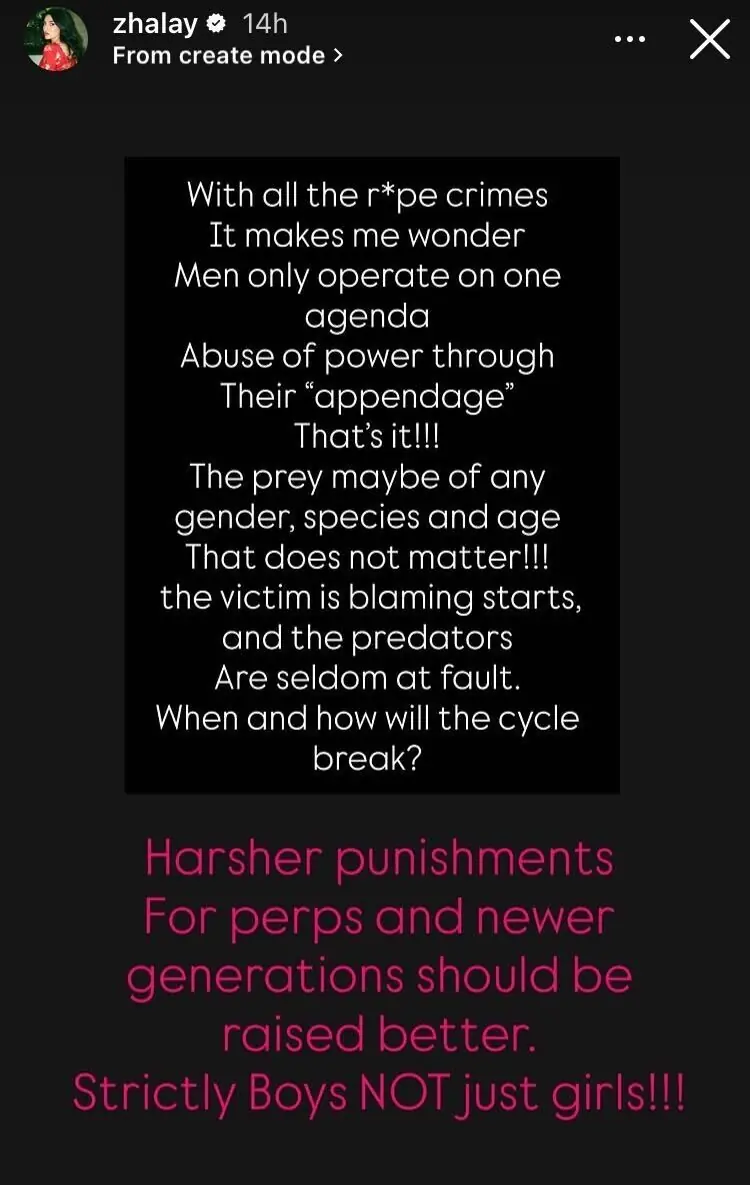
She then posed a poignant question: “When and how will the cycle break?”
In her post, the actor also offered a solution, which she believes could help tackle the issue.
“Harsher punishments for perps and newer generations should be raised better,” Sarhadi wrote, before adding the focus ought to be on “strictly boys NOT just girls”.
By calling for harsher punishments, Sarhadi acknowledged the failures of a justice system that frequently treats sexual violence with leniency, which leads to failure to deter and prevent future crimes.
But it’s her emphasis on the upbringing of boys that addresses an oft-overlooked aspect of rape culture.
For generations, the burden of preventing sexual violence has been placed squarely on the shoulders of women. They are told to dress modestly, avoid travelling alone, watch their drinks and essentially shrink their existence to avoid provoking male ‘desire’. This approach is inherently flawed because it places the onus of safety on the potential victim rather than the potential perpetrator.
Sarhadi’s assertion that boys must be raised better targets the root cause. In many patriarchal societies, boys are often socialised to view aggression as a sign of superiority and sexual dominance as a measure of ‘true’ masculinity.
The concept of toxic masculinity dictates that emotional repression and physical dominance are the benchmarks of manhood and this often happens at the expense of empathy and respect for boundaries.
By stating “strictly boys not just girls,” Sarhadi is demanding systemic change. She is arguing that parents must actively teach their sons about consent, respect and the immorality of exerting power over the vulnerable. Because it is not enough to teach daughters how to defend themselves; society must teach sons not to attack.
This requires dismantling the entitlement that is often inadvertently or deliberately inculcated in young men, where they are taught that they are entitled to women’s bodies and labour.
Sarhadi’s post serves as a necessary wake-up call. It argues that until we stop raising boys to be predators and start raising them to be allies and until our legal systems treat sexual violence with the severity that rape culture deserves, the cycle the actor speaks of will remain unbroken.







Comments