
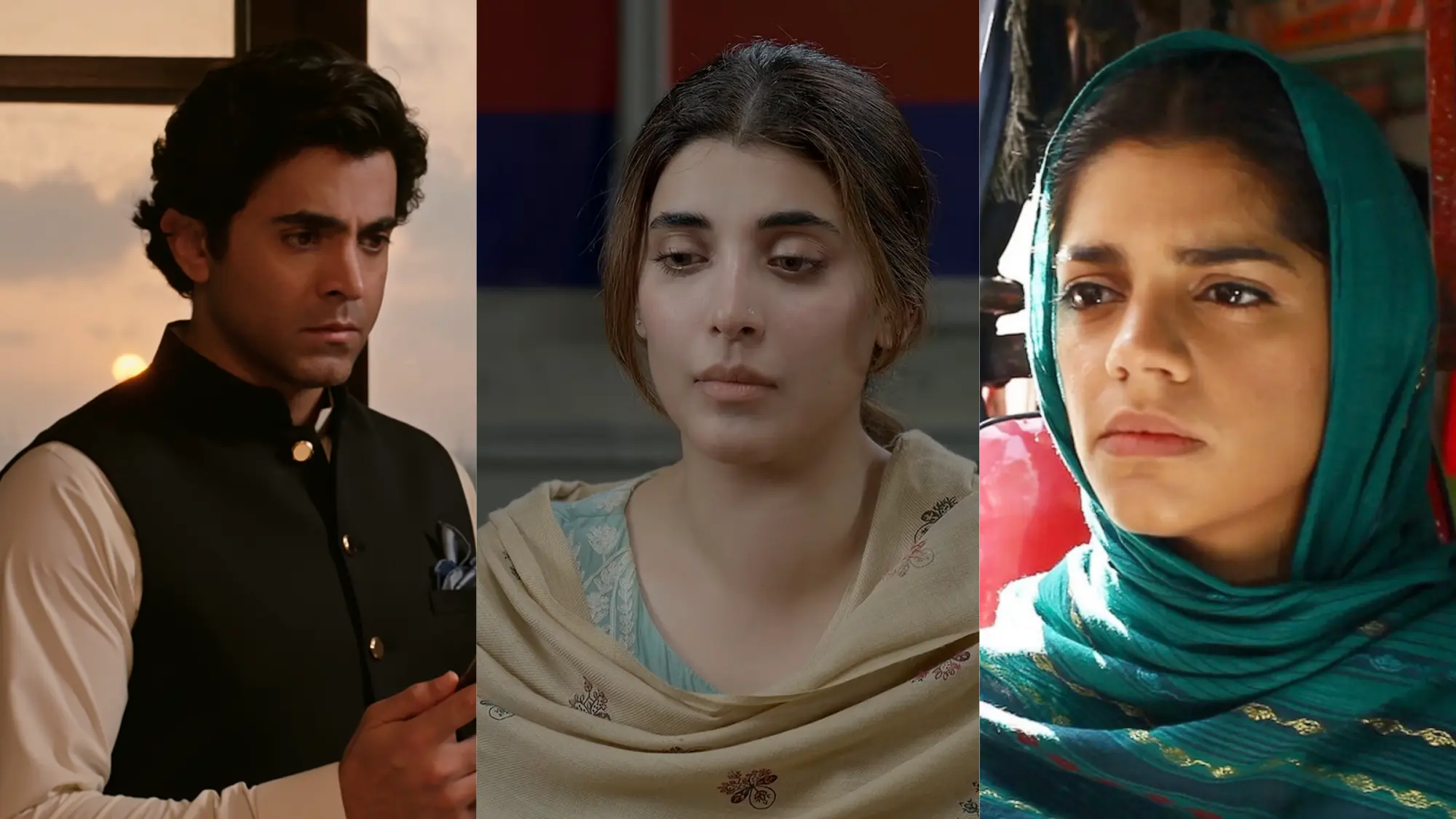
The rich, the righteous and Umera Ahmed
To what can we attribute the success of Umera Ahmed, one of Pakistan’s best-selling novelists and arguably its most successful playwright? One answer is her understanding of the psyche of the audience she is selling her wares to.
Most of those who consume her work are middle-class Pakistani women, and sometimes men, looking for relatable romantic fiction, and Umera Ahmed understands their desires, fantasies and fears very well. There is also the fact that she is an effective storyteller who knows how to create emotional hooks that keep audiences engaged.
Romantic fiction, of course, is not a uniquely Pakistani affliction. It has long been a mainstay of fiction consumption around the world, making romance a multi-billion-dollar industry that outsells every other genre in the book market.
Pakistan has its own long history of popular romantic fiction, beginning with the rise of digests in the 60s and 70s. They had a vast readership, and names like Razia Butt, Teen Aurtein Teen Kahaniyaan, Suspense Digest, Khawateen and Shua remain familiar to many Pakistanis of a certain generation. But these narratives moved from a hugely popular print culture into the absolute mainstream once Pakistani television went commercial with the proliferation of private channels, after decades in which television had been dominated by the state, and editorial control remained largely in the hands of the more “serious-minded”.
As digest sales began to dwindle in the 90s, editors discovered that inserting a religious segment with historical anecdotes, quotations from scripture and scholarly advice augmented circulation tremendously. Once this logic was fully internalised by the publishing industry, romance with a side of Islam became a bona fide genre.
Of course, Naseem Hijazi and those of his ilk had already done this before, but while Hijazi’s focus was on the grand historical conquerors of Islam and the ladies who swooned over them, the women who carried this genre forward, such as Bano Qudsia, then Umera and Nimra Ahmed, brought this dynamic into a mostly domestic sphere.
A little bit like her spiritual mentor, Bano Qudsia, Umera Ahmed’s specialty is bringing these Islamic fantasies to luxury domains. She presents seemingly modern setups — young brilliant students going to top colleges, studying for difficult exams, driving luxury cars, living in sprawling mansions — but the core assumptions and values the drama propagates remain defiantly middle-class and conservative.
We see the enticement of that other way of life, the audience is even encouraged to indulge in it for a good many episodes, but the indulgence is kept in check by appropriately timed warnings about the fates of those who have strayed from the righteous path, and by the moral arc of the universe bending towards Islam, so that the author can never be accused of identifying with or secretly fantasising about that corrupt version of the good life that she has placed in front of our eyes for so many episodes. To be sure, her intent in showing it to us is not because it is more colourful, interesting and fun, but so that we can recognise it and shun it if we ever happen to come across it in real life.
But while Umera Ahmed’s moral point of view may be recognisably middle class, her heroes never are. The middle class is the audience and the moral viewpoint, but never the hero’s ultimate condition. He is either already rich or becomes rich, or is so exceptionally talented that ordinary financial life ceases to apply to him. Zaroon, Salar and Abu Bakar are spectacularly successful. Tabish becomes obscenely wealthy but Jami, the deadbeat husband from Kafeel, is the villain because his is the opposite trajectory — he is a rich man who becomes poor — and Zamil, the insecure boyfriend from Dar-e-Nijaat, falls from grace because he fails to be as successful as his Harvard-graduate nemesis, Abu Bakar.
These dramas speak to viewers by getting into their inner worlds: their class yearnings, academic aspirations and fears that decent people are overlooked. It then gives those people exceptional status, exceptional wealth or a way out of ordinary financial woes. But all that wealth does not ultimately corrupt them, and if it does, it is just a temporary condition. These dramas flatter middle-class values while each one of its main characters escapes the middle-class material life.
This is best symbolised by Abu Bakar still driving around in the beat-up old car his mother gave him upon graduation. He can afford, and in fact does have, a much better car in material terms, but when he drives the old one, the one with sentimental value, he embodies the perfect amalgamation of the material and the spiritual. This is also the case with the idealised heroine of Aap Ki Izzat, Beena, who doesn’t care about all the wealth Tabish has accumulated; what she wants is his love, but that claim seems to carry greater weight when she speaks it in a mansion with a dozen rooms.
This fiction validates the middle class for what it believes by having those values acted out by characters who no longer have to live as the middle class. Your way of life is validated while allowing you to escape your own material reality for the duration of the fantasy.
Umera Ahmed’s women are even more instructive in this regard.
The heroine often starts out seeming smart and ambitious. Either she is born wealthy, stylish and desirable, like Falak Sher from Shehr-e-Zaat, Imama from Peer-e-Kaamil, or Zaryaab from Dar-e-Nijaat or she comes into wealth like Kashaf from Zindagi Gulzar Hai and Beena from Aap ki Izaat. These women are not introduced to us as dull domestic creatures with no lives outside marital aspirations, but as they get deeply entangled with a man, their professional lives begin to disappear.
Take Kashaf. We spend so much time establishing how bright and ambitious she is, how hard she has worked, how important her career is to her, but then she gets married and suddenly everything is about whether she is a good wife, whether she can stop being jealous, whether she can trust Zaroon, whether she can cook properly, or whether she has emotionally matured enough to sustain the marriage. She still has a job but nobody ever seems to be interested in it, including herself.
Imama’s case is perhaps even stranger. She becomes an eye doctor, but then in Aab-e-Hayat, the sequel to the smash hit Peer-e-Kaamil, her profession becomes completely incidental to her life and personality, while Salar’s career becomes one of the central concerns of the book. The men are given work that absorbs and defines them, creates crises for them, gives them status and can become the defining feature of the plot. The women may have impressive qualifications, but those are mainly for show, to confer status and desirability upon them until they can catch the eye of the perfect man.
It is much like Pakistani rishta culture’s obsession with the doctor bahu who is a catch to show off and a perfect home health aide for her in-laws’ everyday concerns, but few are willing to let her continue professionally with the kind of help and support that a career as demanding as medicine requires.
Zeba in Kafeel teaches but derives no evident pleasure from any part of her work. It’s just a means to an end because her husband is unable to perform his God-given duty, ie to earn.
Then there is Zaryab from Dar-e-Nijaat, a straight-A student who is so smart and hardworking that she leaves her boyfriend, Zamil, in the dust by getting into Harvard Business School, but upon experiencing heartbreak at his hands, she leaves her first semester at university midway and proceeds to never have a fleeting thought about her interrupted studies.
That’s the kind of heroine Umera Ahmed asks us to admire — a perfect showpiece with the right qualifications, but not smart or ambitious enough to want a real career, or love her work and intellectual endeavours so much they sustain her at points of extreme stress.
This message, that women’s qualifications are only for show, is not a harmless one in Pakistan, where women’s extremely low rate of participation in the workforce is a major concern for the country’s economy. We produce girls who do brilliantly in school and university and then our society, and oftentimes the girls themselves, treat long-term professional success as optional.
Another one of Umera Ahmed’s tropes is the rich woman who discovers religion. This is another fantasy she returns to that gives the middle-class viewer a very specific kind of satisfaction. The modern rich woman seems to have everything: money, beauty, freedom, glamour and social status, but she is unhappy. Something is missing. And what is missing, conveniently, is the thing the audience feels it already possesses — spiritual elevation.
So the rich woman may have the life you envy, but actually she needs something from you. You are poorer, less glamorous, perhaps less free, but spiritually you are ahead of her.
As long as the rich continue to struggle to attain the spiritual light we already possess, they can be rich without us feeling resentful about it. Their money may buy them mansions, cars, foreign degrees and beautiful lives, but sooner or later they will discover that none of it is enough. And once they have admitted that, perhaps our own lack of glamour, romance and money stings a little less.
This is why Umera Ahmed’s popularity is unlikely to wane any time soon. Giving audiences conservative fantasies at a time when the world around them is changing rapidly serves as a security blanket for those who are unable to keep pace.
In the real world, women may be divorcing more often now with relatively less social stigma; many may be out there building careers, social media may have created stars who derive their main power from bucking old social norms, but here on mainstream television, we can still pretend like the world is not changing beyond comprehension.
Comments