

Textile weavers in Laos craft silk keffiyehs to raise funds for Palestine
In Laos’ capital of Vientiane, a small group of weavers work diligently to produce a Palestinian keffiyeh made of traditional Lao silk.
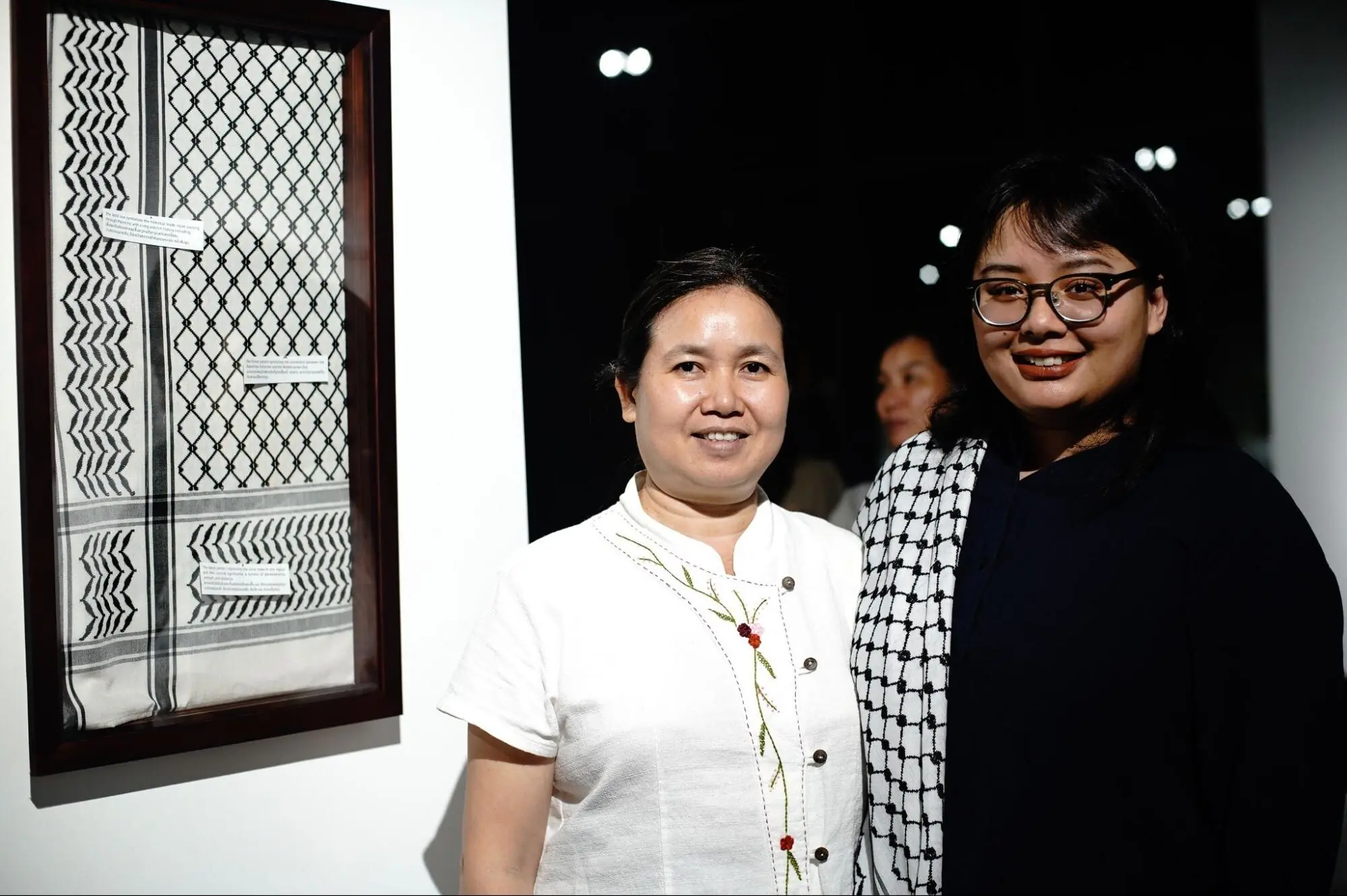
Each hand-woven keffiyeh often takes over a month to complete, and its design also incorporates the Lao UNESCO heritage symbol of the naga (serpent) interlocking into a fishnet pattern — representing protection, strength, and resilience.
“According to traditional mythology, the Naga wrapped itself around Lao people to protect them from brutal Siamese conquests in the past, and exchanged weaving knowledge with the Lao people.”
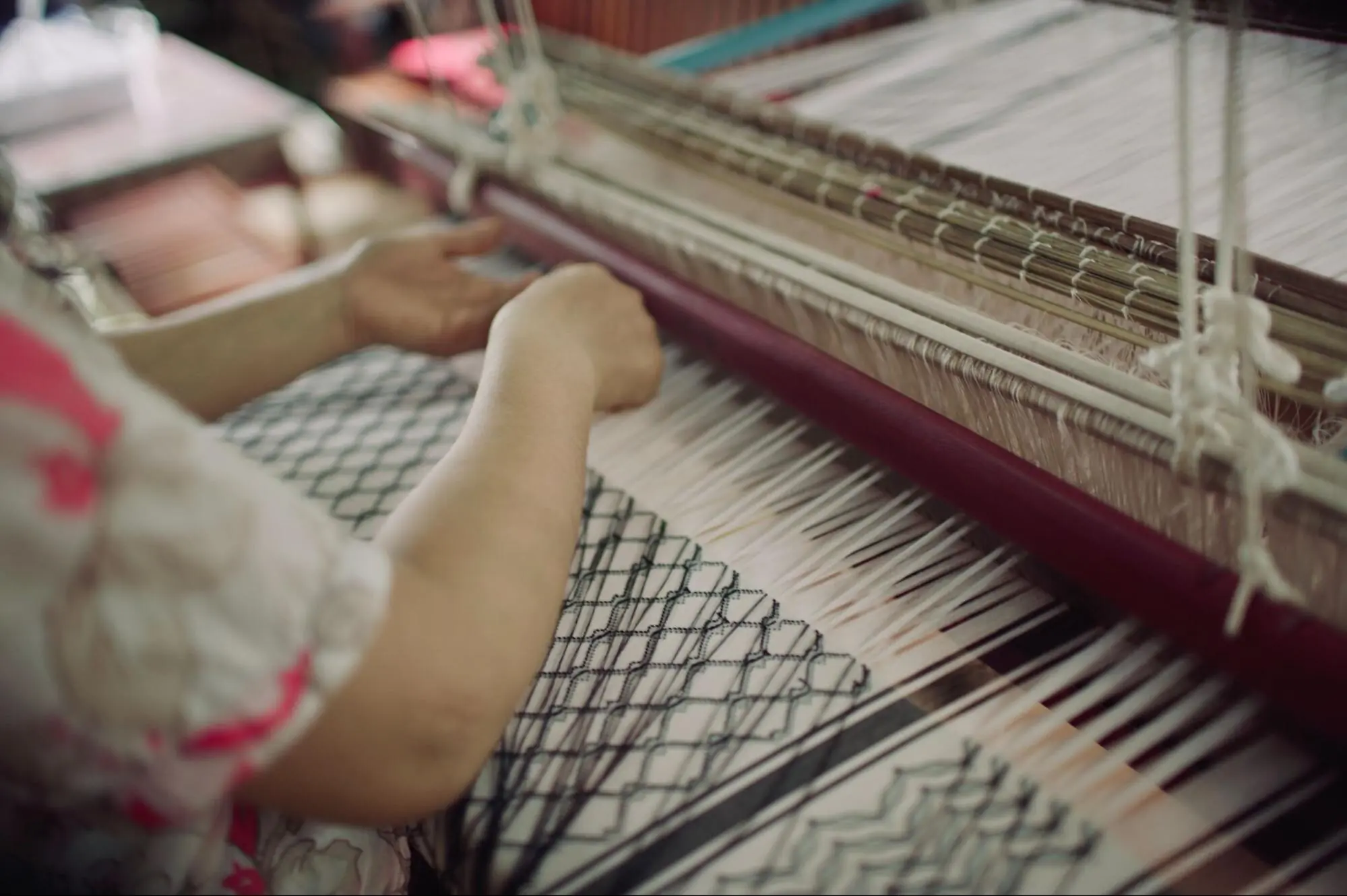
“Meanwhile, the Palestinian fishnet symbolises their connection to the sea,” explained Souvixada Somsacksy, founder of The Silk Keffiyeh project.
The project, which began in December 2024, aims to become an independent, worker-led alternative for Lao textile weavers wanting to ease out of factory work — while also raising funds for Palestine.
Souvixada jointly launched the project with her godmother, Bouakham Phengmixay (also known as Mae), who had previously worked in a textile factory for over 30 years, and is keen to pass on her craftsmanship in a slowly fading tradition to younger generation Laotians.
They now run a full-time residency for people to learn how to weave traditional Lao textile — while also incorporating weekly activities such as tatreez embroidery circles — combining traditional motifs from both Lao and Palestinian textiles.
In May 2026, Saadi Salama, Palestinian ambassador to Laos, Vietnam and Cambodia, had also visited the residency, spending a few days with the weavers after finding out about the Silk Keffiyeh project through word of mouth.
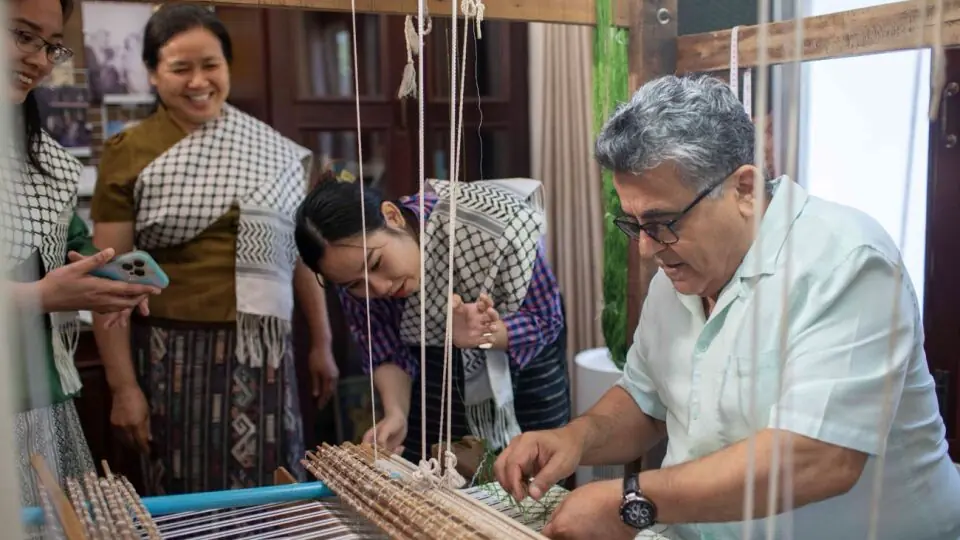
“The ambassador was extremely emotional and very, very moved”.
Originally published in Dawn, October 5th, 2026
This story was originally published in ANN
Comments