
'Women are not public property': Hania Aamir says using women as punchlines is ridiculous
Hania Aamir has never been shy about speaking her mind, especially when it comes to shooing away trolls. Now, she’s coming after content creators disguising misogyny as comedy.
In an Instagram story on Thursday, the star said, “In 2026, using women’s bodies, faces, appearances, age and personal lives as a punchline is ridiculous.”
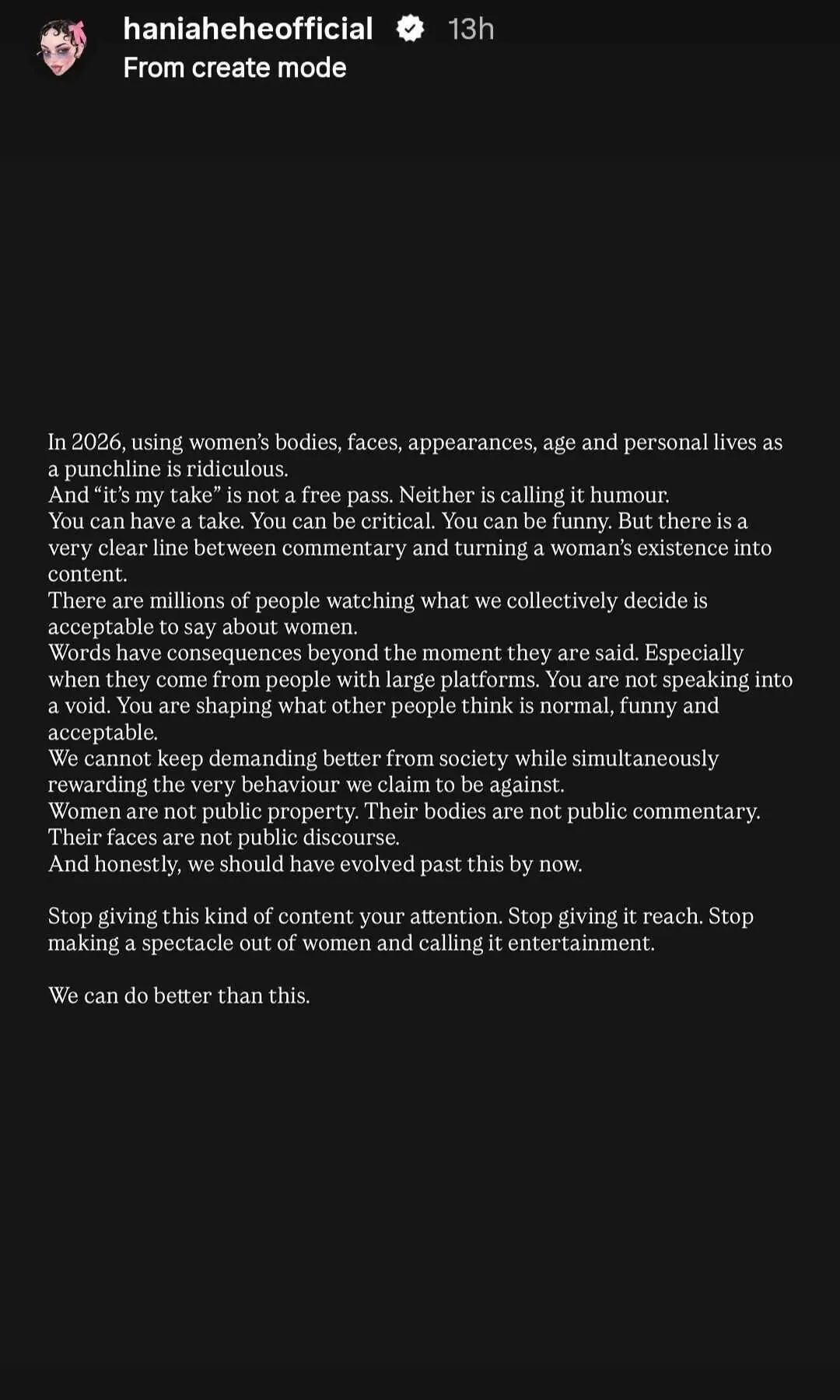
Aamir said calling such jokes an opinion or humour was no excuse and “there is a very clear line between commentary and turning a woman’s life into content”.
Words, the actor wrote, “have consequences beyond the moment they are said”, especially when the person saying them has others following him.
“You are not speaking into a void. You are shaping what others think is normal, funny and acceptable.”
Talking about the responsibilities people have when consuming content, Aamir said there were “millions of people watching what we collectively decide is acceptable to say about women”.
The actor — who recently made a foray into singing — said, “We cannot keep demanding better from society while simultaneously rewarding the very behaviour we claim to be against.”
Aamir said women were not public property, their bodies were not subjects for public commentary and their faces should not be part of public discourse. “We should have evolved past this by now,” she said.
The actor asked people to stop giving creators who make such content their attention. “Stop giving [this content] reach. Stop making a spectacle out of women and calling it entertainment. We can do better than this.”
While Aamir did not specify who she was aiming at with her remarks, this week saw Indian actor Katrina Kaif facing severe trolling over her first public appearance since welcoming a son with husband Vicky Kaushal in November.
She was defended by her fans online, who reminded trolls that this is what motherhood looks like, per reports from Indian media.
Meanwhile in Pakistan, actors Zhalay Sarhadi and Amna Ilyas spoke out against online ‘critics’ whose content revolved around bringing women down and policing them.
Both actors expressed concerns that while such creators may be directing their misogyny at women with influence and privilege, the real victims were others who already had few freedoms in life and suffered most from the rising wave of hate against women.




Comments