

Aap Ki Izzat: An analysis of patriarchy, power structures and the making of a murderer
In cases of violence against women, we often ask who pulled the trigger. We rarely ask who loaded the gun.
According to Sahil, a welfare organisation, 3,172 cases of violence against women were reported in the first half of 2026 in Pakistan — that’s about 17.52 cases a day, and this number doesn’t count what goes unreported. In 884 cases, the perpetrators of violence are relatives; in 405, husbands. Over half the incidents took place at home.
In the drama Aap Ki Izzat, we watch yet another husband, Tabish (Ahsan Khan), plot the murder of his wife, Beena (Urwa Hocane), after years of subjecting her to emotional and physical abuse.
Debate about femicide tends to fixate on the individual man who murders a woman. Here, using Aap Ki Izzat as a case study, I want to look instead at how the people and systems around Tabish produce and sustain conditions that make women’s murders thinkable by enabling, permitting and legitimising patriarchal violence.
Two scenes in Aap Ki Izzat do this work most clearly: Chaudhry suggesting Tabish have Beena killed, and Tabish asking his mother’s permission to do it.
Tabish and Beena, who come from a modest background, get married at a young age. Tabish sees Beena for the first time when he is with his friend, Hafiz (who, 14 years later, also becomes the only person dissuading him from killing his wife), sends a rishta and then marries her.
Deeply in love, young Beena transforms herself into an embodiment of service, selfless love and familial devotion both for Tabish and his family. Beena, who has a complicated relationship with her mother-in-law, never flinches at any of the disparaging comments or instructions from the matriarch; instead, Beena assures her that she’ll treat her as though she were her own mother.
When Tabish’s sister gets married, Tabish doesn’t have any money for the wedding. Newlywed Beena gives her own dowry to his sister. He struggles to start his business; she not only encourages him through all his failures, but also borrows money from her own family to help him. He appreciates the sacrifices that Beena makes — till he becomes rich.
He starts receiving Beena’s care not as her love, but something that he is entitled to, something that she owes him. He turns from a loving husband and non-threatening man to an entitled male chauvinist and the potential murderer of his own wife.
Tabish — even when he was poor — lives within patriarchal entitlement. Beena’s sacrifices are her wifely duties, whereas Tabish’s rare reciprocities are evidence of his generosity. When Beena sacrifices what she owns — her dowry, her time, her labour — and even what she doesn’t own — borrowed money from her family — it is understood as her duty as a devoted wife. But when Tabish gives Beena what she does not even need or want and what he can conveniently afford — expensive gifts — everyone, including Beena’s own mother, instructs her to be grateful for it.

Tabish’s newfound sense of masculinity and power is due to the devotion of his wife and his access to money. He has money, that is why he is powerful; he has a reliable and loyal wife, that is the source of his masculinity. His wealth gives him material power, but Beena’s devotion legitimises his power and determines the extent of the cultural value of his wealth. The fallacious perception is that his wife is loyal and devoted because he has control over her.
But in the patriarchy — a system that creates the conditions where women have limited choices and can’t exercise their agency — Beena’s power in the relationship remains hidden and underestimated.
Women choose safety over exercising their agency — for Beena, Tabish provides all the financial luxuries of life and the safety of a home. She is undereducated, professionally unskilled and socially vulnerable — she has only one friend who is relatively poor and her maika (own family) will not support her emotionally or financially.
Tabish mistakes Beena’s compliance as his inherent authority, though it is co-produced by the limited choices available to her.
Her choice to leave Tabish, although rationally unsound within her sociocultural context, is an attempt to protest the disabling and debilitating patriarchal conditions that disempower her; she leaves her husband and shows him that she will choose dignity over the illusion of safety. She asserts the power that everyone confidently assumed that she did not have in a traditional marriage. She strips Tabish of his power by making a choice that he, and everyone else around Beena, had made impossible for her.
Tabish assumes she has nowhere to go and nobody to turn to, which assures him there will no accountability for how he treats his wife and hence, he becomes emboldened. Tabish’s confidence stems less from his own power than it does from his belief in Beena’s powerlessness.
Tabish, his mother, and his sisters start mocking her weight and appearance around the same time he acquires the resources and status to exercise greater control over her and everyone else in his household. In their exchange of marital value, her labour as a wife and the mother of his children becomes disposable once he gains the wealth to afford other means of wifely and motherly labour in the form of a younger wife and better schools for his kids.
Due to patriarchal norms, everyone trusts that Beena, due to her lack of options, will stay compliant and continue to play her assigned role even at a much-decreased value of her work as a wife, mother, and daughter-in-law.
Everyone sees her unhappiness and the devaluation of her labour but treats it as irrelevant and insignificant. Everyone knows, but nobody intervenes because everyone trusts the marriage in a violent patriarchy to work as intended: Tabish has power, so he does what he wants; Beena puts up with it because the social cost of any other choice is too high.
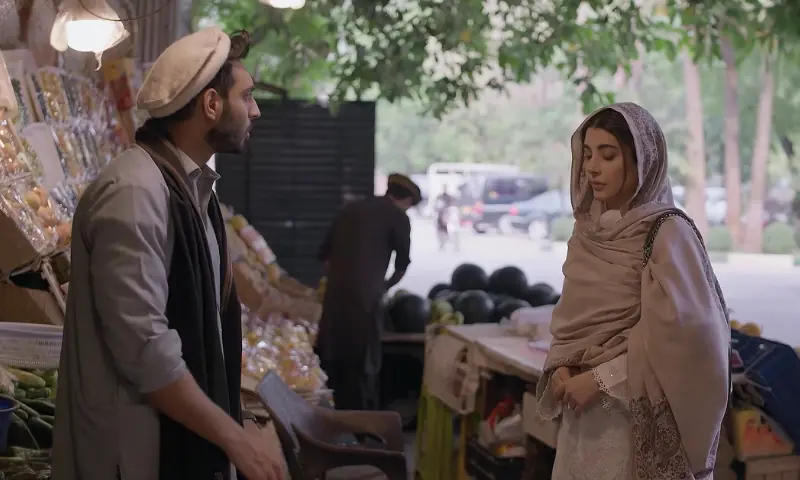
But when Beena chooses to leave Tabish with the help of a vegetable vendor, she reverses the power hierarchy which Tabish relies on as a Pakistani man. She exercises a form of power that was not allowed to her as a traditional, good wife belonging to a shareef (respected) family.
Tabish, and everyone else’s anger, then, is not only due to a marital betrayal — rather, they’re all enraged by the fact that Beena undoes all their power through her single act of refusal to put up with humiliation.
This hurt is visible in everyone’s shock and repetition of “Beena sabzi walay k sath bhag gai (Beena ran away with a vegetable vendor)?”
Honour is another name for control; Tabish loses control over his wife, hence he loses honour. Since he loses honour, his money also declines in its social value. Despite his riches, his wife still chose a sabzi wala over him. It challenges the hierarchies his masculinity and power depend on. His wife, whom he regards as a possession, rejected him for a much ‘inferior’ man. Eventually, it is not his money that gives him power, it is the control over his wife’s body that makes him powerful in his community.
This resentment over loss of control over Beena shows in Tabish’s language of ownership, for example, when he says, “Uski auqaat se zyada diya usko ([I] gave her her more than she was worth).” He, as a man, enjoyed economic, social and patriarchal power throughout his marriage. Later, his wealth gives him more options and less accountability. His financial protection becomes a debt that Beena must repay through her obedience and humiliation. By leaving him, Beena refuses to take on the debt and pay its emotional cost.
Beena, when leaving him, did not take his money. She did not take his kids. She did not take anything he owned. She did not even fight or dishonour him in words. She just stopped allowing him to control her. He does not lose honour; he just loses control over his wife’s body. Emotionally, Beena had already left. It is the dispossession, loss of control over Beena’s body that creates a crisis for Tabish.
Honour, instead of loss of control, becomes the language that rationalises the wife’s murder. It gives Tabish the licence to commit violence to regain his control and repair his bruised masculinity. By killing Beena, Tabish would show that he still controls her body and what happens to it. The wife’s murder returns the gender hierarchy to its violent normal by making the man in charge again.
Chaudhry, and Tabish’s mother — the only two people who have power over him — both explicitly and implicitly support his decision to kill his wife because his loss of masculinity threatens the hierarchy that they all benefit from.
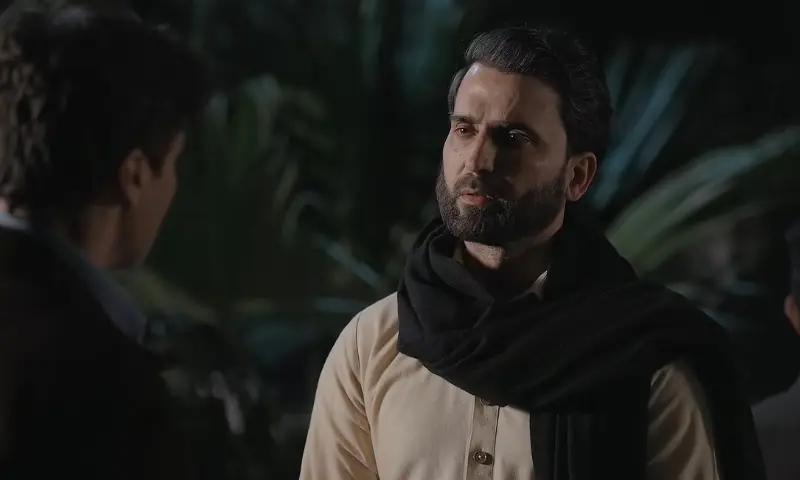
Chaudhry has invested money in Tabish’s political career, and he needs to restore the impression that he has control over his marriage and family. Chaudhry suggests that Tabish get Beena killed in a police encounter. Chaudhry does not simply suggest murdering her, he proposes a form of socially and institutionally disguised violence.
Tabish has the grievance; Chaudhry as someone with greater power teaches him how to avenge the damage to his masculinity, his power. He tells Tabish that murdering Beena is the only way to save his honour. The police encounter makes the murder appear legitimate or accidental rather than an act of domestic violence.
This murder in a police encounter exonerates and protects Tabish. It eliminates Beena’s body and thereby eliminates the sign of Tabish’s wounded masculinity and loss of control. It reframes the narrative so that his masculinity is intact because it hides the fact that his wife left him. It also erases the relationship between Tabish’s masculinity and Beena’s body.
This murder plot exposes the patriarchal influences within social pressure, showcasing how other men and women validate the idea that violence is an appropriate response to female disobedience.
Hafiz, Tabish’s childhood friend, fails because he is the only person trying to dissuade him from killing Beena. Rather, Tabish reminds Hafiz of his social role by calling him beghairat (dishonourable) when Hafiz calls Beena his sister: “Yaar, tu kitna beghairat hai, ek ghar se bhagi hui larki ko behan keh raha hai (How dishonourable you are, calling a woman who ran away your sister).”
The systemic conditions that empower men to murder their wives prioritise men’s — especially affluent men’s — safety and sense of control, with honour-based violence enabled by existing state and cultural institutions.
The problem is not simply that one man is violent. Rather, peers provide the man with socially recognisable mechanisms through which he can carry out violence. His peers help protect him from any formal and informal forms of accountability.
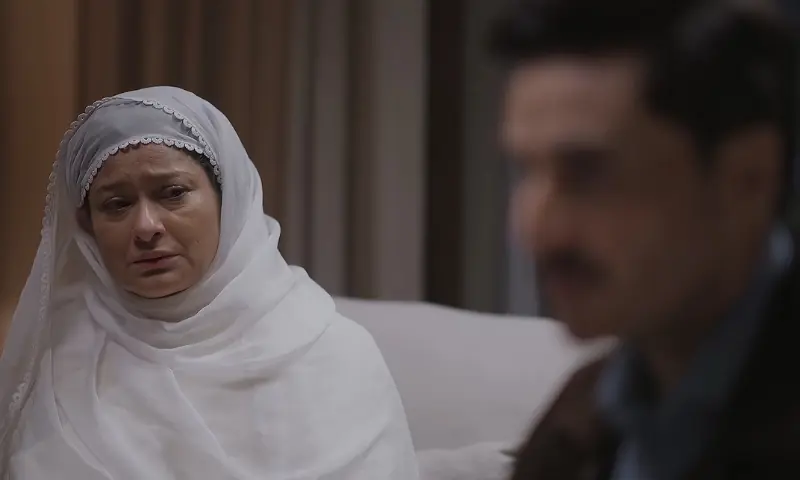
Tabish’s mother allows him to go ahead with the murder through her silence. She prides herself on Tabish never disobeying her, but never puts Tabish in a position where he might disobey her; she never challenges him, never tells him if or when he is wrong. Underlying this choice is the concern that if she challenges him, he could potentially still do what he wants and she will lose the illusion of her power. Since Tabish obeys her, everyone else in the family must obey her too.
Her power rests on the illusion of her power over Tabish. By challenging Tabish’s power, she fears losing her own power. Tabish asks her “Aap mujhay rok tau nahi rahin (You aren’t stopping me, are you)?” In response, she asks Tabish, “Mere roknay se ruk jao gay tum (Would you stop if I tell you to)?”
Would he stop if she chose to stop him? We would never know. But we have seen enough women’s murders to know that family members often choose to please and protect their sons instead of their daughters-in-law. The same is true for Beena. The mother chooses distance from Tabish’s decision to kill Beena, instead of telling him not to commit the sin of murder.
She recognises Beena’s humanity and history. She knows that Beena is not simply an adulterous wife. She knows as well as everyone else that Beena was slowly pushed to her limits and everyone trusted her to expand her tolerance.
Though she actively benefits from Beena’s service and domestic labour, she tells Tabish, “You married her, you chose her, she’s the mother of your kids, you decide.“
She refuses to reciprocate the care that Beena provided her, essentially betraying her daughter-in-law.
This scene between Tabish and his mother avoids the simplistic idea that women are merely victims of patriarchy.
Instead, it shows how patriarchal systems can be reproduced by women — especially women in positions of power — who gain access to social capital (such as respect for mothers) by legitimising male authority instead of challenging it.
She can challenge the patriarchal logic guiding her son, but she chooses not to exercise that authority. She protects two things at once: his authority in the house as a man and her authority over him as a mother. Her silence in the face of a murder that partially rests on her permission is an abdication of moral responsibility.
At the end, Tabish asks his mother to let him commit the sin, even though she has not stopped him. Though Chaudhry has given Tabish the plan to commit the murder without consequences, Hafiz makes Tabish see his wife’s murder as a sin. Tabish, however, reframes it as a necessary sin. The husband who initially only wanted to punish his wife’s transgression via divorce starts believing her murder to be an inevitable sin that he must commit.
In two to three scenes in these episodes, Chaudhry and Tabish’s mother aid in Tabish’s transformation from toxic husband into wife murderer.
Beena eventually lives. But had she been killed, who would have been responsible for her murder? Tabish, because he made the decision to get her killed? Police officers, because they offered and executed the murder for him? Chaudhry, because he showed Tabish that killing his wife was the only way to restore his honour and repair his masculinity? Or Tabish’s mother, whom he never disobeys but who still chose not to tell him not to kill his wife?
A husband like Tabish may ultimately be the person who chooses to kill his wife. But that choice becomes possible only within a system that teaches him that he is completely entitled to the wife’s unconditional love and labour, that turns the wife’s disobedience into injury to his masculinity, that gives him the language through which he understands his hurt as dishonour and that establishes institutions that help avenge his injury at the cost of a woman’s life and show him that there is no accountability of the murder.
Comments