
Trekking to Fairy Meadows in pursuit of the Parbat
He was flirting with me. A crooked grin spread across his sunlit face, only partially visible through a curtain of thick coniferous forests, as he followed me on a meandering four-hour pilgrimage. At 10,800 feet above sea level, where even the Earth’s magnetic field weakens, he had an inexplicable pull. He was omnipresent, but somehow managed to elude me every time I stopped to admire his face.
It was a game of hide-and-seek.
Nanga Parbat is the ninth-highest mountain on Earth: an ice-and-scree-covered behemoth, known most for death. In the Shina and Tibetan scriptures, though, he is called Deo Mir, the Mountain of God. In mountaineering circles, he is the ‘Killer Mountain’, given his insurmountable ego and treacherous temper.
I gathered this much from reading trip reports back in 2020, when I was planning an expedition of my own. I am no mountaineer, but I would take the liberty of calling myself an orophile, and so I settled on a relatively achievable conquest: the base camp.
One of the older accounts of reaching the base camp described the trek as a thrilling, steep and physically demanding journey marked by dramatic gorge trails, sudden weather shifts and deep isolation. At the time I encountered the sentence, I was an overenthusiastic 23-year-old journalist living in Karachi. When asked why I wanted to trek to the base camp of that particular mountain — instead of enjoying ‘just a vacation’ — I mindlessly cited Simone Moro. “It’s like a giant planet standing in front of you, seducing you to climb it,” the Italian mountaineering legend had said.
I did not want to climb the mountain — I wasn’t even equipped to do that. I just wanted to let nature lure me there. I had two beginner-level treks to my name: one at home and the other in Nepal. Both entailed only a few hours of discomfort though. But the Nanga Parbat base camp, ChatGPT and I agreed, was a ‘Type-2 kind of adventure’ for my feeble experience. Opting to do this with a group of Gen Zs I barely knew was another gamble.
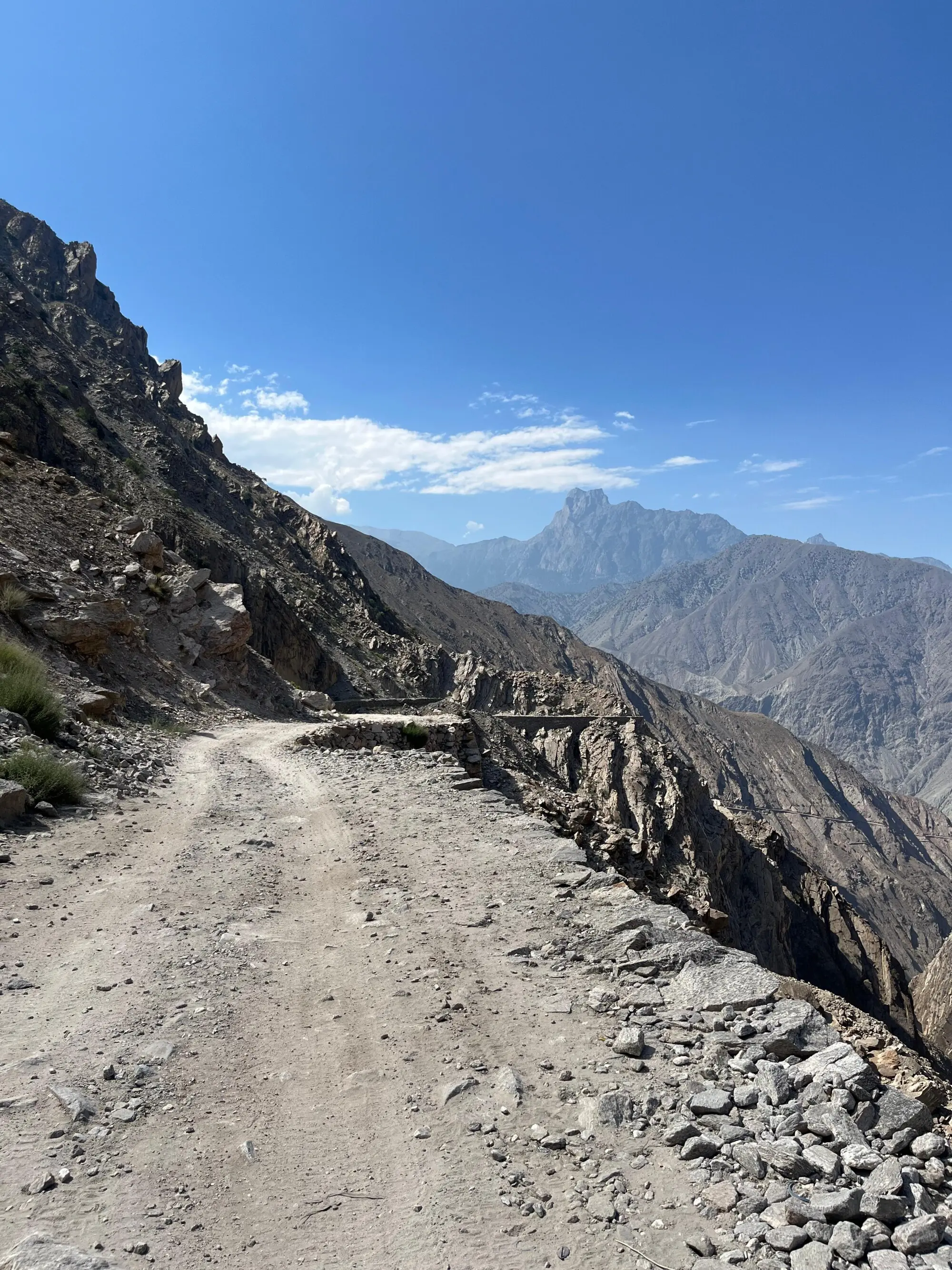
The journey began in 4x4 jeeps clambering along on a narrow, single-lane dirt and gravel path carved into steep rock cliffs without any guardrails. Calling dibs on the passenger seat did me no good — the fierce Raikot sun burnt my exposed arms, the blistering dry wind slapped my face, and the views looked straight down into a roaring gorge.
The two-hour-long rattling briefly halted when we encountered a jeep on the narrow road, which meant one of the two vehicles had to move over, manoeuvring closer to the edge to give way. The only respite were the occasional, fleeting views of the Parbat. But I refrained from looking too closely — I had to earn the view.
The first time I set eyes on the Parbat was on a short trip to Skardu a couple of years earlier. He had blanketed himself with low-hanging clouds. There was something oddly inviting about the Parbat. It was for this reason that this time around I had pre-planned our meeting, minute by minute.
Our jeep ride ended at Tattu village, from where the trek kicks off, crowded with duffel bags and backpacks left behind for porters to carry. My excitement was palpable: I was finally ready to stare at the Parbat. But as our guide Naveed bhai said, the Parbat decides who he wants to reveal himself to, and that time was yet to come.
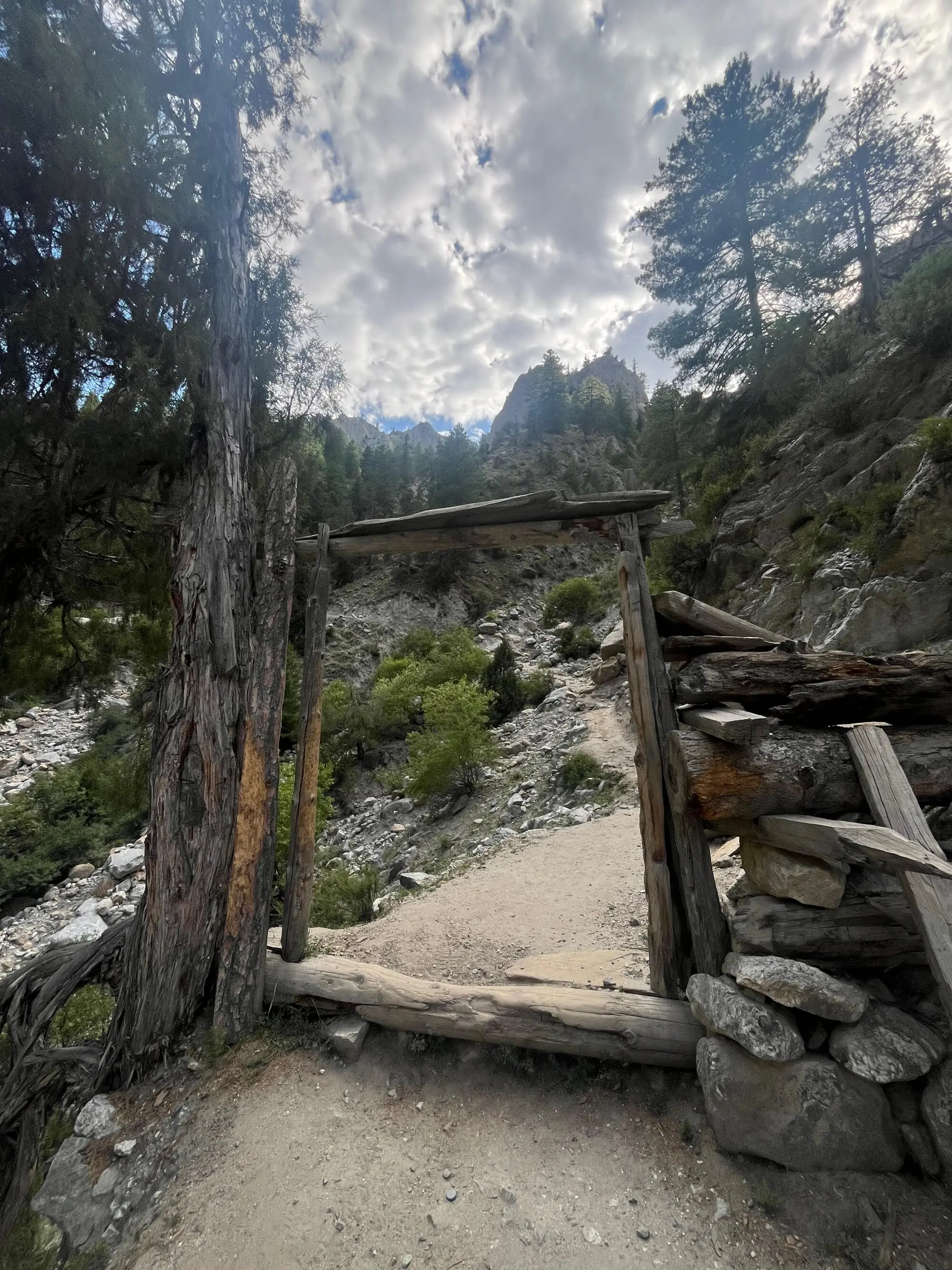
For the next hour or more, I marched toward Fairy Meadows, winding along a craggy trail littered with empty plastic bottles and horse faeces.
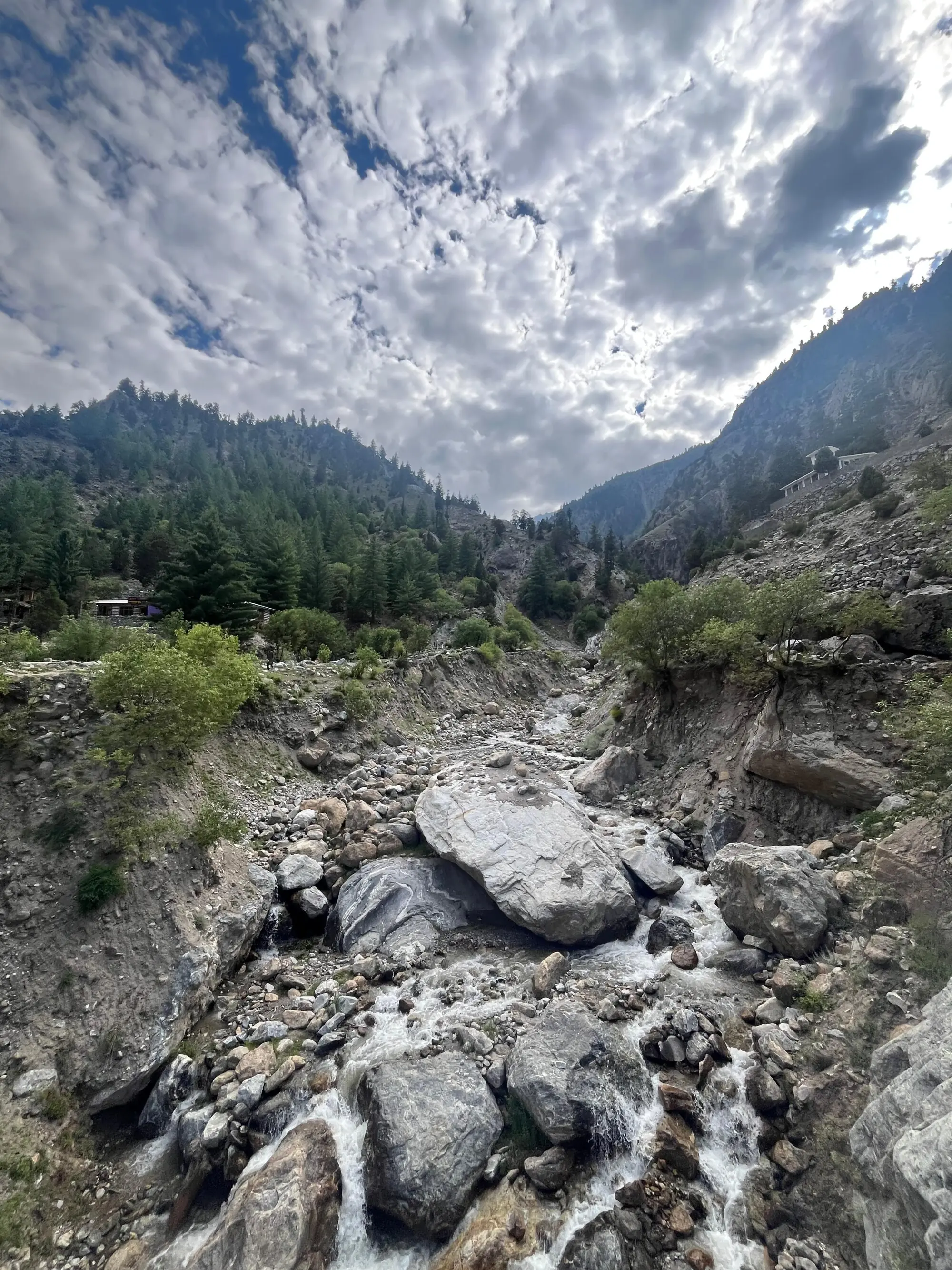
To my right, a mountain wall rose into the sky, its face covered by pale white stones mixed with green moss. On the other side, the earth broke into a gorge right at the edge, a chasm where the bottom was hidden by bushy treetops. A thin silver line of a gushing river cut through the rocks far below, heard before it was seen, its low roar a faithful companion as we made our way along the trail. Whenever the scorching sun bore down on my back, a draft of cool, damp air rising from below provided respite, as if on cue.
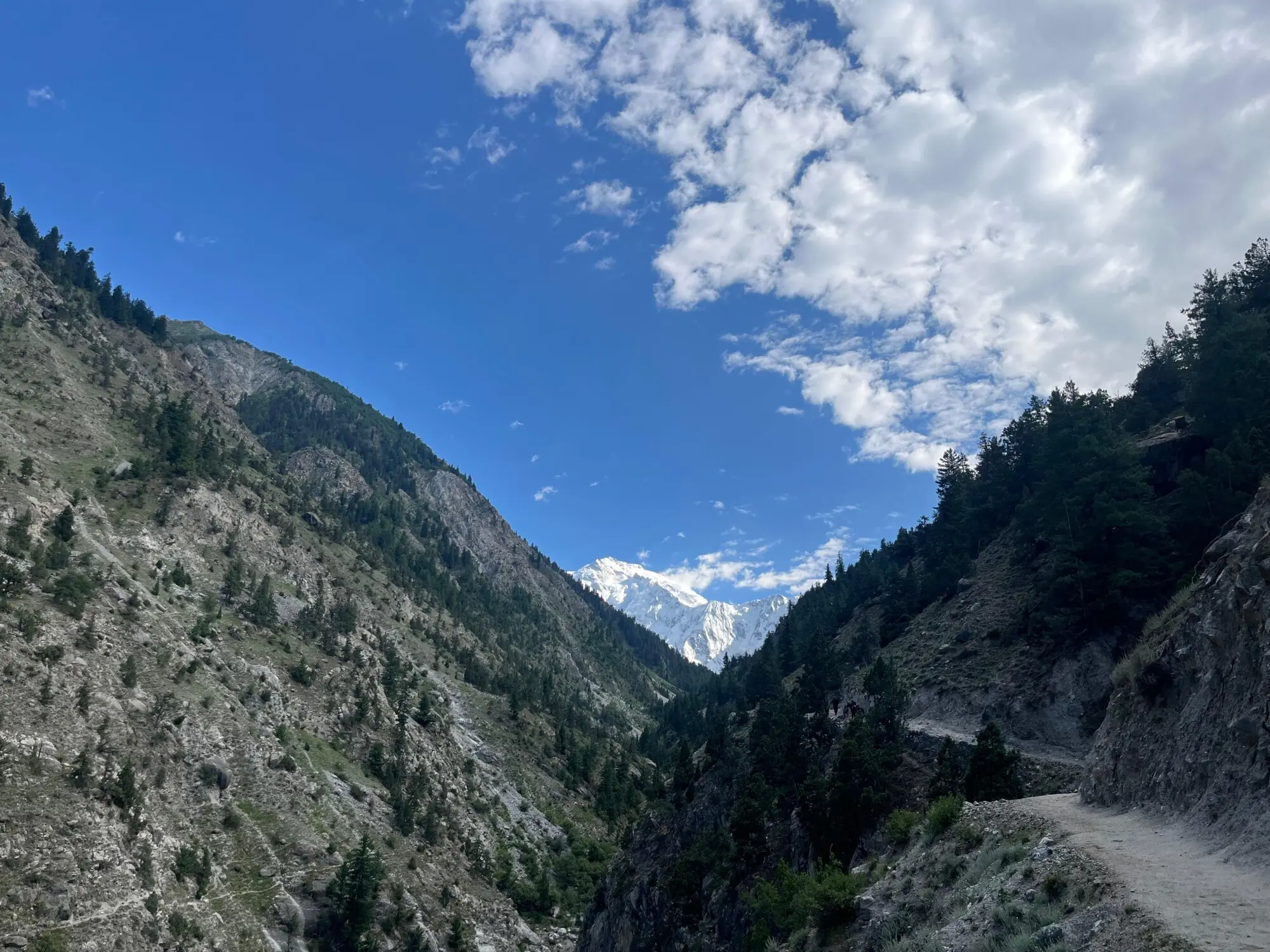
The Parbat, meanwhile, stayed put, peeking from the secondary ridges that cut across the landscape like jagged teeth. His stony eyes, the only visible feature of his face, looked down on the sprawling valley, and me. “You don’t challenge the ego of the Parbat,” a friend responded to my whining.
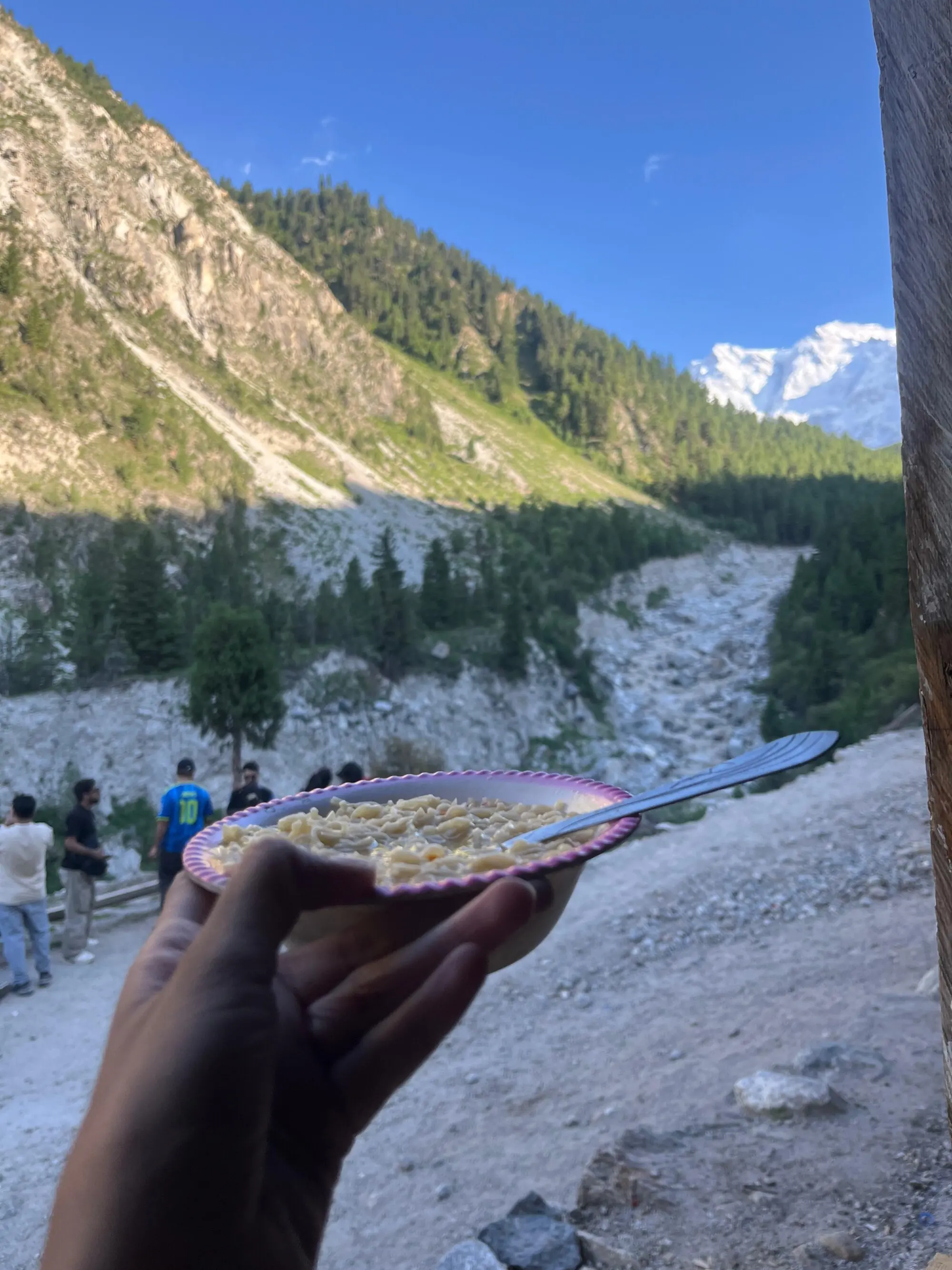
Our first stop was the 50-50 Cafe, a comforting sign that the difficult parts of the trek were now behind us. The rustic refuge featured a tin roof, weathered stone walls, a compact dining hall, and an open kitchen reverberating with the crackle of damp wood. Within 10 minutes, a bowl of Maggi noodles came out, piping hot. I devoured it; the steam rising from the bowl soothed my cold nose, and then set off for the remainder of the journey.
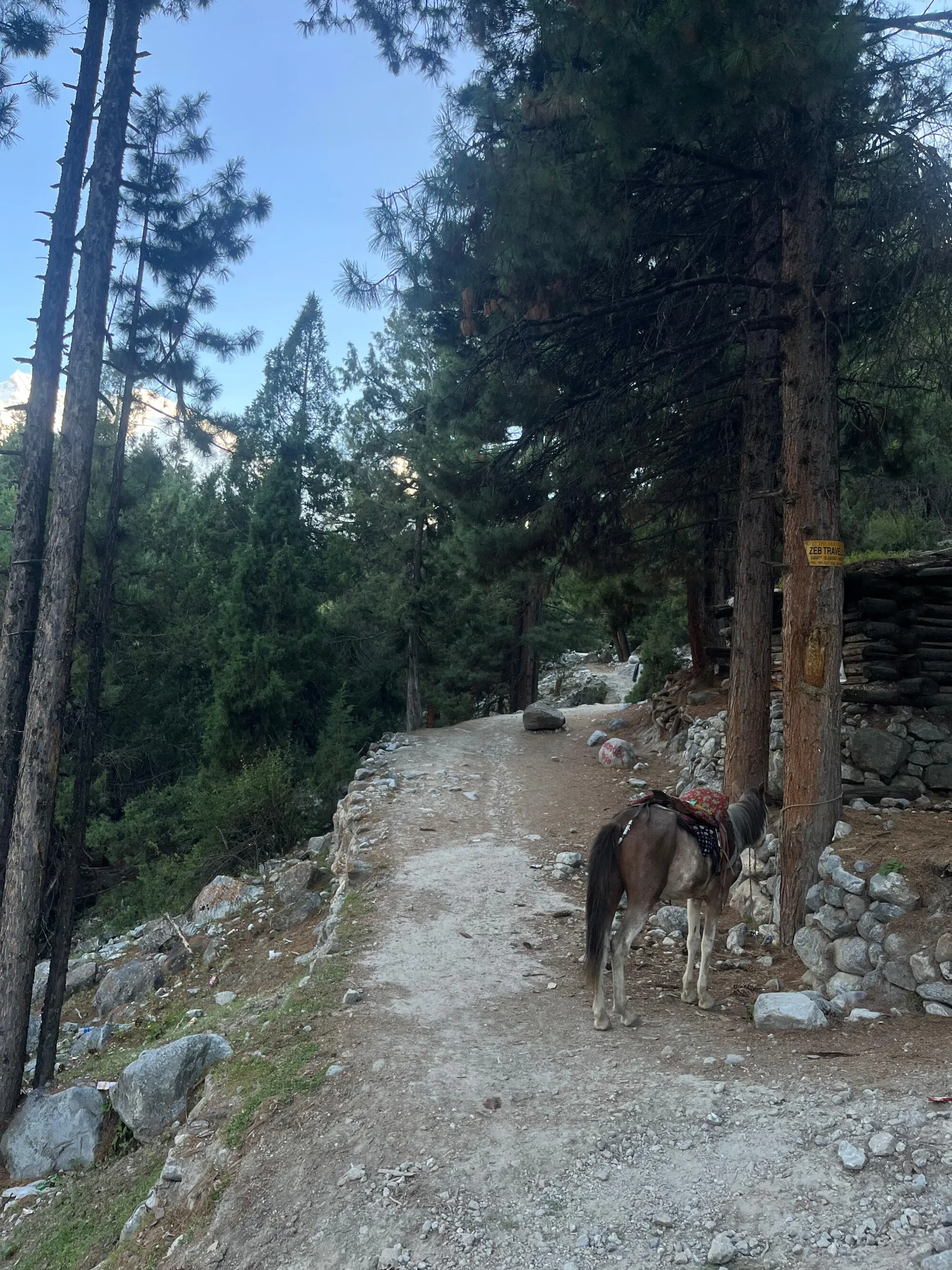
The trail had now dramatically changed. I stepped into a cool sanctuary of ancient trees, instantly greeted by the scent of pine needles, sweet sap, and cool mountain moss. The ground beneath me transformed into soft earth, moist as a freshly-baked cake, the sunlight filtering through thick tree trunks to paint needle-thin gold patterns on the dirt. The tight canopy shut out the glaring mountain sun, creating a cool, shadowed refuge, which meant I could now only get glimpses of the cobalt blue sky as the Parbat towered above us, never fully revealing himself. He was indeed a restless giant, standing rigid and immense above the valley.
“You are staring at a wall; it rears from the abyss at your feet to a height for which the neck must crane back […] it is a buttress worthy of its role,” historian John Keay wrote of the Parbat years ago.
My reverie was soon cut short when, without any warning, the thick foliage began to stretch, thinning out into a steep final push — the loose gravel, zig-zagging dirt path, and precipitous gorge were all back. This time, with much more force. The towering pine trees were now all behind me, their bundled needles standing tall in shared anticipation: the meeting was close, merely a few footsteps away. I wanted to race to the top, the wait too long to bear, but the ragged terrain and my smoker’s lungs demanded attention. One step at a time, I chanted.
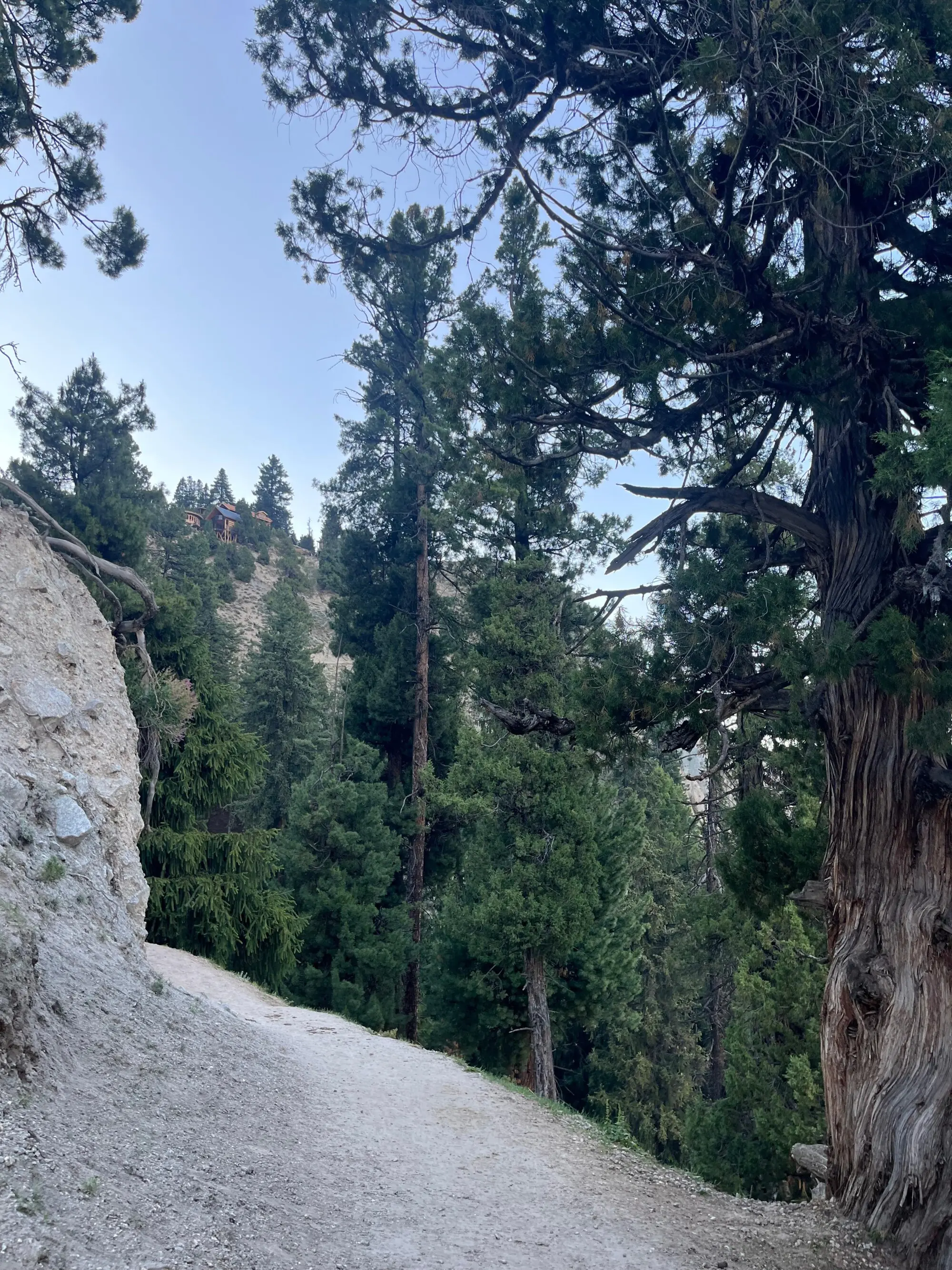
Exactly seven minutes later, I stopped in front of a signboard. An arrow pointed to the right.
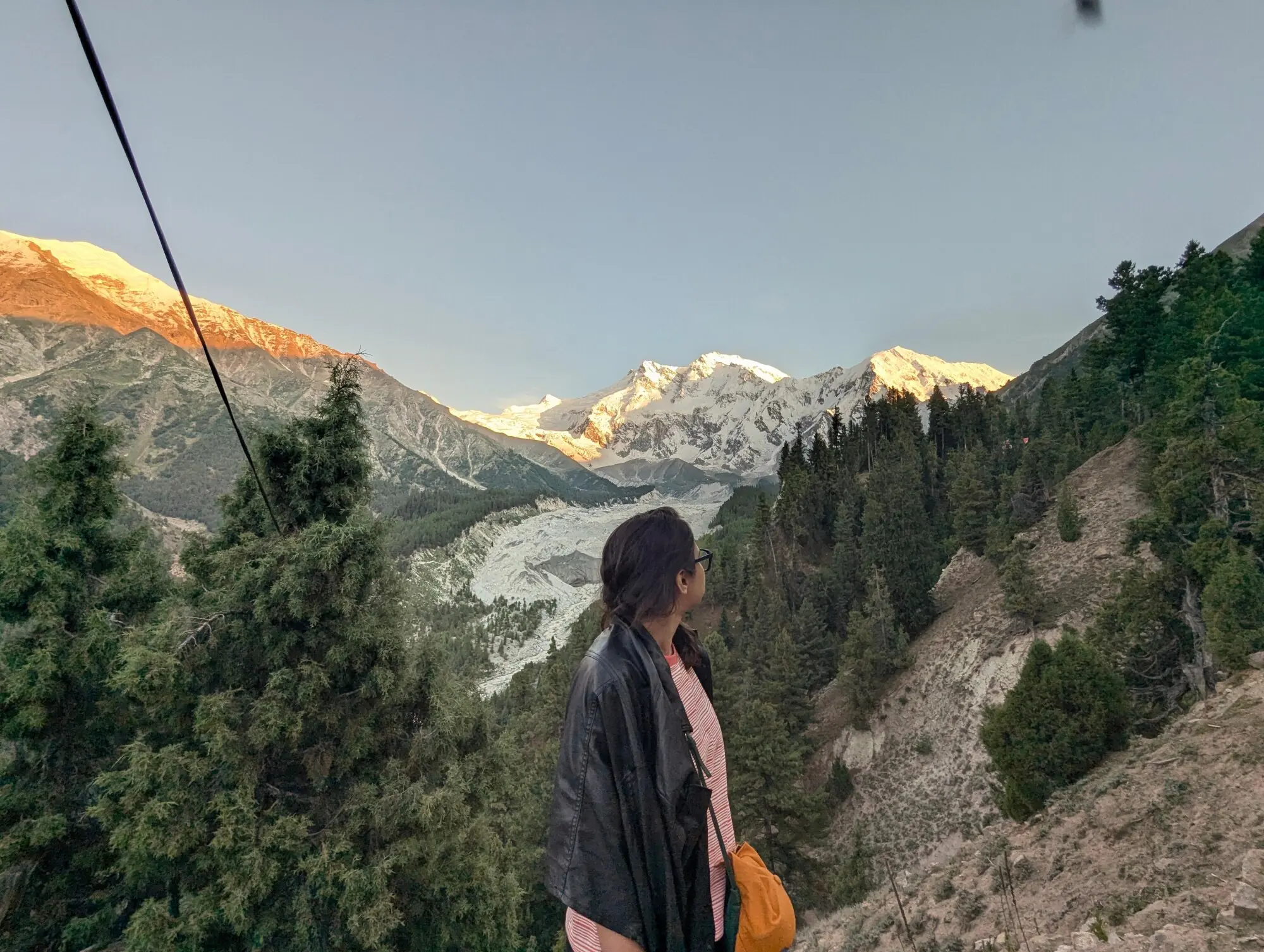
For all the waiting, anticipating and planning I had done beforehand, I couldn’t bring myself to look at the Parbat. The back of my throat had run dry and I could sense tears welling up in my eyes. I fixed my eyes on my dirty shoes and drew in a deep breath. When I looked up, he filled the horizon — his exposed rock face shot up from the abyss, blue veins of ice spreading across the dark stone. At its foot, a 15km-long glacier — blanketed in dark rock debris, dirt, and moraines — rested, feeding the green valley hidden below.
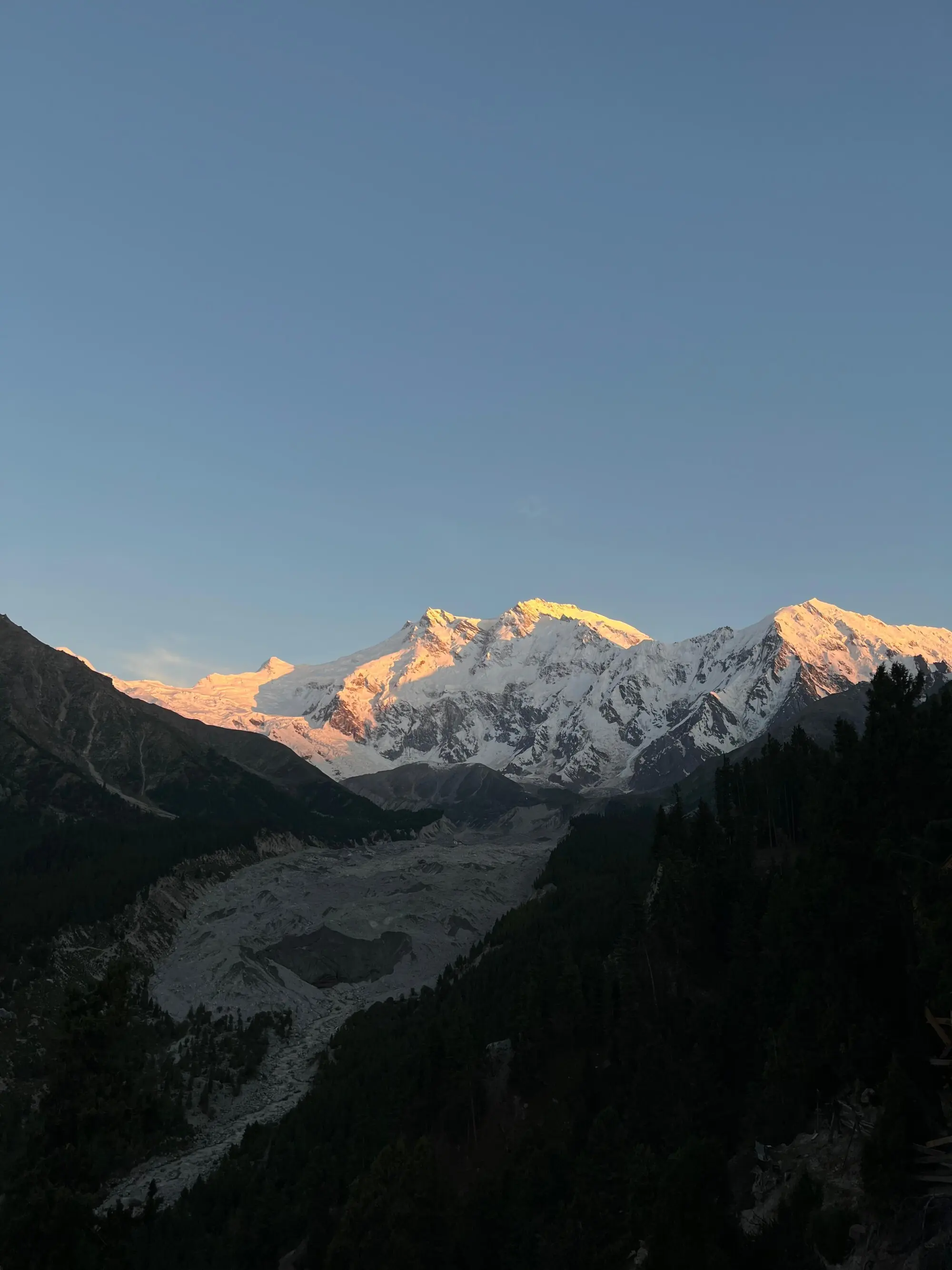
Beautiful was not the right word to describe what was before me; arrogant was.
“Tu hai kon [who are you],” his stony gaze seemed to ask. The question, not asked aloud, hung heavy in the air as he rose insultingly close to the sky, as if he built a staircase to heaven just to look down on the rest of us with disdain, unfazed by the desperate vanity of mortal conquerors. He stood alone because he could. And that, more than his height, was what felt arrogant.
“Such a dude,” a friend interrupted my thoughts. I smiled and a comfortable silence settled between us. We stood at the edge of the trail, our eyes eager to take in the expansive view before us. From somewhere along the trail drifted a familiar melody: “Mujhse pehli si muhabbat mere mehboob na maang.”
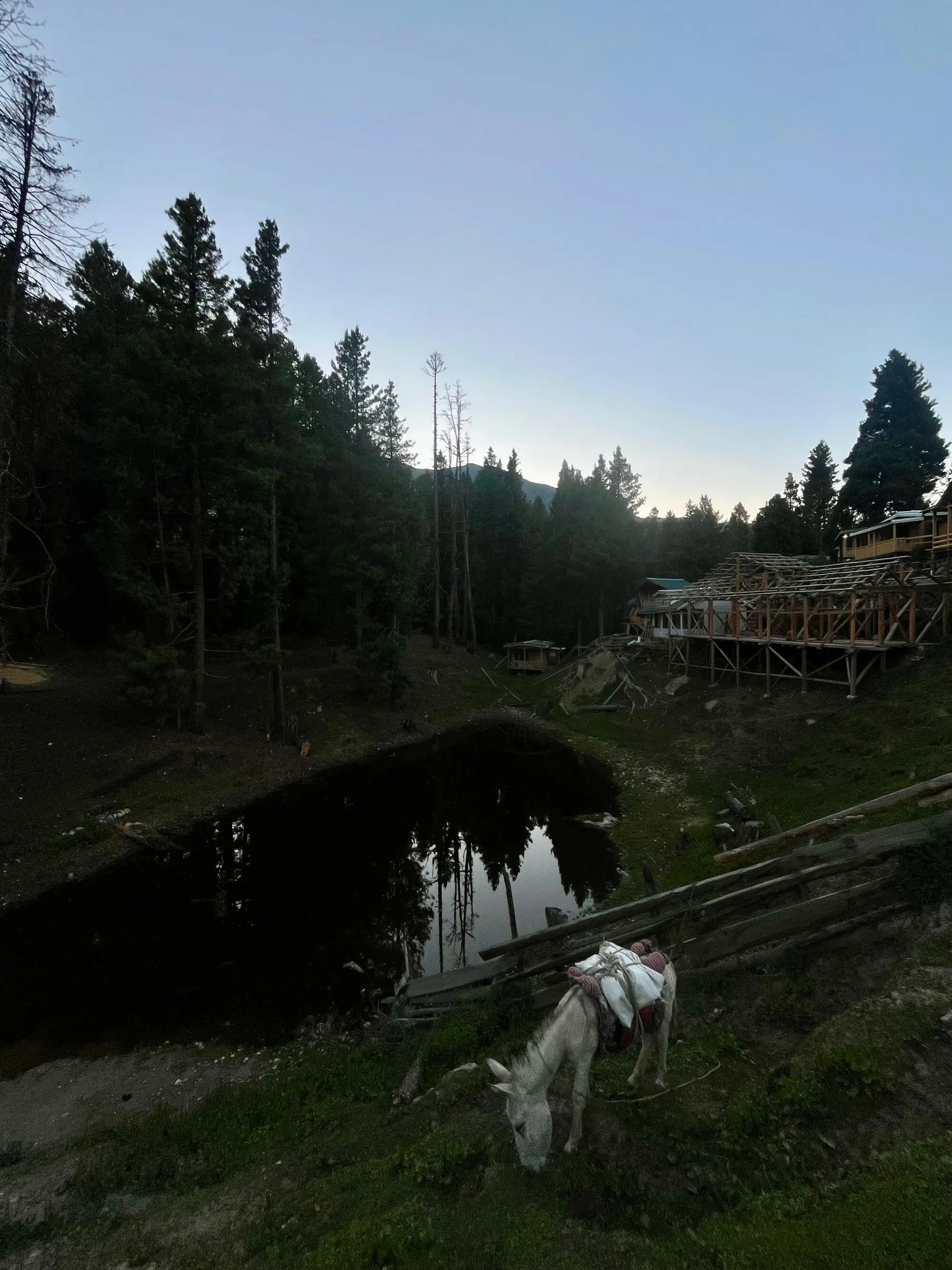
Not long after, other members of the group found us, and we set off toward our guest house at the far end of the trail. When I entered through its fence-like white gate, another friend, the only person I knew before embarking on this 12-day trip, jumped in celebration. “I won the bet,” he cheered. He had put money that I’d be among the first five group members to get there. My insides bubbled with happiness, some of which spilt out in a happy dance, pink cheeks and a wide smile.
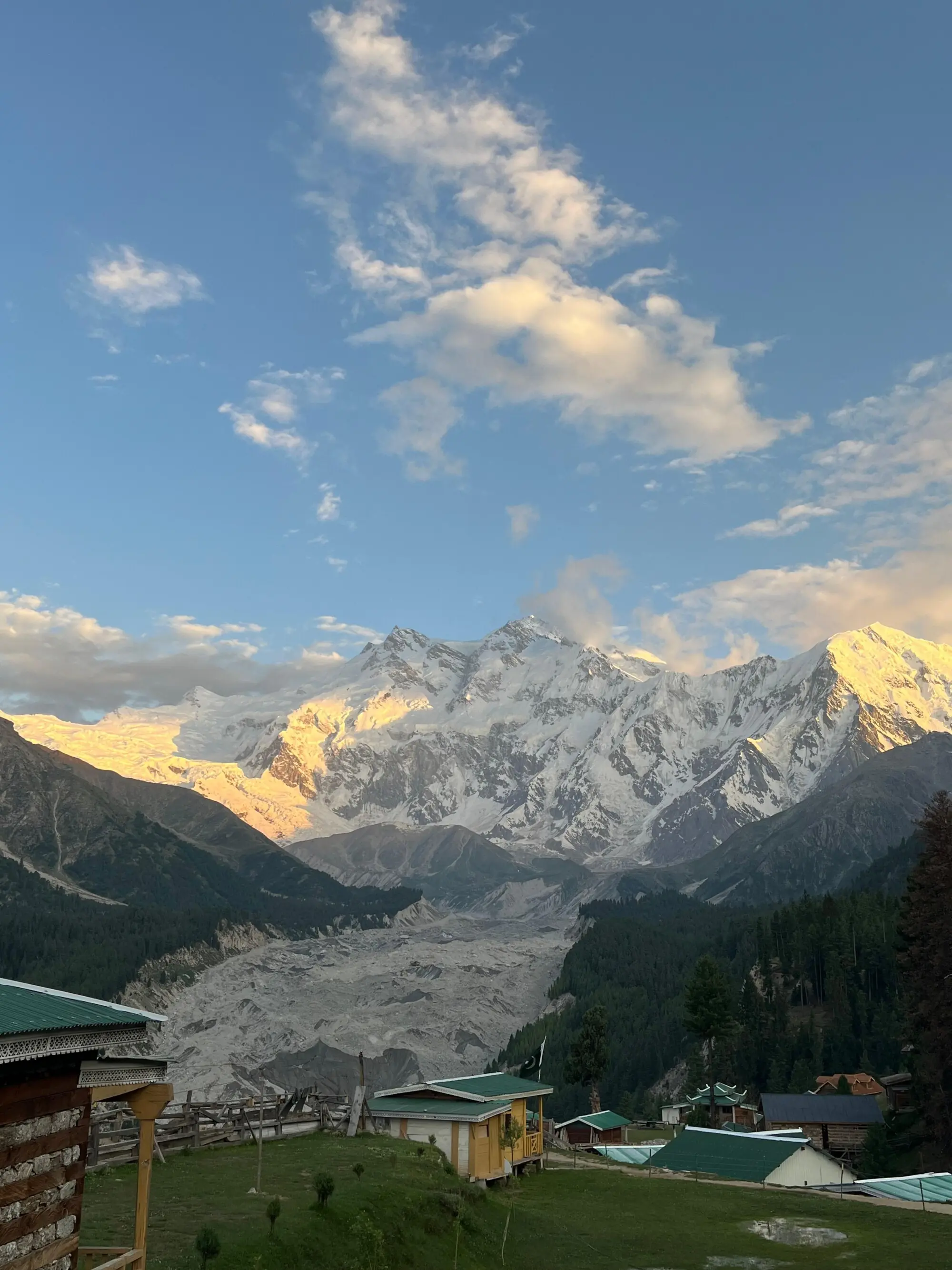
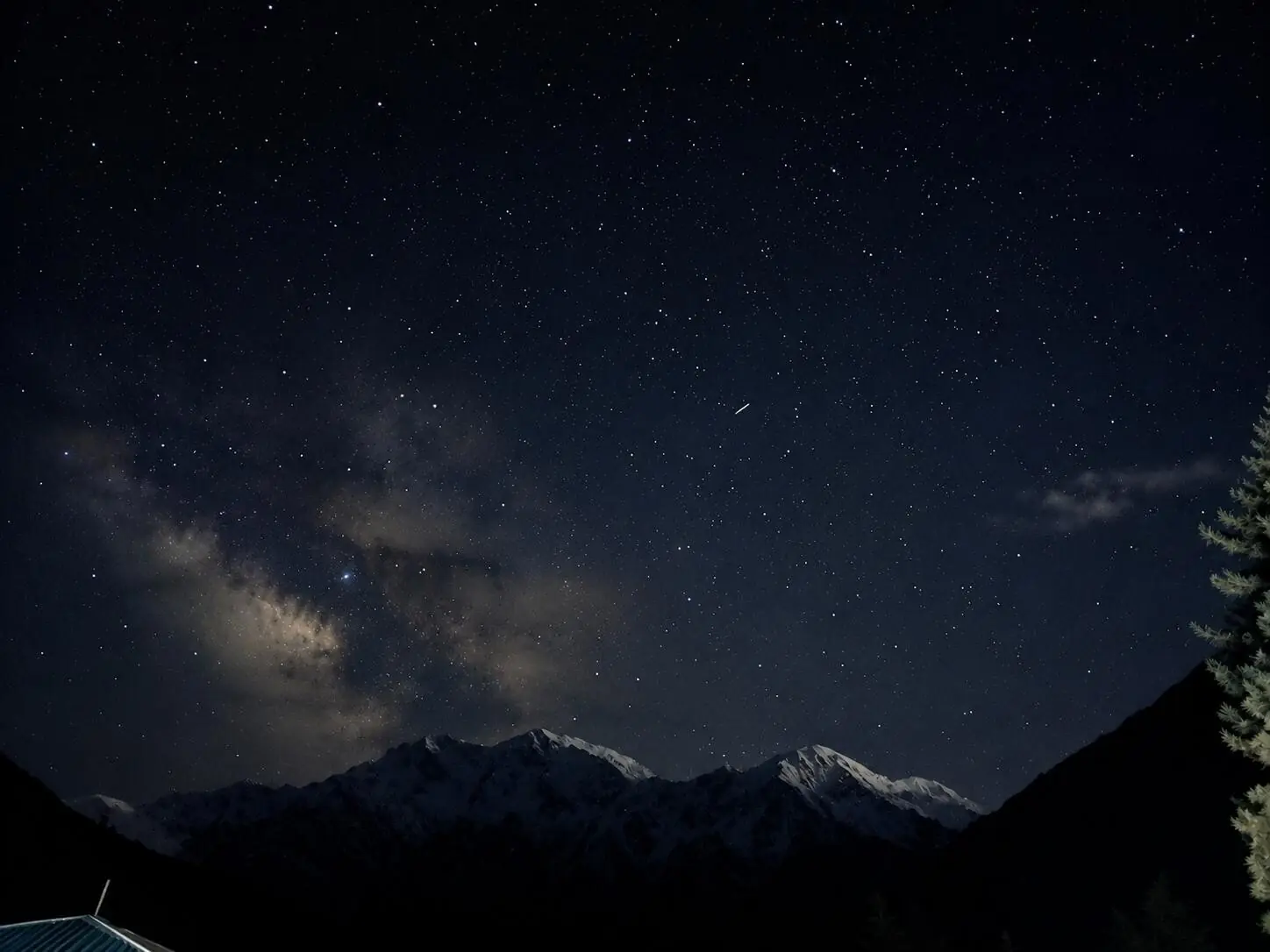
By the time everyone made it to the guest house, the sun was setting, its rays transforming the Parbat into a glowing monolith that changed colour with every passing minute, catching brilliant golden, orange and pink hues standing out as the deep valleys under it faded into the twilight. The first stars appear one by one. As the sky darkened, they multiplied until the horizon burst into a glittering cosmos.
Although now faded into a silhouette, Parbat’s presence still commanded the night. He never moved; not when the clouds drifted, or when the stars wheeled overhead. For most of the night, we remained glued to the guesthouse’s famous wooden deck — filthy, exhausted and unwilling to go inside. Empty teacups and dinner plates were strewn around us as laughter drifted into the otherwise hushed night.
But eventually, conversation found its way back to Naveed bhai. Mountains like these refuse to remain geological; before long, they become stories. Somewhere above the glaciers of the Deo Mir, he began, is a place made of crystal ice. There, beyond the reach of ordinary people, the queen of fairies lives with her companions. At twilight, when the clouds drift across the Parbat’s summit, they say the fairies break into dance. Those whom they choose are welcomed into their kingdom, and those whom they reject may never return.
Then came the love story.
About 100 kilometres away, as the crow flies, stands Rakaposhi. Locally known as Dumani — the Mother of Mist — she is everything the Parbat is not: graceful where he is imposing, luminous where he is austere. There was a time, Naveed bhai said, when the two mountains stood close enough to touch. Then came a great upheaval. The earth convulsed beneath them, tearing them apart, leaving the valleys of Gilgit-Baltistan between them. They have remained there ever since — facing one another, unable to meet.
“But they still speak,” he insisted. At dawn and dusk, when the first light catches their snowfields, and the last light leaves them, the mountains converse across the valleys. The changing colours are not merely alpenglow but longing, grief, and a love that has outlived continents.
I knew her. I had stopped to take a long look at her in Nagar. I distinctly remember feeling awestruck by her beauty and grace. Only then did I understand. All along, his gaze had never been fixed on me. Not on the valley beneath. Nor on the rivers or the forests or the pine trees. It was on Rakaposhi, always.
Silence settled over the deck after Naveed bhai finished. No one spoke, we simply looked back at the Parbat, each of us carrying a different version of the story. Then, for the briefest moment, a shooting star streaked across the sky behind him, illuminating his face before darkness reclaimed him again.
“We think we come to the Parbat,” Naveed bhai said quietly, “but it is he who decides when we are allowed to come.”
Sitting on that deck beneath a sky full of stars, I felt the journey had already shifted. The game of hide-and-seek had never been between the mountain and me. I had simply wandered into a story that wasn’t mine to tell. As the night came to a close, I looked back at him one last time before going inside. The mountain hadn’t changed — I had.
Comments