
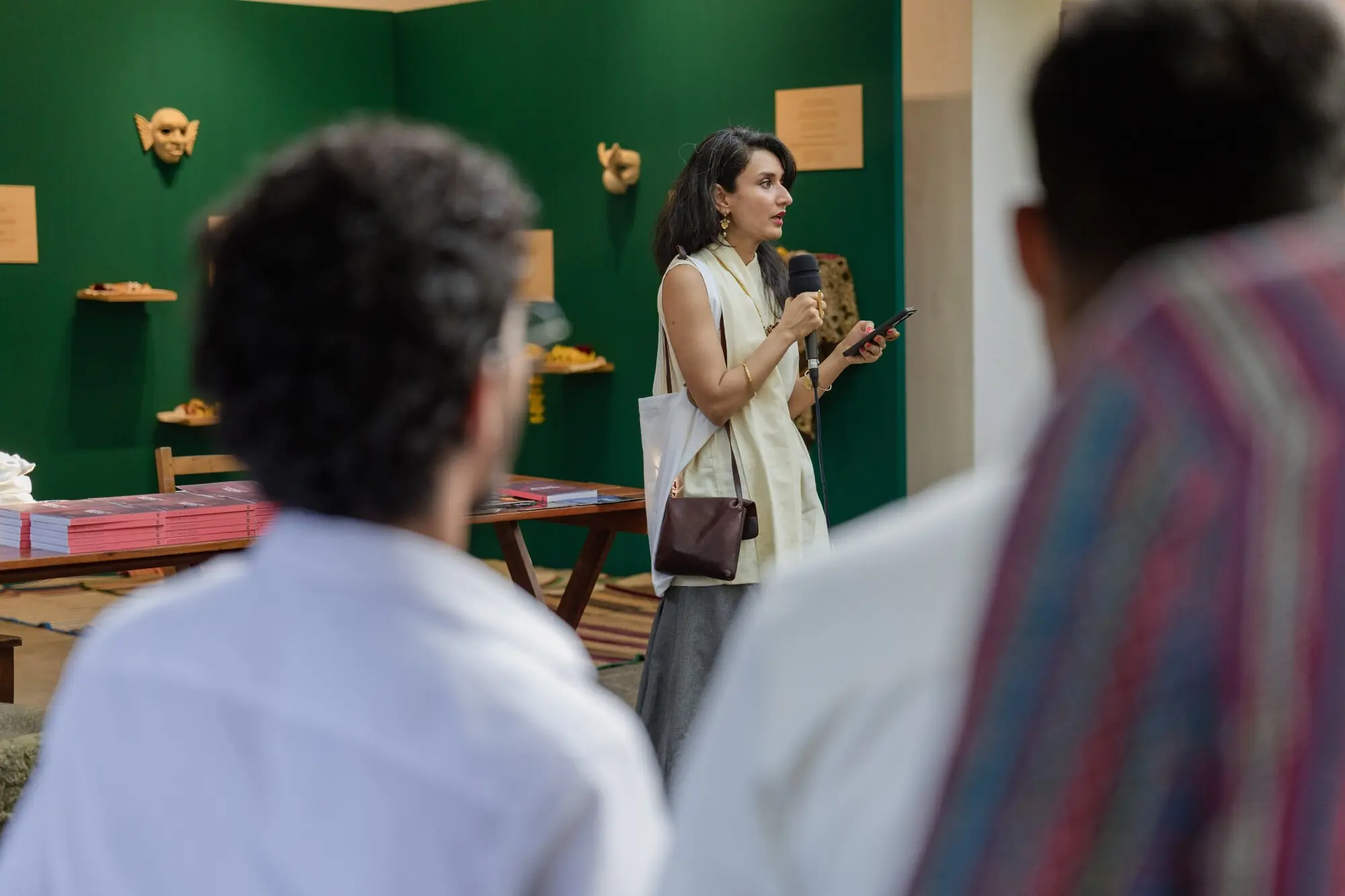
Colomboscope 2026 and Hajra Haider Karrar, the Pakistani woman behind it
Before I knew it, I was being whisked away from the hotel at which I was staying towards Galle Road, where I was told Hajra Haider Karrar was already waiting for me at Barefoot Gallery. Along the way, I felt that Sri Lanka’s capital Colombo was vibrating at a slightly altered frequency as the city hosted Rhythm Alliances, the ninth edition of the contemporary arts festival Colomboscope. The event was held January 21 to 31.
Under Karrar’s guest curatorship, and the artistic direction of Natasha Ginwala, the festival’s exhibitions, performances and talks were an experiment in attunement.
Rhythm Alliances dispersed itself throughout the city’s fabric. Hence, to experience the festival and reach its various venues was to crisscross Colombo itself, moving between neighbourhoods and atmospheres in a curatorial decision that feels perfectly aligned with its theme.
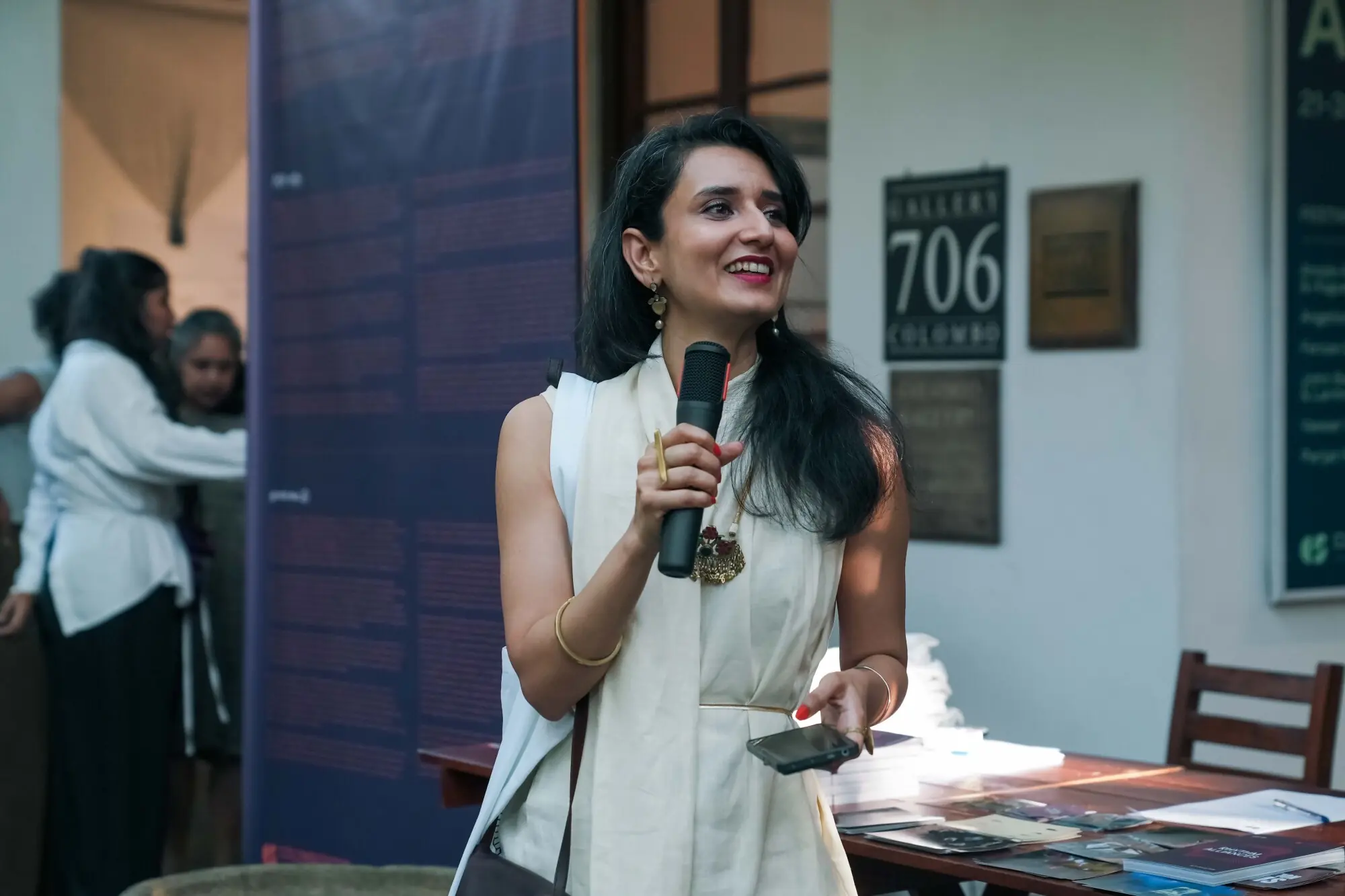
Upon arriving at the gallery, I found Karrar waiting for me near the threshold between the courtyard and the exhibition space, as though positioned deliberately between outside and in, between city and curatorial proposition. If rhythm is the theme, then this first encounter of ours felt like an overture.
I’d first heard of Karrar back when she was faculty of the Visual Arts department at the Indus Valley School of Art and Architecture (IVS) in Karachi and chief curator at IVS Gallery, and. She’s been forging quite the path since. She’s now based in Germany as the curator at SAVVY Contemporary: The Laboratory of Form-Ideas, Berlin. I asked her what it had been like to manage her work in Berlin while spearheading Colomboscope in another part of the world, but she appeared rather unfazed by the scale of what she had pulled off.
Her conceptual framing for this year’s Colomboscope positioned rhythm as a way of listening to under-heard stories of migration, labour and oceanic exchange. Rhythm, in her words, reverberates “across generations and geographies, carried by oceanic flows”.
Karrar’s curatorial strategy was both expansive and precise: expansive in drawing linkages across continents and precise in selecting artists whose practices embody rhythm as lived experience.
And in order to experience Karrar’s expansive precision, I was getting a tour of the venues and the artworks they house from the curator herself.
Cartographies of loss
Barefoot Gallery is, as Karrar also pointed out to me, reminiscent in spirit to Karachi’s Koel Gallery, functioning simultaneously as a gallery space, eatery and seller of artisanal creations.
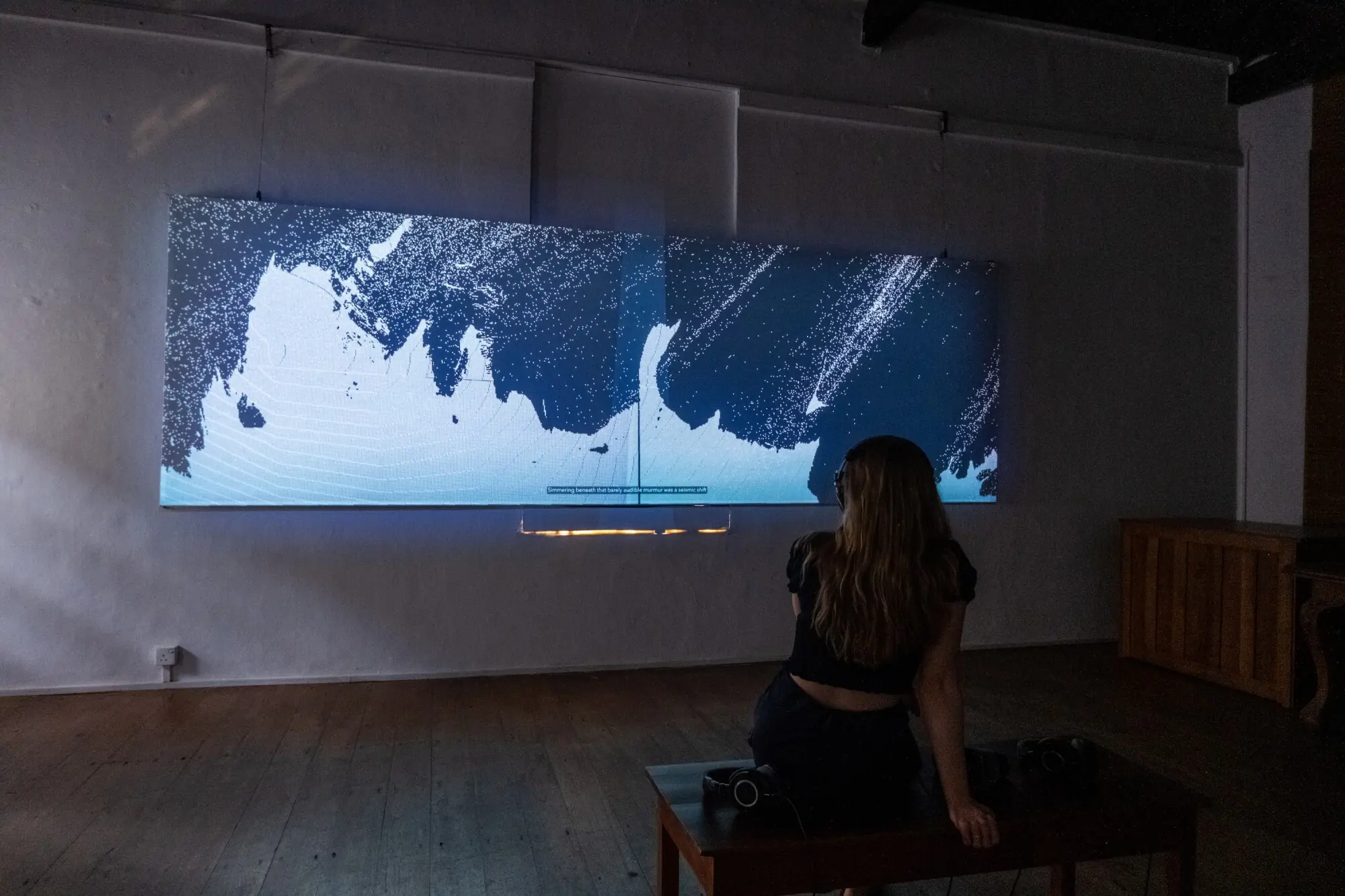
Upstairs, Saadia Mirza’s multi-channel video and spatial sound installation A Phenomenology of Iceberg Collisions unfolded like a geological séance. Reconstructing the rupture of B15, the world’s largest recorded iceberg, the work compressed two years of seismic recordings into a 10-minute sensory encounter. Radar imagery flickered across overlapping projections, their edges colliding like tectonic plates. Sonic frequencies brought to life subterranean ruptures, as Mirza’s powerful installation mapped critical cartographies forever transformed in the wake of man-made catastrophes.
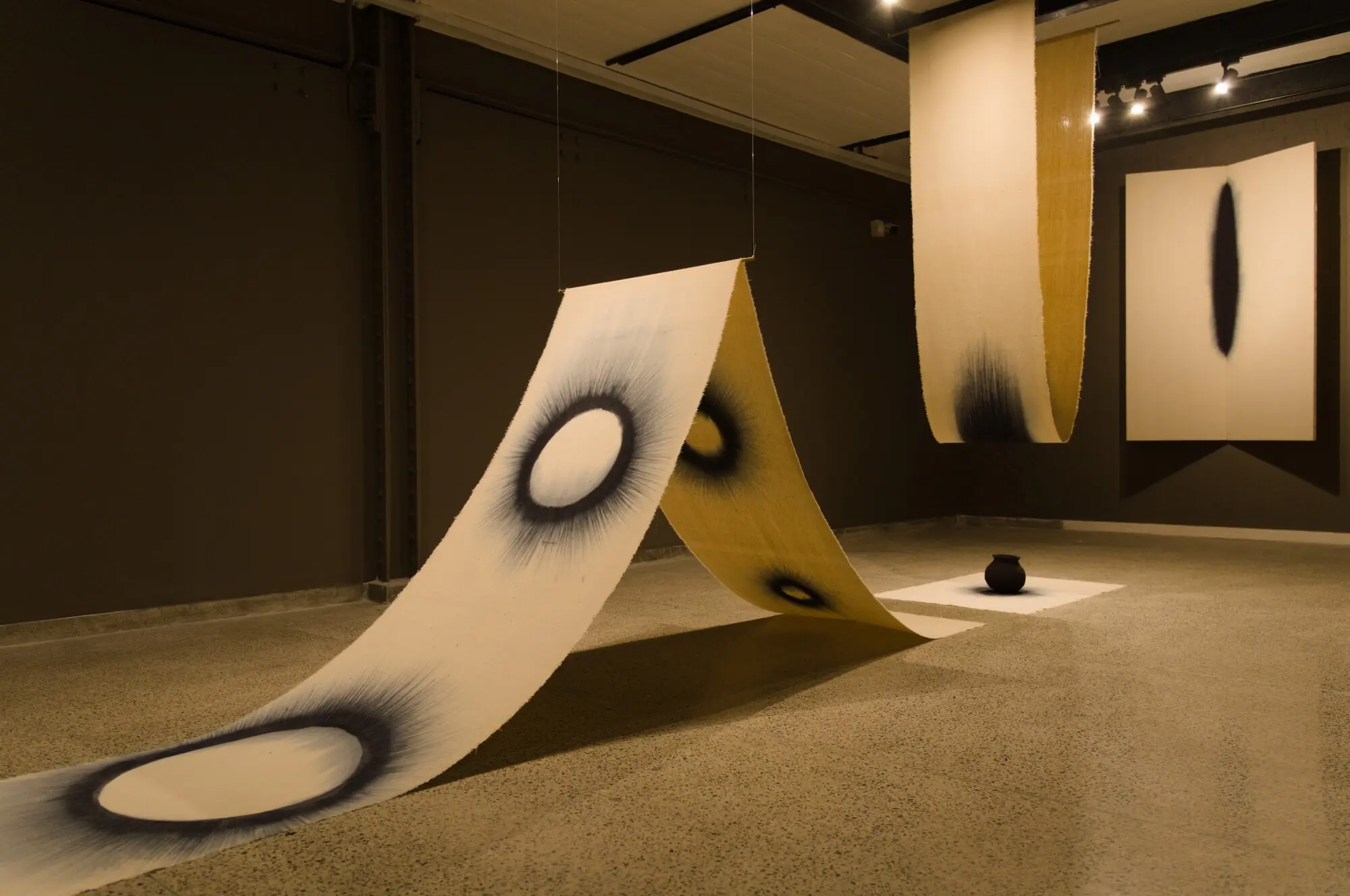
Elsewhere in the gallery, Taiwanese artist Charwei Tsai drew upon the techniques employed in writing Buddhist sutras to impressive use in her meditative and cyclical Sky Dancers series. Circles with defined centres radiated outward like tree rings, symbolising, at face value, the enlightenment and unity of all things espoused in Buddhist philosophy. However, much to my fascination, Tsai told me over dinner later that night that the concentric forms could equally evoke the act of circling the Holy Kaaba.
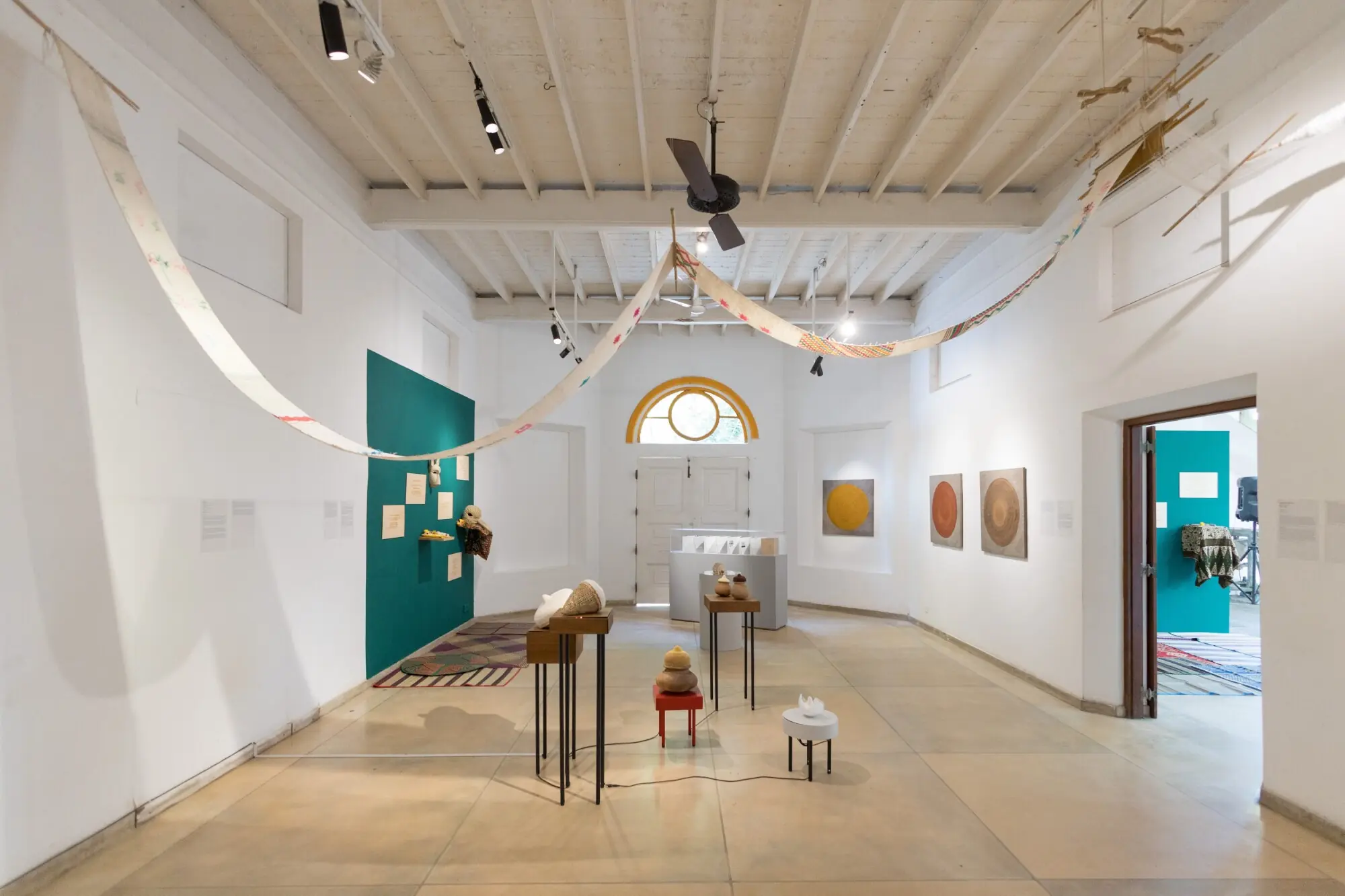
Next to her work in the gallery was Nepalese artist Mekh Limbu’s Chotlung: Traversing Spirits, Redemptive Songs, which centred weaving as embodied recall. Belonging to the Adibasi-Janajati Yakthung (Limbu) community, Limbu foregrounded textile traditions practised by generations of Yakthung women. The handwoven pieces, some previously carried in demonstrations against state-backed hydropower dams and infrastructural incursions, hung alongside video documentation as weaving became both archive and an act of revolt.
After viewing the works at the gallery, Karrar insisted I grab some lunch. As we were to be hopping from one Colomboscope venue to the next, I was going to need the energy.
The seen and unseen
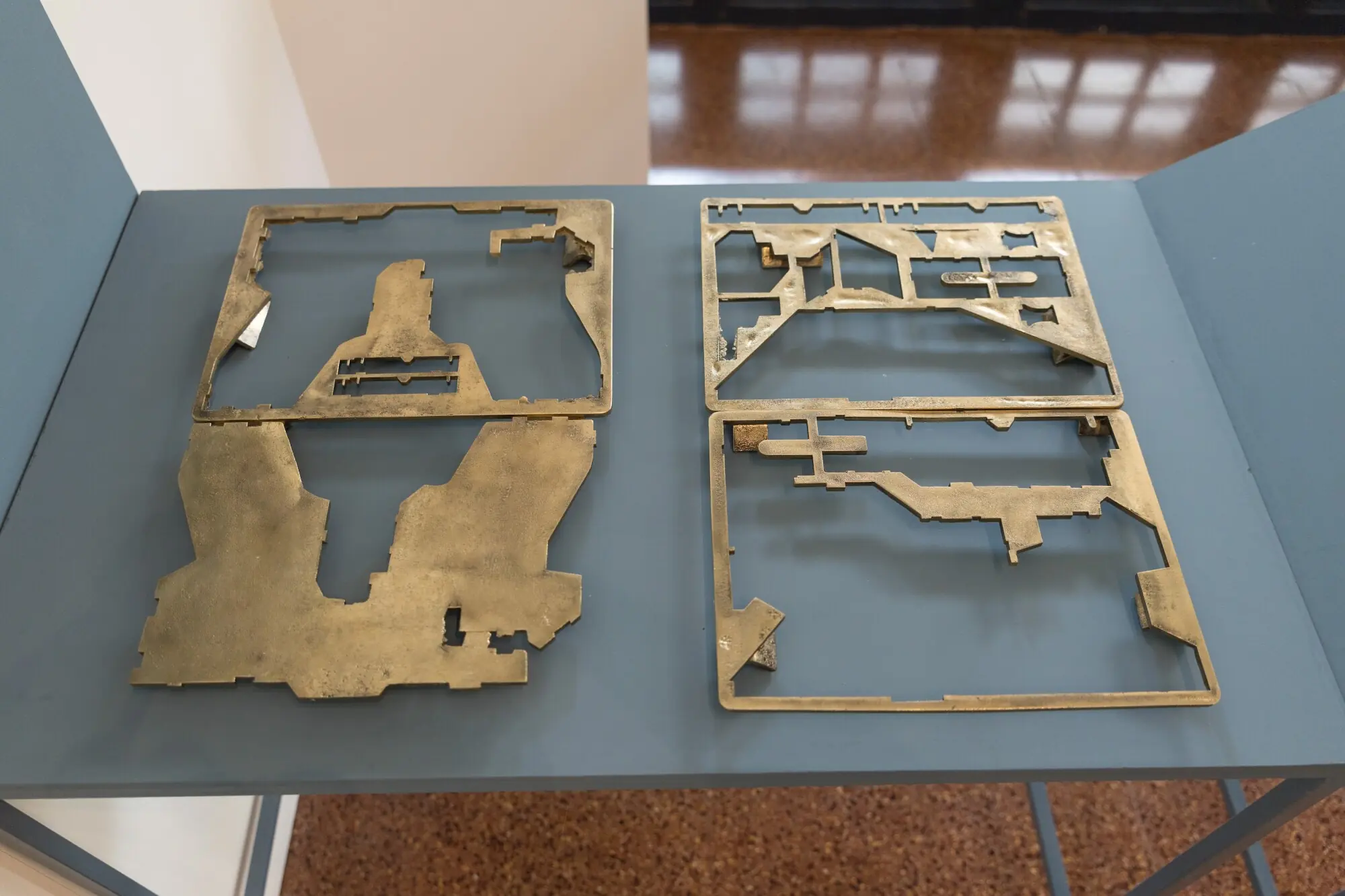
On Chatham Street, Radicle Gallery hosted dialogues that felt explicitly trans-regional. Naiza Khan presented audio installations Durbeen and Batticaloa Justice Walk. Durbeen reconstructed tenuous nexuses of mobility and exchange through field recordings, protest songs and spoken recollections, acting as a sound collage that traced exchange across coasts.
In the gallery’s basement was Seher Shah’s deeply alluring Woven Nights, a series of concertina books composed of monotypes and shadow prints. Installed in the shape of undulating waves, the pages, and the markings on them hovered between presence and disappearance. Shah’s intimate grammar registered rhythm through interval and silence.
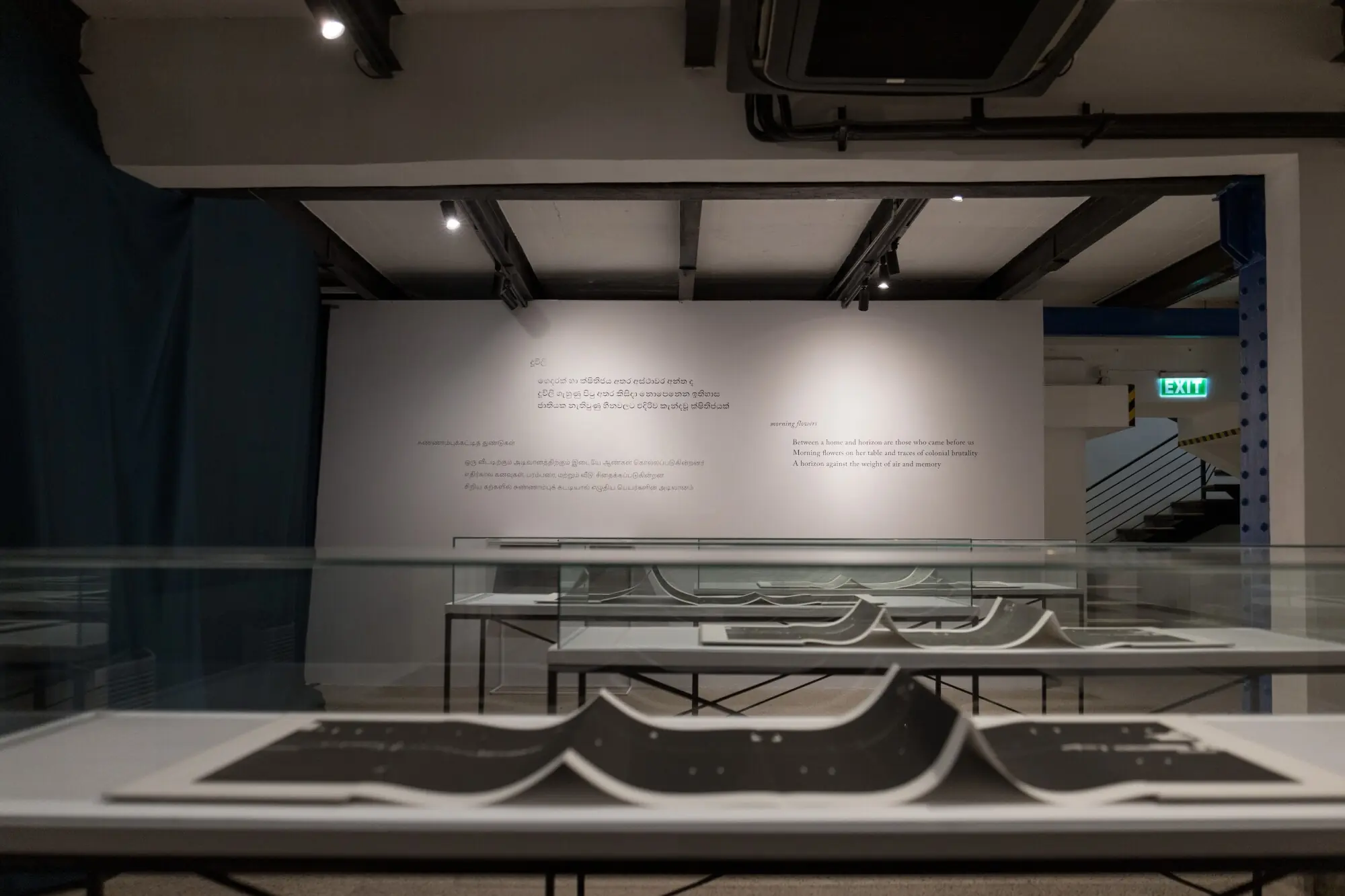
Alongside this, her text-based work Between a Home and a Horizon shared her observations during her time spent living in New Delhi. What was particularly revealing in her writings was her invocation of a Mughal-era Urdu genre of poetry known as Shahr-i-Ashob, which poets have employed over the centuries to lament a city’s misfortune.
Fittingly, her writing mourned the political and ideological downturns that she witnessed in India, as a sort of quiet elegy for a New Delhi that once was.
Rhythm as resistance
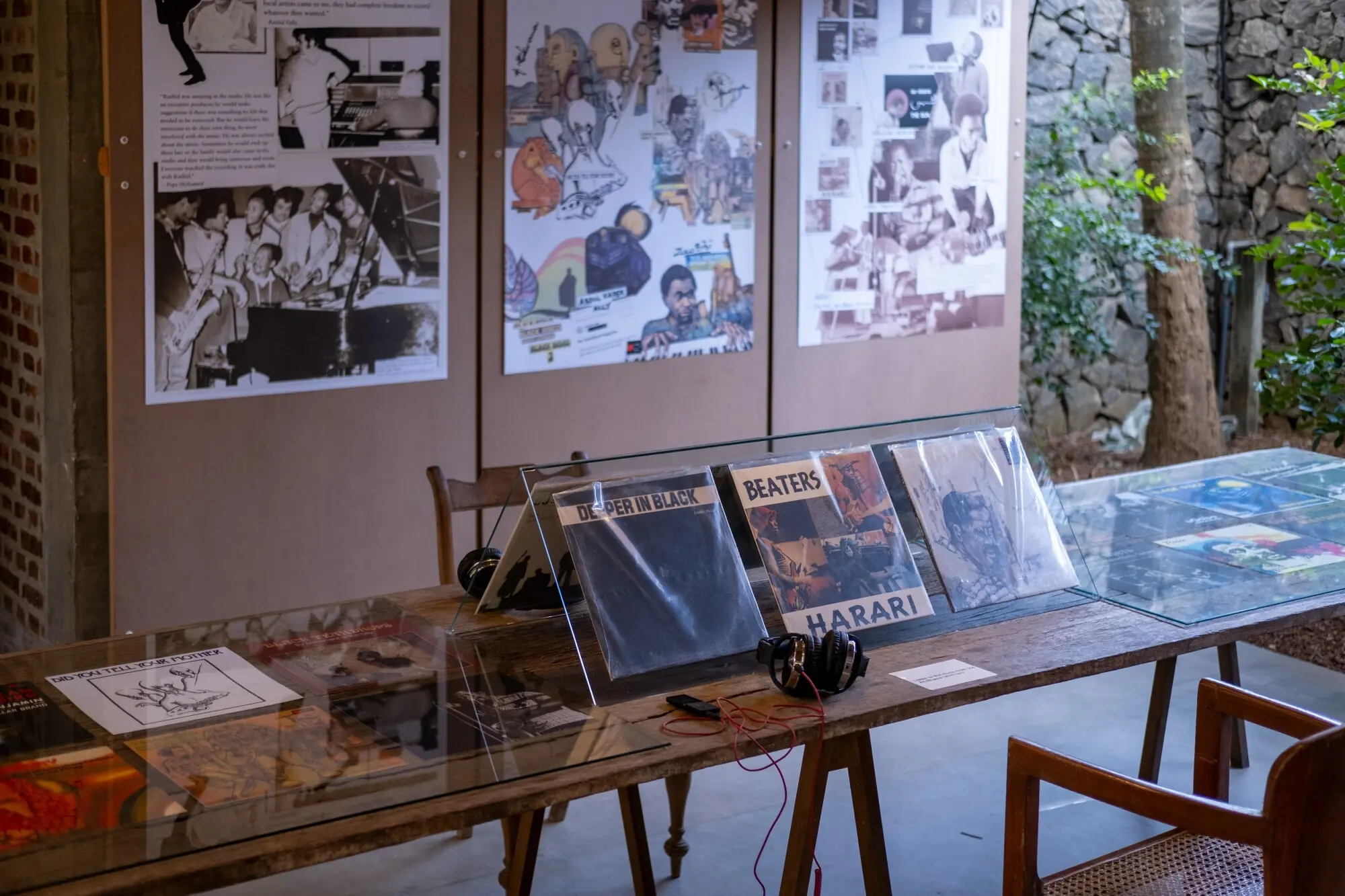
Built from repurposed concrete blocks, and equipped with water pools and a vinyl library, Soul Studio is an intimate sonic refuge. This was where the South African researcher and DJ Atiyyah Khan presented A Journey into the Sun, rooted in her long-term research into As-Shams Records. Founded in Johannesburg in 1974 by Rashid Vally, the independent music label gave a platform to anti-apartheid jazz, nurturing artists such as Dollar Brand, later known as Abdullah Ibrahim. In fact, Rashid’s record shop, Kohinoor, became a hub for creatives and music enthusiasts alike.
Atiyyah’s immersive sound environment distilled years of archival research into a resonant reminder that jazz functioned as a form of cross-racial solidarity forged under oppression in South Africa. By tracing migrations, both forced and voluntary, from South Asia to South Africa, her project perfectly encapsulated Colomboscope’s transoceanic imagination. Rhythm here was a social adhesive that held communities together against the violence of segregation.
Rooms of remembering
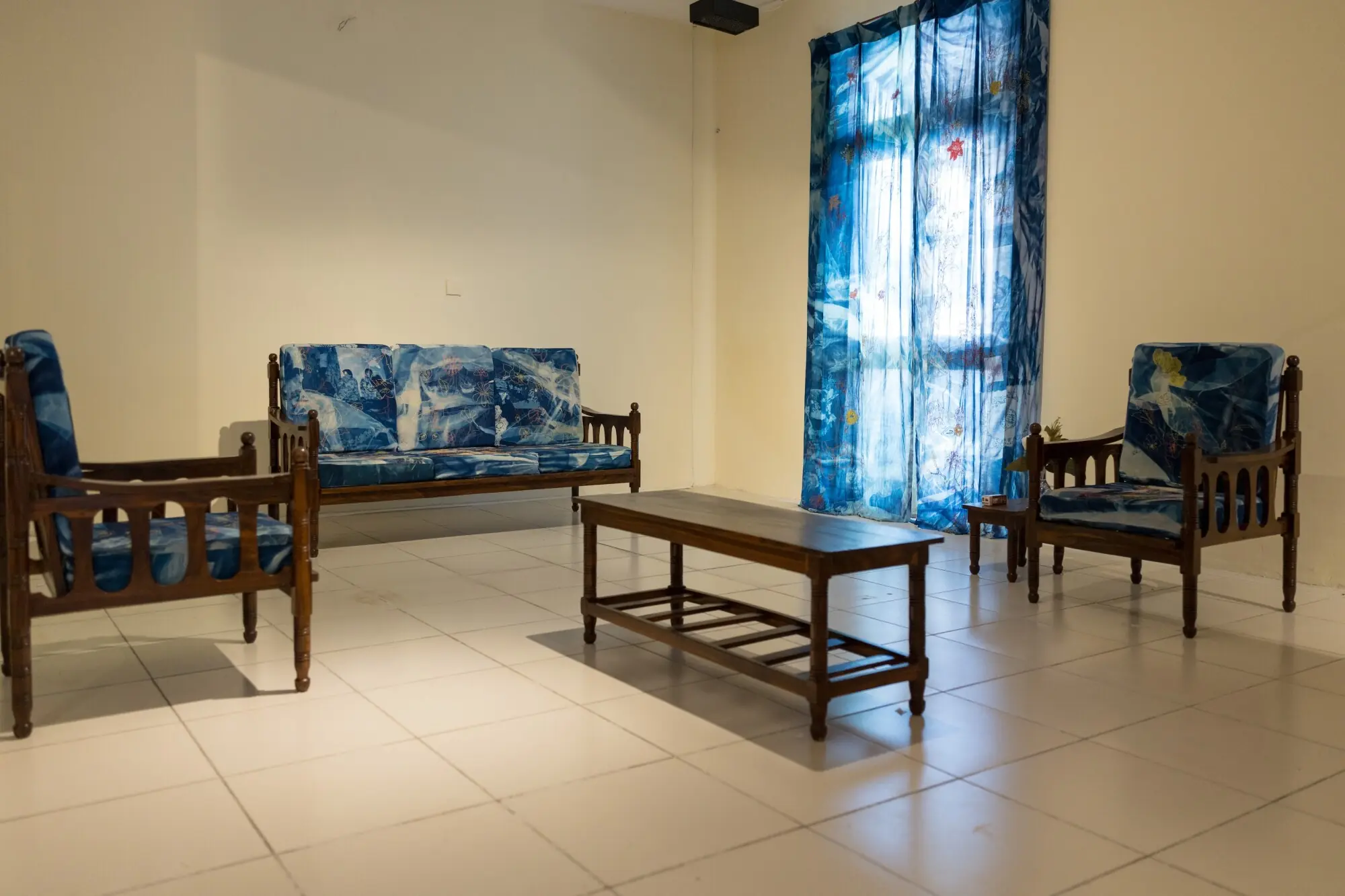
Our next stop was Colpetty Town House, which delivered some of the festival’s most emotionally resonant works. Pakistani artist Jovita Alvares’s installation unpacked the impact of Portuguese colonisation in Goa and the ruptures of Partition. Karachi’s Goan community became her lens in the work Re: cite, member, sist, in which she constructed a domestic setting brimming with “intergenerational memory”.
She incorporated tracings of her grandmother’s embroidery patterns onto cushions and curtains, transforming domestic objects into mnemonic devices. Seeing her work, I was reminded of her exhibition at Karachi’s Canvas Gallery, Goa last night I dreamed I touched you… today it dissipates, which was, fittingly enough, also curated by Karrar.
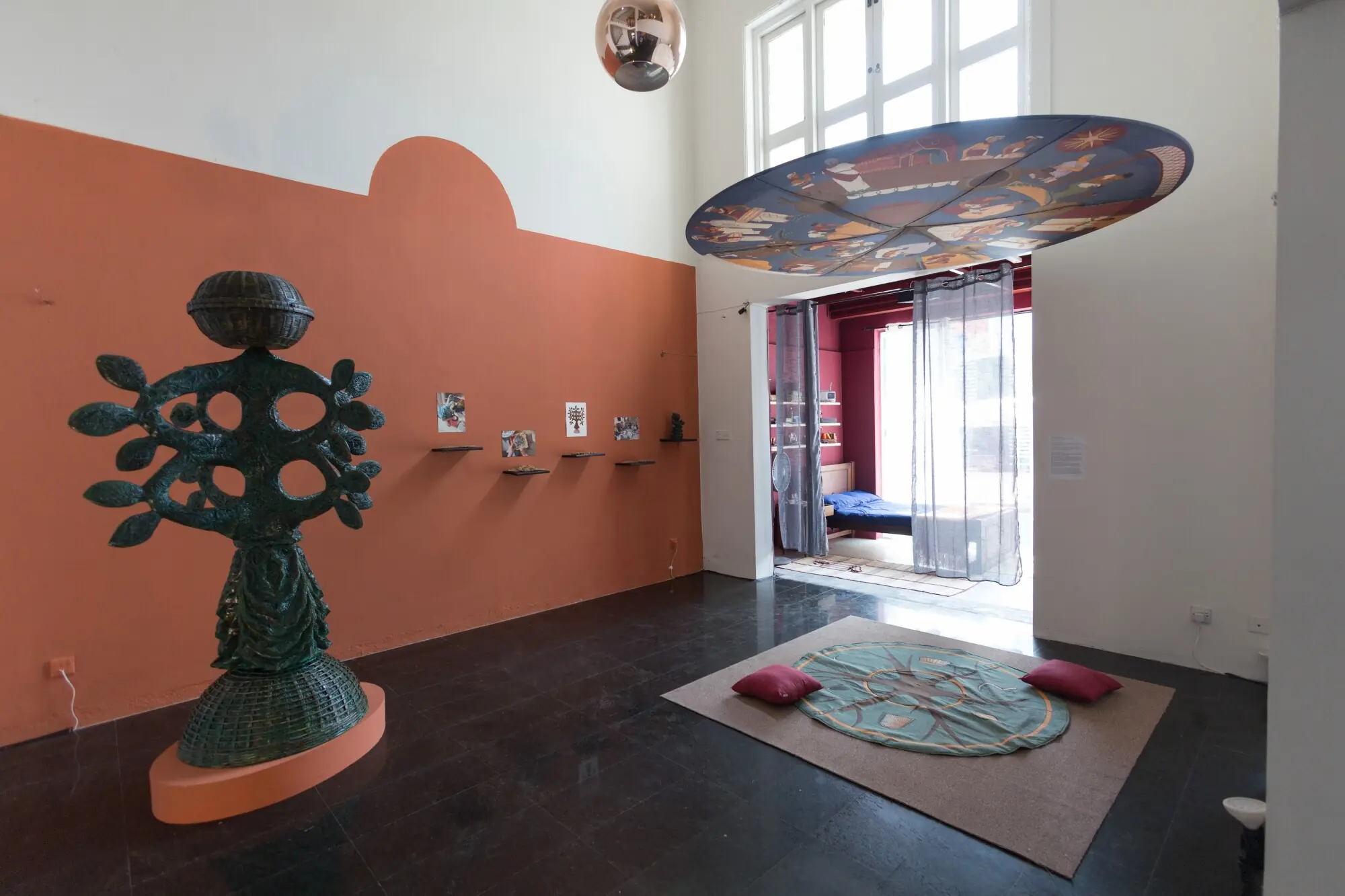
On the ground floor of Colpetty Town House, Sri Lankan artist-duo Tashyana Handy and Sakina Aliakbar’s For Private View and Public Disappearance meticulously reconstructed a young woman’s bedroom. The work was so evocatively constructed that one could imagine it being any girl’s bedroom, so much so that it reminded me of my older sister’s chaotic room during her teen years.
The installation unfolded as what the artists described as an “intuitive and emotional archive”, with mundane objects carrying the weight of grief, love, debt and friendship. A line scrawled on the shelf read: “Do not make that house your home, it is not.” Placed next to the window of the townhouse so that passersby could peer in, the bedroom staged the tension between private interiority and public performance/scrutiny, particularly for young women.
And from here, as I looked out the window, Karrar was already hailing a tuk-tuk to take us to our next and final stop.
The last picture show
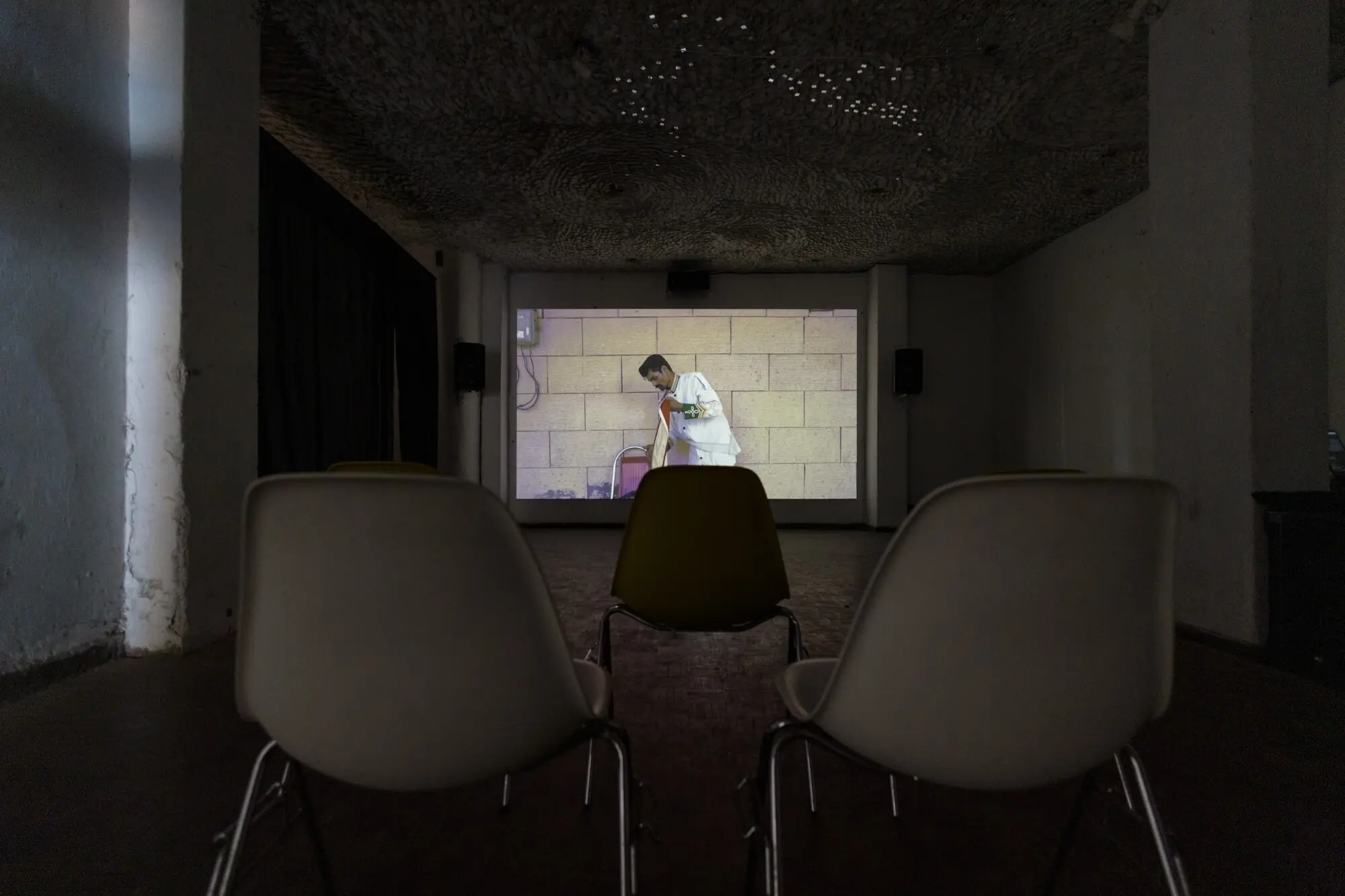
In a scurry, we arrived at Rio Complex, a former mid-century cinema marred during the Black July anti-Tamil pogrom of 1983. Here, cinematic memory was palpable, thus making this charged space ideal for Basir Mahmood’s electrifying A Body Bleeds More Than It Contains.
Mahmood spent years engaging with ‘background’ actors, musicians and technicians from Lollywood’s dilapidated film ecosystem. Following the partial demolition of Lahore’s iconic Bari Studios in order to make way for yet another housing project, his multimedia installation used the defunct studio as a backdrop to put those long relegated to the background front and centre.
The work acted as a living archive and ode to the people behind the movies. At one point in the video, a man was shot and a filmy gush of blood erupted forth from his chest. He was dead and, along with him, the once-imperious film studio he devoted his life to.
Listening as alliance
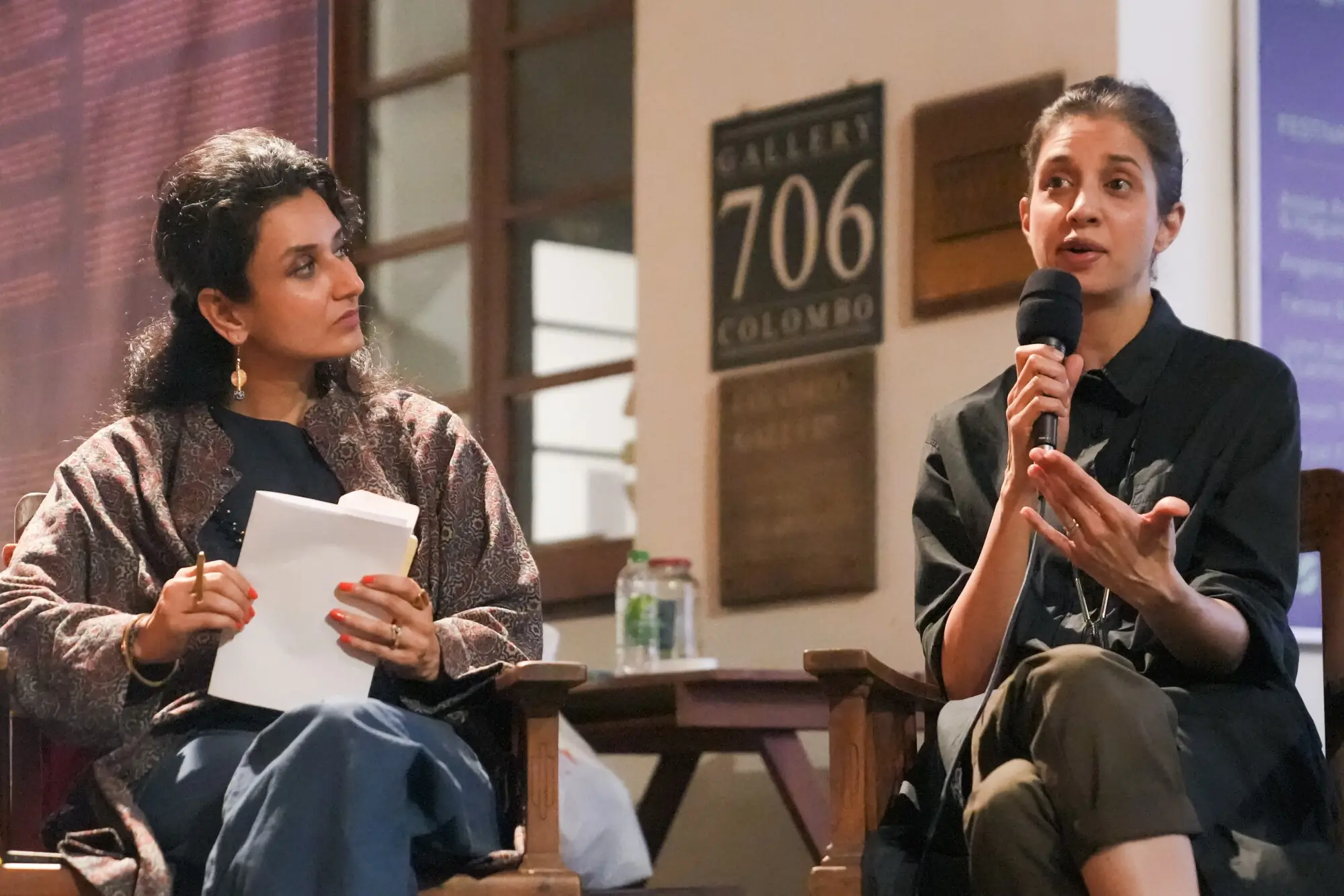
As we departed from the Rio Complex, just as the sun started to set, it was evident to me that Karrar wanted Colomboscope’s ninth edition to favour resonance over empty spectacle. By spreading itself across Colombo’s architecture and histories, Rhythm Alliances transformed the city into an instrument, as each venue operated in a different register, with Karrar at the helm as the maestro.
Cover photo by Sanjaya Mendis
Comments