
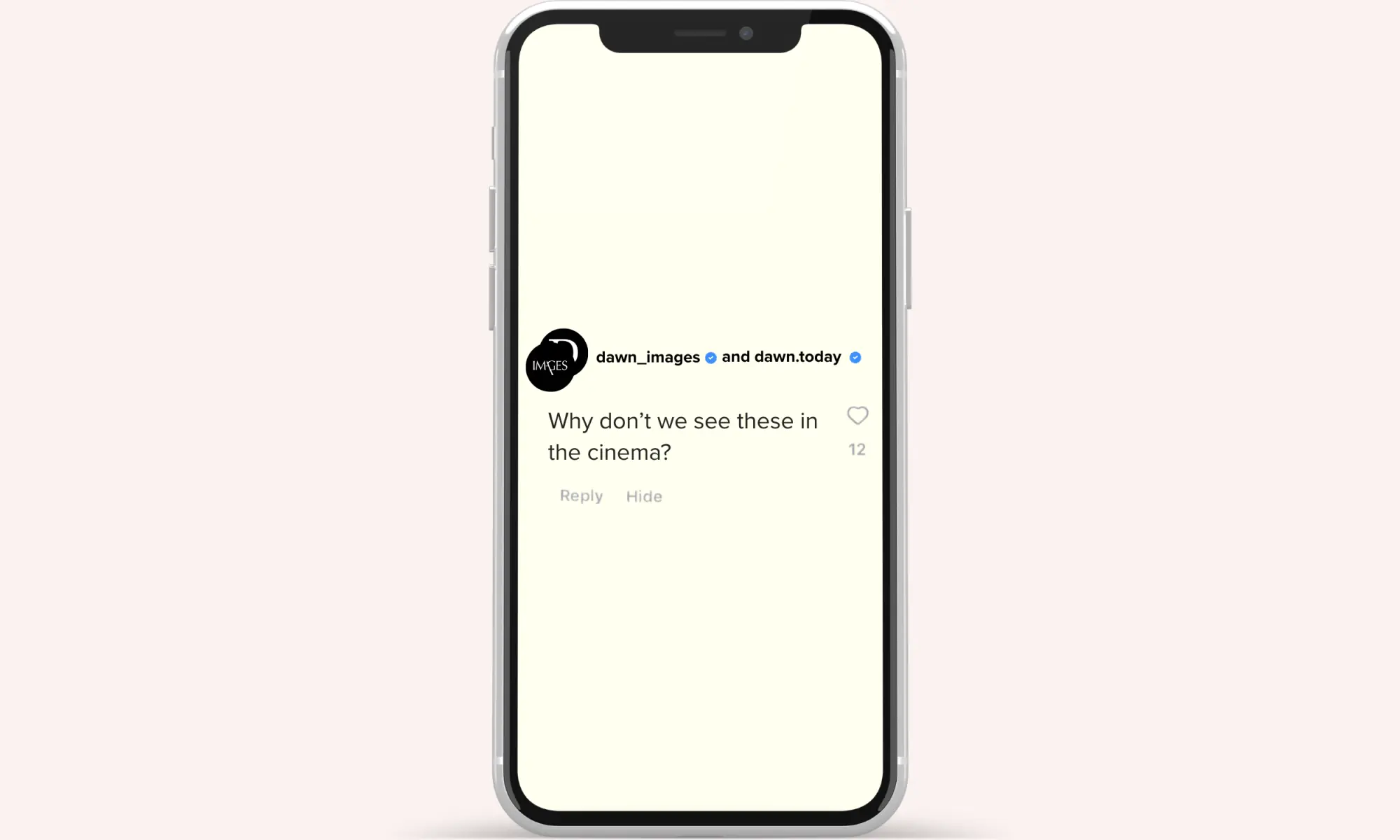
Why don’t you get to see any cool Pakistani indie films?
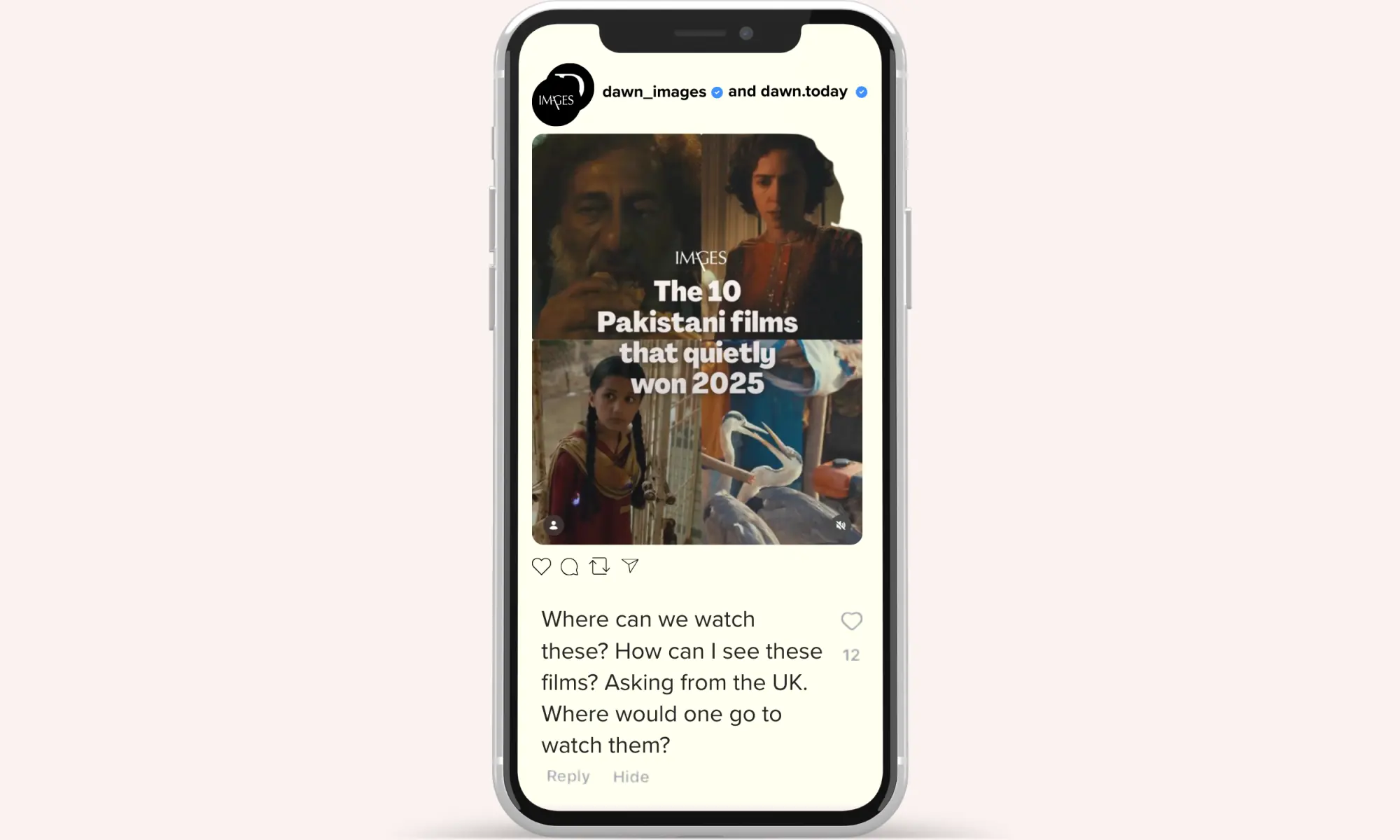
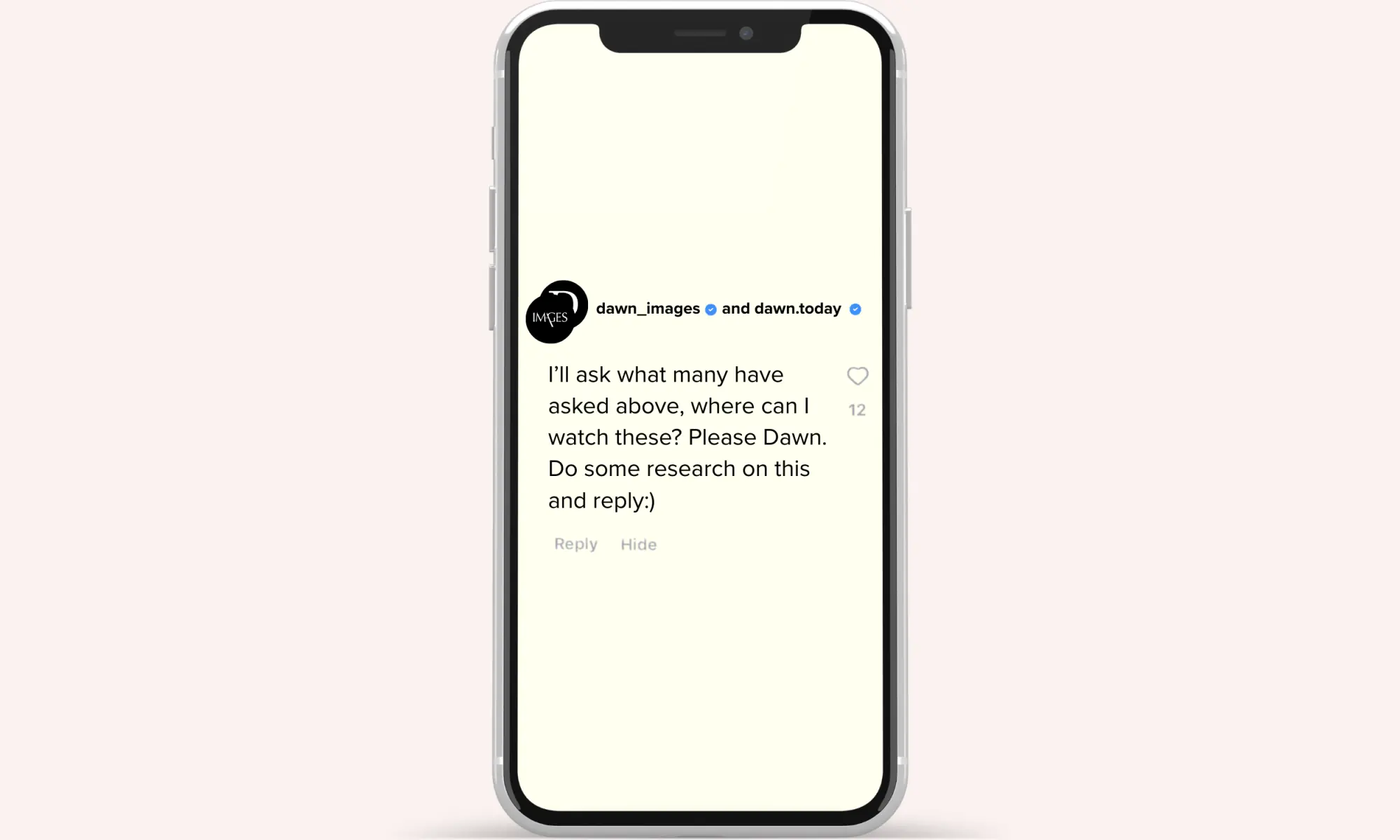
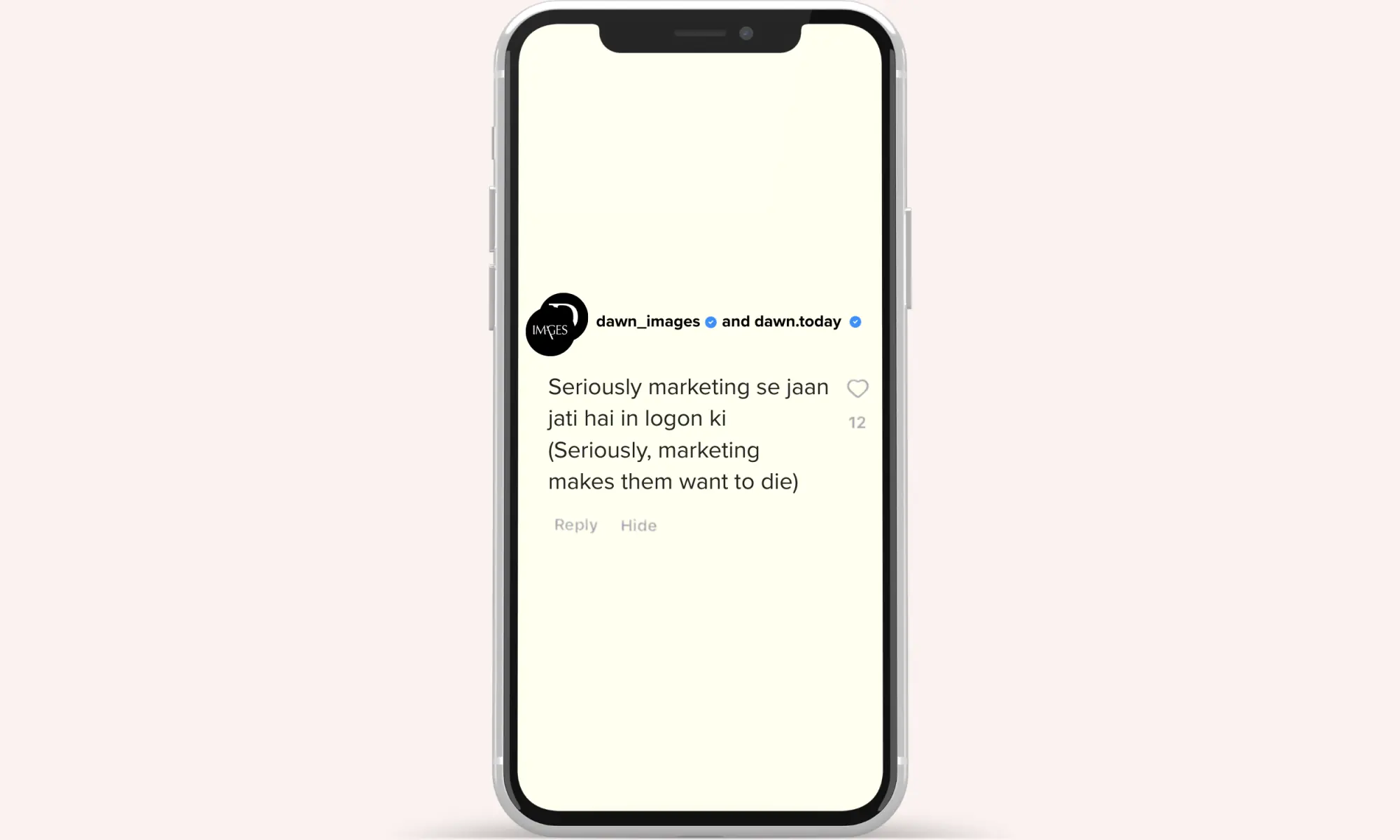
The questions kept pouring in. Your questions filled up the comment section of my last story titled, ‘Beyond the box office: The 10 Pakistani films that quietly won 2025’, in which I compiled a list of 10 independent Pakistani films from the past year. Most people seemed quite interested in watching them.
Many of you raised valid questions, and some speculations about why we as Pakistanis don’t have access to most of these films.
So on popular demand, research is what Images did. But before delving into the most asked question, “where to watch these films,” let’s dive into understanding why it is such a difficult question to answer.
What does the independent filmmaking process look like? Why is showing films to the people they are made for an arduous task for filmmakers? Who are the major stakeholders? And where can you catch these films if not at the cinema?
To understand what happens once a film is made, let’s go back a little bit and gain some basic understanding of the film world — the not-so glamorous side of this art form.
The basics
First, let’s divide films into two categories for a better understanding: feature films and short films. According to Studio Binder, an all-in-one production management software designed for film, television, and video production teams to streamline workflows, a feature film typically has a run-time between 80 and 180 minutes. A short film, on the other hand, is any film that isn’t long enough to be a feature. Typically, it runs between 45 seconds and 45 minutes. Films screened in commercial movie theatres are typically features that run over 80 minutes.
Whether it is a short film or a feature, as soon as you have a story and a full script, the first thing any filmmaker would need is drumroll, money.
Whatever you see on your screens, whether it is a movie, TV series, short film, mini-series, or any other form of media, requires a decent budget. The definition of ‘decent’ changes based on the requirements of the story; it could go up to millions. The funds are then allocated to casting, production expenses, crew, marketing, and distribution.
Naturally, more money means a more experienced technical team, which includes cameramen, assistant directors, art directors, editors, gaffers, the list goes on and on. Does it always mean better actors? Maybe not. Does it mean better stories? Definitely not.
However, it almost certainly means better marketing.
So, what happens once a filmmaker is done making the film? Needless to say, the next step is taking the film to its audience. Conventionally, that means taking it to cinema screens where you can enjoy the film armed with an overflowing box of warm, sweet and salty popcorn, and a diet soda — or maybe that’s just me.
My last story included both features and short films and we just learnt that short films usually aren’t contenders for cinema screenings.
Let’s talk about features first, then.
After the completion of a film, the next step for filmmakers is to distribute it, which they can do in two ways. It can be taken to experienced distributors who have been part of the industry for enough time to have useful direct connections with cinema owners, and marketers to market and exhibit the film in cinemas or filmmakers can self-distribute.
To understand the job of a distributor in simple terms, I spoke with film critic and distributor Kamran Jawaid, owner of Anthem Films. According to him, a distributor’s job is simply to take a film to the cinema.
“A distributor has his own strategy. What is the perfect time for the release? What is the audience quote target? Which age group is it targeting? Would the age group you want to target be available during the month you want to release your film? Would you release the film in the first week or the second week, or the fourth week? How do you plan the release strategy, the PR of it? All of that comes under the distributor,” he explained.
According to Studio Binder, a distributor’s job is get the film into different exhibition settings, whether it be a theatre, TV, streaming service, or DVD. An exhibitor, meanwhile, owns these platforms where the films can be shown.
During my conversations with eight non-commercial filmmakers, one theme that remained consistent was failure to find a distributor for their films. Whether it be the the critically acclaimed In Flames (2022) that premiered at Cannes Film Festival, or Habib Shahzad’s crime-thriller Jujji (2024), which eventually had its Transactional Video on Demand (TVOD) release on Amazon Prime, a model through which a user can buy the film for $8 (approx Rs2,300) or rent it for almost half the price.
The reason? Lack of funds and distributors’ unwillingness to take on the film.
Jujji’s Shahzad spoke about his team’s six-month-long struggle to find sponsors to fund the distribution of his self-funded film, all in vain.
“We wanted to distribute it [Jujji] in cinemas. Then we started putting in effort, all sort of effort. I had like five people in Islamabad going to different companies, going to different brands […] we went to banks, we went literally everywhere. We were not able to raise a penny for this film, at least for six months.”
Despite being received well in celebrated local film festivals such as the Gandhara Film Festival and Divvy Film Festival, Shahzad wasn’t able to take his film to local cinemas since he couldn’t lock down a deal with a suitable local distributor — an issue most Pakistani filmmakers have faced.
While looking for distributors, Shahzad was told to pay money upfront to the distributor for three things: to exhibit his film across cinemas in Pakistan, for clearance certificates, and for an on-ground marketing campaign.

“One of the distributors told me upfront that we don’t have confidence in your film, that is why we are charging so much money. If the film doesn’t make enough money, we can’t be in loss.”
Jujji’s director didn’t have the funds to spend on marketing nor did he believe this was a global practice. This made him look outwards, which led him to secure a deal with US-based distribution company Buffalo 8, which acquired the film and owns all distribution rights. With them, his experience was starkly different.
“It was, you know, how generally distributors make you an offer. They said, ‘This is our upfront fee, and this is the amount of money that we’re going to spend on advertising and marketing. This is the total amount, but we’re not going to charge you this upfront. When, if we will distribute your film, when your film will start making money, our charges, we will recoup that. After that, you know, the money will start going to you,’ which was absolutely beautiful. And this is how it works all over the world.”
In Flames’ producer, Anam Abbas, had similar things to say about her experience distributing the film abroad: “Foreign distributors paid us a minimum guarantee, even if it was a small amount,” to license and distribute the film.
She explained that for those distributors, the minimum guarantee was their trust in the film and themselves, that they knew how to work and generate at least the minimum guarantee amount after distribution.
However, according to film critic Jawaid, global and local practices don’t differ much. What Shahzad eventually got was an acquisition deal out of his film’s distributors, which is usually the case if “your product is something the distributor is looking for, or specialises in”.
Jawaid explained that this was possible if the product had the quality they were looking for in that particular genre. In Pakistan, acquisition deals are not common because “no network of big-name distributors acquires your product”.
He said 90 per cent of the deals are straight distribution deals, where the distributor gives the filmmaker a “minimum guarantee” amount if they see potential, and recoup their distribution costs from revenue, splitting the rest of the money according to terms agreed upon in the contract.
“The distributor only takes about 15 per cent. The rest just goes back to the producer,” Jawaid said. This was backed up by distributor Nadeem Mandviwalla of Mandviwalla Entertainment.
The remaining 10 per cent deals in Pakistan are distribution-for-hire deals, where you pay the distributor to take your films to the cinema.
The question then arises, how does a distributor decide which film to distribute and why are most self-funded projects unable to fulfil their criteria?
What makes a film distribution worthy?
Unfortunately, anything that might draw numbers. Where do the numbers come from? You, the audience.
What does the audience want? Apparently, star power, item numbers, and a lot of oomph.
“The only films that come under our radar are the ones that have this big hurrah to it, the big commercial push to it, for example, Fahad Mustafa’s Aag Lagi Basti Mein is being pushed already. So you know that’ll come onto the radar,” distributor Jawaid noted.
Director and producer of the box-office success Karachi Se Lahore, Wajahat Rauf, who has also produced a handful of commercially successful films, echoed Jawaid’s thoughts.
“Most independent or first-time producers and directors are unable to lock in a major star or stars in their films, and that is one reason the trade doesn’t respond favourably to them,” he explained.
Rauf also shed light on the distributors’ perspective. “Perhaps it’s a trust issue that the movie is not going to recover the expenses involved in releasing a film. Distributors are wary of their investment [not] coming back in terms of promotion and distribution costs, so they ask for P&A (Print and Advertising costs) up front from the producer. That is why a lot of good films by new filmmakers don’t get a good release.”
Mandviwalla, a major Pakistani distributor and owner of Atrium Cinemas, said Bollywood makes 250 films in Hindi only every year, but “the part that nobody knows” is that of those 250 films, only 100 are supported by distributors.
“Cinema is a commercial place. So when you go talk about releasing your films in the cinema, then you’re talking about a certain expense that has to be taken. Either your distributor will take it, or you will. If you’re not willing to take that expense, it [film] will not go to the cinema,” he said.
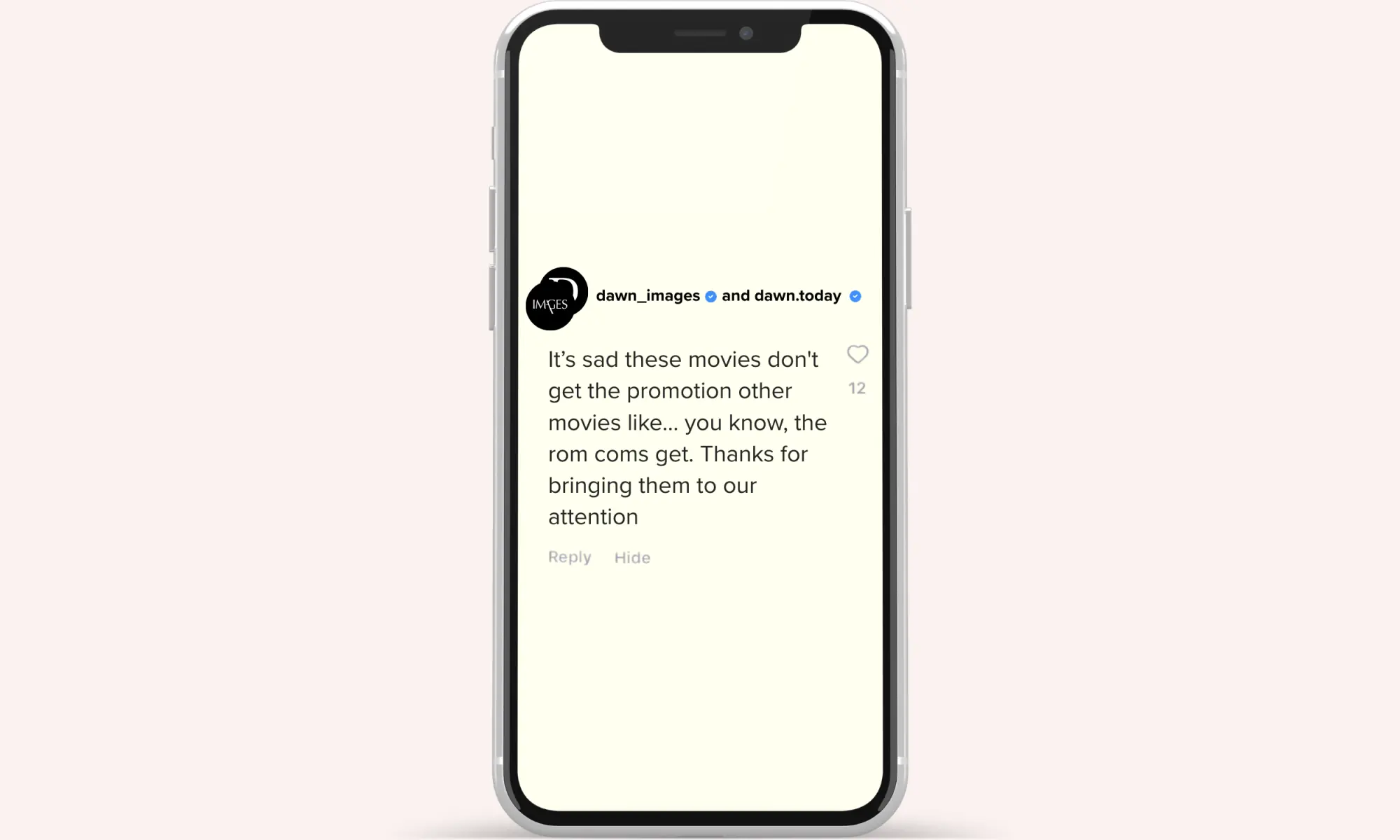
The problem with the films that many readers showed interest in watching, unfortunately, is that they do not offer the glitz and glamour most Pakistani audiences are looking for. These indie filmmakers are a bit too determined to tell stories that mirror our society. To experiment. To bring something fresh to our local film catalogue.
When Abbas stepped out to self-distribute In Flames in Pakistan, she found herself stuck in a similar loop as her peers — no big names equalled no marketing.
“With In Flames, basically, the answers we got from across the board were that it doesn’t have any stars, so we can’t market it basically.”
Eventually, she entered into a short contract with Mandviwalla — who distributed Nayab, Deemak and the Glassworker, among many films — as an exhibitor and they got to screen the film for approximately two weeks at Atrium Cinema in Karachi. You might wonder why this wasn’t marketed enough for you to find out about it. Well, the conversation circles back to funds. The contract with Mandiviwala Entertainment was an exhibitor’s contract, which only included providing the cinema space to screen the film. The cost of marketing the film fell squarely on the shoulders of the filmmakers.
Independent filmmaker Arsalan Majid had a different perspective. Comparing the Indian film industry to Pakistan’s, he reflected on how Indian cinemas offer tickets ranging from INR50 to INR500, allowing the general public — not just the elite — an opportunity to go to cinemas, thereby making it a more sustainable practice. However, he cautioned that India reached this point after mass production — a practice Pakistani players need to adopt.
“In India, there is a new film every Friday, so they make I think about 3,000 to 4,000 films a year in different languages […] Here, we have internalised India’s glossy side of business — take a few A-listers here and there, make a commercial film, launching four films on one day on Eid,” he said, lamenting that our industry has not worked from grassroots level.
“That films should be made, the good stuff and the bad stuff, will take care of itself. The audience will decide what films should stay. But if you enforce a concept, that this is Mahira Khan, this is Fawad Khan, come watch, why are you not watching it? Then that’s not going to work,” he said.
Curating audiences
Kamil Chima, producer of the 2019 crime thriller Laal Kabootar, later produced a comedy film titled The Queen of my Dreams. The film had its premiere at the Toronto International Film Festival, like many other Pakistani independent films, and, like many others, there is no easy way to watch it for Pakistani audiences.
Why? Because it’s no easy task to get our audience to go to the cinema.
“The cost to get an audience member to leave their phone or their couch, get into a car, get three or four people to sit with them, come to the cinema, and then pay Rs1,200, Rs1,300 or Rs1,400 per ticket is a pretty expensive task,” he said.
Award-winning documentary maker Jawad Sharif directed TV serials for mainstream channels like HUM TV and Geo Entertainment for at least five to six years before transitioning to documentary films. He told me that a large part of him had accepted that his films wouldn’t do well in cinemas, as they were not suitable for local audiences.
Sharif, who fuels his passion projects through his commercial work, was not the only one who thought their films were not “suitable for the local audience”. Majid, director of Beyond the Wetlands, the first feature film in the world to be shot in -30 degrees Celsius in the K2 mountain region in its entirety, felt the same.
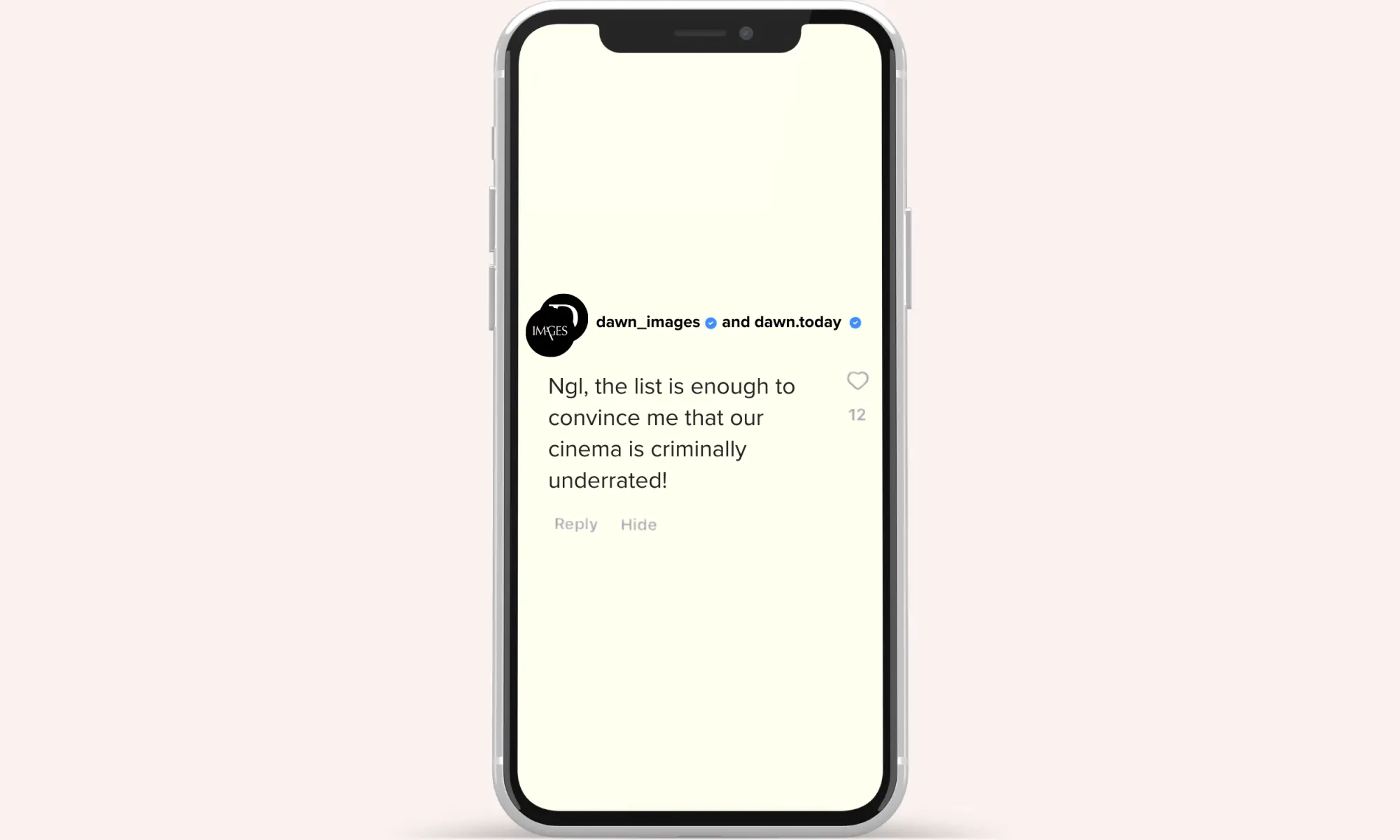
“The film is not for [the] entire Pakistan, and I am fine with that,” he said.
Sharif, the director of the award-winning Moklani, reiterated that most independent films are not glamorous enough for mainstream audiences, as they are not interested in watching message-based films.
He also believes Pakistan’s cinema culture has diminished. For audiences, going to the cinema is not part of their weekly routine, unlike in other countries, such as India, in which around 157.4 million people go to the cinema every year. For a country where only a handful of films are produced and exhibited in cinemas, audiences lean towards what is entertaining.
“Our topics are such that an audience coming to the cinema for entertainment, why would they want to watch a social-issue based or tragedy [film]? They are visiting [the cinema], spending two to three hours of their time to be entertained,” he said, highlighting how non-commercial films created by independent filmmakers might not be everyone’s piece of cake.
Kamli’s (2022) producer, Kanwal Khoosat, shared the same view. Commenting on the conditions of cinemas in Pakistan, Khoosat stated multiple factors keep discerning audiences from going to cinemas, including the lack of quality cinema screens to exhibit films in their true form.
Complaining about the “bad lens” of DHA’s Nueplex cinema — where they premiered Kamli — she mentioned that there aren’t “many things alluring the audience to go to the cinema; it is just the film itself”.
This is something many cinema-goers, including myself, can completely agree with. I have often left cinemas, disappointed in either the quality of the screen or sound.
“If you make a film of your own accord, then it will not have a mass audience,” she shrugged, saying Pakistani TV audiences have been brainwashed into consuming formulaic narratives and are reluctant to engage with more demanding material. She urged filmmakers and producers to realign their expectations because the non-commercial film fraternity has failed to curate the right audience for their work.
“If they are paying Rs1,200, Rs1,500, Rs2,500 a ticket, then they better laugh their way out of the cinema,” she said, of the audience’s mindset.
Apart from the films lacking glamour, Sharif highlighted a much less talked-about issue: the gaps in the way filmmakers treat films to create a cinema-worthy product.
“As a filmmaker, when you go to the cinema and watch your film, it is a process; you see your mistakes. On a big screen, your mistakes get multiplied; all that you’re unable to see on a phone screen, you’re able to see on a cinema screen. You get polished once you’re in that process. Unfortunately, we are not going through that process. Instead, we are sharing these films within like-minded circles and getting critique from there.”
After attending several international film festivals, Sharif came to the conclusion that the treatment of stories that have to be displayed on big screens is supposed to be completely different from stories made for Instagram reels and TV screens.
“We don’t have the technicians — I don’t have that cinematographer, I don’t have that colour grade artist, I don’t have that editor, I haven’t found a good documentary editor in Pakistan yet. Eventually, I have to work on it on my own timeline,” he said, which takes much longer to complete a single film than it should.
One of the main reasons behind our underdeveloped film industry is the absence of the state’s involvement, according to the filmmaker.
Wherefore art thou, State?
“You pick any country, every city there has its own independent film fund,” said Sharif. All these film funds were given to independent filmmakers by the government, he said, mainly to give them the resources to bring important stories to the surface.
“We don’t have any official film institute, we don’t have any official film fund,” he stated.
This isn’t, however, strictly true. Last year, while approving the construction of a “Film City” near Lahore, the Punjab government also constituted an eight-member Punjab Film Fund Disbursement Committee to allocate grants-in-aid to filmmakers under the CM Punjab Film Fund, aimed at reviving and promoting the province’s film industry.
Earlier this month, Federal Minister for Information and Broadcasting Attaullah Tarar reiterated that the government would extend full support to filmmakers and take concrete steps to encourage quality film production across Pakistan.
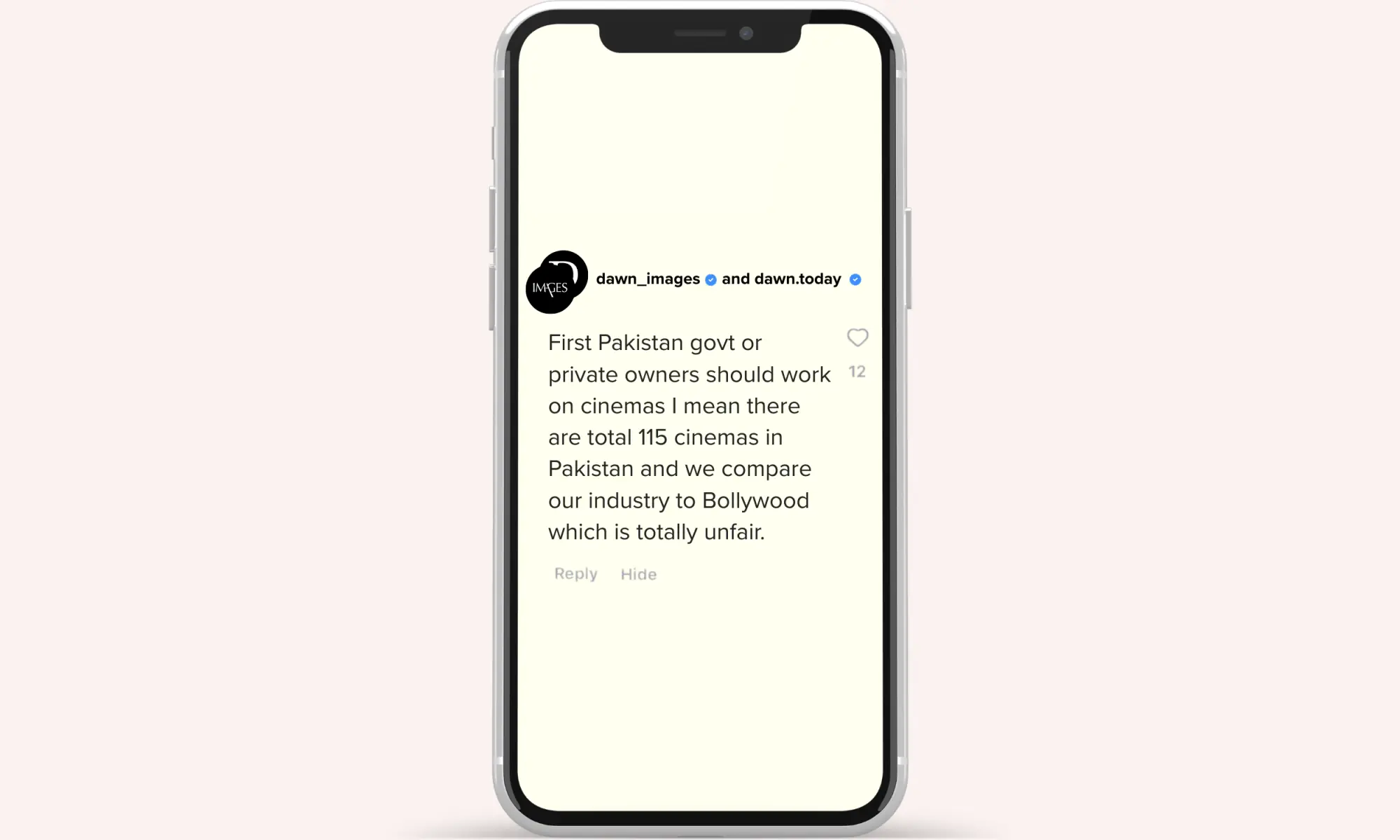
Sindh Information Minister Sharjeel Inam Memon, during a visit to the Karachi Film School, also announced plans to support emerging filmmakers financially through a newly created funding mechanism. The Sindh cabinet had already approved Rs1 billion in December last year for the production of films, dramas and documentaries focused on public awareness.
But despite all these announcements and ambitious promises, accessing any tangible information about these funds remains a challenge. I spent nearly 20 minutes searching online but was unable to find a functional link, application portal, or clear guidelines explaining how filmmakers could actually apply for these funds — only news reports echoing official claims of “major steps” to boost Pakistan’s film industry. If it’s this difficult for a journalist whose job it is to dig out information, it stands to reason that filmmakers would have an even tougher time.
Seemab Gul, writer, director and producer of Ghost School, a film exploring the phenomenon of schools that have been shut down in Pakistan, also complained about the absence of an official government body for the film industry.
Premiered last year in September at the Toronto International Film Festival, Ghost School is still struggling to get itself certified as a Pakistani film, as the British-Pakistani director says she has not been able to find a single guiding body or website dedicated to streamlining processes like certification. Distribution comes much, much, later.
For her second film, Gul is facing another issue altogether. Due to France’s financial investment in the film, they are calling her second feature a French film — a film that has been written in Urdu, set and shot in Pakistan, and is a product of Pakistanis’ sweat and blood.
“They say it is a French film […] because we have put in our (French) taxpayers’ money in this film. Where is the Pakistani money in this film? Not only do I need Pakistani money, I need Pakistani support, I need Pakistani institutions, I need Pakistan to do international treaties with other countries in order to do international co-productions,” Gul said, exasperated.
Critic Jawaid, who is part of seven local film-related committees, said the Pakistani film industry had been unregulated to a certain degree. For any regularisation to happen worldwide, the first step is censorship, he explained.
“For anything to be acknowledged, it needs to be there, recognised by the government, or else it doesn’t exist in the government’s eyes,” he said. Thus, getting a film certified is akin to bringing it into official existence.
Pakistan always had a film ordinance, the Motion Pictures Ordinance (1979), which recognised film as an art form, but there was no acknowledgement of film as an industry. For a government to create film-related policies and incentives, it needed first to formalise the industry. Films were not recognised as an industry until 2018, after which the Punjab Film Fund was established with a mandate to bring people back to cinemas.
However, so far, no one has received any funding from the fund yet. Jawaid believes one of the reasons could be the stringent eligibility criteria — owning a private production company, gaining intellectual clearance, and a distribution contract by a quality distributor. He says regularising the industry by ensuring proper documentation and accountability is what the Pakistani industry needs.
OTT is the new black
When we talk about Pakistani audiences, TV dramas remain the only form of media that has consistently held their attention. There is at least one person in nearly every household either glued to their television screen at 8pm for their favourite prime-time serial, or waiting all day to stream the episode later on YouTube, laptop open, tea in hand.
These days, cinemas may even be making more money by screening the final episode of a crowd-favourite drama than by showing a film made by Pakistani filmmakers.
This raises a another question: what is it about drama serials that draws millions of viewers so devotedly? Yes, there are stars, saas-bahu conflicts and formulaic tropes, but one of the biggest factors is accessibility. As Sharif noted earlier, going to the cinema is not embedded in our culture. It is not a hobby; it’s a once-in-a-blue-moon activity. You know what is a habit? Watching drama serials.
Easy access allows dramas to infiltrate public life seamlessly, whether through a television screen, a phone or a laptop.
This brings us to a pressing question: can local OTT platforms replace cinemas as exhibitors for local, non-commercial films?
Ghost School’s Gul pointed out, “Netflix Asia is not acquiring Pakistani films so openly and so fully. So there is a gap in the market, actually […] We could have something like Netflix Pakistan…”
Pakistan’s OTT industry is climbing the ladder slowly but steadily — or at least attempting to. It may be too early to determine whether these platforms can realistically replace cinemas, but if utilised well, they could help bridge the gap between audiences eager to consume independent Pakistani films and the films themselves.
Begin, a local OTT platform launched in 2024, is attempting to do just that by building a library of premium content for a subsidised fee. Speaking to Images, Begin’s CEO Jonathan Mark Tatti explained that the platform offers “curated premium entertainment content in sports and also unconventional cinema, anything to do with filmmaking that wasn’t making it to mainstream,” despite finding recognition on the festival circuit. The aim, he said, is to make such content more accessible and affordable for viewers.
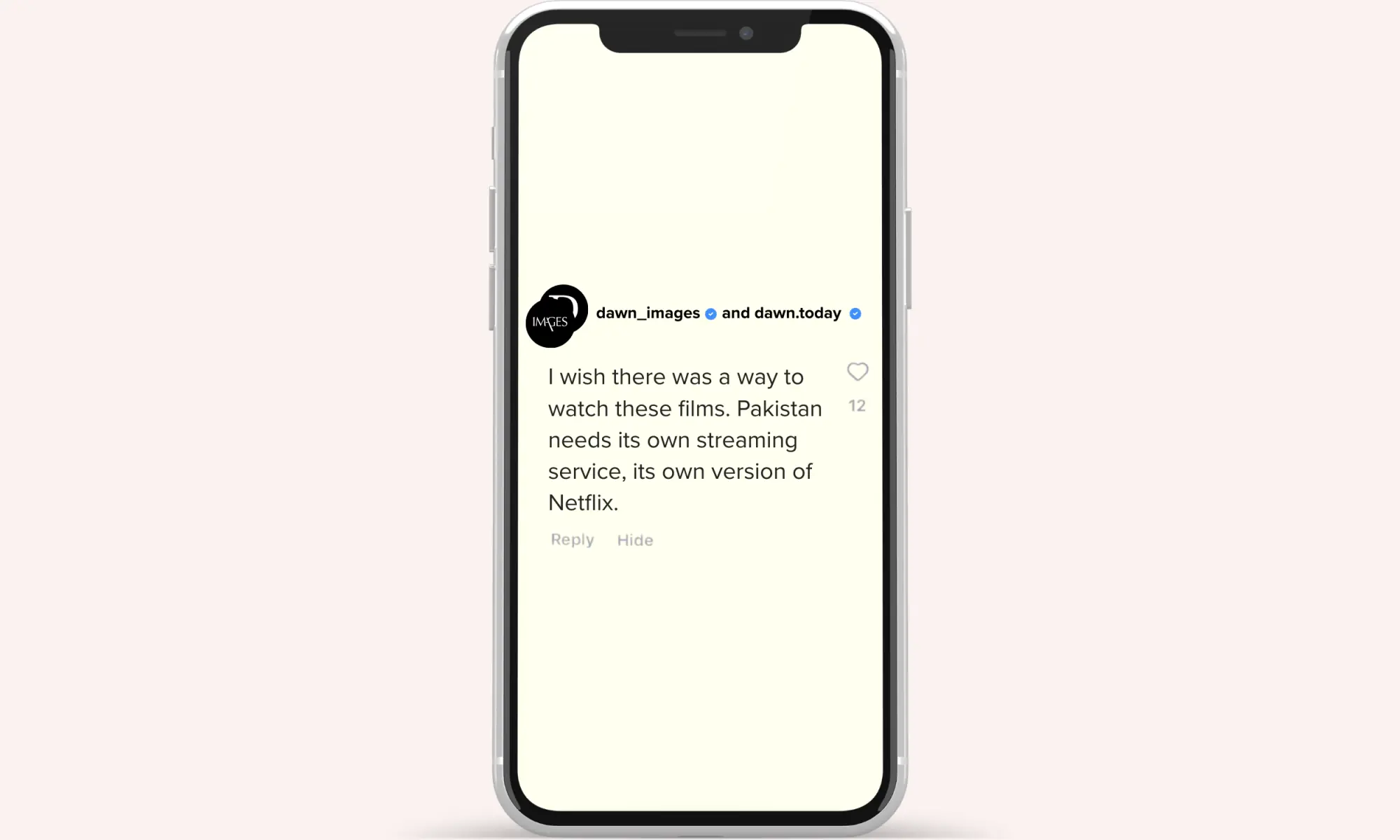
In addition to locally produced niche films and series, Begin is also in talks with studios such as Lionsgate, HBO and A24 to expand its catalogue. For now, it’s the only place you can watch shows like Pakistan Idol online.
At roughly half the price of a Netflix subscription, Begin hopes to offer three times the genre diversity, positioning itself as a holistic content platform for local consumers.
While Begin is in its early stages, the OTT ecosystem in Pakistan also includes platforms such as Tamasha, Vidly, Shoq and UrduFlix. While Tamasha prioritises live sports and mainstream television, the others largely focus on local films and Urdu-language serialised content.
However, ease of access remains a challenge. As Abbas noted, “most of the Pakistani audience is not used to paying for content.” While subscribing to Begin may not be as effortless as watching free content on YouTube, it could still offer access comparable to, if not easier than, other OTT platforms.
In the meantime, how do you watch indie films online? Joyland’s director Saim Sadiq believes one just needs a Google search to watch them if you really want to. His film is available to stream on Apple TV, Amazon Prime (rental) in the US, Channel 4 in the UK, and Mubi in India.
However, not every film is Joyland.
Majid, who ultimately released Beyond the Wetlands on YouTube despite having OTT options such as Vidly, Tapmad and Mubi, said the decision was driven by a strong desire to ensure a wider Pakistani audience sees the film and having control of the way they market it, considering they have a niche market.
“As a producer, I want to make world-class content, but on YouTube, because there is no barrier there between you and the viewer,” he shared, shedding light on his marketing strategy, which banks on creating a relationship with a specific demographic for his film.
Noting consumer behaviour and the limitations of OTT platforms, which, according to him, are not a sustainable model yet, he said the Pakistani public doesn’t want to spend “Rs4,000 with two tickets, two bags of popcorn and one Pepsi” at the cinema, but is interested in consuming content. Instead, he believes, consumer behaviour has adapted to watching high quality content on YouTube. His target audience being the masses, YouTube seemed like the best option for him.
“If someone decides that we want to make an OTT platform, and you want everything in one place, all of the Pakistani content on one platform rather than two or three different platforms, that is the only way OTT will succeed. Because as a consumer I will pay for Netflix, I will not pay for any local OTT platform. Even if I do, I will do that just to watch the film I want to watch, but from the next month I will just unsubscribe. So, this is not a sustainable model,” Majid said.
Chima acknowledged that platforms like Tamasha and Tapmad are slowly trying to fill the gap, but stressed that broader structural issues remain. “It really has to do with debit card and credit card usage in Pakistan and how much people are willing to pay when it’s very easy for us to get something for free, or steal rather, through piracy or pirated copies,” he reasoned.
The reasons are many, layered and deeply intertwined — from weak distribution networks and the absence of state support to fragile exhibition models and unrealistic market expectations. One could go on and on, unpacking the systemic failures that keep independent Pakistani films out of reach for their own audiences but if there is one truth this entire conversation circles back to, it is this: exhibition ultimately follows demand.
Distributors respond to numbers. Cinemas respond to footfall. Platforms respond to clicks, subscriptions and viewing habits. At every stage, the industry looks to the audience, not just as consumers, but as proof of viability.
The overwhelming response to ‘Beyond the box office’ suggested curiosity exists. Interest exists. Appetite exists. What does not yet exist is a sustainable system that connects that interest to access — whether through cinemas, OTT platforms or alternative models of exhibition.
Perhaps the more uncomfortable question, then, is not just where these films can be watched, but whether we, as audiences, are ready to actively seek them out, pay for them, and sit with stories that do not always promise easy laughter or familiar spectacle.
Until that shift happens — culturally, structurally and collectively — independent Pakistani films will continue to circulate silently through festivals, private screenings and comment sections, waiting not just for a screen, but for a public willing to meet them halfway.

Comments