
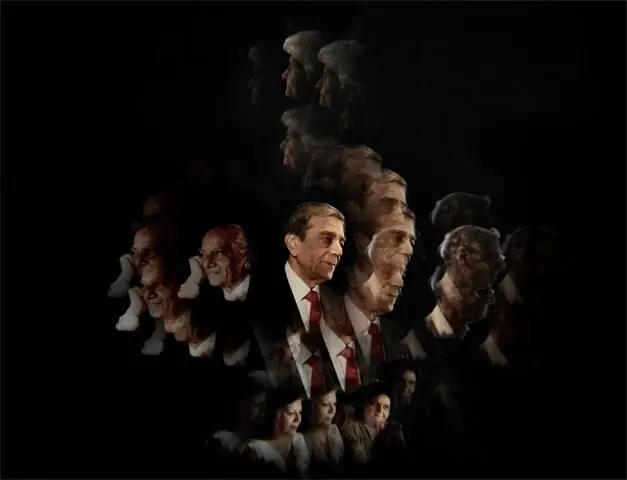
Review: The Colour of My Heart preserves Zia Mohyeddin through memory, not monument
Anchor’. It is such a simple, little word. It is brimming with literal and literary connotations, but has now been rendered unremarkable and characterless due to its daily use on television.
In Umar Riaz’s documentary, The Colour of My Heart (Rang Hai Dil Ka Mere) — a reimagined and reworked version of his 2018 documentary Some Lover To Some Beloved — the word reacquires the length and breadth of its meanings through Dr Arfa Sayeda Zehra.
If you do not know of the late Dr Zehra, a celebrated human rights activist, scholar and educationist, then there is a high probability that Zia Mohyeddin, Daud Rahbar, Faiz Ahmed Faiz or his daughters, Salima and Muneeza Hashmi, would seem little more than mere names to you. This documentary, therefore, may not be a fit for you — yet, it should be.
In a film structured into chapters, Dr Zehra introduces and sometimes narrates — and most importantly, binds together — a winding recollection of Zia Mohyeddin’s life. Dr Zehra sets the tone of the documentary’s contextual premise of lovers and the beloved by briefly explaining poetry, ghazals and romanticism.
As a text before the first chapter clarifies: “Ghazals often regard a mysterious Lover addressing and yearning for an unnamed Beloved.” Although it sets the intellectualness of the premise, in the case of Moheyuddin, the applicability of mysteriousness is less ambiguous: he is the Lover, and his yearning for excellence is the Beloved.
The Colour of My Heart, however, is neither a memento of a genius nor a rags-to-riches story of an underdog actor who attained global acclaim. It does not dwell on the actor’s successes in film and television or on stage, and barely touches on a few milestones here and there. Instead, it is a story of fallibilities, insecurities, regrets and the eternal pursuit of fleeting personal triumphs. It is a story that is all too human, of a man who was all too human.
Framed in a tight close-up, a stainless steel counter serves as a clock, marking the years from 1931 to 2013. With each tick of a falling number, a small projector, propped up on books in a cramped, dark room, unfolds a packet of history for the ailing Zia Mohyeddin.
It only takes a second, but the great thespian, braving the pains and shivers of old age, becomes his younger self’s awestruck audience. His eyes widen, and his hands clasp his cheeks as that younger version recounts passages from Hamlet with immaculate theatricality — “Or that the Everlasting had not fixed; His canon ’gainst self-slaughter! Fie on ’t, ah fie! ’Tis an unweeded garden that grows to seed!” The memory is both bewitching and bittersweet.
Zia Mohyeddin — one of those rare Pakistani graduates of the Royal Academy of Dramatic Arts (Rada) — tells us that he hasn’t been the same after a series of surgeries in old age. He may have 18 months or so to live, he says, and yet still pines for that elusive high of everlasting triumph.
Mohyeddin first felt that when he was three years old, he succumbed to the strange desire to climb a high archway — something that his parents had forbidden. He was 10, performing in a play his father wrote, when that exhilaration returned for the second time. His second triumph, however, also introduced him to his eternal nemesis: nerves — the jitters before a performance that plagued him even as he aged.
The film recounts just enough of his milestones to acquaint the uninitiated with his iconic stature. It touches on his time abroad, when the great director David Lean discovered him at a stage performance of A Passage to India and cast Mohyeddin in Lawrence of Arabia. We then see him return to Pakistan to host The Zia Mohyeddin Show — or as he called it, a “poor man’s David Frost Show” — which thrust a “halo of stardom” on his head.
The film then briefly touches on his return to the UK, where he produced and hosted Here and Now, and his eventual return to Pakistan, where he headed the National Academy of Performing Arts (Napa). From there, the focus narrows down to his annual Zia Mohyeddin Readings and his struggles to maintain familial ties.
From the run-time they get, one assumes that these are the central pegs of this version of his life story. That is, until the narrative shifts to Faiz and Rahbar.
In one of Zia Mohyeddin Readings, he laments that he didn’t get the opportunity to record Faiz despite the poet’s personal request. The film then turns to Faiz for the next 20 minutes or so, spotlighting one of the greatest poets of this — or any — generation through the memories of his daughters, Mohyeddin and Dr Zehra.
One learns just how charming Faiz was — a man who entertained discussions of both left and right wings in politics, and, when things got a little heated, assumed the role of a peacemaker. “Faiz never fell prey to anger,” Mohyeddin tells us; at most, he would call someone “an imbecile.”
The next switch is to Rahbar, Napa’s Professor Emeritus, Mohyeddin’s cousin and — lest one forget — Riaz’s uncle. Rahbar, ailing yet still expressively enthusiastic in the shaky, home-video-esque footage, recounts the film’s opening peg, which most of us have forgotten by then.
Rahbar was an accomplished essayist, poet and scholar of comparative religions. A master of Arabic, Persian, Urdu literature and Indian classical music, he giddily — yet reluctantly (telling someone to go away was his style, one assumes) — talks about ghazals, and why lovers, longing, veils and distance are necessary ingredients in them.
Returning to Mohyeddin and his wives — Sarwar Zamani, Nahid Siddiqui and Azra Mohyeddin — as well as a side story about a sweet, innocent infatuation from his youth — we learn of the man’s immaculate, particular and, at times, infuriating nature. Things had to occur in a precise way, at the right time. For all of his relationships, Mohyeddin admits that he is a bit of a loner, moving from one country to another, seeking a triumph that is forever seemingly out of reach.
There is also a heavy, unmistakable sense of finality embedded in the film’s ambience. Dr Zehra, Sarwar Zamani, Rahbar, Faiz and Mohyeddin himself are all gone. This reality lends the film a rare, archival gravity, preserving the last, fading echoes of a generation of intellectuals.
The Colour of My Heart, thus, is a film about personal longing, history and selections — the latter specific to Riaz as a filmmaker. The film decidedly portrays Pakistan as a country where chaos ensues, showing one side of history where riots erupt and cars burn. It also avoids naming dictators, presidents or politicians.
Compared to its earlier version — Some Lover To Some Beloved — which this writer also revisited, this is a polished upgrade. Not starkly different, but better. It showcases the man as most knew him, rather than a man measured by recollections of his successes.
A Distribution Club release, The Colour of My Heart is rated ‘U’ (Universal) in Sindh and Punjab, and PG (Parental Guidance) in Islamabad. Running 103 minutes, the film comes to cinemas from February 6, and is not just for the intellectually inclined
Originally published in Dawn, ICON, February 1st, 2026







Comments