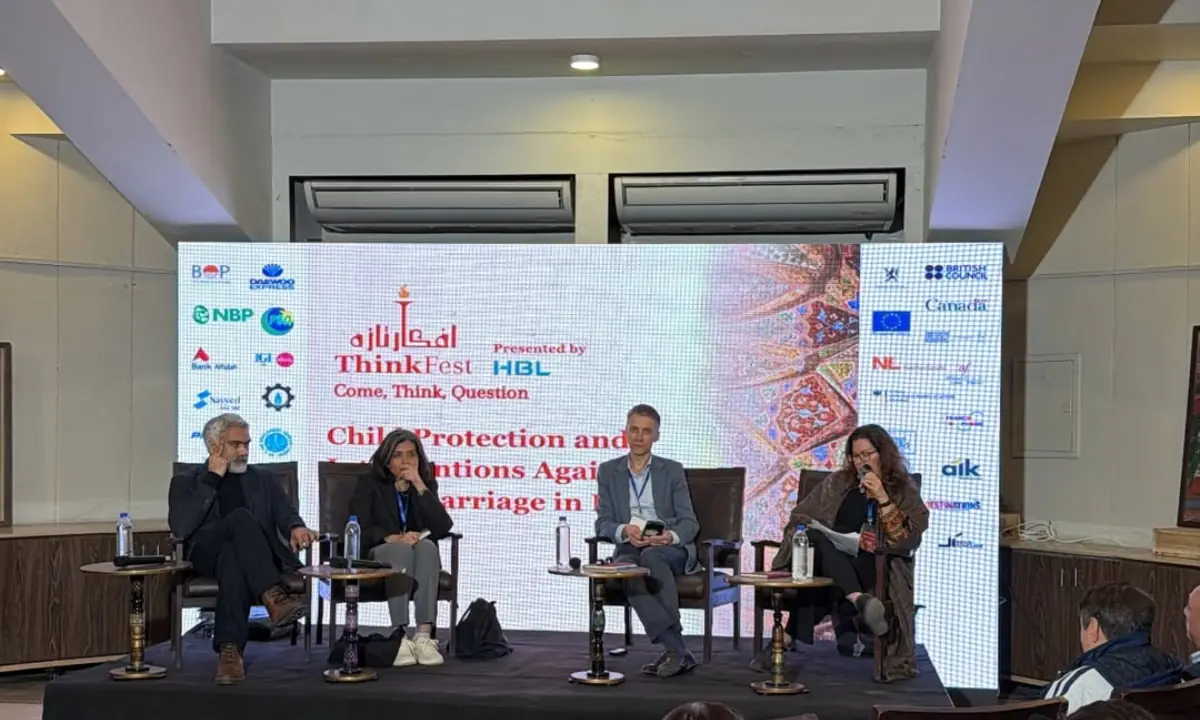
Panels on literature as resistance and child marriage in Pakistan held at Lahore’s ThinkFest
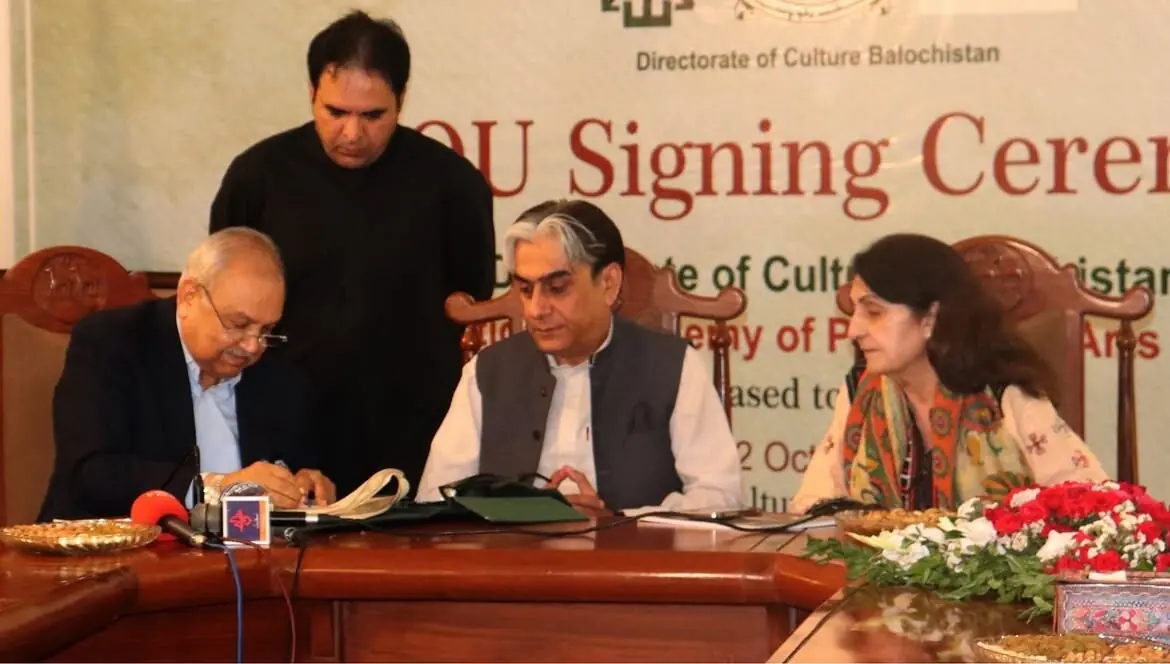
In a well-attended session titled, ‘Literature as Resistance’, renowned author and journalist Mohammed Hanif and Professor Shaista Sonnu Sirajuddin explored different aspects of literature on Friday on the inaugural day of Lahore’s ThinkFest.
The session took the form of a conversation between the two speakers. Sirajuddin gave a brief introduction of Hanif, saying that his broadcast in Punjabi from the BBC was of great interest for many, as he conveyed his thoughts to the ordinary people in a very cool and impressive manner. She said perhaps the author found an escape from the stress of journalism and started writing fiction.
To a question, Hanif said he had undergone schooling in the military school system but ended up in civilian life. He held his teacher and editor, Razia Bhatti, in high esteem. He said she told him how to tell a story, where to place sentences to create the effect the story needed. In a lighter vein, he said Bhatti used to tell him the media had never been free; perhaps that’s why the journalist later started writing novels.
Sirajuddin lauded Hanif for his use of wonderful metaphors and phrases. She said character names like Teddy Butt and Joseph Bhatti carried significance in his books and added that he used cinematic images in his novels. His use of caricature in description made for very interesting characters.
While talking about literature as resistance, Hanif mentioned Junaid Hafeez who had written poetry as a medical student in Lahore. The author said he had read some of the student’s poems, adding that Hafeez was arrested and sentenced to death.
Sirajuddin further threw light on Hanif’s writings, saying that he used comedy as a weapon, a tradition that went back to the Greeks. She also mentioned his book, Red Birds, and read excerpts to the crowd, commenting on how it drew from experiences in flying.
Child marriage
A session on ‘Child Protection and Interventions against Early Marriage in Pakistan’, was held at the Afkar-e-Taza ThinkFest happening at Alhamra Arts Council where speakers explored various aspects of child marriage in the country.
Jennifer Malton from Unicef said: “80 per cent of children in Pakistan experience violence, 26 million children are out of school, eight million are engaged in child labour. A strong legal framework is there but there are gaps in it”.
She talked about child abuse and children might be better protected from it. She added that children were very important and it was important to listen to their wishes and thoughts. Children, she said, need quality education, nutritious food and for academia and students to amplify their voices.
Justin Jones from Oxford University talked about child marriage, saying that according to statistics, 21pc women were married off as children in Sindh, southern Punjab, Khyber Pakhtunkhwa and some parts of Balochistan. He added that the outcome of such marriages was often negative and that domestic violence was often connected to child marriage.
He underlined the need to review the birth registration process as a measure against child marriage and discussed the roles of Nikah Khawans and registrars in the practice.
Sara Malkani, a lawyer from Karachi, explained the legal framework around child marriage, saying Sindh was the first province to fix the legal age for marriage at 18. Earlier, she said, boys had to be 18 to be wed, while girls could be married off at 16.
Later, other provinces also followed this age bracket. She said when it comes to laws against child marriage, implementation in Sindh was very weak. She said many minor girls were choosing to marry minor boys by eloping together. She stressed that rethinking the legal framework for addressing the issue was important.
Muhammad Faisal Khalil, also from Oxford, discussed the negative role of Nikah Khawans and registrars in the case of child marriages. He said the birth registration rate was very low and investment was needed in the welfare of children and old people.
Originally published in Dawn, January 24th, 2026
Cover photo: ThinkFest/Instagram