
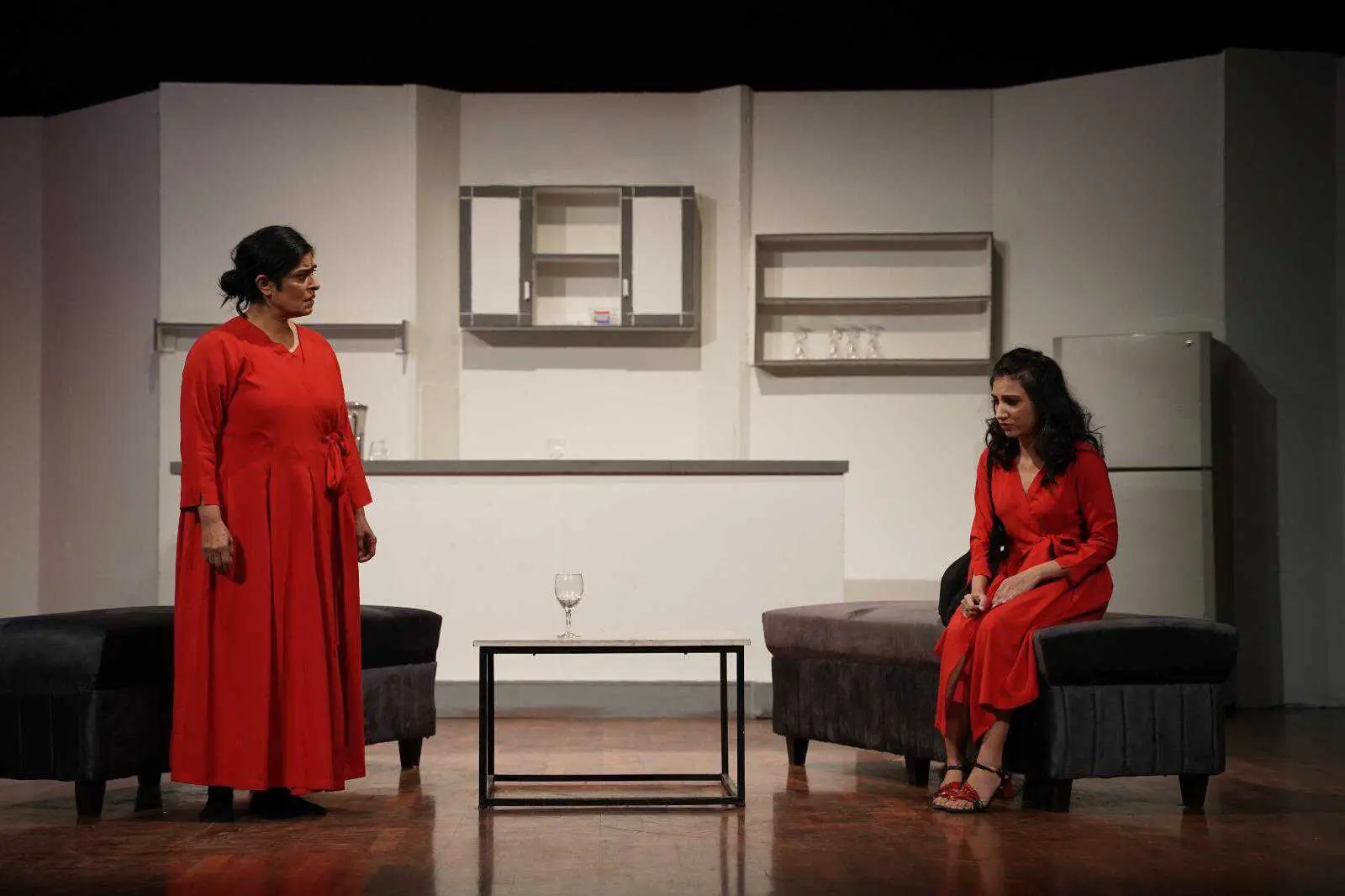
Usama Khan’s The Mother will make you question what’s real — and call your mum
Motherhood is not an easy assignment — every child, at least in Pakistan, knows that from the countless “I fed you, bathed you and kept you safe” lectures they get from their own mothers semi-regularly. But what happens after the assignment concludes? How is one to cope with the end of something that brings so much meaning to their life?
French playwright Florian Zeller’s The Mother attempts to paint a picture of the day after motherhood, and Usama Khan brings it to life for a Pakistani audience. For something the director said was a “pure translation of the original script”, the subject matter was not at all out of place in a local context.
Directed by Khan and led on stage by the dynamic Nimra Bucha, The Mother is running at Karachi’s National Academy of Performing Arts from January 9 to 18. The supporting cast comprises Sonil Shanker, Eshah Shakeel, and Ashmal Lalwany.
The first scene opens in a sparsely furnished, white room. Haleema (Bucha), an ageing mother of two, comes alive as her husband, Saad (Shanker), gets home from work. Haleema asks Saad how his day was and talks about an upcoming business trip of his. She then gets to the primary conflict of the play and asks her husband, “Why doesn’t Arsalan reply to my messages?”
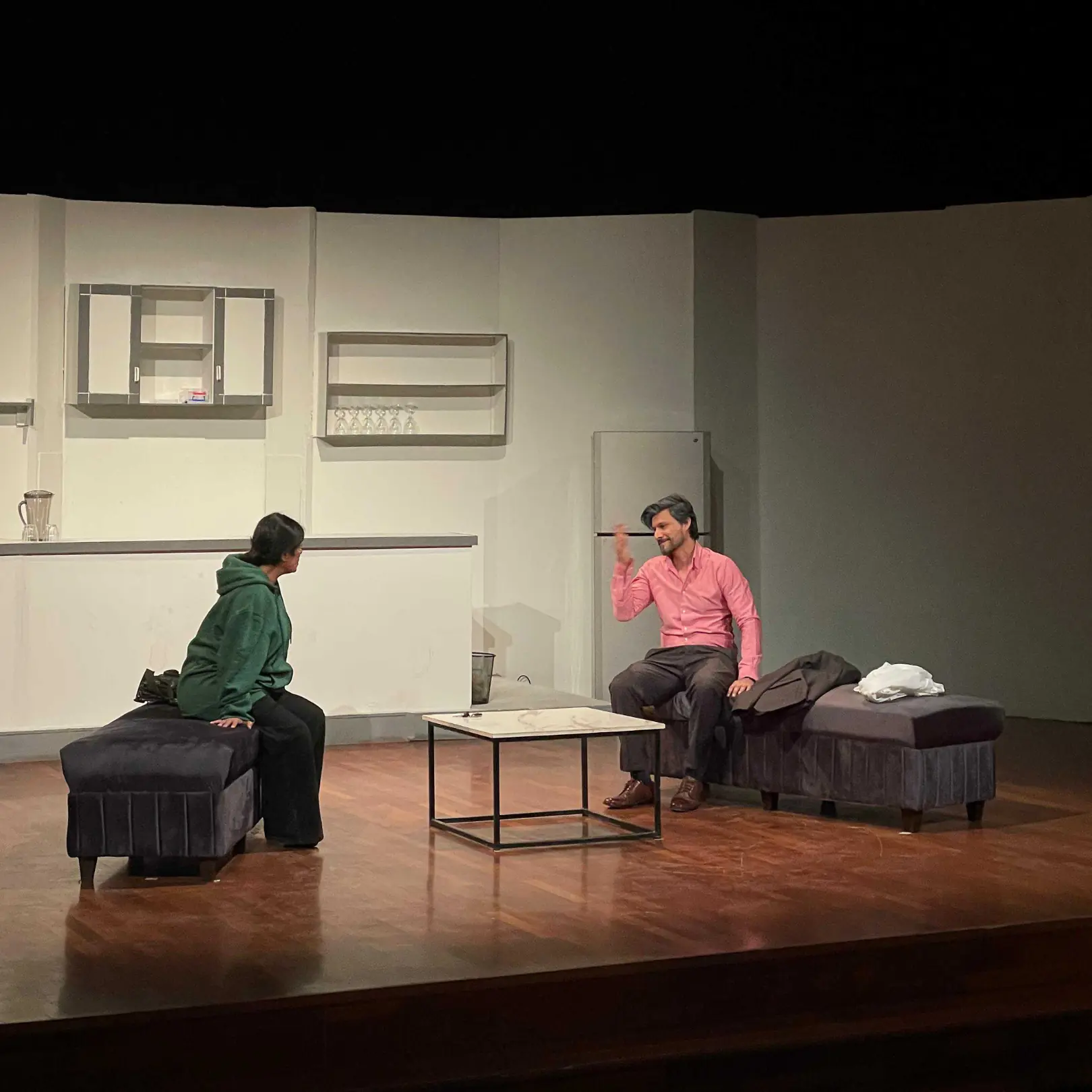
Saad tells her that her son (Lalwany) was probably just busy with his partner (Shakeel) and that this was just the natural order of things. The building tension between the two was palpable when Haleema, as if she’d warped back to the beginning of the play, asks her husband, “So, how was your day?”
The back and forth continues till the scene ends, and in the next one, we see Saad come back from work and get asked how his day was and when the business trip to Bhurban is.
While the script does eventually progress, repetition is a key theme of the play, with details, characters, and the energy onstage changing to present multiple versions of the same event.
Zeller’s answer to how someone deals with an empty nest is that you don’t, and that it eats you up on the inside until you can’t tell fact from fiction.
Arsalan does eventually come home after a fight with his partner, Sana, only to be suffocated by his mother‘s overbearing love as she refuses to give him even a moment’s peace. Troubled by his own love life and his mother’s state, he waits for her to leave and confronts his father over something the senior had to tell Haleema.
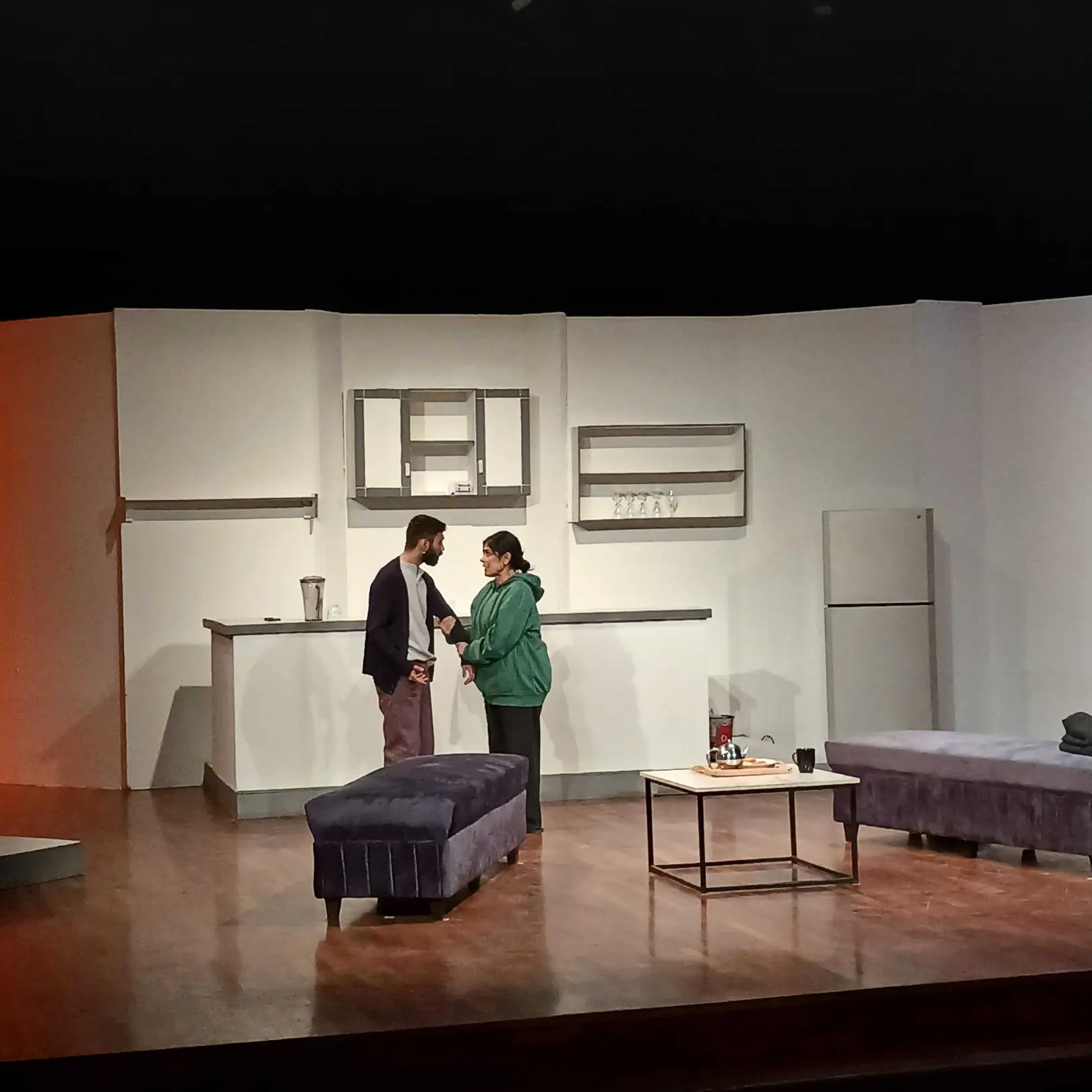
Saad leaves for his conference, but not before we see his wife attempt to confront him over an alleged affair and threaten to harm herself. She also thinks out loud about how Sana is trying to steal her son — I didn’t know the French had saas-bahu tropes in their plays too.
Sana visits the house in two alternate scenes, one where she admits to trying to steal Arsalan — with the boy literally wrapped around her as she says it — and another where she‘s come to make amends with her partner. When Haleema shoos the girl away, her son, who had been ’sleeping’ throughout the interaction, comes onto the scene and asks his mother what had just happened.
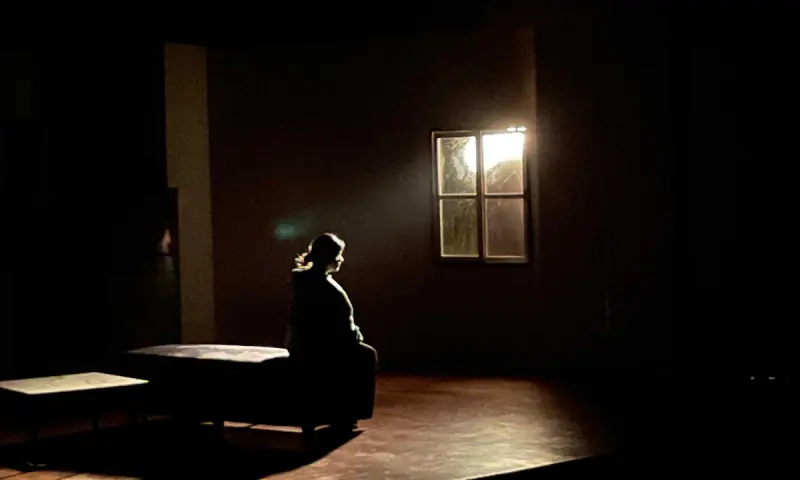
The mother-son fight ends with Arsalan leaving the house in a fit of rage, a final nail in the coffin of Haleema’s sanity. A hospital bed is brought on stage, and a doctor (Shakeel) forces the older woman onto it; we find out she had overdosed on sleeping pills.
The final scene, with Haleema in the hospital, also has two versions. One where Arsalan physically strangles her to death and another where he kills her motherhood by announcing he will be moving in with Sana permanently; which death is worse, only a mother can tell.
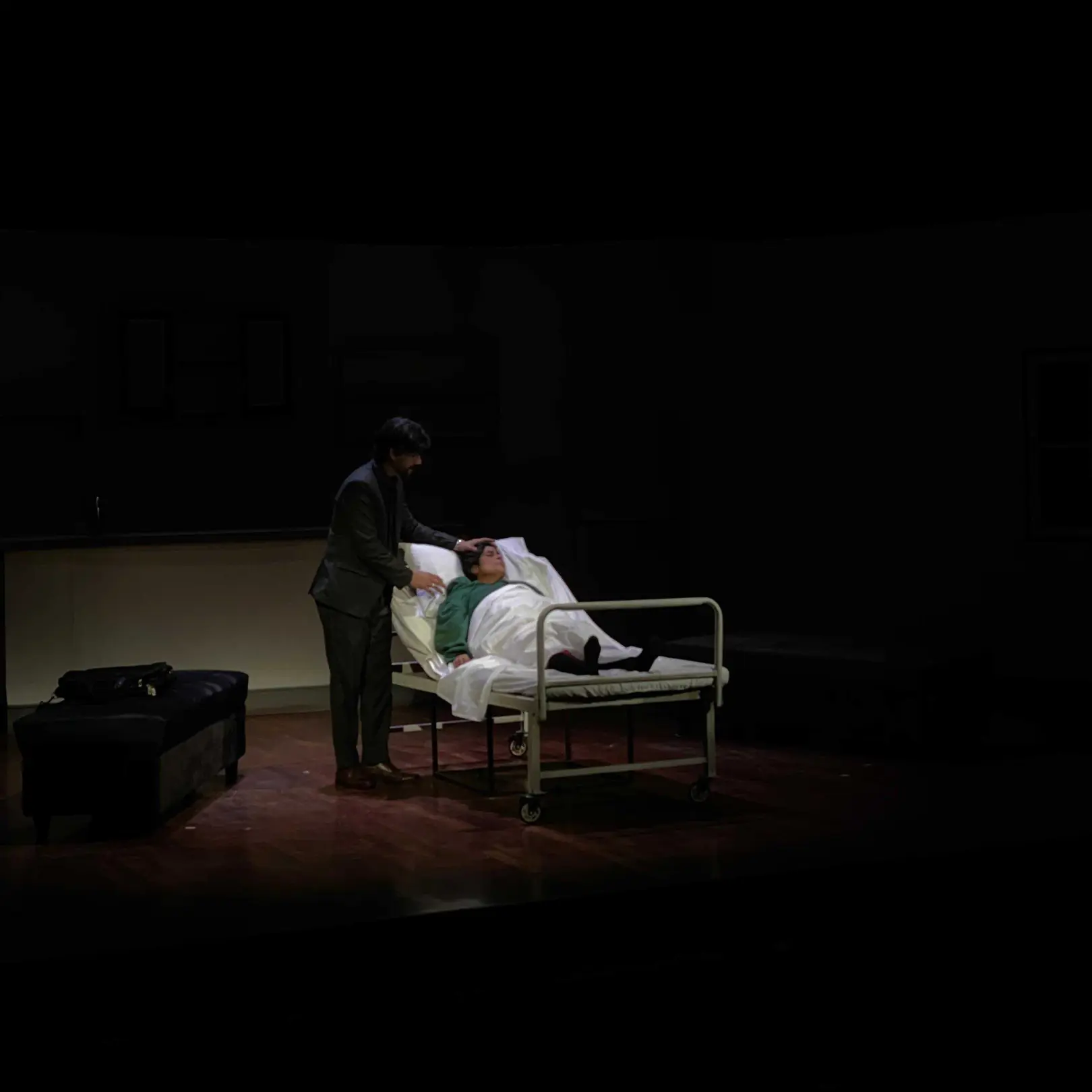
The fact of the matter is, there was not a single point in the 90 minutes of the play that I was bored. The acting was spectacular, Bucha commanded the audience’s attention, and Shanker played a very convincing middle-aged Pakistani husband. Shakeel, playing four separate roles as a counter to Bucha’s character, tied everything together.
I was, however, left wondering what exactly was real and what wasn‘t; unfortunately, my attempts to ask the director and cast didn’t yield much in the way of results. Khan did tell me he wanted people to see themselves in his plays. Bucha added to this, saying, “I think it’s a play that starts a conversation.”
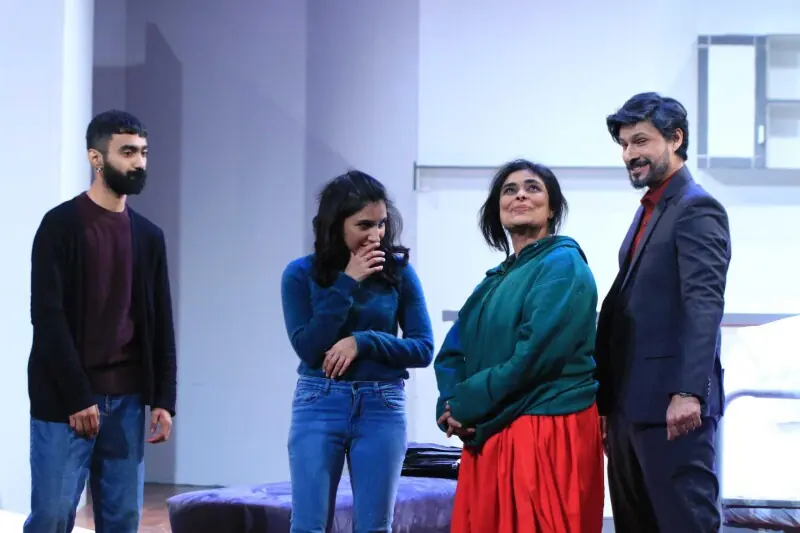
When asked what he wanted the audience to walk out of the theatre with, Khan said that was up to them and that his job was just to portray life on stage. Bucha said, “I would love for people to go home and talk to each other in the family, to look at each other, notice [each other]. See your mother, listen to her, she wants to be heard.”
Shanker said he wanted people to “start thinking” and “start questioning”. He told me theatre, when done right, was more than just entertainment; it can be educational, cathartic, even therapeutic, but it needs support from audiences and especially from the state.
Cover photo: The Last Show.