
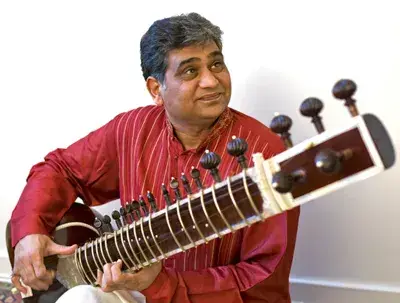
Musician Ikhlaq Hussain mesmerises Washington DC audience with soulful sitar recital


When the sitar is played, its music blooms — rhythmic as a heartbeat, tinted like a rose, fragrant as jasmine and as mysterious as fog. That rare experience unfolded in an intimate gathering on the outskirts of Washington DC on Saturday, where Ikhlaq Hussain, one of Pakistan’s leading classical sitarists, performed before an audience of music lovers.
Among Pakistan’s few remaining classical virtuosos, Ikhlaq stands out as a devoted practitioner of the Gayaki Ang — a vocal-inspired style that seeks to make the sitar sing, capturing the nuances and emotions of the human voice. “For me, music is not a profession,” he says. “It is my devotion, my life’s purpose.”
Born into a family steeped in music, Ikhlaq inherited his art from his father, Ustad Imdad Hussain, a respected sitarist who kept the traditions of the Delhi Gharana alive in Pakistan after Partition. The Ustad’s purity of tone and deep understanding of raga continue to echo through his son’s performances.
As the evening progressed through delicate alaps — slow, meditative, and improvised opening sections that introduce the raga — and brisk gats — a pre-composed melodic theme performed with rhythmic accompaniment from the tabla — the room grew still, every pluck seemed to breathe.
“Absolutely amazing,” said Dr Brian Silver, a sitarist with more than 50 years of experience and a former executive director of International Music Associates. “He is intense, and he is light when he wants. His playful improvisation is unique.”
Dr Silver explained that while it is easy to play the sitar simply, “it is very difficult to play it in a complex way. What distinguishes it from Western instruments is that you play almost all of your notes in the upper two octaves on one string.” Noting that the sitar has 72 scale variants and numerous grace notes, he added, “Only a maestro like Ikhlaq Hussain can improvise the way he does.”
The performance also deeply moved Dr Moazzam Siddiqi, a scholar of Persian and South Asian literature and a retired director of the Voice of America broadcasting service. “I am still under its spell,” he said. “It’s so soothing that it gives you inner peace, but it also stirs deep emotions inside you.”
The concert was arranged by a recently formed group of Pakistani Americans seeking to promote the country’s cultural and artistic heritage in the United States. “From Faiz and Sadequain to Ustad Salamat Ali Khan, we have so much to offer, but we remain focused on politics,” said Mona Kazim Shah, who hosted the event. “We want to highlight the richness of Pakistani culture.”
Dr Silver echoed the sentiment, stressing the importance of preserving South Asia’s classical legacy. “Pakistani musicians have kept Amir Khusro’s tradition alive,” he said. “It’s very important to continue this tradition.”
As the last notes faded into silence, the audience rose in quiet admiration — a rare acknowledgement that in a noisy world, Pakistan’s classical soul still sings softly, yet with enduring grace.
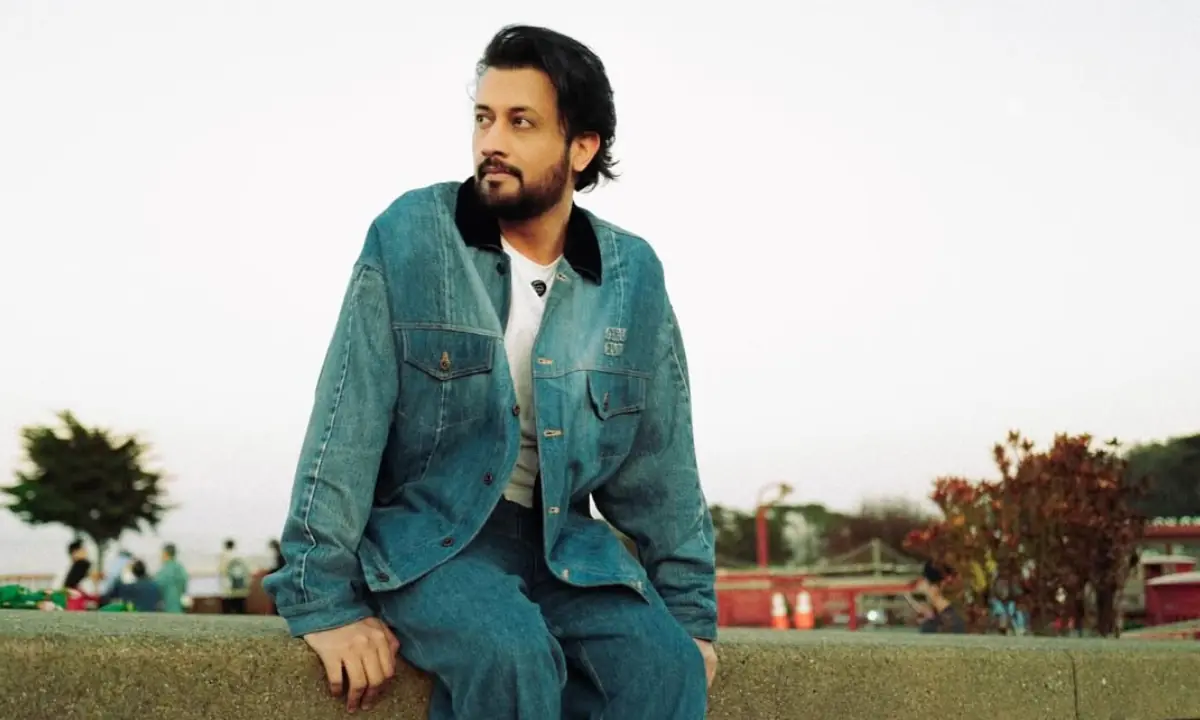
Cover photo: Ikhlaq Hussain



Comments