
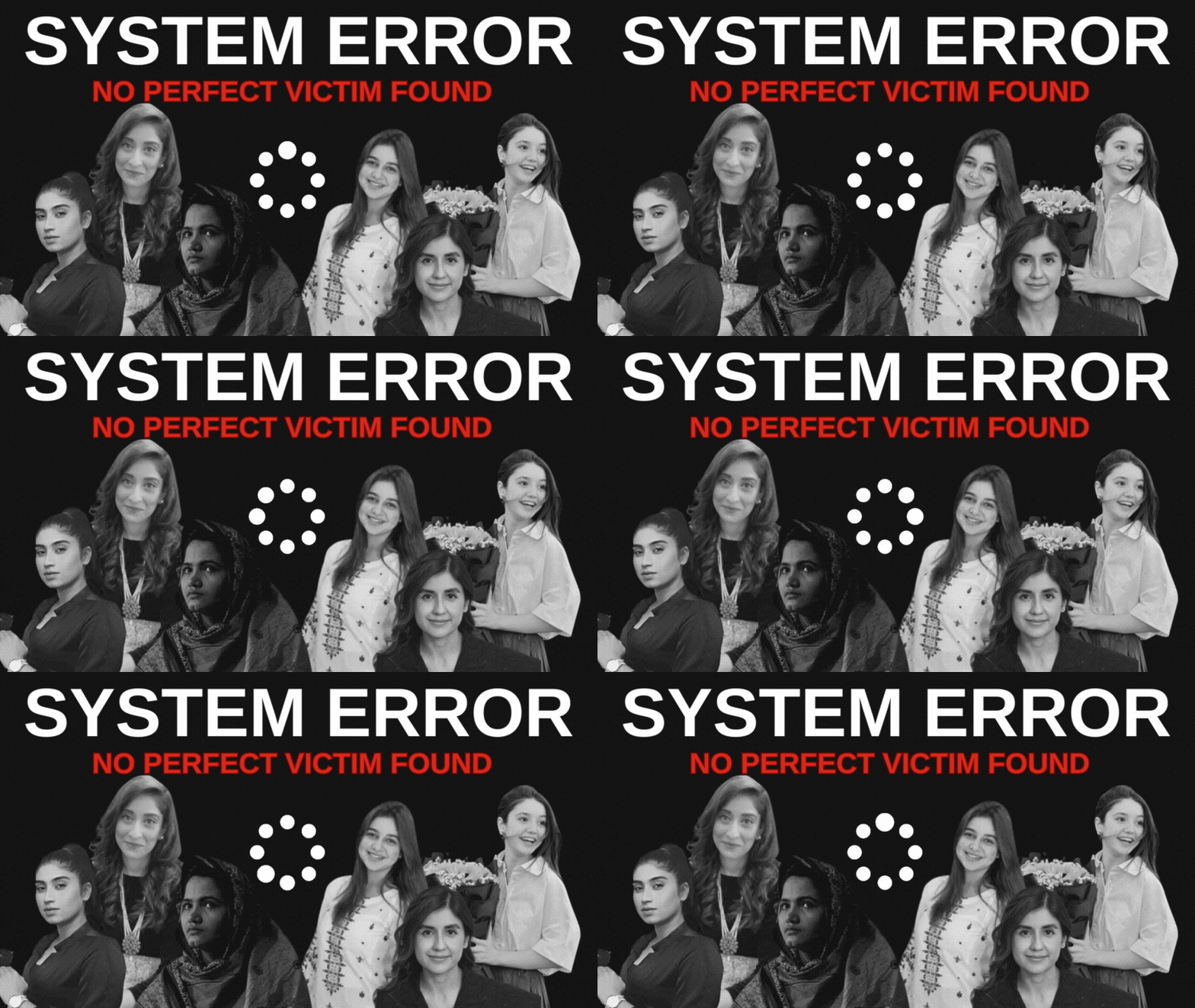
We only want to protect ‘perfect victims’ — newsflash, there are none


Week after week, we see reports on women fighting for their right to exist safely and freely in Pakistan. This time, it’s social media influencer Samiya Hijab, who came forward with a chilling account on Sunday: days of alleged stalking, harassment, threats, and finally, an attempted abduction right outside her own home.
The Islamabad police arrested on Monday a man for allegedly harassing and attempting to kidnap her. A statement from the police spokesperson said the move came after her complaint and video statement. The case has been registered at the Shalimar Police Station under sections 354 (assault or criminal force to a woman with intent to outrage her modesty), 365 (Kidnapping or abducting with intent secretly and wrongfully to confine person), 392 (punishment for robbery), 500 (punishment for defamation), 509 (Word, gesture or act intended to insult the modesty of a woman) and 511 of the Pakistan Penal Code.
The suspect had been stalking her for several days, the social media influencer alleged in her complaint. Soon after his arrest, Hijab thanked the Islamabad police in another video.
In the same video, she called out the comments people were making about the authenticity of her allegations, given she made it back home alive and without any visible major injuries. For many, there wasn’t enough to sympathise with her about, let alone give her the benefit of the doubt.
Where is the other side of the story, some asked, while others accused her of having led the man on.
Hijab’s case feels eerily familiar, as she mentioned in her videos. Just two months ago, 17-year-old TikTok star Sana Yousaf was murdered by a man after months of harassment.
At the time, many pondered what the outcome would have been had someone taken her concerns about the man seriously. But the real question is — do we take women seriously before they’re silenced forever, or even after? Yousaf and Noor Mukadam were constantly blamed for their own murders.
The truth is, Pakistani women are expected to be the “perfect victim” to be believed. Dead or alive, their credibility is constantly put on trial: what were they wearing? Did they lead their stalker/harasser/murderer on? Did they provoke him? Were they firm or polite enough in rejecting their advances? How did they know where she lived? As if the world is oblivious to how stalkers operate or what it means to be stalked.
Every time a woman is attacked or killed in Pakistan, the first instinct is to ask what she did wrong. Did she go to a man’s house, like Mukadam, who was tortured and murdered? Did she choose marriage, like Sara Inam, whose husband beat her to death in their home? Did she choose her own husband, like Bano Satakzai, and pay for it with her life?
Did she fight for justice, like Kainat Soomro, who was gang-raped at 13 and forced into a sham marriage with her rapist? Did she dare to be visible, like Qandeel Baloch, strangled by her own brother in an ‘honour’ killing because she refused to be hidden? Did she fight back like the wife of a news anchor who shared harrowing images of the abuse she had allegedly suffered, only to be blamed for assaulting him too?
Or did she simply say no, like 17-year-old Yousaf, who didn’t go to a man’s house but had him storm into hers and shoot her dead? The truth is, it doesn’t matter. Whether married or single, rich or poor, famous or anonymous, at home, at work, online, or outside, these women were killed or violated, not because of where they were or what they did, but because they were women.
And unless a woman fits the narrow, moralistic template of what society thinks a “good victim” should look like — silent, submissive, voiceless — these incidents prove that their pain will always be dismissed. And if she dares to be vocal, visible, or, God forbid, well known like Hijab and Yousaf, she will be told she must be doing it for “clout”.
Or that it’s her fault because she put herself out on the internet. When Yousaf was murdered, many blamed TikTok and said this is why women and girls shouldn’t be on the app, because somehow their presence entices men. Tthat men have zero control over their impulses is evidently a woman’s ‘problem’, and therefore, whatever they do after losing control must be the woman’s fault.
We know how this script plays out. Women who speak up are labelled liars or opportunists, their character dragged through the mud and told that’s what happens. And if they’re killed? Suddenly, society rallies to mourn them, but always in retrospect, when it’s too late for their voices to matter. And even then, they’re hardly innocent because somewhere, they were somehow at fault. That is why we only show sympathy for dead women while the living ones are treated as suspects in their own cases.
This cycle tells us something damning: we do not actually care about women’s safety. We care about controlling women’s narratives. Protecting them only becomes a priority when their silence can no longer be weaponised against them. And after they’re dead, their silence will still be weaponised but with a dash of sympathy.
Hijab’s case is not an isolated one — it is a reminder of the structural rot we keep ignoring. Harassment complaints often go unregistered. Police responses depend on social media outrage. Legal frameworks exist, but conviction rates remain abysmally low.
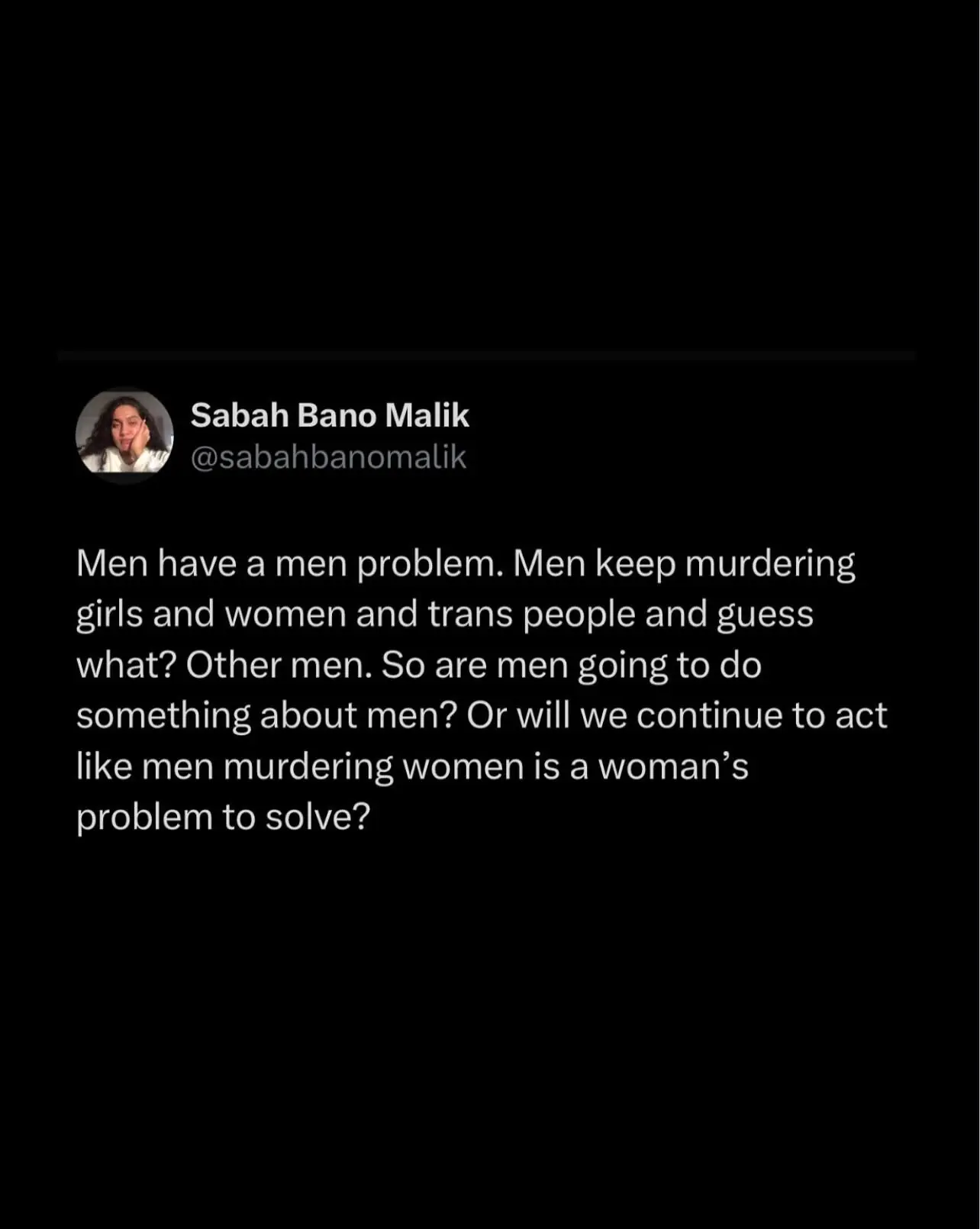
Women’s safety is treated as a “women’s issue” instead of a societal emergency. As radio host Sabah Bano Malik said when Yousaf was murdered:
And through it all, the burden remains on women: record the CCTV footage, post the video statement, file the FIR, relive the trauma publicly, defend your character, and pray that your case makes enough noise to be taken seriously, just like Hijab is doing right now.
But what happens to the women who can’t do what Hijab can?
Most women in Pakistan do not have the resources, visibility, or community support that allows them to record evidence, approach the police, or post a statement online. They are daughters living in restrictive families who would rather hush things up than “ruin their honour”. They are working-class women without legal knowledge or connections. They are women who know that police stations are often hostile to complainants, where their character will be questioned before their case is registered. They are wives who cannot afford to upset the very breadwinners who abuse them.
They are women who cannot risk their jobs, reputations, or even their lives by speaking up. And most of all, they are women who understand that society is waiting for them to slip — to not be ‘perfect victims’ — so it can turn on them. The truth is, there are no perfect victims.
Until we stop measuring women’s worthiness of justice based on how much suffering they’ve endured, more lives will keep being lost to a system that only reacts after the damage is irreversible. And until we stop asking what the victim could have done differently, we will keep excusing a culture that makes it clear: nowhere is safe.
Comments