
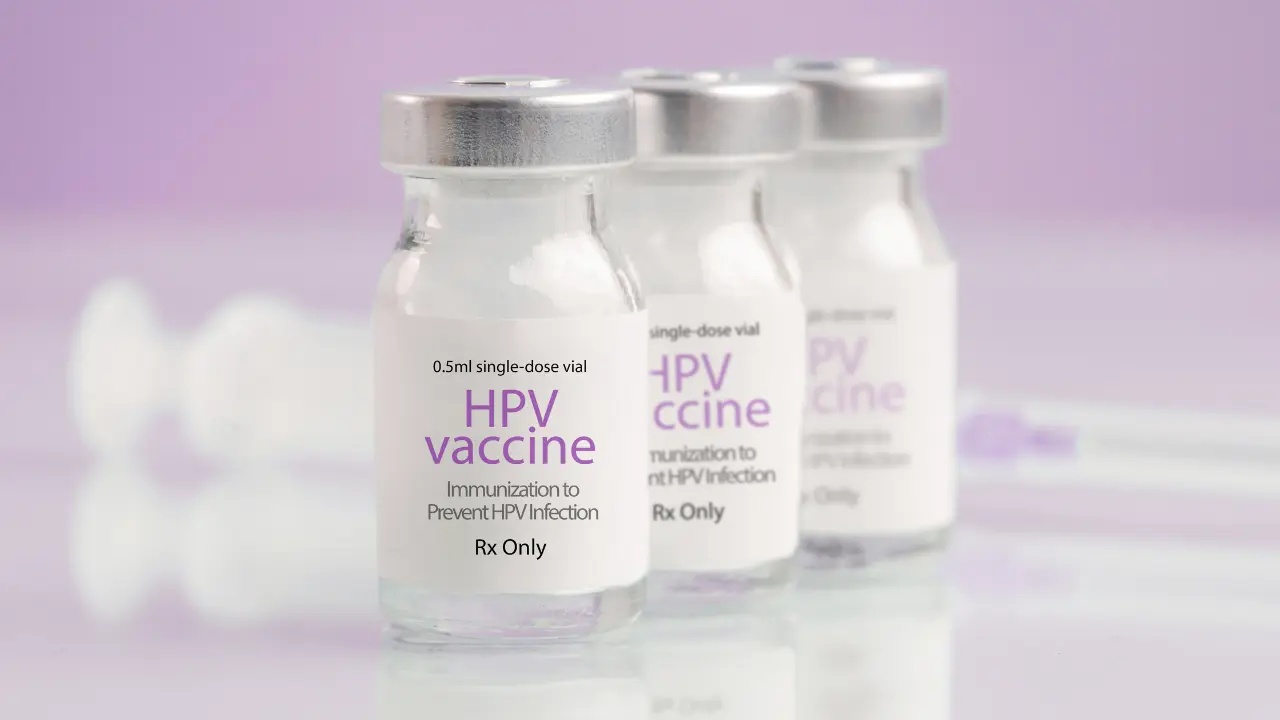
What you need to know about Pakistan’s first-ever HPV vaccination drive for girls aged 9 to 14
“There was a lot of white vaginal discharge. There was also heavy bleeding — chunks of blood. This would go on for 15 to 20 days at a time and then stop. Come back again after 10 days. I was unable to go out for farm work or carry out household work. My hands and legs would feel weak and tremble. I went to Dr A in the local town. … It cost me more than 5,000 [INR]. There was no change in my condition. Then the same doctor referred me to the medical college hospital. I went there. … Nothing worked. … I went with my son to the cancer hospital in Chennai. … When I returned for the test results, they told me that it was the beginning stage of cervical cancer.”
This story of a cervical cancer survivor and mother of four from India, narrated in a World Health Organisation (WHO) report, is not unique. Cervical cancer is the fourth leading cause of cancer deaths among women around the world, especially in low- and middle-income countries such as India and Pakistan.
But here’s what many people don’t know — the disease is one of the few cancers that can be almost entirely prevented with early screening and vaccination. There are two approved vaccines that can reduce the risk of cancer by protecting against the infections that cause them — the hepatitis B vaccine and the cervical cancer or human papillomavirus (HPV) vaccine.
Pakistan is launching its first-ever cervical cancer prevention vaccine drive this month, and doctors and government officials are pushing to make it a success.
Virtually all cervical cancers are caused by persistent infection with HPV. Two high-risk types, HPV 16 and HPV 18, are responsible for 70 per cent of cases.

In 2006, the United States Food and Drug Administration approved a vaccine to be administered to females nine through 26 years of age. Gardasil, as the vaccine was called, aimed to protect from diseases caused by certain types of HPV, including cervical, vulvar, vaginal, and anal cancers as well as genital warts.
Nearly four years after its licensure, researchers who surveyed vaccinated women aged 14 to 59 found that among vaccinated girls aged 14 to 19 years, vaccine-type HPV prevalence dropped from 11.5pc to 5.1pc — a staggering decline of 56pc. Among other age groups, however, the prevalence didn’t seem to differ significantly.
In 2020, the WHO launched a global strategy aiming to accelerate the elimination of cervical cancer as a public health problem. By 2023, around 140 countries introduced the HPV vaccine into their national immunisation programmes, including those with large populations and cervical cancer burden, such as Bangladesh, Indonesia, and Nigeria.
In Pakistan, however, the vaccine has largely remained out of reach and unknown to most people — until now.
In August, the WHO announced that it is partnering with the Government of Pakistan to train over 49,000 health workers for the country’s first HPV vaccine drive, planned from September 15 to 27. The campaign is being described as a “historic milestone,” and is set to target 13 million girls aged nine to 14 years across Punjab, Sindh, Islamabad Capital Territory, and Azad Jammu and Kashmir.
The Federal Health Ministry announced that it is launching the campaign in Sindh in collaboration with the provincial health department and urged close coordination with the education department to ensure as many girls as possible are covered in the campaign. Sindh Health Secretary Rehan Iqbal Baloch said the campaign aims to vaccinate about four million girls in the province.
Gavi, a global health alliance that helps lower-income countries access vaccines, is also providing support, he explained. The necessary doses will be available free of charge through the government-led Expanded Programme on Immunisation (EPI).
Why is the drive important?
According to infectious diseases epidemiologist at the Aga Khan University Hospital in Karachi, Dr Muslima Ejaz, the initiative is important because it targets adolescent girls, a group often left out of health interventions. “By reaching them early, before they’re exposed to HPV, we’re literally safeguarding their future health,” she told Images.
She explained that the drive sets a precedent. If Sindh succeeds, it can become a model for scaling up across other provinces. “This campaign is not only about vaccination, it’s about building systems, community trust, and a roadmap for integrating HPV into routine immunisation,” she said. Essentially, it’s a public health breakthrough for women in Pakistan.
Gynaecologist Dr Uzma Chishti said adolescent immunisation is crucial, noting that although cervical cancer has traditionally affected women who are in their 40s to 60s, she has recently seen patients in their 30s.
She pointed out that the WHO now endorses a single-dose schedule, which simplifies delivery and increases the likelihood of uptake. While skepticism towards vaccines in general poses a challenge, she argued that it can be overcome with the right communication.
“Healthcare workers need to build trust, explain the disease, and highlight how vaccination protects girls before they are ever at risk,” she said, adding that counselling on preventive measures such as delaying early marriage and promoting safe practices is equally important.
Beyond vaccination, Dr Chishti highlighted screening as another critical tool. Simple tests such as pap smears or HPV testing can detect precancerous changes years before cervical cancer develops.
The rollout
Dr Sohail Raza Shaikh, additional project director of EPI Sindh, explained that the campaign will use a multi-pronged strategy, including fixed-site services at existing EPI centres, outreach programmes for communities unable to access those sites, and mobile vaccination teams.
Schools are expected to serve as the main vaccination sites, supported by the province’s education department, which has already trained teachers and conducted sensitisation workshops. Dr Shaikh added that around 48.5pc of the target population is enrolled in schools, while the remaining out-of-school girls will be reached through the Lady Health Worker programme and civil society organisations such as HANDS and the Sindh Rural Support Organisation.

He explained that approximately 3,611 vaccinators will take part in the drive, each working in a four-member team with assistants and social mobilisers, bringing the total to over 14,000 field workers. Supervisory structures are also in place, including 1,190 first-level supervisors, mostly doctors trained to handle adverse events following immunisation, and 393 second-level supervisors. A breakdown of the vaccinators includes 490 fixed-site workers, 2,990 outreach workers and 31 mobile teams.
To monitor coverage, the campaign will use the Sindh Electronic Immunisation Record (SEIR) system, with an additional HPV-specific module, along with vaccination cards distributed to recipients.
“Even after the campaign period, there will be a catch-up drive to vaccinate any missed children,” Dr Shaikh told Images. He stressed that the vaccine would become a routine part of the immunisation programme, with the Sindh government already having allocated budgetary resources for the next three years.
He highlighted the key role of teachers and parents in ensuring the success of the campaign. “Teachers, in particular, hold significant influence. If they support the vaccine, parents are more likely to follow,” he said. Districts with higher proportions of out-of-school girls, such as Kashmore, Qambar-Shahdadkot, Shikarpur, Larkana, Umerkot, Tando Muhammad Khan and Badin, are being prioritised for intensified mobilisation efforts.

Potential roadblocks
Epidemiologist Aneela Pasha noted a potential challenge for the drive: while the EPI mainly administers vaccines for infants and toddlers, such as polio, BCG and typhoid, the HPV vaccine is different as it targets adolescent girls, a group that does not routinely visit paediatricians.
She said myths related to the vaccine causing infertility might become a key hesitancy driver. However, she noted that the vaccine actually protects you from infertility because “it’s the HPV infections that could compromise your reproductive system”.
She also highlighted the prevalence of cervical cancer in Pakistan, with more than 5,000 women diagnosed annually and over 3,000 losing their lives to the disease.
Up-to-date figures are difficult to obtain from the Global Cancer Observatory due to the absence of a comprehensive national registry. However, data compiled by Islamabad’s National Institutes of Health from various registries between 2015 and 2019 shows cervical cancer is the fourth most common cancer among women in the country.

While misinformation and vaccine hesitancy are genuine concerns, paediatrician Dr Fyezah Jehan said the vaccine’s relative unfamiliarity might work in its favour. “No information is better than incorrect information,” she said.
Since widespread misconceptions have not yet taken root, health authorities have an opportunity to shape the narrative with accurate messaging. She warned, however, that misinformation could emerge once the campaign begins, making its management, and the timely delivery of correct information, critical to its success.
Comments