
Hasan Raheem’s wedding fashion was all about culture (and a bit of comfort)


Celebrity grooms aren’t usually the stars of the show when it comes to wedding fashion. In Pakistan, the default is almost always a plain sherwani or a suit. Even when a designer is involved, the fits rarely scream individuality — most of the time, you could mistake the groom for any one of the 20 men awkwardly hanging around the stage.
Mehendi looks get a pass, since they’re usually more experimental (embroidered vests, beadwork, block prints, you name it), but beyond that, grooms rarely give us much to talk about.
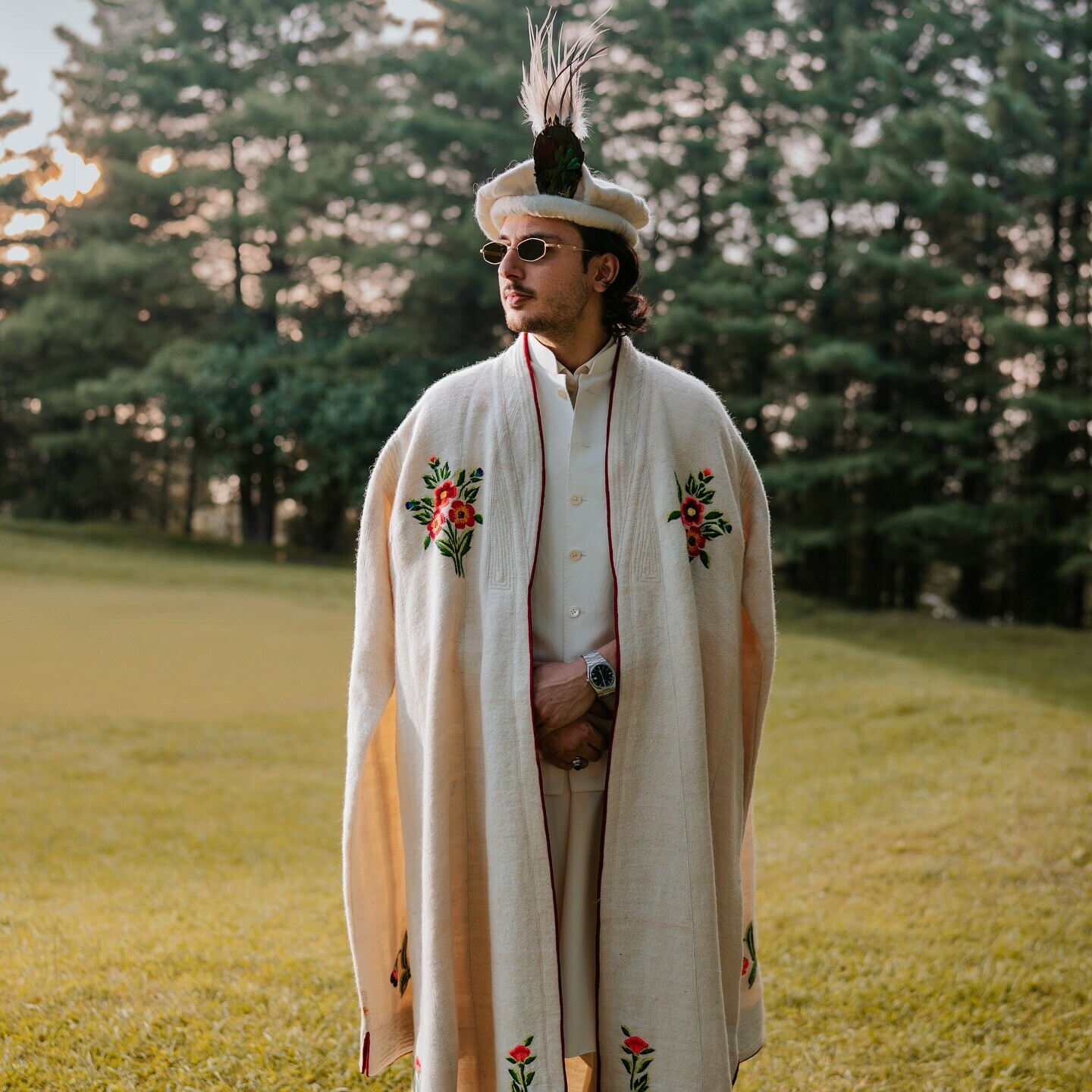
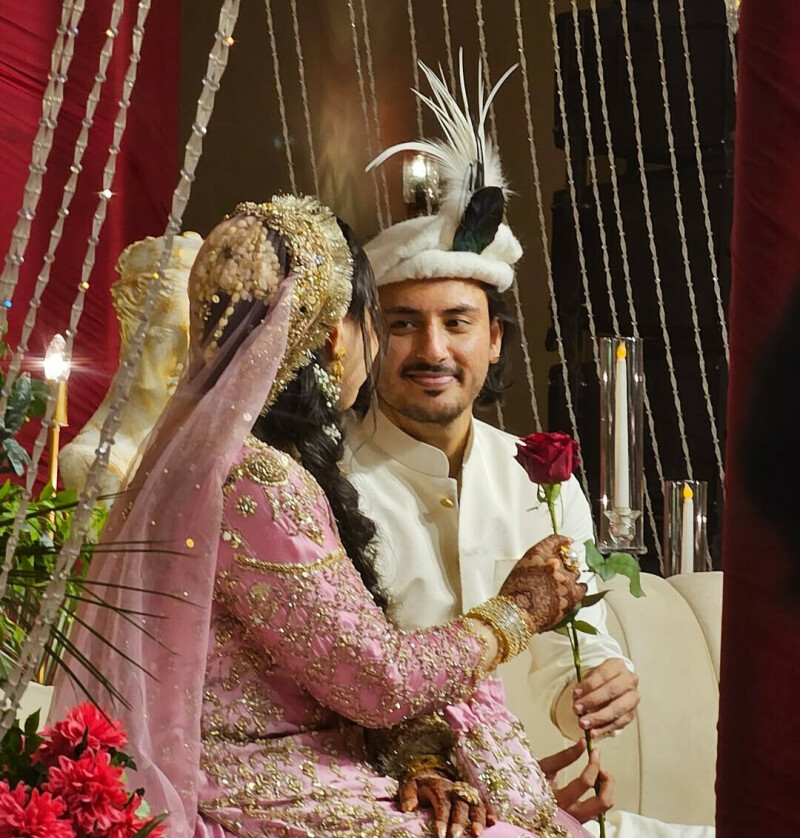
Hasan Raheem, however, came to the rescue of fashion lovers everywhere with his looks. His wedding look wasn’t just about looking dapper; it was a crash course in Gilgiti culture, something we don’t often see in the spotlight of celebrity shaadis. It begs to be talked about because it stands out, perhaps not in Gilgit, but definitely in the realm of celebrity wedding wear.
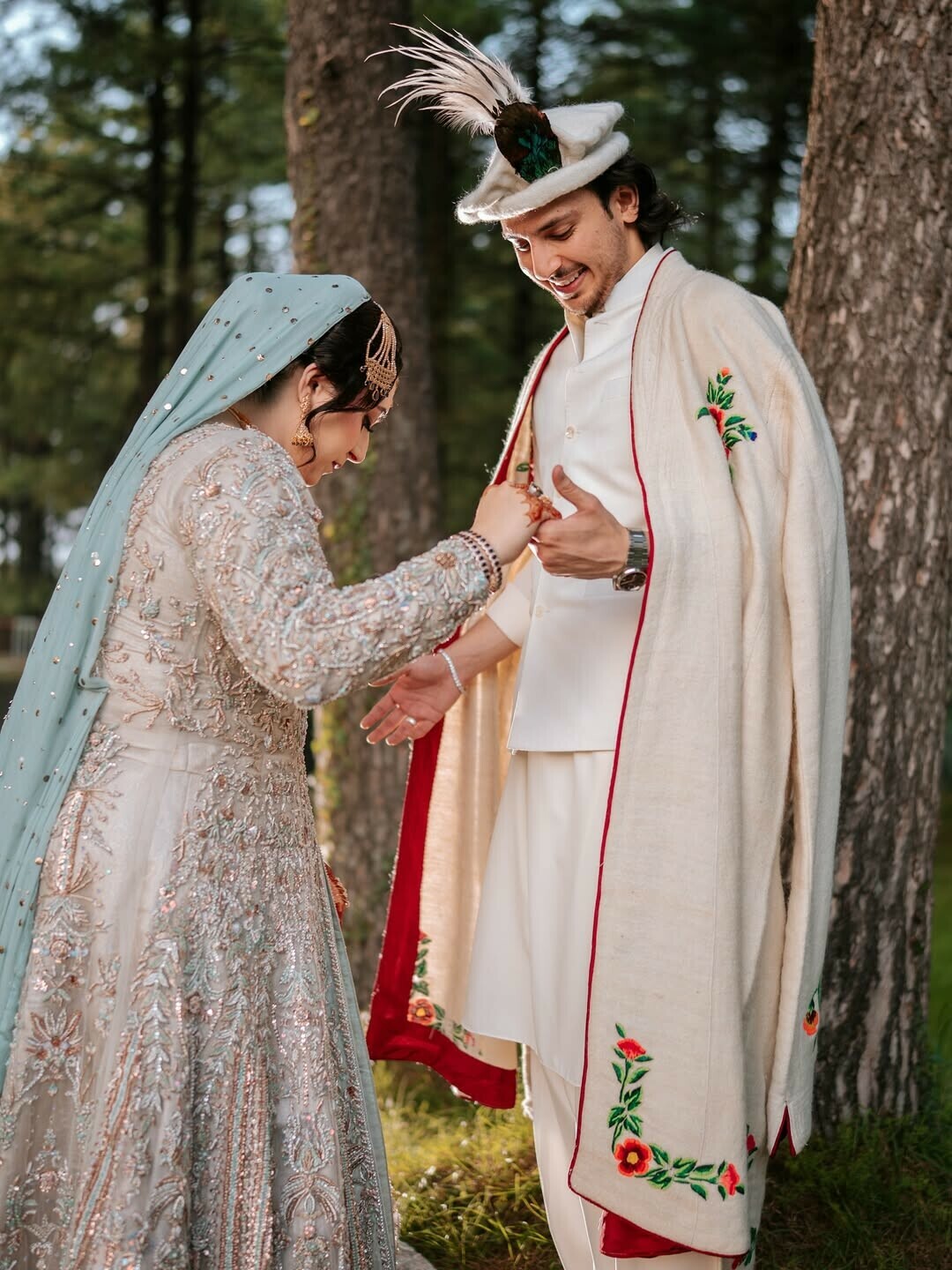
For his shaadi, Raheem wore a traditional shuqa — a woollen garment made of local patti that’s perfect for brutal winters, with long, long sleeves. His shuqa featured maroon and green floral embroidery with a maroon border, layered over a white shalwar kameez and matching white waistcoat.
To top it all off, he wore the traditional Gilgiti parxin cap, complete with a feather. In fact, he rocked the cap at every single event.
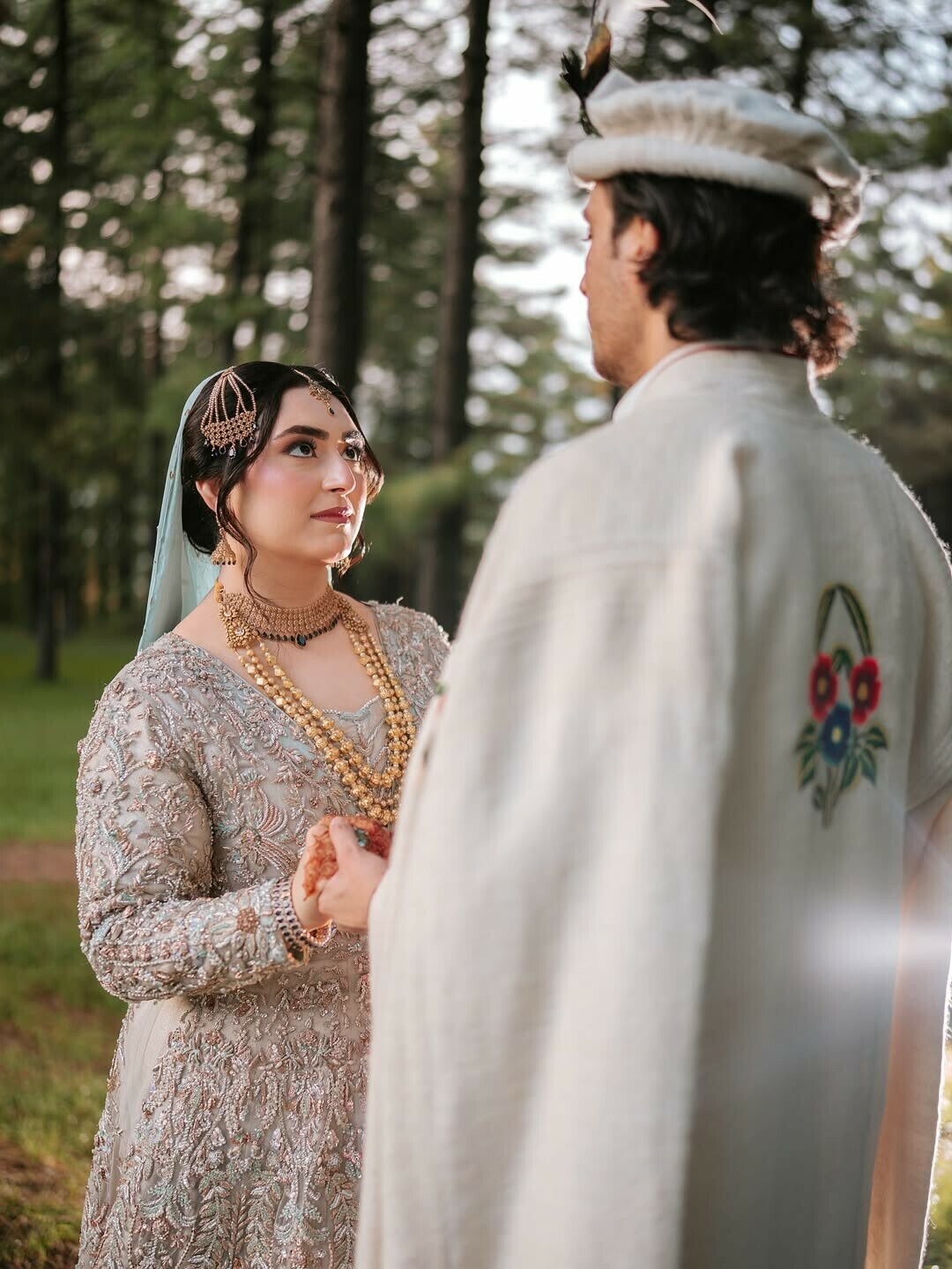
Did the internet clown him a little for sticking to white for most of his shaadi events, including his mayun, nikkah, and shaadi? Absolutely. And were they wrong? Not really. After a while, the sea of whites did get a bit repetitive.
Luckily, Raheem switched it up for his valima with a sleek all-black suit, tie included, accessorised with his trusty parxin, glasses, and a man bun (of course, he did). It wasn’t groundbreaking, but it was a much-needed palate cleanser after all that white.
One thing’s for sure: he complemented his bride beautifully, who, unlike him, brought variety to the table — pastel pinks, icy blues, silvers, and the quintessential maroon and gold. Raheem kept it simple, but his cultural representation carried the weight of his looks.
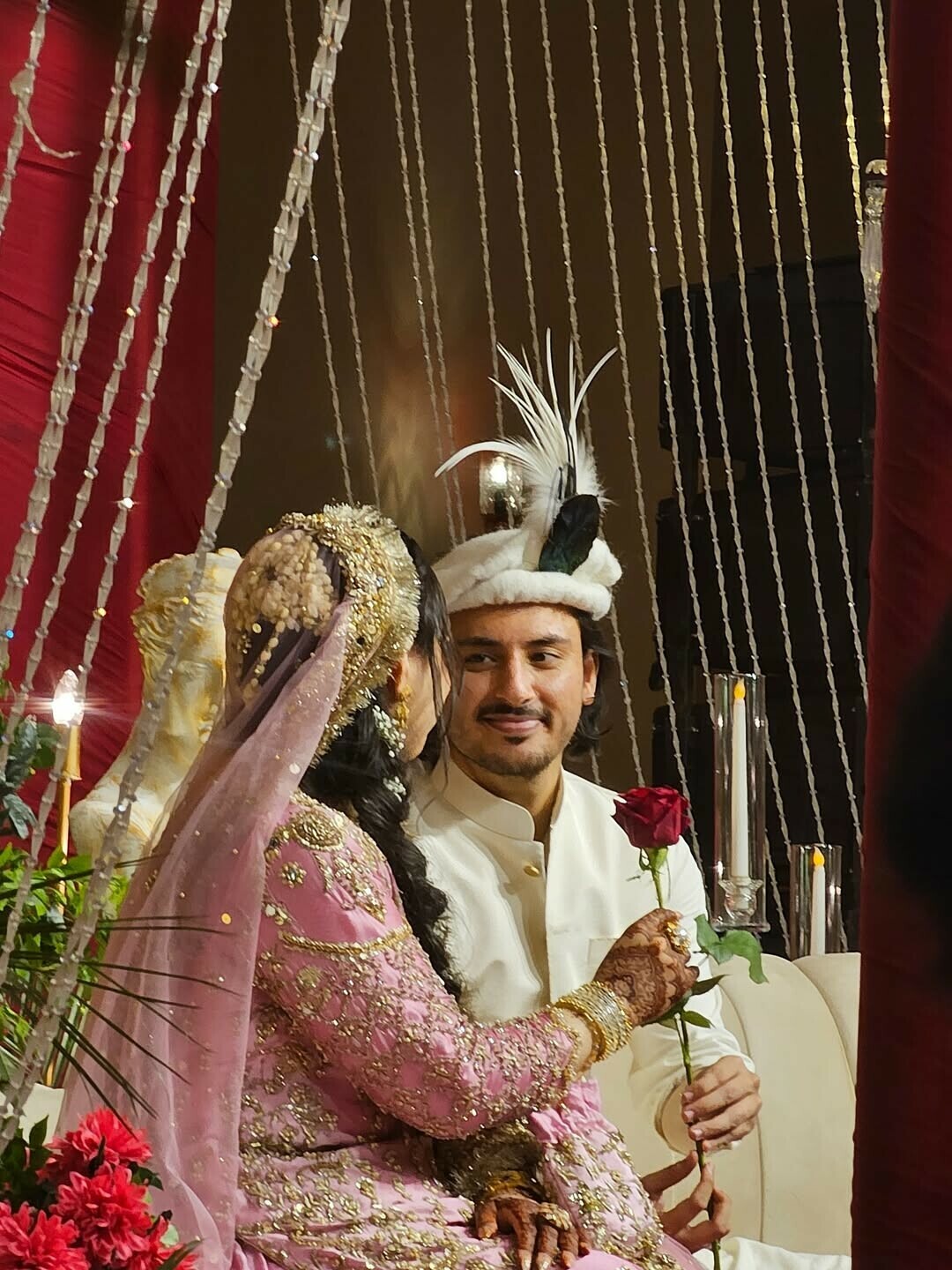
So yes, while we wish he’d thrown in more colour just for the drama of it all, he gave us a dulha look that proudly represented his roots. And for that, we’ll happily stan a Gilgiti dulha done right.
Cover photo by Ocular Films.



Comments