
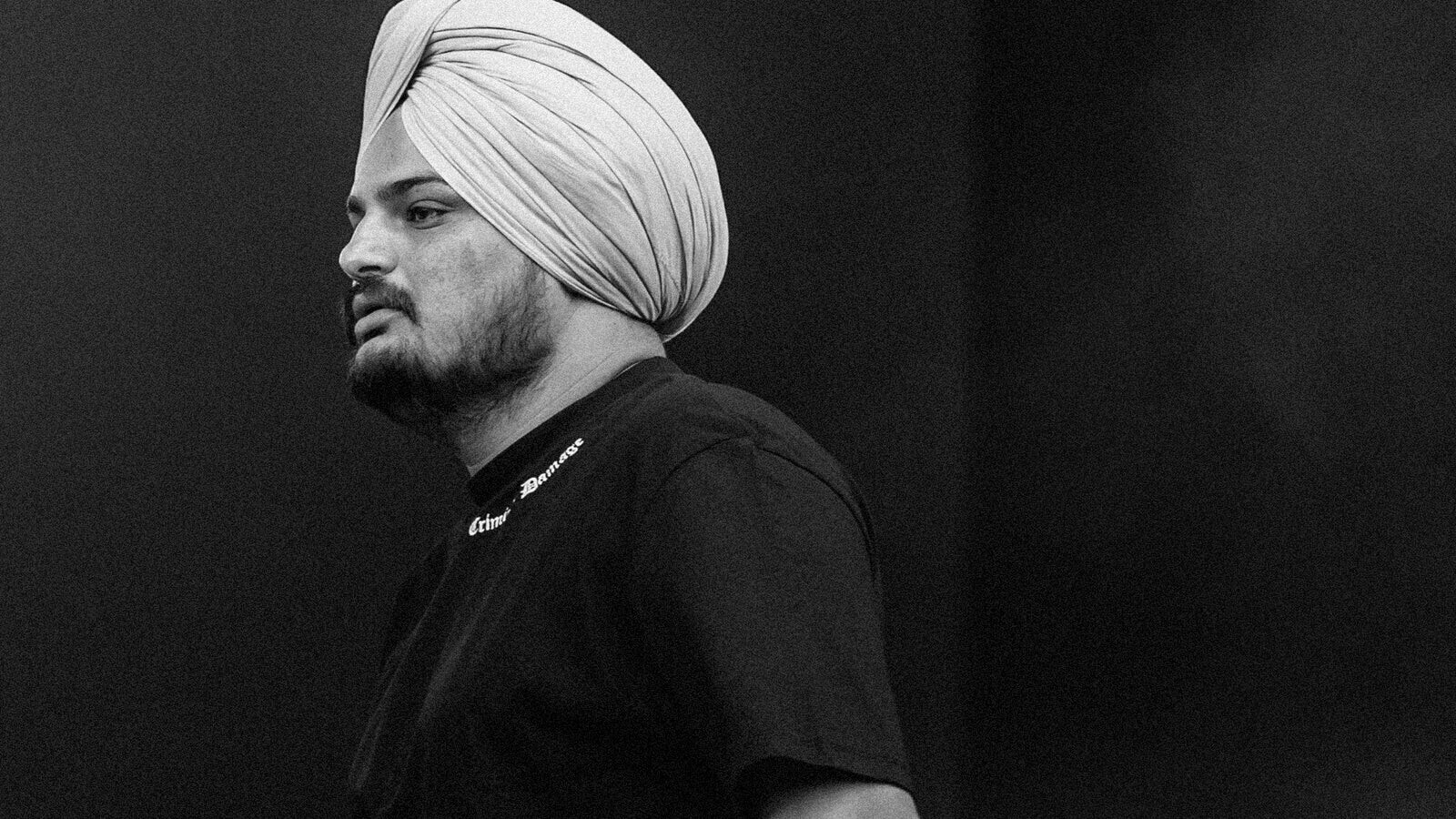
Who is Sidhu Moosewala’s upcoming posthumous ‘AI tour’ really for?
When Punjabi rapper and singer Sidhu Moosewala was gunned down in May 2022, his voice was silenced far too young. But now, three years after his murder, his official Instagram account, run by his team, has announced something no one saw coming — a world tour.
Titled Signed to God, the tour is slated to launch in 2026 with shows lined up in Indian Punjab as well as cities such as Toronto, London and Los Angeles, promising to bring Moosewala’s most popular songs to life using AI and hologram technology that “recreates” his presence on stage.
Cue the fanfare, but also some tough questions, such as, is this a memorial or a manufactured spectacle, and who gets to decide how a deceased artist is remembered, especially when that artist is no longer here to give their consent?
A first in South Asia
According to India Today and Rolling Stone India, the tour will utilise an AI-generated avatar and 3D hologram technology to give audiences a sense of “experiencing” Moosewala live again. While details of the tour remain under wraps, insiders suggest the use of augmented reality and other immersive tools to simulate a concert experience that feels futuristic and, to some, eerily lifelike.
This would be the first posthumous world tour of its kind for a South Asian artist. And while it may be hailed as “groundbreaking,” the notion of resurrecting musicians with tech isn’t entirely new.
In 2012, a hologram of Tupac Shakur appeared at Coachella. Michael Jackson was the centrepiece of The Immortal World Tour by Cirque du Soleil, a show that grossed over $370 million, becoming the ninth highest-grossing tour of all time. He also “returned” in the form of a hologram at the Billboard Music Awards in 2014.
There are also plans to cast James Dean, who died in a 1955 car accident after starring in just three films, all of which were highly acclaimed, as the star of the upcoming film Back to Eden.
Dean’s digital resurrection would not be a first for an actor either. Carrie Fisher, Harold Ramis and Paul Walker have previously reprised iconic film roles posthumously. Brazilian singer Elis Regina was also recently resurrected for a car advertisement.
Earlier this year, OpenAI rolled out an image-generation feature within ChatGPT that allowed users to transform photos into the distinct, hand‑drawn aesthetic of Studio Ghibli films. The result was a viral phenomenon: thousands of “Ghiblified” selfies, memes, and reinterpretations flooded X (Twitter) and other platforms.
But what seemed innocuous soon ignited furious backlash. Critics argued that the feature relied on machine‑trained mimicry of copyrighted artwork, most of it created without consent or compensation, effectively appropriating the visual signature of Hayao Miyazaki and his studio
These instances raise a troubling concern — are artists entirely replaceable? If so, does that make them property to be reanimated and profited from indefinitely?
The illusion of tribute and the problem of consent
There is an understandable temptation to frame this tour as a loving tribute. Moosewala’s murder was a devastating loss to the Punjabi music scene and to millions who saw him as a voice for the marginalised. A tour that celebrates his music could be healing and cathartic for fans.
But a posthumous tour with an AI version of Moosewala? That treads into murkier territory.
Moosewala was a fiercely independent artist. He launched his own record label called 5911 in 2020 through which he released his music. The posthumous world tour has been announced by his team and is expected to begin in 2026.
But being the kind of artist he was — someone with tight creative control over his image and music — makes it difficult to imagine that he would consent to a tour that, no matter how well-intentioned, mimicked him. How can fans be certain that the tour aligns with his wishes? He cannot direct, curate or consent to this AI avatar, nor to how it moves, speaks, or emotes on stage.
More than a face or a voice
Perhaps the most troubling aspect of this posthumous tour is what it signals about the future of art. In relying on AI and holograms, there’s a growing belief that art can be boiled down to mere aesthetics — the sound of a voice, the look of a face, the memorability of a beat.
But Moosewala wasn’t just a combination of facial expressions and vocal tones. He was an artist rooted in cultural and political nuance. His songs carried the anger of marginalised communities, the pride of diasporic identity, and the vulnerability of someone caught between fame and fear. These are not things AI can replicate.
By recreating Moosewala without his lived experience, this tour risks turning his legacy into a stylised ghost — a projection that says his physicality and humanity can be replaced, that art doesn’t require a soul, just good programming.
For fans or stakeholders?
The questions arise: are posthumous releases or performances meant for fans or stakeholders? Do they honour the artists, or monetise them?
In Moosewala’s case, the stakes feel even more delicate. He was murdered, a victim of violence who spoke openly about systemic injustice. His death was not just tragic; it was political. Recreating him through AI risks flattening that complexity into a consumable product, one that may not reflect the very principles he stood for.
Technologically, Signed to God will be impressive. It will likely be sold as a once-in-a-lifetime event for fans who never got to see Moosewala live. But we cannot ignore what this means for how we remember artists, especially those who die young.
As the music industry edges closer to using AI and holograms as standard tools in memorialisation, we have to ask: are we honouring artists or trying to own them forever?
Moosewala once said, “Legends never die.” Perhaps not. But even legends deserve peace. Not a digitally reanimated afterlife that continues to serve everyone but them.



Comments