
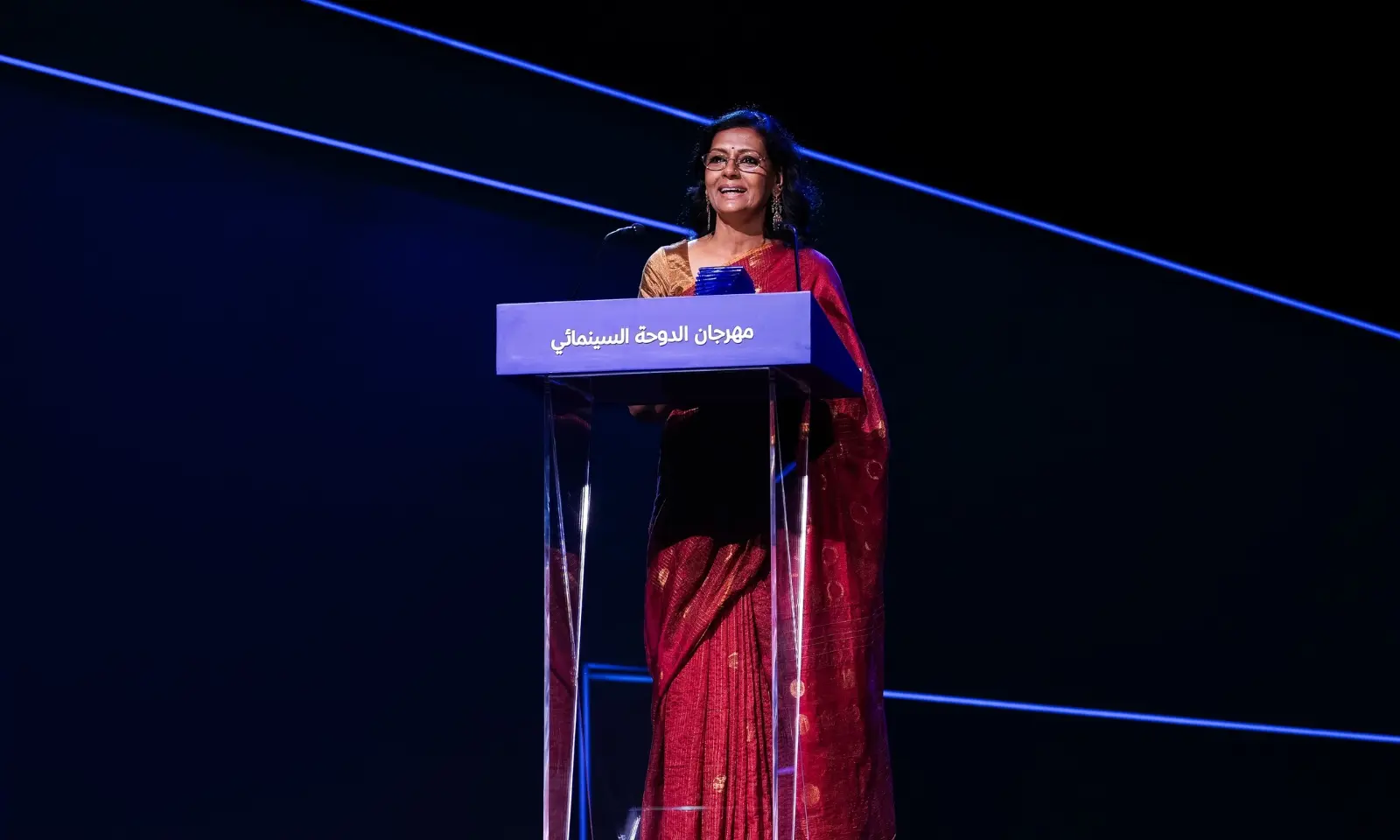
‘There will be dawn’: Indian filmmaker Nandita Das hopeful on cross-border ties
Indian filmmaker and actor Nandita Das said on Friday that she remains optimistic about relations between Pakistan and India, particularly people-to-people contact, despite ongoing political strains between the two neighbours.
Speaking to reporters at the Doha Film Festival, where she received the Creative Excellence Award at the opening ceremony, Das emphasised the enduring power of cultural exchange. The festival opened on schedule despite regional tensions amid the US-Iran standoff.
Das, who has acted in 40 films and directed three, noted that she recently attended the Faiz Festival in Pakistan.
“I am an optimist, so I believe in hope even in the worst times,” Das said, quoting German playwright Bertolt Brecht: “‘Will there be singing in the dark times? Yes, there will be singing about the dark times.’ Even though the relationships between India and Pakistan are not politically great, I think people-to-people contact would continue.”
While official film collaborations between the two nations may remain out of reach, Das said artists will always find spaces to tell their stories. “I hope there will be dawn,” she said. “We can’t be cynical about the situation, as cynicism is for the lazy. We have to look at the best we have.”
Instead of commercial projects, Das has focused on what she calls “cinema with a conscience”, steering clear of films that further polarise audiences.
“I don’t believe in that perverted, preachy, high-handed politics, even if it may resonate with some people politically,” she said. “I feel it’s more important to humanise stories, to bring out the nuances, to be able to communicate, to be able to use film as a bridge.”
“Cinema with a conscience is becoming less and less,” Das added. “Everything is becoming more mainstream and commercial.”
Asked whether cinema has turned political, Das said film-making is inherently political and can be manipulated into propaganda. The commercial shift has also shrunk the space for independent cinema in India, where about 1,000 films are made annually. Das pointed to a “chicken-and-egg situation” in which producers say they only make what audiences want, while viewers say they simply watch what they are given.
Even streaming platforms, once seen as a haven for independent films, have grown increasingly mainstream, she said. Still, she defended creative freedom: “If you want your freedom, you have to fight for others’ freedom too with the same energy”.
Turning to artificial intelligence, Das said the film industry faces a challenge for which it is not fully prepared. While AI-written scripts are currently easy to spot, she noted that the technology will improve over time.
“I think human experiences and things that you can do with your hand would become more important,” she said. Accepting that AI is here to stay, Das admitted she uses it to shorten emails, though never for writing. “I don’t think anybody exactly knows what its impact would be,” she added.
The festival opened with The Station, the debut feature by Yemeni director Sara Ishaq, depicting how women survive in conflict-torn Yemen and strive to keep their young boys from becoming fodder in the ongoing war.
Running through Nov 27, the festival will screen 104 films from 60 countries, including 17 world premieres and 48 Middle East and North Africa premieres, with more than $300,000 in prizes across four competition sections.
Originally published in Dawn, November 21st, 2026



Comments