
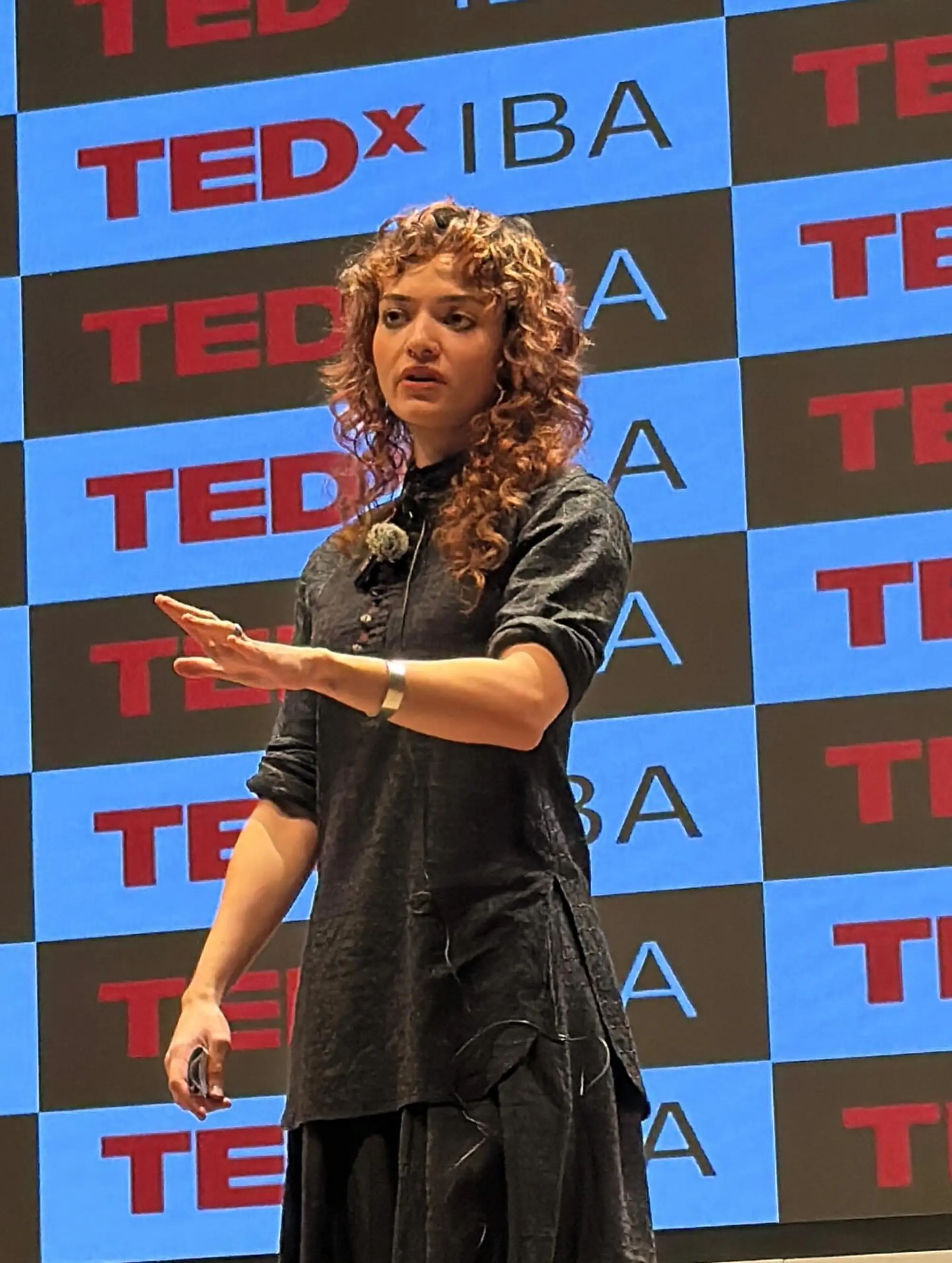
Parishae Adnan thinks young people aren't financially irresponsible, they're just plain broke
Designer Parishae Adnan wants to know how people from her generation are expected to go through life amidst extreme uncertainty and terrible economic conditions.
The couturier was being interviewed by former model Frieha Altaf on the podcast FWhy? when the host said millennials were different from older generations since they didn’t believe in buying property. “Even if we did want it, how would we get it?” Parishae responded.
She said her father — veteran fashion designer Amir Adnan — was able to afford a down payment on a house with a few months of his salary when he was her age and could comfortably afford a new car with a year’s wage.
“What’s our average salary? 60, 70, 80k? What are you going to do?”
Parishae said many places didn’t adhere to minimum wage standards, which made the whole situation worse. She agreed that many younger people felt it was better to rent homes than buy them, but that was only because that’s all they could afford.
Continuing the discussion on generational divides, Altaf said her generation also chided younger ones for not working hard enough, but Parishae was exceptionally hard-working.
The guest replied that Gen Z was the one that realised they didn’t have to work constantly and that millennials were stuck in a perpetual grind because otherwise they felt guilty for not working — something she said she experiences too. She said her own younger sister was so much calmer.
Earlier in the programme, the designer said Pakistan’s biggest problem was the lack of basic amenities, which kept people frustrated.
“The people [of Pakistan] aren’t bad, but when even the most basic things in your life aren’t there — literally food, clothes, housing, water, gas, electricity, basic stuff — you get so tangled up that you lose patience for everything else.”
Parishae said many of society’s issues boiled down to a lack of patience and that the problems people faced out on the street didn’t end when they got home. “That’s not even a problem of the poor, it’s everybody’s problem.”
She said that if issues surrounding basic necessities were resolved, a lot of people’s tension would go away.



Comments