
As the world watches Nolan’s Odyssey, turn your gaze to Troy, where the story began
Standing on the rooftop of the Troy Museum in Türkiye at eight in the evening, I stopped being a tourist.
The enormous Trojan plain swallowed the horizon. The never-ending swathe of land bathed in a simmering yellow that turned orange and then suddenly a deep, stubborn red, thick with secrets as the sun set. For a moment, I was inside the story, one that started almost 4,000 years ago.
This is also where Odysseus might have stood. Cunning, valiant, and depending on who you ask, the mastermind behind Troy’s fall. The Greek king who convinced his men to hide inside a giant wooden horse. The ‘complicated man’ who spent years trying to find his way home from a war he had just won. The man enshrined in Christopher Nolan’s new film, The Odyssey.
But the story begins right here — not in a film studio in Iceland, Italy or Morocco, but in the city of ancient Troy that now sits in Türkiye’s Canakkale province, some 30 kilometres from the city centre.
Most people know the city from the famous Brad Pitt film Troy. Few know that it is a real place. That blockbuster ended with Odysseus walking away from the doomed city. In it, he asked for one thing: “If they ever tell my story, let them say I walked with giants. Men rise and fall like the winter wheat, but these names will never die. Let them say I lived in the time of Hector, tamer of horses. Let them say I lived in the time of Achilles.”
A complicated man
Odysseus got what he asked for but Troy got something too: immortality. The city that was never forgotten, mostly because of the venerable Greek poet Homer, whose very existence remains shrouded in mystery, and also because while some cities from the Bronze Age have faded into archaeological footnotes, the world kept retelling Troy’s story. It was also from these burning plains that Odysseus set sail into a decade of chaos, monsters, and gods with grudges.
Centuries later, curious travellers and history nerds still flock to the city of Truva (the Turkish name for Troy), a UNESCO World Heritage Site.
Sandwiched in a tightly packed dolmuş or shared taxi that smelled of sunscreen and old upholstery, everyone had their own reason for making the 45-minute-long journey to the ancient ruins. Some come convinced Troy is a myth and want to be proved wrong. Others come clutching dog-eared copies of Homer’s Iliad. And some, much like the Greek tourist sitting beside me said with a slight chuckle, come because they read somewhere that Helen, the Spartan queen whose elopement with Troy’s younger Prince Paris instigated the long, exhausting Trojan war, was the most beautiful woman in the world and want to see what all the fuss was about.
Outside the minivan’s tiny tinted window, the city’s coastline stretches. The Dardanelles glitters to the left. Lofty mountains rise to accompany you to the right, and the water is so blue that it almost looks fake.
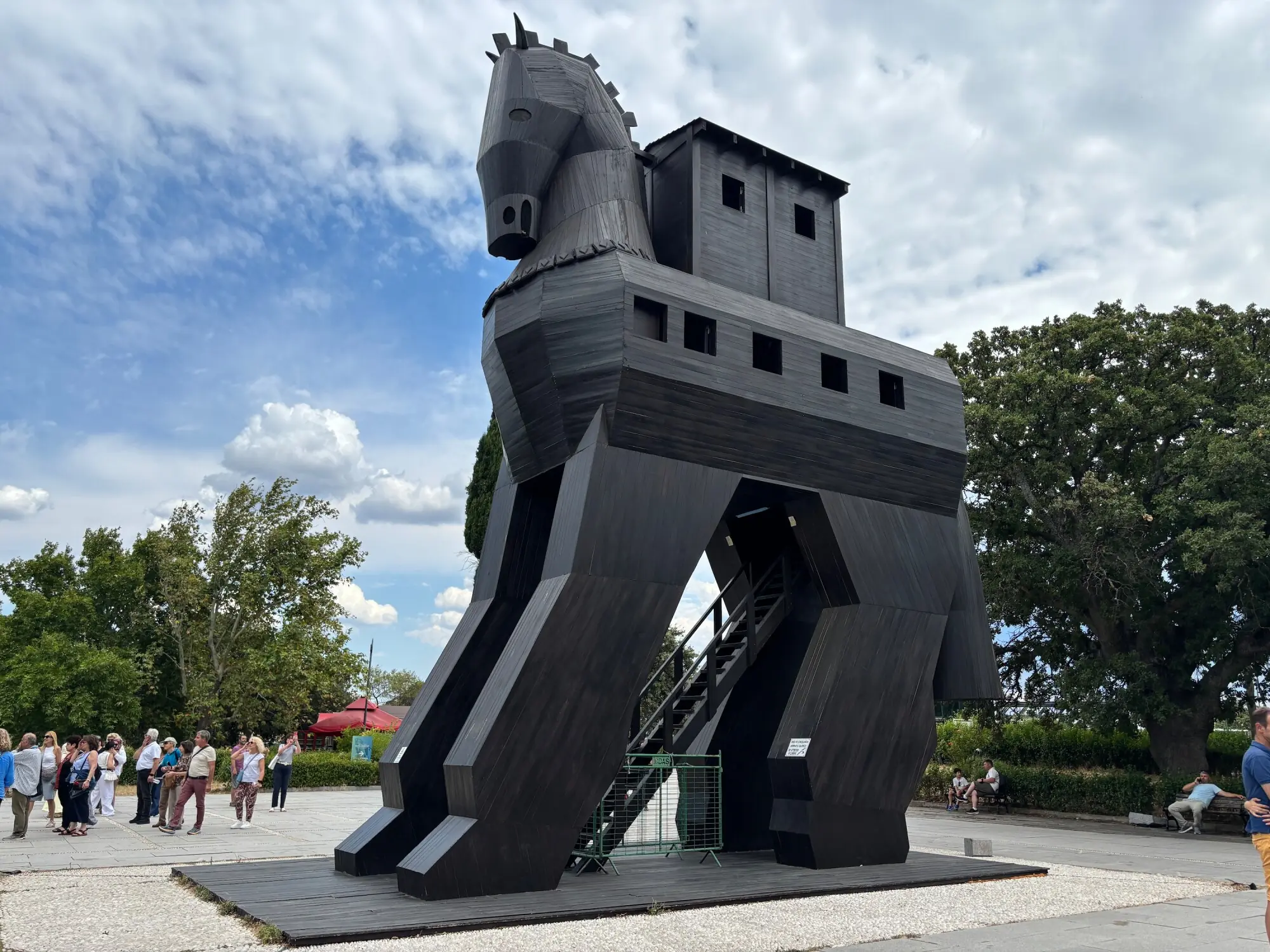
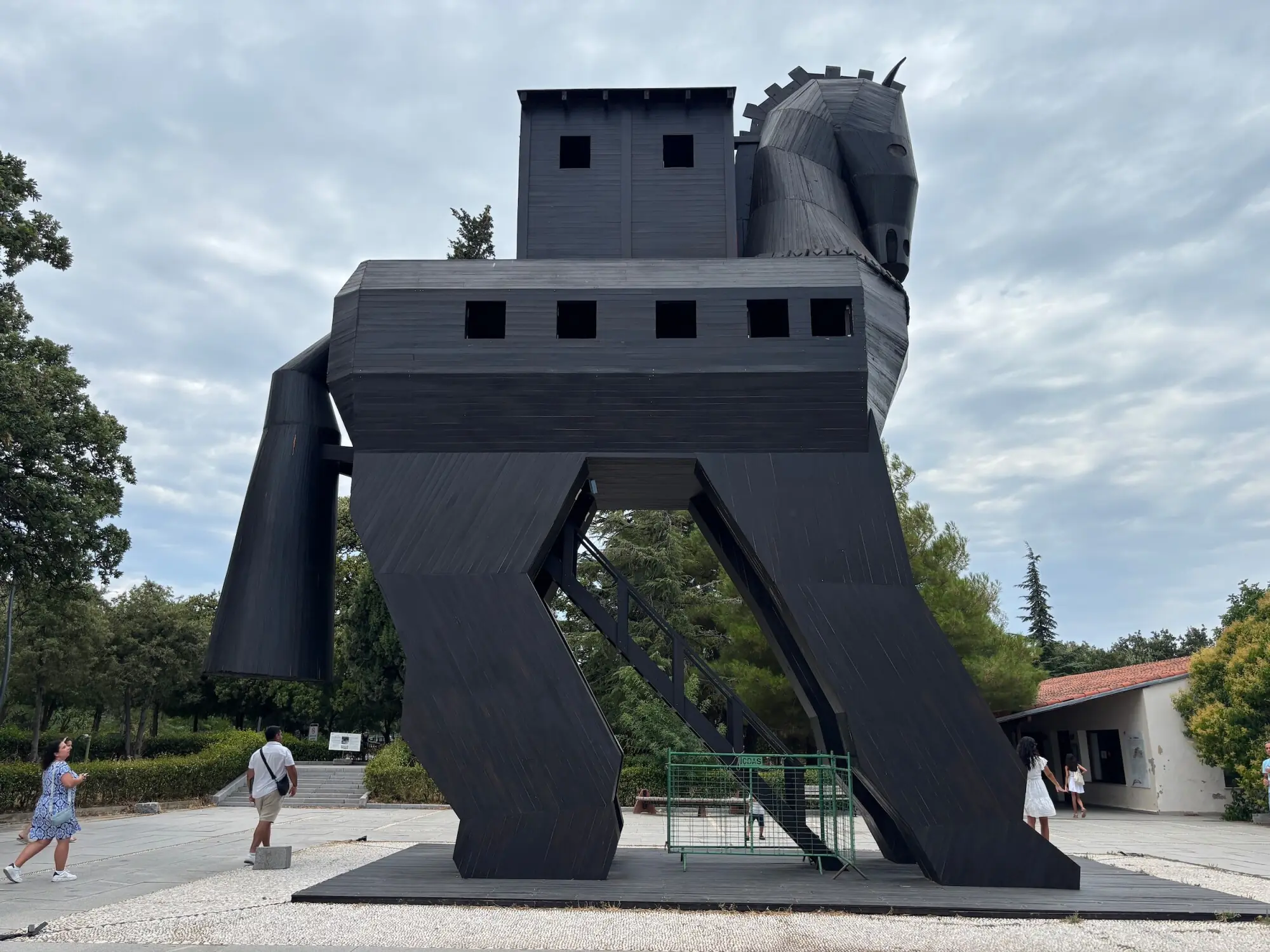
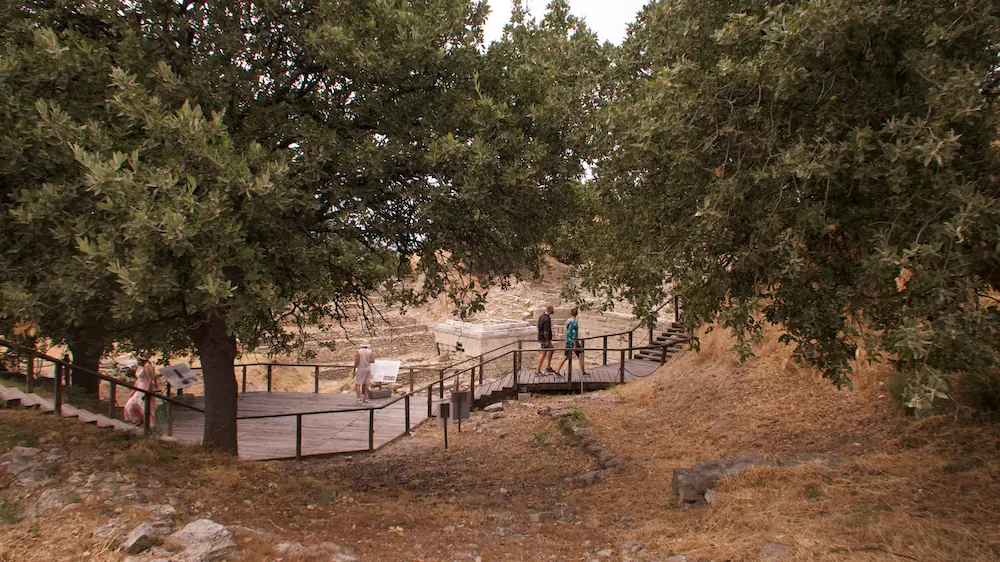
The ancient site arrives before you expect it. But it doesn’t come as a surprise. There’s no grand gateway or dramatic entrance. Just a wooden Trojan Horse standing tall at the gate, built for photos, mainly. Old bending olive trees cast little pockets shade over the excavation trenches and wooden ramps that spread across the site, looking like an incomplete map. Valonia oaks, thick and completely unbothered, line the path. There comes a time when the dead silence and rustling of leaves get on your nerves, but the field crickets keep up a low, constant chirp.
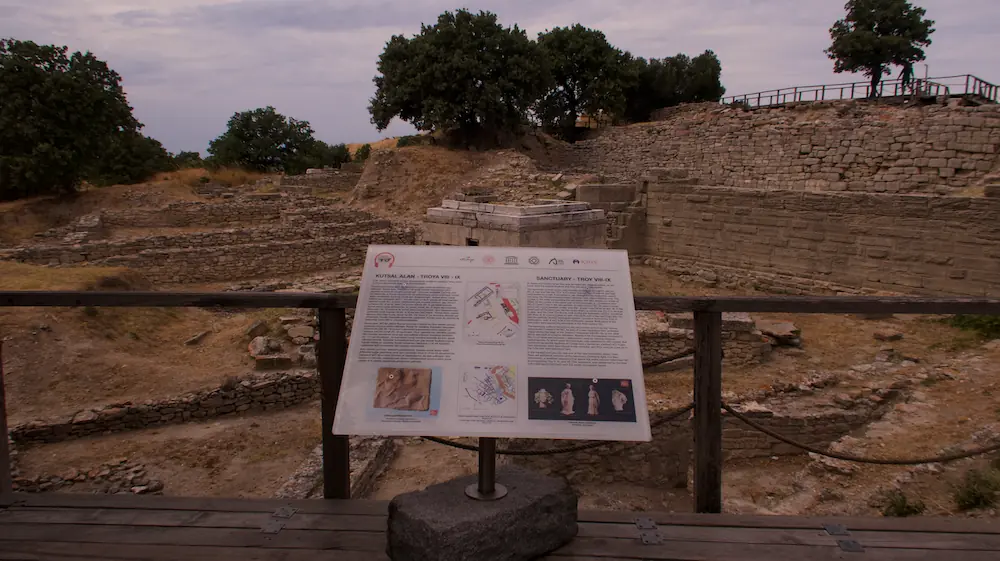
The tourists briskly walk past the trenches and foundation walls. The marked layers, Troy I through Troy IX, show years of human ambition compressed into a few metres of soil. The weight of it is not dramatic. It is quiet and the kind that does not ask anything of you.
The cube-shaped treasure
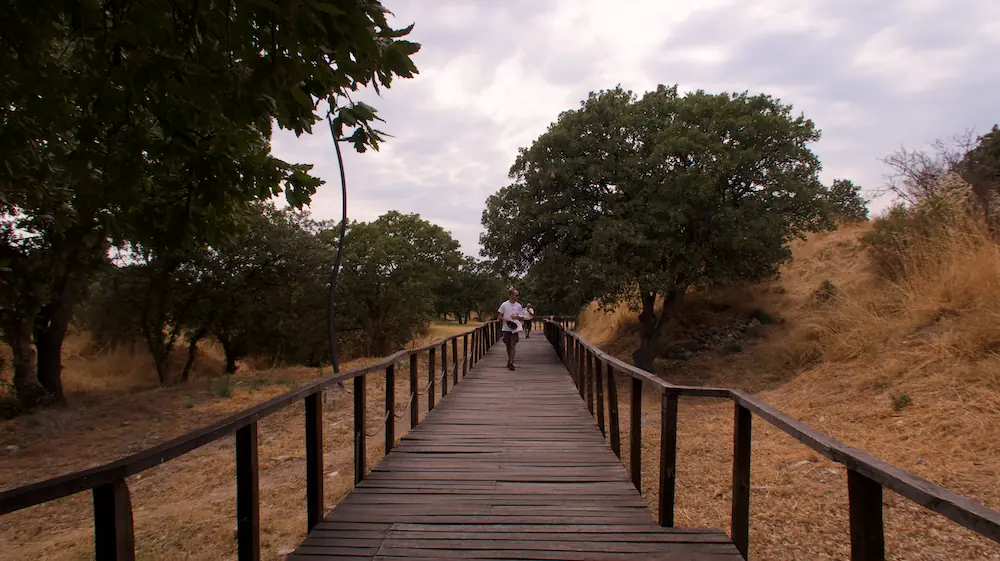
Some 750 metres from the ancient site, there’s a long walk to the award-winning Troy Museum. From the outside, it looks like a rusted and deliberately plain cube that has been pulled from the ground rather than built on top of it. In the scorching heat, stepping through its doors felt like a relief.
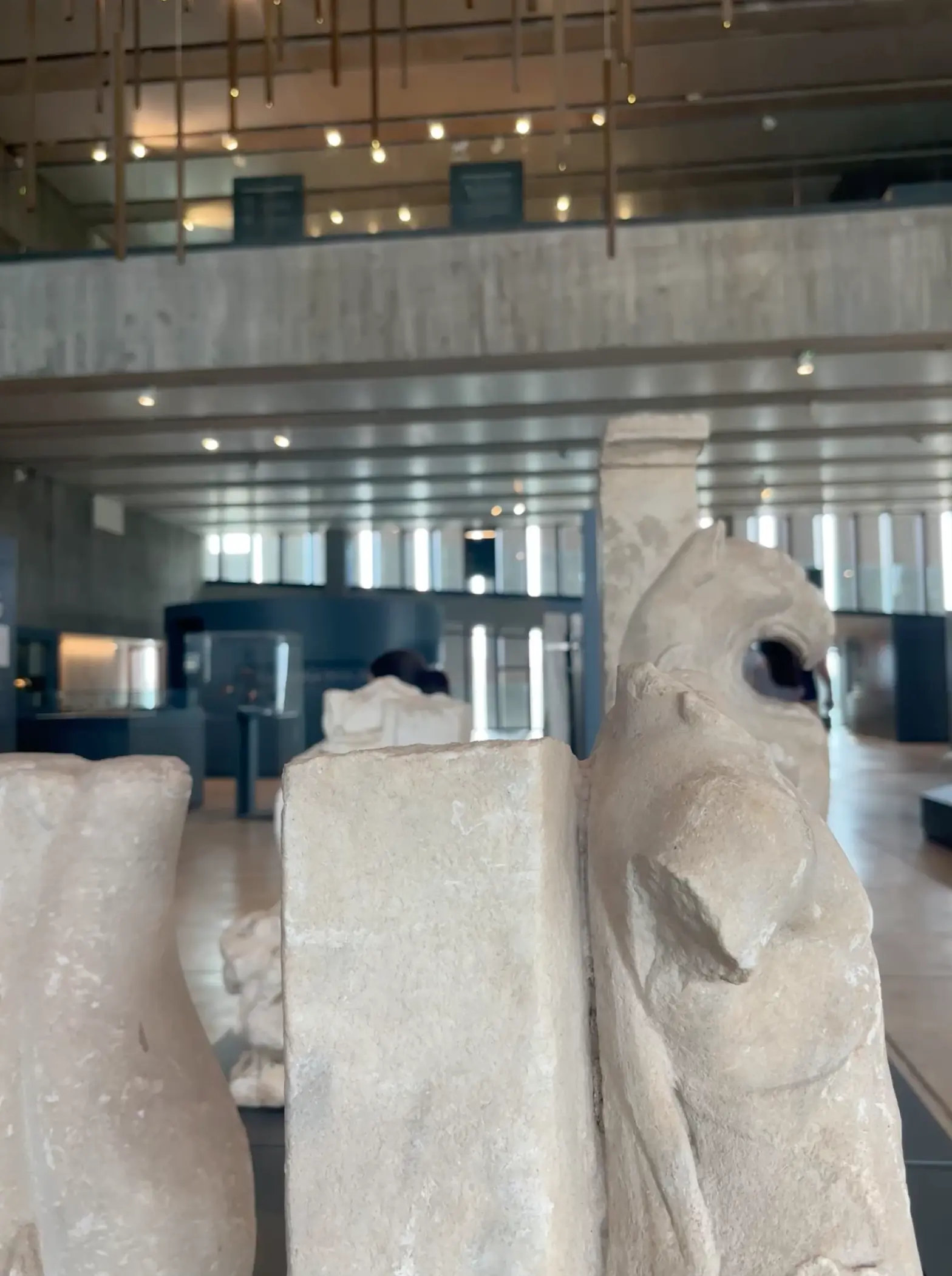
Inside, there are no stairs, only ramps. You descend first, then rise again, moving through seven sections in a slow spiral. Each of the ramps takes you into a different era, a different civilisation, a different Troy. The walls hold gravestones, sculptures, scene recreations, and photographs at mural scale. The best part about the museum is that it does not shout at you — it makes you take your time.
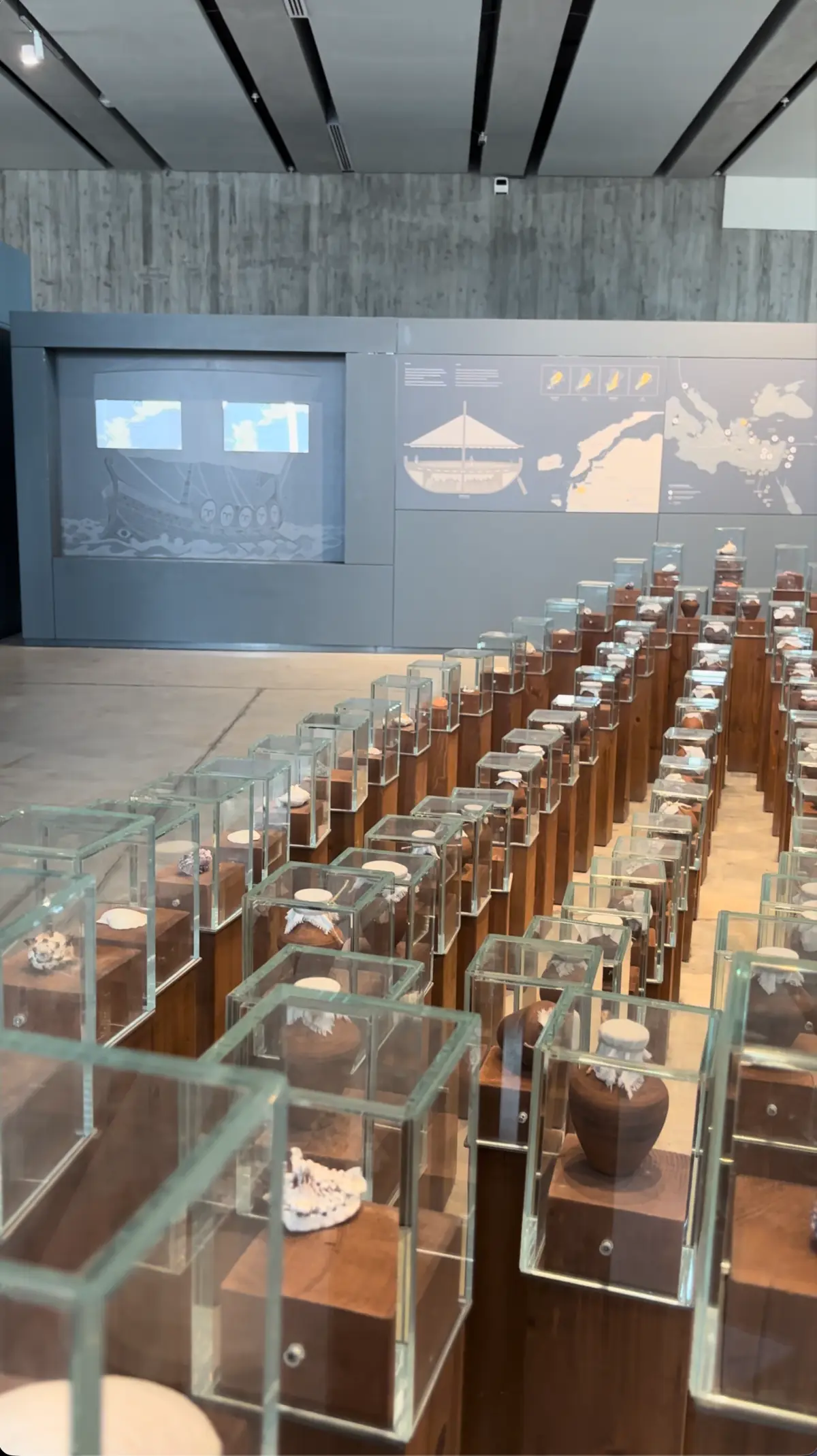
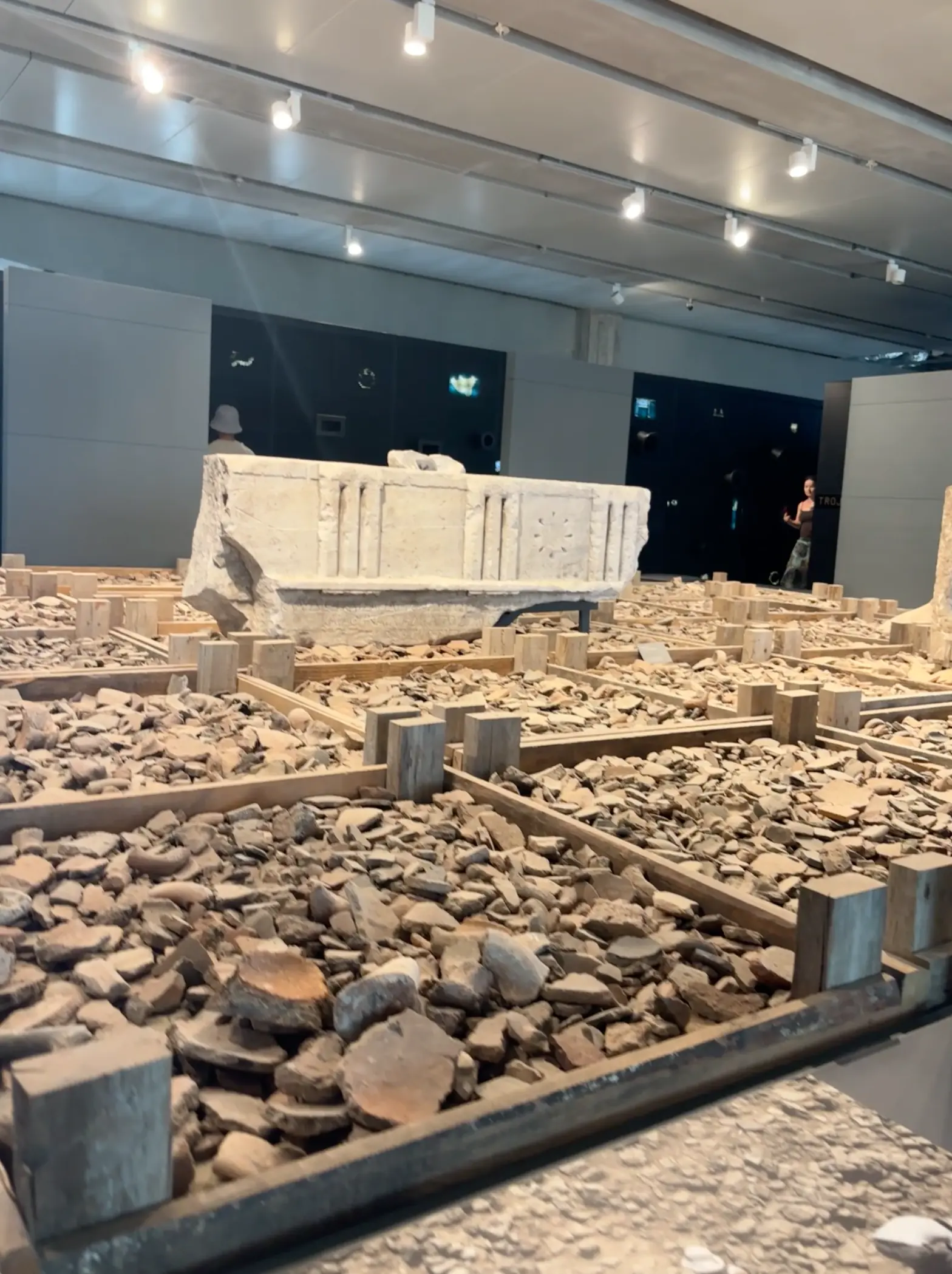
On the lowest level, the floor is glass. Beneath your feet, pottery shards dating back to 3000 BCE lie exactly where they were found, symmetrical and placed closely next to each other.
Rıdvan Gölcük, Turkish archaeologist and former museum director, was quite direct when I asked him what this place offers that Nolan’s Odyssey cannot. “Cinema offers us a magnificent illusion. But this is where that illusion ends and the truth begins. Nolan may have filmed his Odyssey from Morocco to Iceland. But this museum stands on the very ground where Odysseus walked, breathed, and drank water.”
He was not being theatrical at all.
“This is not a set. This is not Disneyland. The museum offers you the red pill. Because this is real.”
The ramps continue upward. Bronze Age weapons. Greek ceramics. Roman coins. Ottoman artefacts that remind you this ground kept being lived on long after Homer’s epics were composed. It was a city that refused to stop existing and offered so much more with every new dig.
Right at the top is the rooftop. In a cinema you watch a story, at the Troy Museum, Gölcük says, you step into the Homeric geography where the story was born. You can walk in the garden, look from the terrace and see the bay where the Achaean ships landed, then walk the streets of the ancient city minutes later. “This is Zero Point,” he pointed out.
Zero Point — the place all the stories lead back to. There are things the museum tells you that no film will.
Storytellers write history
German adventure-archaeologist Heinrich Schliemann excavated Troy in the 1870s and declared he had found Homer’s city. He had not.
In his rush to reach what he imagined was the right layer, he blasted through the actual Homeric Troy with dynamite. The gold he pulled from the ground — diadems, cups, jewellery — was smuggled out of Ottoman territory and taken to Berlin, only to be seized by the Soviets in 1945. It now sits in the Pushkin Museum in Moscow.
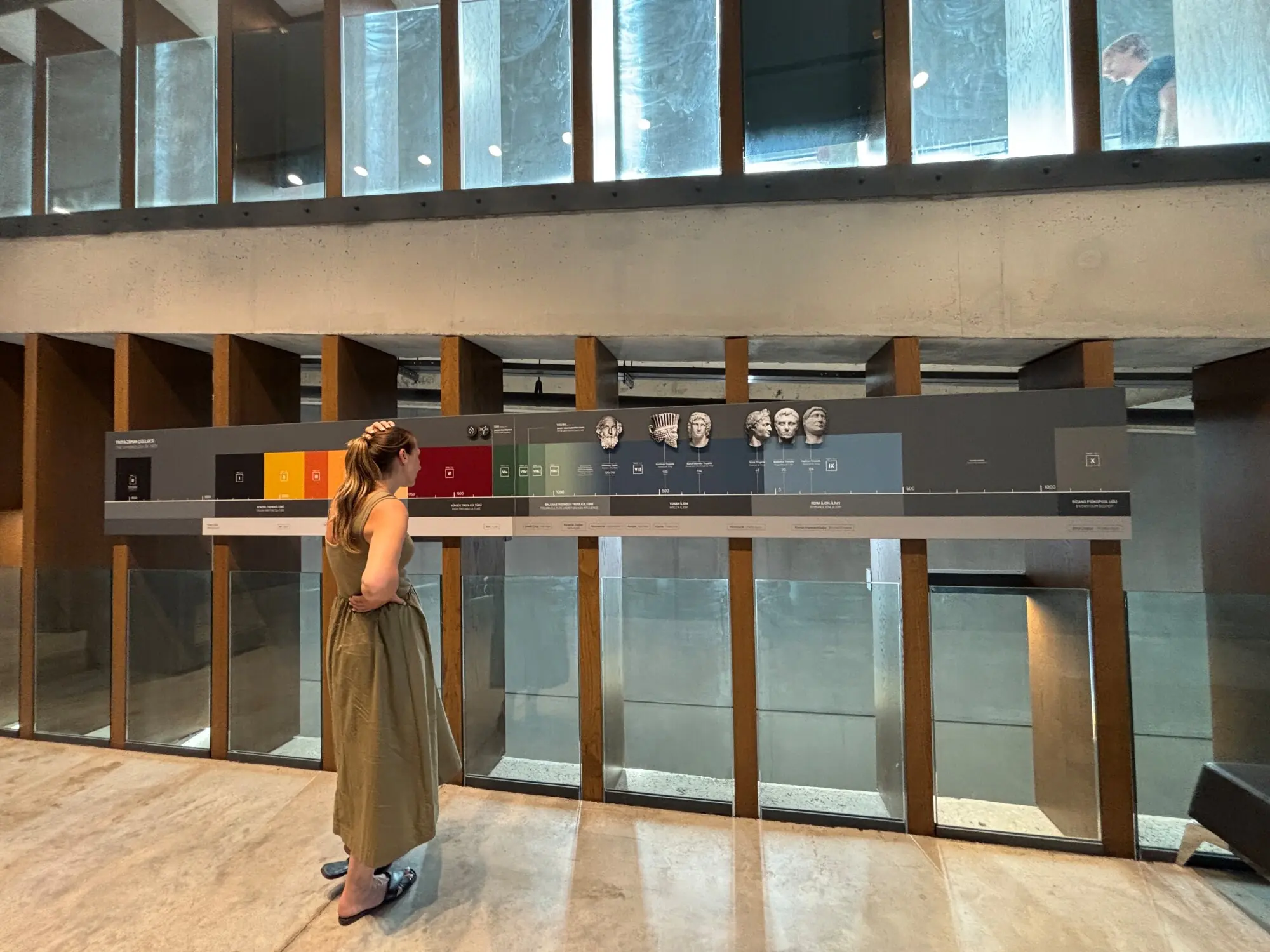
The Troy Museum, the most logical home for the treasure of Troy, does not have it. “History is inconvenient that way,” said one of the guides listing the treasures the museum is missing.
“They say history is written by the winners,” Gölcük said. “I do not entirely agree. Because the Iliad is not the epic of the winners. It is the epic of the losers.” Think of every name that survives from Troy. Hector. Priam. Andromache. Hecuba. The Trojans. The people who lost.
“Odysseus thought he was leaving behind a city in flames,” Gölcük said, with a very different perspective about the epic. “What he actually left behind was an immortal name — Troy — that has outlasted every age.”
Nolan’s Odyssey is pulling in massive numbers, with a $264 million global debut and collecting both praise and critical acclaim worldwide. It begins where the 2004 film Troy left off, with Odysseus sailing away from the fallen city, asking to be remembered. Twenty-two years of cinema. Ten years of mythology. The place that connects both films is here.
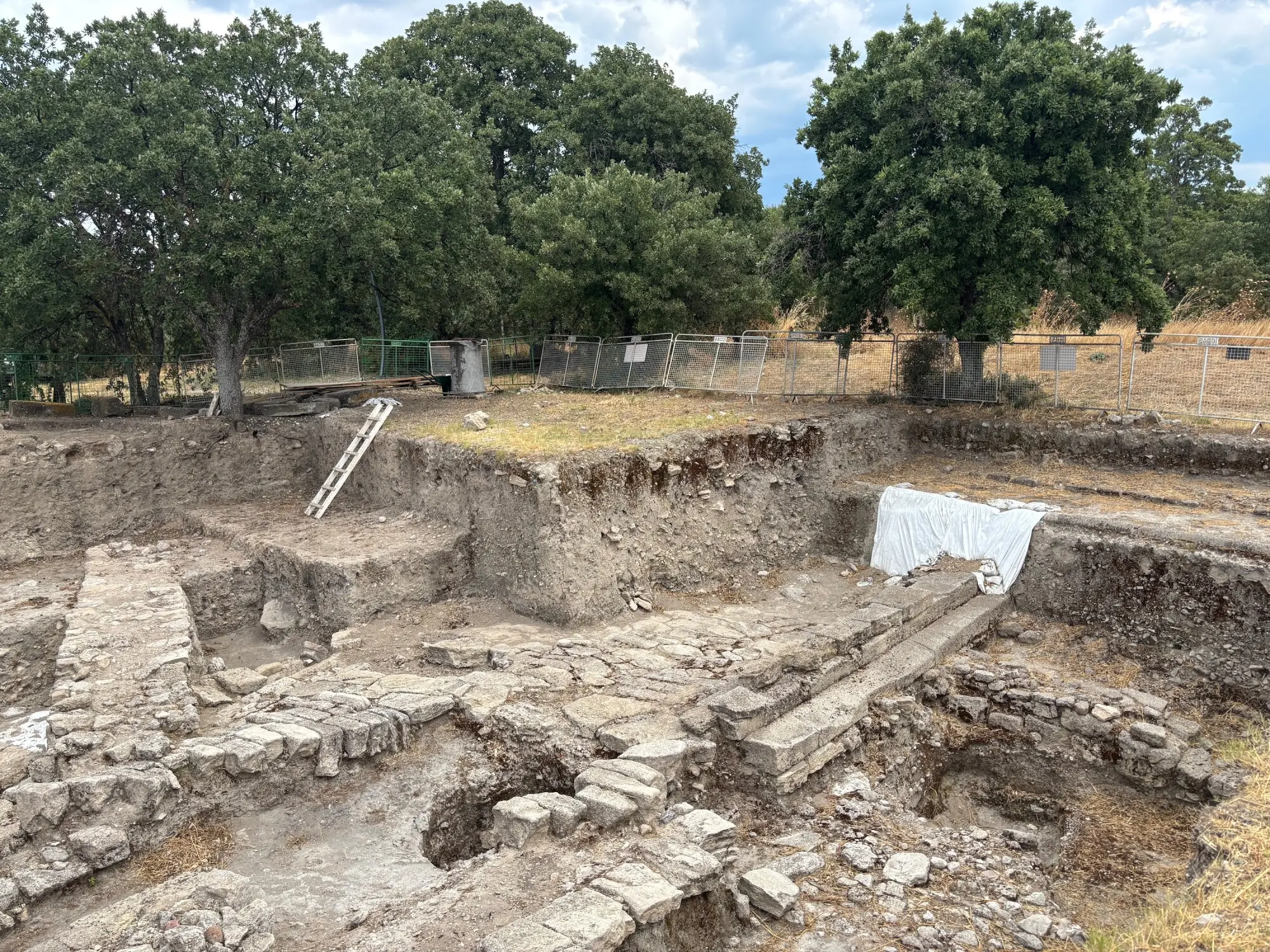
I left the rooftop as the last red light faded from the plain. The crested larks had gone quiet. The bee-eaters had settled somewhere in the Valonia oaks. The profound silence took over once again, whispering that Troy does not need anyone to remember it.
Julius Caesar came here and walked the ruins. Alexander the Great made a pilgrimage to Troy. Schliemann came here and loved it so much he destroyed part of it. But Homer, if he was one person, which nobody can agree on, may never have visited Troy. He may have been working from oral tradition passed down by traveling singers, rhapsodes across generations, not from his personal observation. He may never have even seen the Aegean.
The most influential description of this place in human history may just be based on mere powerful storytelling. Now, Nolan has sent the entire world back to the beginning of the story.
Comments