
Review: SharPasand weaves a tangled web of lies, deceit and emotional manipulation
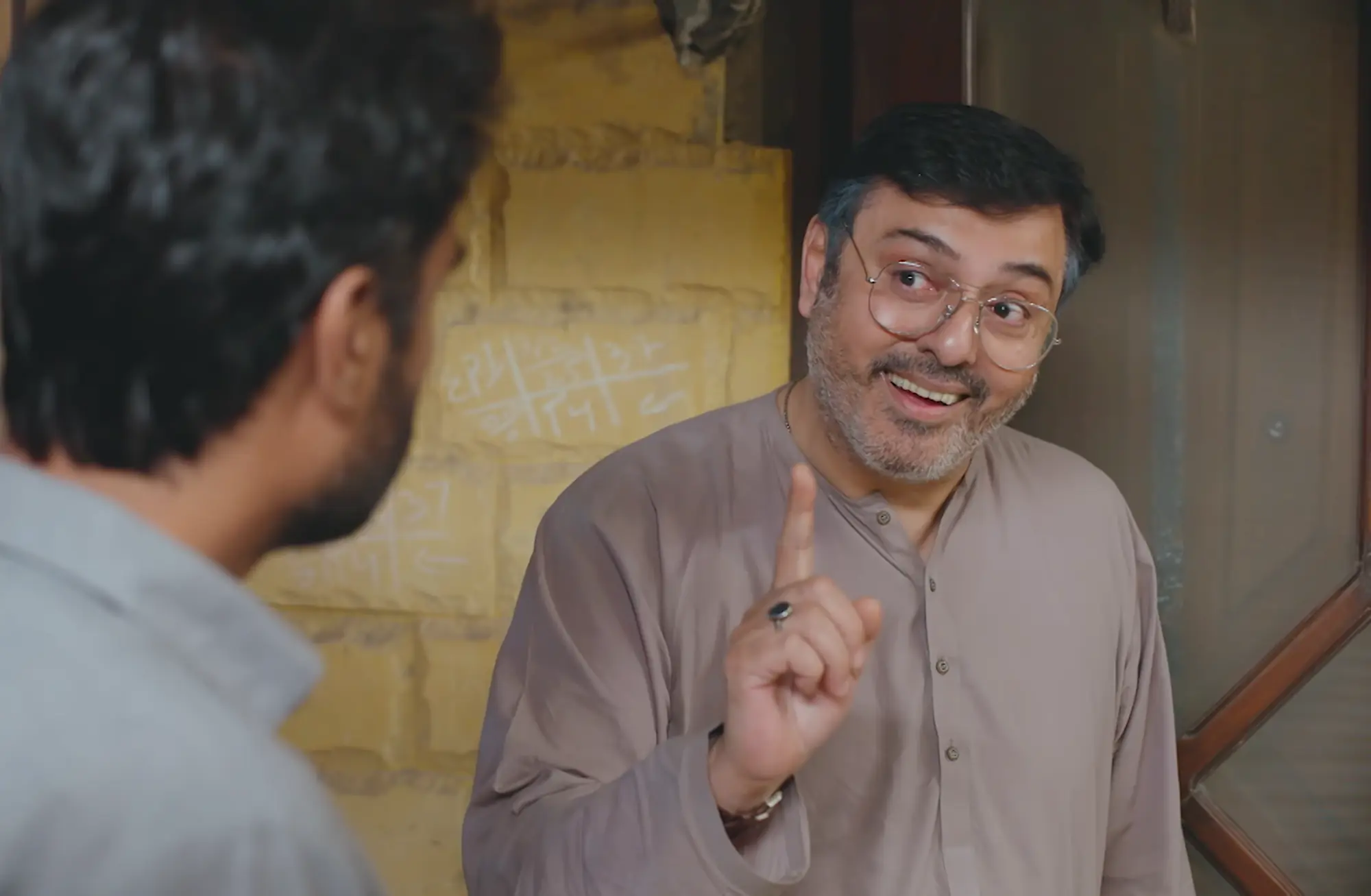
At first glance, SharPasand seems like a typical drama, reminiscent of an older Karachi — a tree-lined neighbourhood where everybody knows each other and interferes with each other’s lives. Although such neighbourhoods may not be as prominent as they used to be, they can still to be found. The titular character of the drama is Farasat, played convincingly by Naumaan Ijaz.
Roughly translated as someone who is mischievous or meddling, the term sharpasand barely does justice to Farasat because he is much more than that. He is intrusive, calculating, dishonest and manipulative — a man who interferes, schemes and consistently causes more damage than good all under the guise of someone who is moralistic and religious. He is married to Ruby (Nadia Afghan) and has three children — two daughters and a son — two of whom are reflections of him.
At the beginning of the drama, a couple moves into the neighbourhood: Sanam (Hareem Farooq) and Fida (Affan Waheed). Farasat is quick to butt into their lives, and is successful as Fida is not particularly bright and is gullible enough to fall prey to Farasat’s machinations. Fida’s inability to see through him becomes central to the drama, making him the perfect target for Farasat’s manipulation. Sanam, meanwhile, is smarter and sees through Farasat. What adds to the deterioration of their marriage is the fact that the couple is unable to conceive.
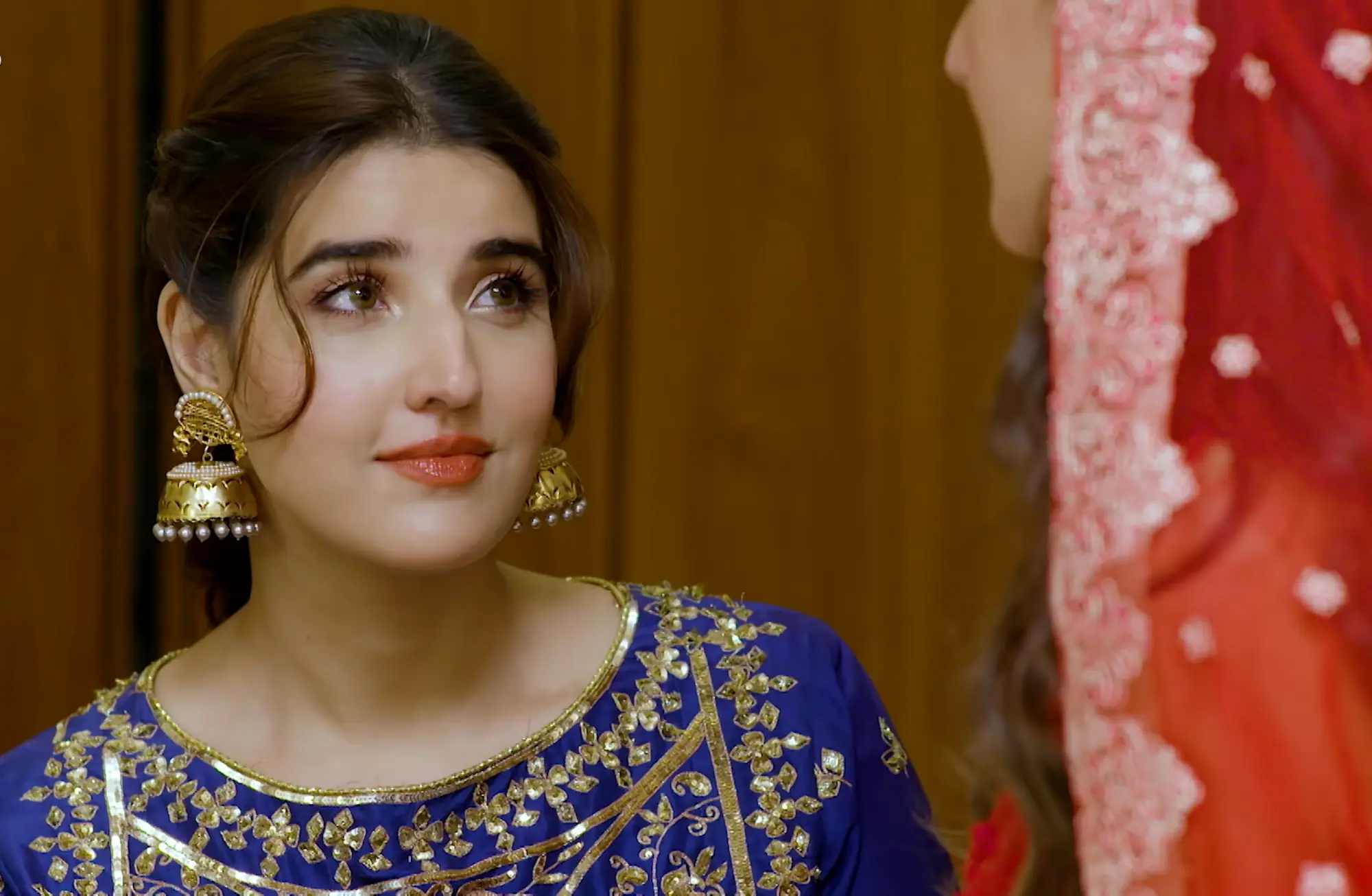
Another important character is Shazmain (Hira Mani), a widow who lives alone and holds an important position at a bank. She quickly befriends Sanam and she too is one of the few people who sees through Farasat’s guise to the sleaziness beneath the surface. Unsurprisingly, Farasat badmouths her in the neighbourhood, painting her as an immoral woman who entertains men. The sheer ease with which this accusation spreads is both disturbing and, frustratingly, still relevant in this day and age.
Another household in this interconnected mohalla belongs to Begum Ali (also referred to as Shagufta), played by Seemi Pasha. She is a widow with two children: Wali (her son, played by Ahsan Afzal Khan) and Hafsa (her daughter, played by Sabahat Sheikh). Then there is Shama and her son Hammad (Hassam Khan), whose lives become entangled in the larger emotional web of the drama.
And then, of course, there is the soap element — because SharPasand is definitely a soap. Emaan, Naumaan Ijaz’s daughter, is in love with Hammad; Hammad, meanwhile, is connected to Hafsa; and Hafsa herself is emotionally tied to him as well. Wali meanwhile is the love interest of Farasat’s other daughter Minahil. Without giving away too much, Farasat, his wife Ruby, and to an extent his children, actively work to ensure that Hammad and Hafsa are not able to get married. At the same time, Farasat preys on Fida’s insecurities and slowly attempts to break apart Sanam and Fida’s already fragile marriage.
What follows is a tangled web of lies, deceit, emotional manipulation, and constant interference — all stretched across 52 (!) episodes. At that length, forward movement often feels extremely slow.
However, the drama does bring to the fore several important issues. It touches upon the way women are treated, whether married or widowed, and how easily their reputations can be controlled or destroyed by social perception. It also highlights the power — and danger — of uploading videos and how quickly they circulate within mohallas. Though, admittedly, it becomes slightly hard to believe that certain videos shared within the neighbourhood can suddenly become “viral” and cause a myriad of consequences, including suicide. Some of these transitions feel underdeveloped or unconvincingly handled, leaving certain story arcs underexplained.
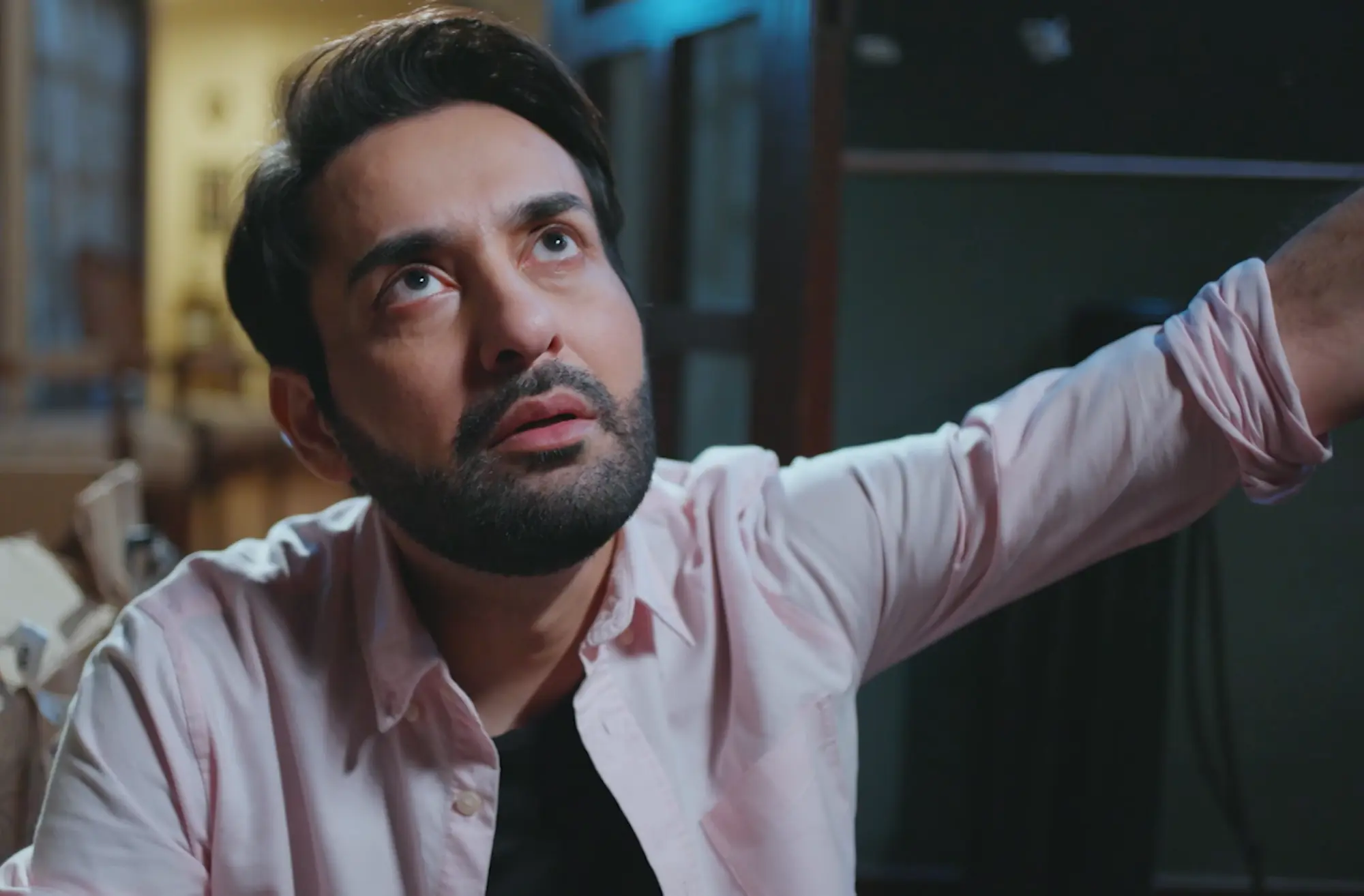
Despite these misgivings, the performances largely save the drama. Ijaz, Afghan, Farooq and Mani all stand out, bringing weight and conviction to their roles. What is particularly interesting is that you end up not fully hating the villainous characters, despite their vile acts.
Another strength of SharPasand lies in its refusal to flatten its characters into stereotypes. There is a noticeable lack of rigid gender stereotyping. Not all men are toxic — some are weak, some are foolish, and some are vulnerable. Similarly, not all women are portrayed as helpless or weepy — some are strong, some are intelligent, and some are emotionally complex.
The way the stories interweave also keeps the drama watchable. Even when individual arcs falter, the interconnectedness of the neighbourhood ensures that something is always happening.
However, there are moments of inconsistency that are hard to ignore. At times, continuity errors are quite obvious. For instance, a character claims she needs to go somewhere urgently in the middle of the night, yet when she opens the door of her house, sunlight seeps in. In another instance, a man arrives at his home’s exterior wearing a shirt, but in the next shot, he is suddenly wearing a coat indoors. These details might seem small, but in this day and age they are jarring, especially given the higher budgets of such dramas.
Still, despite these flaws, SharPasand manages to hold attention for the most part. It remains engaging, even when it is repetitive or stretched. The narrative momentum may falter at points, but the performances and interpersonal dynamics keep it afloat. And there’s always the option to fast forward!
The ending, however, feels almost deliberately cynical. Bad people do not necessarily get what they deserve, and people’s natures do not really change. There is no neat moral resolution. Instead, the drama leans into something more uncomfortable — the idea that interference, manipulation, and emotional damage often linger without clear consequences.
But then again, perhaps that’s a truer reflection of society — although it may not be the best for the moral police and those who believe that good always triumphs over evil.
Comments