
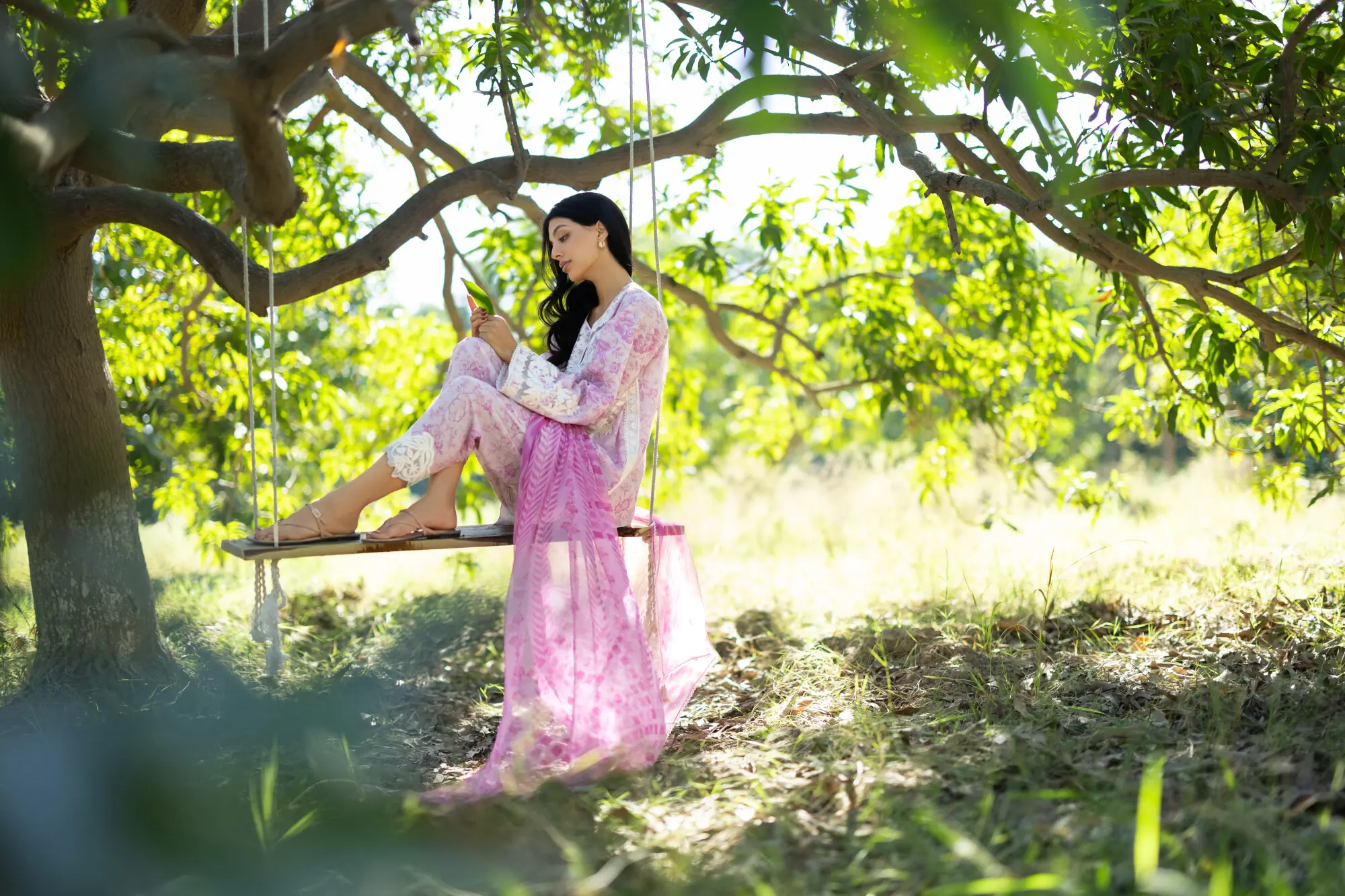
Has Pakistan’s designer lawn bubble finally burst?


Nearly three decades ago, lawn mania took over Pakistan.
It was recognised as a natural progression of fashion, with lawn — a pedestrian fabric and a summer essential — being reimagined, fine-tuned and metamorphosing into affordable designer-wear. Designer lawn surfaced and it was comfortable, glamorous and even edgy at times.
The economy was changing and this made sense. Internationally, Armani had diffused to Armani Exchange and Alexander McQueen to McQ, and young guns such as Zara and H&M had sprung up on the High Street, offering trendy looks at a fraction of the prices of their high-fashion counterparts.
In the same vein, in Pakistan, Rizwan Beyg translated his love for phulkari, ralli and paisleys on to lightweight lawn. Shamaeel Ansari turned her eye for colour, texture and print towards lawn’s mass-centric domain. Sana Safinaz also extended their sophisticated signature to designer lawn, which became recognised as a covetable, glamorous, summer wardrobe must-have.
Once a humble, comfortable summer staple, lawn was transformed into a glamorous, designer-led phenomenon during the great lawn craze over the last few years — creating new careers, challenging designers and changing consumer behaviour. And then it all seemed to end. Why?
Lawn’s golden era
Lawn was all set to take over and the customer was ready for it. While textile mills continued to bring out their own seasonal unstitched collections, almost all of Pakistan’s motley crew of designers also chose to venture down the lawn route at one point or another.
There were those who were great at it. Others struggled to translate their couture aesthetics into lawn’s massy domains. Nevertheless, most of them succumbed to the lure of selling to an avid, massive lawn customer base. If they succeeded, the profits could be huge, and the prestige of being recognised as a ‘lawn mogul’ was irresistible.
These were the days when lawn exhibits would be held at popular public venues and crowds of women would gather there at the crack of dawn, just for the love of buying a lawn suit that had them smitten.
And when a suit was sold out, customers would become even more eager to get their hands on it, willing to pay double the price if need be. There would be such a rush to be the first to wear a lawn suit that enterprising women would arrive at exhibits with buckets of water in their cars: they would buy the suit, shrink the fabric right there and then, before handing it over to the tailor immediately!
In retrospect, it all seems fantastical and unnecessary and, yet, when lawn mania raged through the country, such stories would often be heard.
Designer Zara Shahjahan — whose unstitched summer collections are extremely popular — notes, “The world and the economy changed, the middle classes became more visible and everyone wanted access to fashion. Designer lawn was an inevitable result of this.”
And yet, somewhere along the way, the designer lawn bubble burst. Many designer lawns lost the ‘designer touch.’ So what happened?
The changing lawn
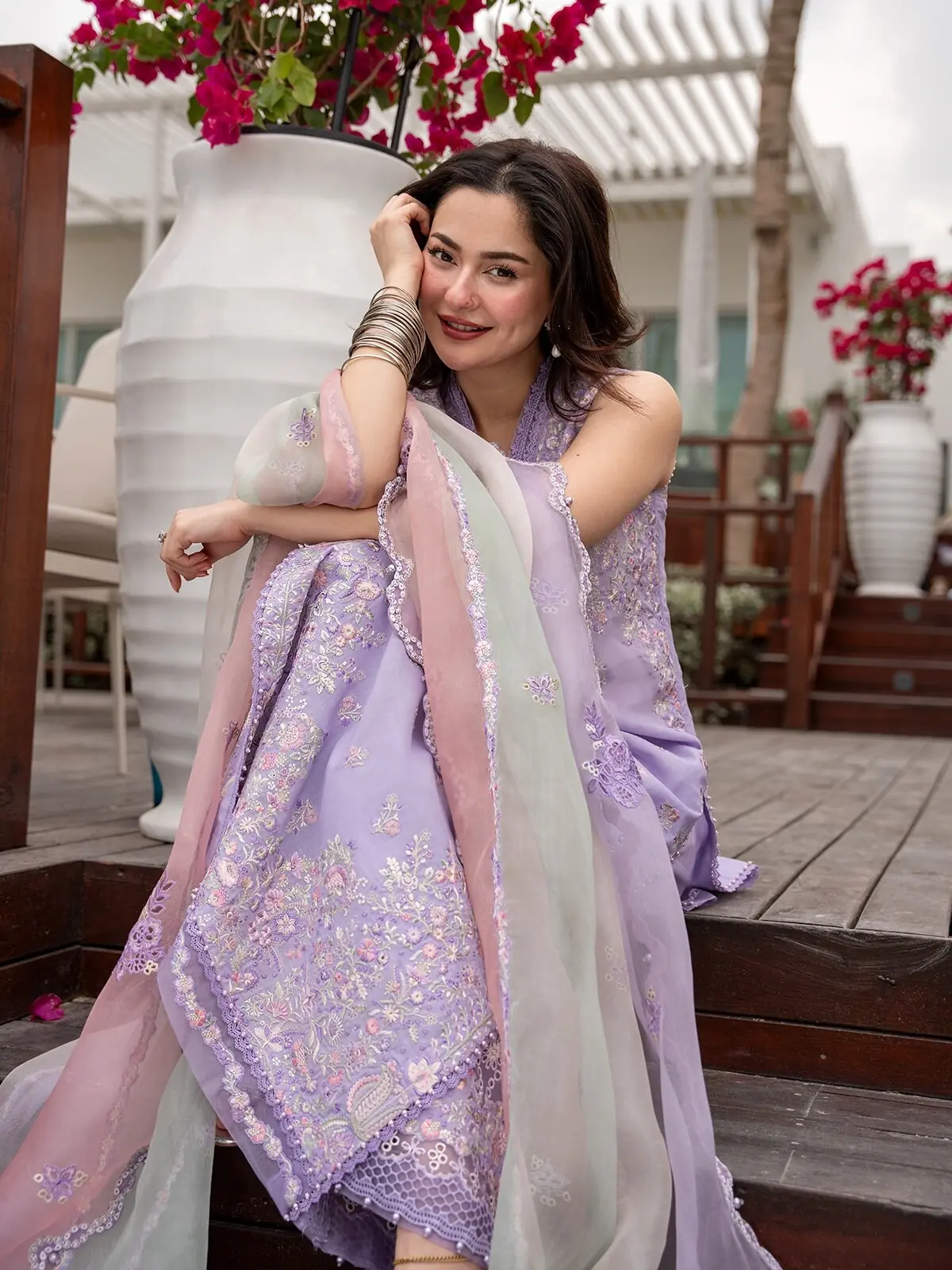
Rizwan Beyg, who spearheaded the designer lawn movement in the days of yore, says, “Lawn has always been there. Historically, it is a derivative of the Dhaka malmals that were popular in the Mughal era — a light, nearly transparent fabric that was a summer essential.”
He adds that Pakistan’s initial unstitched lawn lines came from textile mills that would just replicate Korean and Chinese digital prints on to unstitched fabric, which had no cultural relevance. “Designer lawn changed all that,” he says. “I added traditional elements characteristic of my aesthetic to the lawn collections I designed. For the first time, designer-wear became accessible to the mass market, available to all and sundry.”
But then something else happened.
“In the early days, a lawn design relied on print, screen, blocks and digital prints,” says Rizwan. “When designer lawn gained popularity, investors entered the market and focused entirely on gaining a larger share of the market. Price wars began and, suddenly, what used to be a simple summer staple for every woman became a bridal outfit masquerading as lawn.”
The creative and not-so-creative sides of lawn
The mad rush to entice customers led to what Rizwan aptly describes as a jhanjhalpura [a state of chaotic excess]. The basic cotton suit began to come with multiple add-ons: embroidery, additional borders that could be appliqued, chiffon, silk and organza swathes, cutwork and even smatterings of sequins.
The three-piece lawn had transformed into an eight-, then 12-, then 16-piece jigsaw puzzle!
Lawn campaigns were in a rat race of their own, with designers opting for exotic locales to add oomph to a collection. The elaborate lawn suit started being photographed in places where you would never dream of wearing lawn! Embroidered shirts would sway down the cobbled streets of Rome, a dupatta would flutter against the backdrop of the Mediterranean Sea, models would wear their high heels and navigate mountain tops, beaches and heritage sites in all their luxury lawn glory.
Touted as the ‘queens of lawn’ back when designer lawn was still trendsetting, Sana Safinaz would rule the summer sartorial season.
Designer Safinaz Munir recalls, “Our aim when bringing out unstitched lawn collections was to provide amazing fashion at affordable prices. Earlier, lawn was relegated to daywear, while women wore polyester as formal wear. We introduced lawn as an option for evenings. The fabric would be comfortable but also very formal. Every year, we would experiment and innovate.”
She explains that her team introduced chikankari bases, incorporated silk, added laces, and experimented with silhouettes. One year, they focused on the straight pant as an alternative to the shalwar, while in another, the white shalwar dominated their collections. They also dabbled in paste-printing, to prevent see-through shalwars, popularised new colourways, and innovated with digital embroideries.
Safinaz Munir adds, “We would produce our collections in large quantities, so that when a lawn suit would sell out, it would not be because stock was limited. It was because people had truly loved the design and bought it all!”
In all the madness, though, many designers were forgetting the whole point of designer lawn: to offer creative, original designs at an affordable price to the mass market.
“Designer lawn was supposed to offer customers a slice of high fashion, and introduce sharp, trendy options in the mass market,” argues veteran designer Maheen Khan. “Instead, Pakistan’s sartorial tastes deteriorated — from wearing starched dupattas and darted shirts we went on to wearing outfits drowned in nine separate pieces that the tailor could hardly figure out how to put together!”
She adds: “Just when fashion in Pakistan was finding its voice — structure, education, identity — it was hit by a massive lawn wave. Fast, loud and commercial, it washed away nuance, craftsmanship and depth. Fashion didn’t evolve — it drowned. And lawn took its place. Big brands took over and smaller fashion ateliers closed their doors.”
Lawn as a launchpad
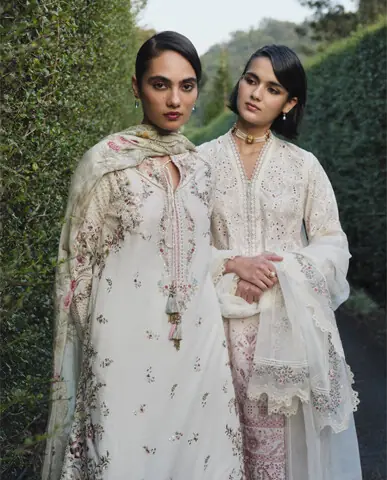
Designer Kamiar Rokni, whose occasional trysts with lawn have always reflected his traditional, colourful ethos, agrees that lawn may have dumbed down actual design.
“Design is a creative endeavour that primarily caters to a niche clientele,” he says. “Lawn is a translation of this aesthetic, but design gets limited because the focus is on creating clothes that appeal to the masses. There is very little experimentation with silhouette or innovation with pattern-making.
“However, one can’t deny how lawn has transformed fashion. Credit goes to designers such as Hussain Rehar and Zara Shahjahan, who offset the ‘massiness’ of their product by elevating how it is presented. Creative campaigns, combining striking imagery and videos, have become the norm, opening doors for a young generation of creatives in their careers.”
Zara Shahjahan points out that lawn gave her and many other designers the opportunity to build their brands. “A brand like mine started off without any major investor on board and lawn was a lucrative venture, allowing me to earn enough to bring out more collections, open stores and invest in campaigns.”
Designer Faiza Saqlain adds that lawn gave her the opportunity to tap into a market that could not afford her luxury-wear. “Designing lawn was an eye-opener. My luxury formals and wedding-wear cater to a niche clientele, but there are so many others who find lawn to be a more economical option. A lot of women also prefer buying unstitched suits and having them tailored according to their body type.”
She continues: “My lawn collections are launched following detailed evaluations of the market. If Eid falls in the summer, around the same time that lawns enter the market, my focus is on coming up with a festive aesthetic, while sticking to the lawn fabric. There are also specific colourways associated with my brand that I like to translate to lawn.”
Does lawn dilute a brand’s aspirational value?
However, does lawn — affordable, easily available, boasting the name of a famed couturier — strip away aspirational value from fashion?
When labels, hitherto considered exclusive, suddenly start selling unstitched packets of lawn from the friendly cloth vendor on Karachi’s Tariq Road, do they suffer from becoming too accessible?
For Sania Maskatiya, the unstitched domain has been an inevitable extension of her label, offering options to customers on the search for formals in lightweight fabrics.
“Unstitched collections do not dilute our brand’s presence,” she maintains. “There are customers who enjoy wearing lawn. Others are on the search for more affordable options. We create our unstitched lines just like we design all our other collections, coming up with design elements that appeal to us.”
She adds that her brand doesn’t compromise on quality, which is why their summer unstitched line remains relatively expensive and niche. “The brand losing its impact over the market has never been a concern for us. In fact, our main priority has been to have our supply chains sorted and our design team organised so that we can cater to the demands for summer lawn efficiently.”
On the other hand, designer HSY counters, “A brand might lose aspirational value when dabbling with lawn, and we have seen this happen in some cases. The ones that have lasted in the long run are those that have stayed relevant with original designs, and worked in developing narratives that make their campaigns stand out.”
One remembers HSY venturing into the lawn market as well, more than a decade ago. His particular vision for unstitched stayed true to the glamour associated with his brand, with a lawn-clad Mehreen Syed on a private boat zooming along the Dubai coastline or reclining in a Rolls Royce Phantom. Why did he opt out?
“I realised that it would have been the death of my brand,” he says. “My brand’s ethos has always been very luxurious and I cater to a market where pricing and brand positioning are very important. Lawn’s mass market did not resonate with what customers expected from my brand.”
There were many other designers who had eagerly hopped on to the lawn bandwagon back when the fabric was considered the ultimate summer sensation, only to hop off it later, losing interest in the ride. Today, designer lawn — or rather, unstitched collections, since they include so much more than basic cotton — that remain in demand are those that truly reflect a brand’s unique aesthetic.
However, the fact remains that there are many lawn labels that are entirely forgettable, lost in a sea of embroidery, with no decipherable ethos. Has fashion’s lawn bubble finally burst?
One could say so. But before it did, it introduced new career paths in the industry, as the demand for innovative lawn campaigns heightened. Not to mention that it made the mass market more familiar with Pakistani fashion brands. But let’s not forget that, in many cases, it also did the Pakistani woman a disservice, brainwashing her into thinking that an 18-piece suit, drowned in embellishments, was actually ‘fashion’.
Lawn didn’t just change what Pakistani women wore, it left an indelible mark on Pakistan’s sartorial landscape, shaping both designers and customers, for better or for worse, for generations to come.
Originally published in Dawn, April 12th, 2026
Cover: Sania Maskatiya lawn
Comments