
Review: Trauma, toxicity and a thirst for traction — what’s wrong with Meri Zindagi Hai Tu


Before the Ramazan slowdown, when television viewing traditionally declines as people prioritise their spiritual pursuits, ARY’s prime time serial Meri Zindagi Hai Tu (MZHT) had achieved blockbuster ratings across every metric. Not wanting to lose the momentum that had gathered in Pakistan — and overseas — producers scheduled the final episode for the second day of Eid.
Starring Bilal Abbas and Hania Aamir — two of television’s most bankable stars — the drama definitely had star power in its favour. Combined with Musaddiq Malek’s direction and Radain Shah’s script, it seemed like a guaranteed hit.
However, in many ways, MZHT becomes a case study in how even the best ingredients — stars, solid director, big budgets and hype — cannot make up for weak narrative discipline and ethically dubious storytelling. It also raises questions about what our television industry is choosing to glorify.
The rise and rise of the toxic hero
MZHT continued the trend of toxic male heroes in Pakistani TV.
Radain Shah had earlier bucked the trend for wholesome heroes with Shamsher (Danish Taimoor) in Kaisi Teri Khudgharzi (KTK), a character defined by privilege, entitlement and emotional instability. The drama, despite heavy criticism, became a ratings phenomenon, proving something very important: audiences will watch — obsessively — stories about obsessive men.
With blockbuster ratings and a devoted fanbase, the recently concluded drama should have been a cause for celebration. But behind the glamour and viral moments, it shows how Pakistani television increasingly rewards moral equivocation, sensationalism and toxic masculinity
Some of this rebel-without-a-cause character template was perhaps ‘inspired’ by Indian films such as Arjun Reddy and Kabir Singh. Pakistani television added its own spin to this trope: wealthy, emotionally damaged men whose misdeeds are forgiven because they “love deeply.”
For example, in KTK, Shamsher hounds, threatens and coerces the obviously unwilling female lead, Mehak (Durrefishan Saleem), into a relationship. This would normally have been characterised as villainous or dangerously negative behaviour, but was instead rewarded with blockbuster ratings.
The success of such characters revealed something important about audiences: toxicity sells, not complexity, subtlety or nuance. And once a formula works, it is repeated — and MZHT is no exception; in fact, it takes the formula two steps further.
The problem is not that television shows flawed men. The problem is that television repeatedly rewards these men without demanding genuine accountability and the male protagonist is almost always emotionally unavailable, psychologically damaged, rich, powerful and cruel — until he falls in love. Love then becomes redemption, justification and absolution, all rolled into one.
Wealth, power and no accountability
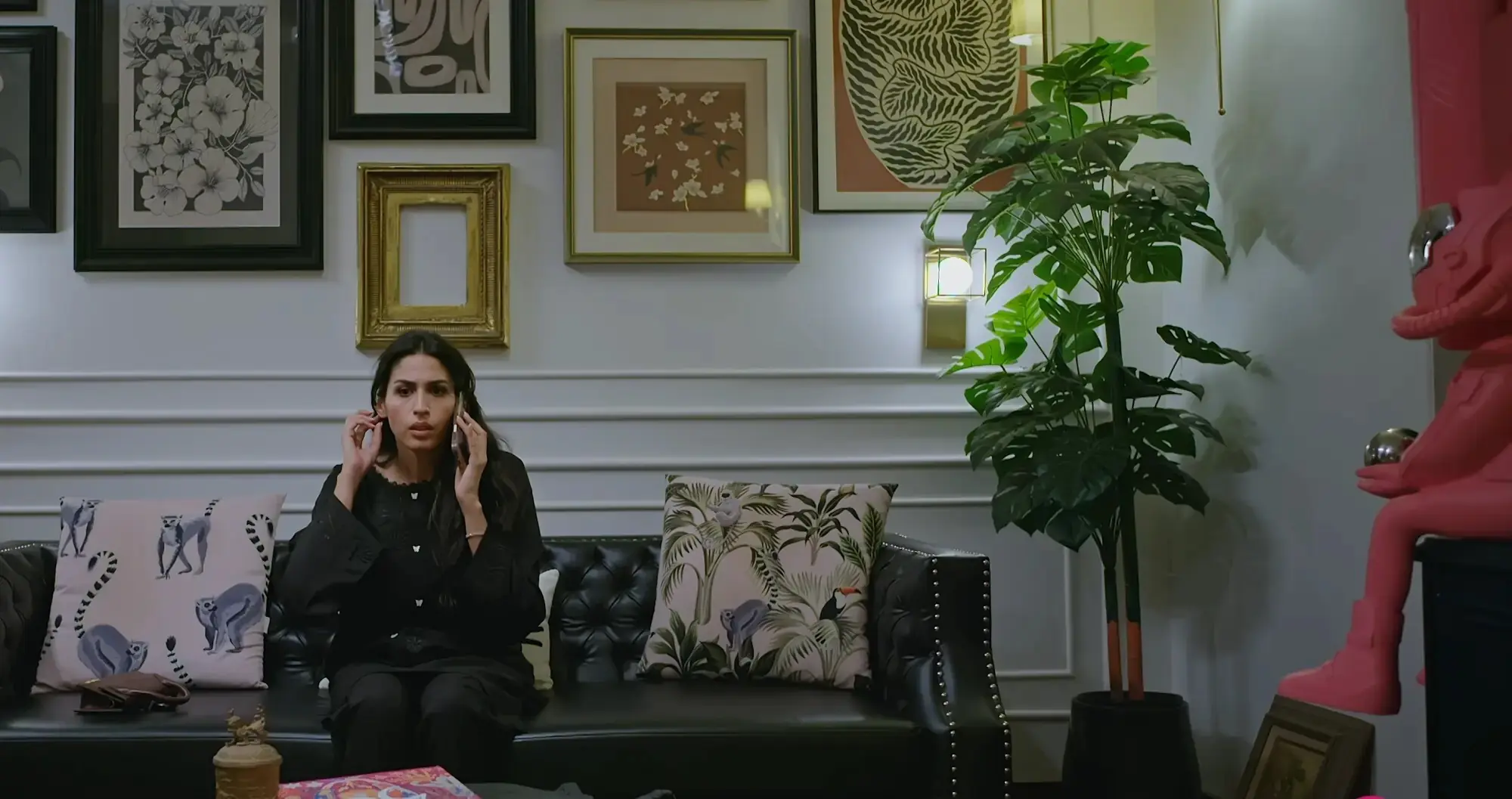
Another defining feature of this genre is that the hero is almost always wealthy and powerful and consequently, accountable to no one. Wealth is depicted not as earned but as a licence for moral freedom — even moral immunity.
The protagonist Kamyar’s main defence in MZHT is his wealth. It enables him to act carelessly, make disastrous choices and still win over the audience. The degree to which this has become normalised is deeply concerning. The affluent, poisonous hero is now the hero rather than the antagonist. His actions are never questioned, his behaviour is always excused, justified and even romanticised and he is usually redeemed at the end of the drama.
Class snobbery and a lack of consequences seem to attract and excite audiences rather than repulse them, at least when wielded by rich, well-groomed and good-looking young actors, as well as the spirited (but eventually compliant) heroines they chase and usually attain. In a country where arranged marriages are the norm, the idea that a man might want nothing but one woman, without the usual qualifiers, seems to have tapped a nerve.
This new urban fantasy, rooted in materialism, contrasts sharply with traditional South Asian folklore, like Heer Ranjha or Umar Marvi, where love triumphs over power and wealth and earlier Pakistani dramas that celebrated moral, family-oriented heroes.
Kamyar: trauma without responsibility
In MZHT, the male lead, Kamyar (Bilal Abbas), is an emotionally damaged and broken individual shaped by his bickering, unforgiving, bitter parents (Adnan Jaffar and Arjumand Rahim) and a home that is, for the most part, devoid of warmth or connection.
He struggles with alcohol, drugs and an empty social life, using and discarding women without remorse. His only deep connections are his close friend and ex-girlfriend, Fariya (Vardha Aziz), and his grandmother (Shameem Hilaly). His household is modern, materialistic and secular.
For fans of Indian and Turkish serials, this is a familiar pattern: the disconnected young man from an elite family, who is attracted to a strong yet largely conservative girl, who will reconnect him to family life. MZHT follows this formula but also uses trauma as an excuse rather than an explanation.
Violence as romance
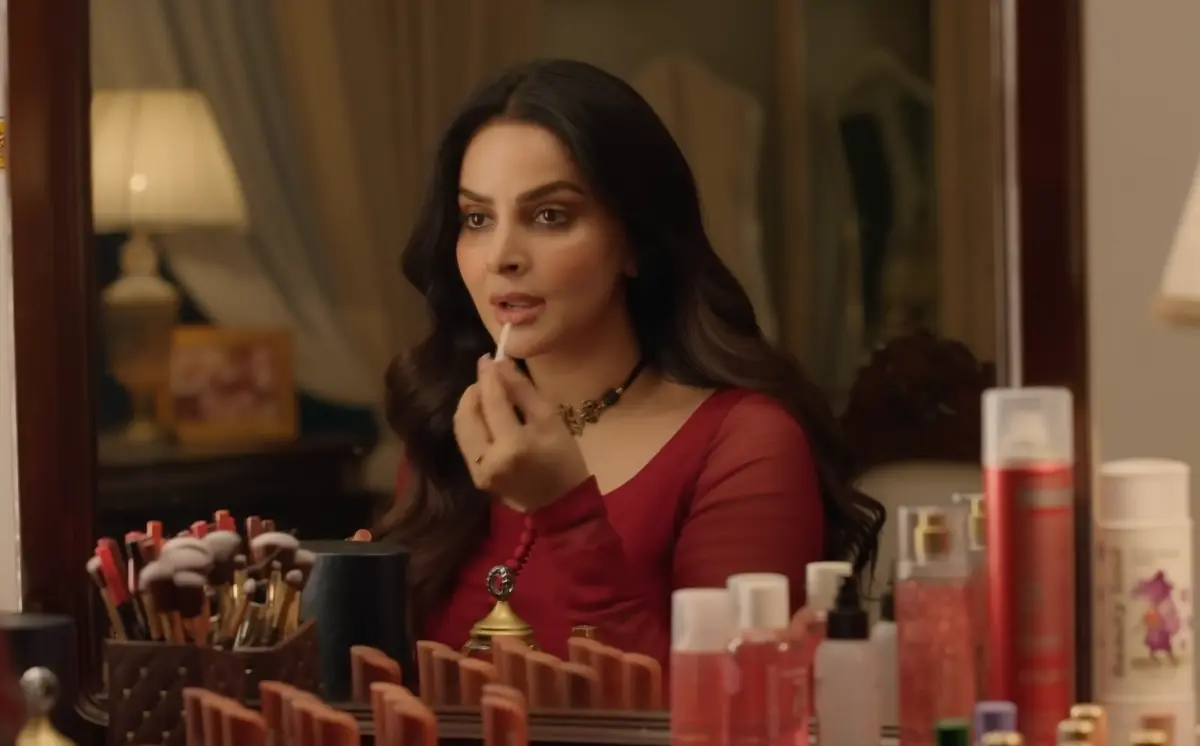
Kamyar’s first interaction with the comfortably upper-middle-class Dr Ayra (Hania Aamir) shocks him, as he is not used to getting pushback from anyone.
His next move: setting fire to her brand-new car, a gift from her father (Alyy Khan). The burning car in a respectable, well-lit street, with him casually standing by, making zero attempt to hide, would have chilled a normal woman. However, instead of cowering, Ayra slaps Kamyar and her ridiculous bravery causes him to fall in love with Ayra.
This mirrors what we saw in KTK in which Mehak slaps Shamsher. This “slap and fall in love” moment is increasingly becoming a recognisable trope in many television romances — where conflict and harassment are portrayed as chemistry.
In the real world, setting a car on fire would result in a police report and a psychiatric evaluation, but the makers of MZHT give us an intense visual spectacle, a dopamine hit so high that we forget the danger and inherent violence of Kamyar’s behaviour and begin to root for the romance.
This is perhaps the most revealing moment in the drama, because it shows how dramas are increasingly confusing intensity with love. Grand gestures — even violent ones — are framed as proof of passion. Calm, respectful behaviour, on the other hand, is often depicted as boring.
Television has repeated this formula so often that it has created its own emotional logic: cruelty first, love later; humiliation first, devotion later; violence first, redemption later. The audience is conditioned to expect this pattern — and increasingly, to accept it.
While the sensible Dr Ayra wants nothing to do with him, Kamyar tries everything he can think of to bring her closer to him. His immature mind cannot comprehend how a respectful relationship works and every mind-numbing, foolish attempt he makes is thwarted by his behaviour.
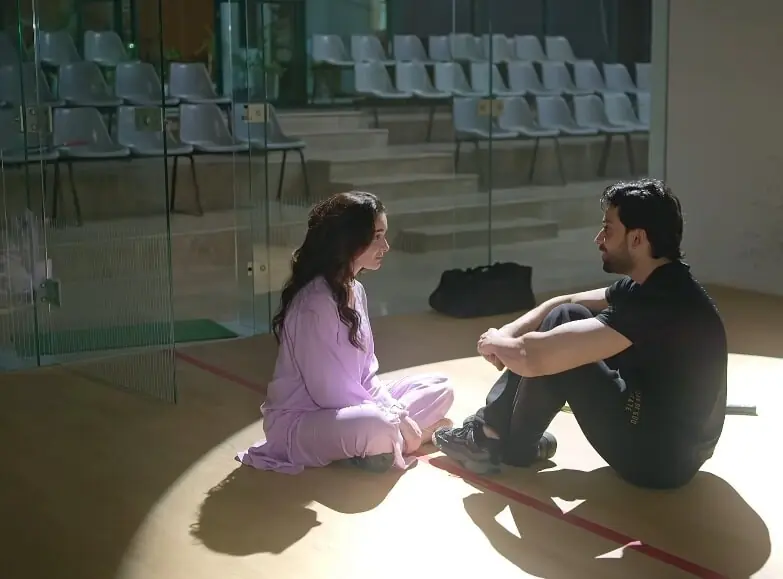
This is where the script takes a turn for the better: Kamyar tries to improve himself. He finally takes an interest in managing the company left to him by his grandfather and takes on a corrupt union. Much to the audience’s joy, Ayra finds this new, subdued Kamyar attractive and, to the team’s credit, we get a beautifully acted and presented, low-key confession of love at a squash court.
This shift should have marked the true turning point of the drama — where growth replaces obsession — but the story soon returns to old habits.
The plot twist: crime without consequences
The roller coaster of romance seemed to have hit an early high, with a wedding planned and a newly reformed Kamyar. However, the path of true love is never easy and the villains play their part in destroying this newfound happiness.
Here, the drama takes a darker turn, exploiting sexual assault and cybercrime in a sensationalised manner, perhaps to drive viewership.
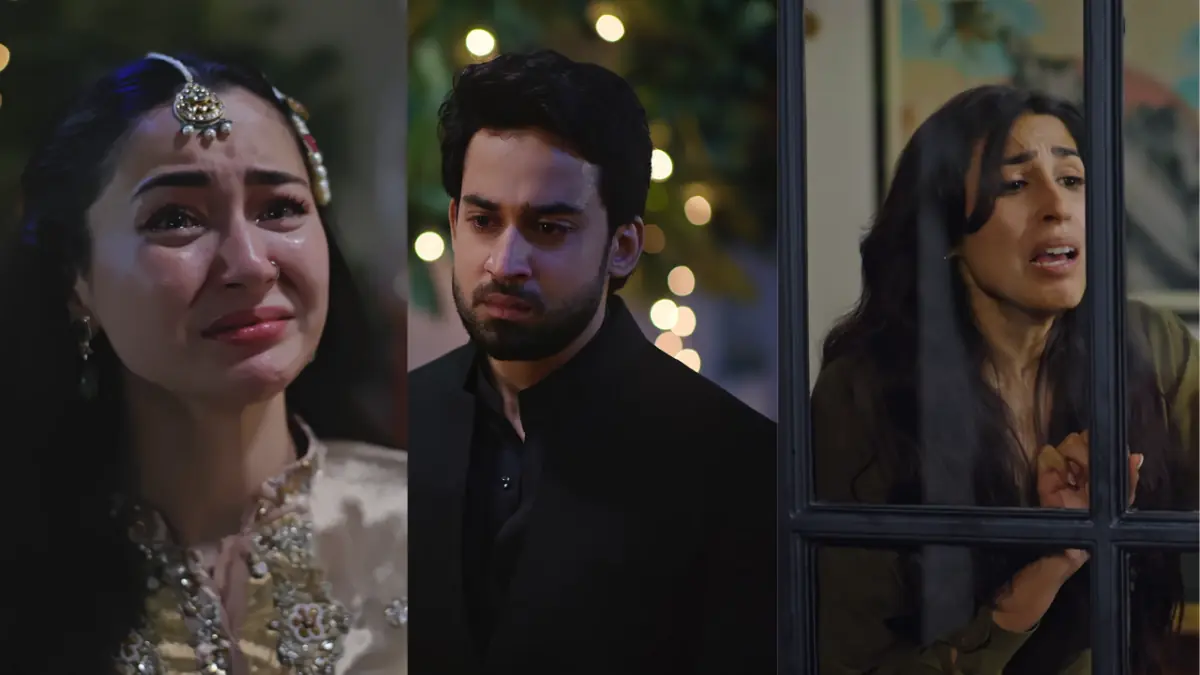
Fariya and Khawar (Ali Rehman) — another aspirant for Ayra’s hand — persuade one of Kamyar’s formerly jilted girlfriends to drug him and film an inappropriate video with him. Through some miracle, the video is released on every guest’s cell phone, moments before the nikaah.
The fallout from this is completely believable, as any woman in her right mind would back out of a wedding after a sexually explicit video of her fiancé with another woman is taken a day before their wedding. Kamyar is publicly disgraced and deeply hurt, but this is where the script takes an off-ramp from reality.
When the truth of his “innocence” comes to light, even though he is upset with the perpetrators, his anger remains focused on Ayra, whom he continues to demean and punish for not believing in him. On the other hand, he spends a lot of time with Fariya, despite learning that she was the brains behind the video and even helps the woman filmed with him relocate to Dubai.
Unfortunately, serious issues such as sexual exploitation and digital blackmail are sensationalised rather than addressed meaningfully. Instead, they are used as shock devices — plot twists designed to trend on social media and generate YouTube views.
The serial Aik Aur Pakeezah, playing concurrently on Geo TV, explores the consequences of a leaked video far more effectively. The protagonist, Pakeezah (Sehar Khan), is forced at gunpoint to record a video with her fiancé, Faraz (Nameer Khan), by Yaseen (Ali Jan). Writer Bee Gul and director Kashif Nisar carefully draw out the victims’ PTSD, their agony at the loss of privacy and their crumbling trust in relationships. Excellent performances capture every trembling nuance.
Ali Jan as Yaseen presents the epitome of banal evil: the average young man next door whose mediocrity masks a cruel disposition. Contrast this with Fariya, who commits the same crime but is portrayed as a jealous, lost soul — another woman excused for her tragic backstory. Yaseen faces no excuses; his choices define him.
Fariya: the other woman trope
However, it is safe to say that Fariya’s character is an essential part of this trope. Despite every advantage in life, she has no self-respect. Ignoring rejection after humiliation after humiliation, she keeps clinging to Kamyar and plotting against his true love.
Similarly, Haya (Sabeen Farooq) from Tere Bin and Sofia (Shehzeen Rahat) from KTK were both intelligent women from well-to-do families who spent their lives chasing a man for a mythical status they already possessed.
This brings us to another new and recurring trope in Pakistani dramas: the educated, wealthy woman who becomes obsessive when rejected. Clearly, obsession is the order of the day.
As mentioned earlier, Kamyar renews his friendship with Fariya even after he finds out she is responsible for the video. This gives her another chance to create another misunderstanding between the lead pair. MZHT did not have to take this route, but once that decision was made, the production team should have balanced ethics and logic with the need to achieve ratings.
Kamyar’s continued association with Fariya after her crime highlights the script’s core weakness. His behaviour makes little emotional or moral sense.
But it makes perfect sense if the goal is to prolong the drama, create more confrontations and keep audiences clicking on to the next episode.
The rise of YouTube-driven metrics has fundamentally changed how Pakistani dramas are written. Episodes are now structured around “moments” — confrontations, reveals, slaps, breakdowns — that can go viral as clips. In this structure, narrative coherence becomes less important than momentary impact. Stories no longer build; they spike. MZHT increasingly feels engineered around viral moments rather than organic storytelling. The result is a drama that moves constantly but evolves very little.
Quite a few writers have spoken out about the changes producers make to their scripts, prioritising viral, commercial moments over the integrity of the story or unnecessarily lengthening the drama to increase advertising revenue. It seems that dramas are now written and edited with “viral moments” in mind — scenes designed to trend on social media rather than serve the story.
The actors save the day
No matter how crazy the plot twist or weak the ending, our actors carry the public’s interest by taking their roles seriously. Bilal Abbas and Hania Aamir’s screen chemistry is one of the biggest reasons for the show’s success and, despite the earlier mentioned flaws, the drama remains watchable largely because of its two leads.
Bilal Abbas brings vulnerability to Kamyar, making him more sympathetic than the writing sometimes deserves. Hania Aamir brings warmth and emotional intelligence to Ayra, grounding the drama whenever it drifts into melodrama.
Even when the script reduces Ayra to a self-sacrificing heroine, Hania manages to give her dignity, warmth and emotional strength. Ultimately, both excelled in their emotional scenes of connection and romance and their screen presence made up for many of the random, illogical plot turns.
The supporting cast, including Adnan Jaffar, Arjumand Rahim, Alyy Khan, Javeria Abbasi (who plays Ayra’s mother) and Shameem Hilaly, delivers excellent performances, keeping the audience tuning in.
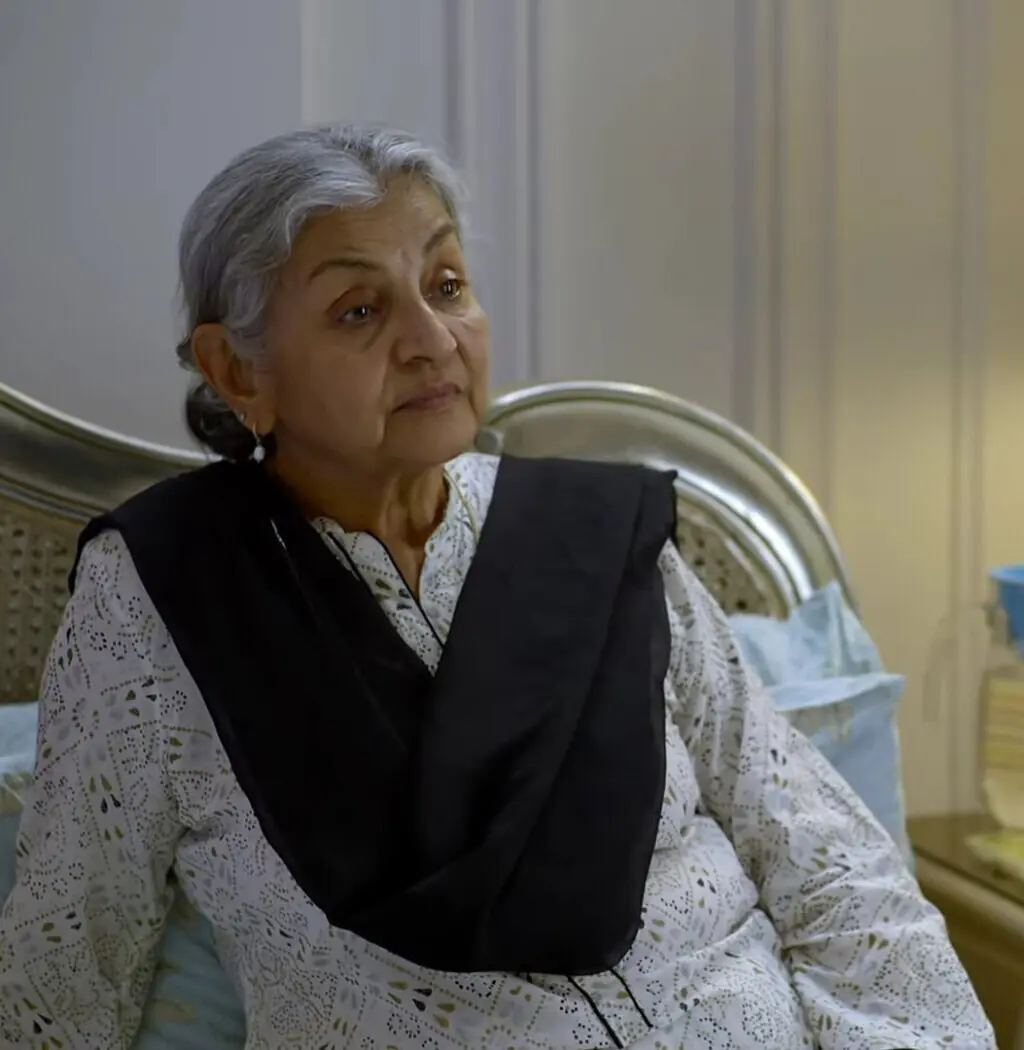
Shameem Hilaly brought quiet strength as the grandmother navigating the burden of supporting the relationships of two generations. Alyy Khan also stood out as an, at times, bewildered but always loving father of two daughters — Ayra and her sister Falak (Meher Jaffri) — who thought he had immunised his daughters from the whims of fate that women face in a conservative society.
In many ways, the actors rescue the script from itself, creating emotional continuity even when the writing does not. This is not easy to do, especially in a drama where characters are often required to behave inconsistently in order to sustain the plot. However, most of the actors manage to maintain audience investment even when the narrative falters — which perhaps explains why the drama remained so popular despite its flaws.
A romance that (almost) worked
What should have been an amazing emotional ending was somewhat marred by a focus on keeping the romantic angst burning.
Instead of episodes of Kamyar punishing Ayra to give us a mazloom aurat (helpless woman) melodrama, why didn’t they show him navigating his way towards healing and accountability? That would have made for a much more compelling and interesting narrative rather than being rushed. However, the lead couple’s final resolution on an aeroplane was a pleasant surprise, made sweeter by Kamyar’s journey to humility and the true meaning of love.
For viewers rooting for their romance, the ending was a moment of healing and complete satisfaction. The only sour note was the strange and sudden rehabilitation of a Machiavellian villain like Fariya, who was seen once again at the couple’s finale celebration.
Director Musaddiq Malek’s finesse, the strong performances and high production values made the drama visually and emotionally engaging. However, Radain Shah’s premise had the potential to explore trauma, obsession and redemption in more meaningful ways. Instead, the drama gradually seemed to have been driven by ratings pressure, viral moments and the commercial appeal of a toxic romance.
This is perhaps the most important takeaway — MZHT is a reflection of where mainstream television stands today. An industry once known for strong storytelling is now increasingly driven by algorithms, advertising and audience metrics.
Toxic heroes thrive, consequences disappear, trauma becomes spectacle and love — somehow — redeems the toxic hero no matter what he does while the initially spirited woman becomes docile, subdued and quietly surrenders.
The drama may be a blockbuster. But it is also a warning sign.
Originally published in Dawn, ICON, April 5th, 2026





Comments