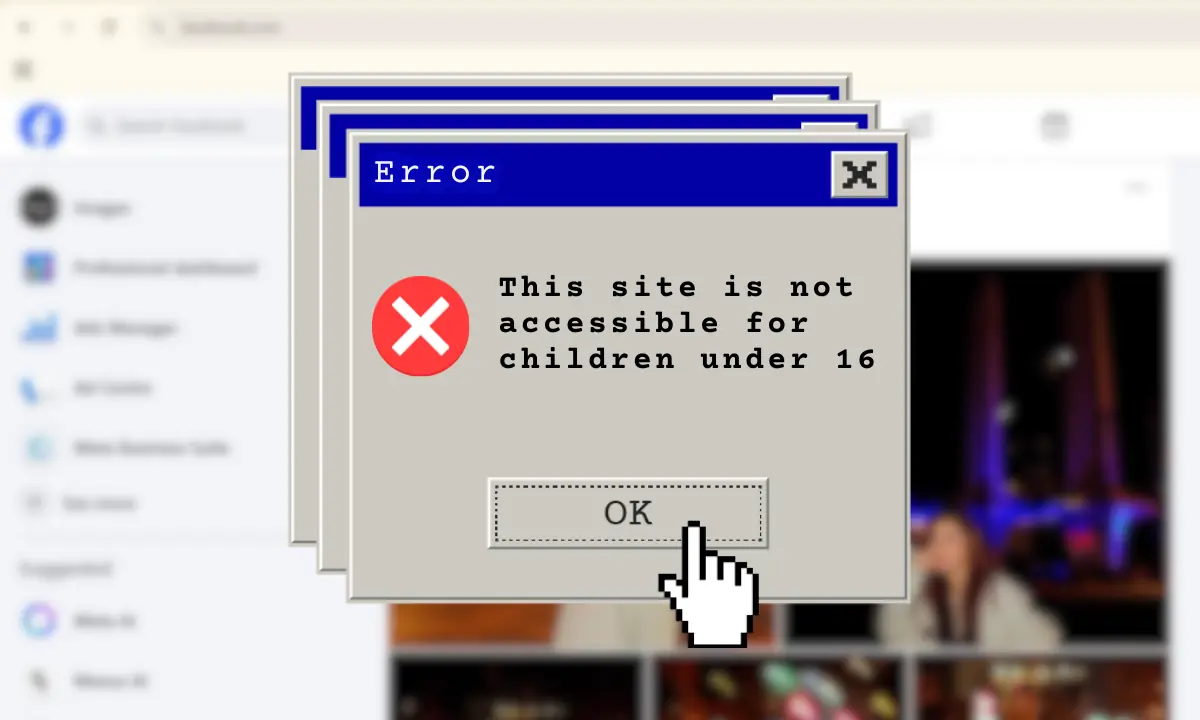
Indonesia moves to ban social media apps, Roblox for children under 16


Indonesia is set to become the latest country to ban social media for children and teens after the government announced widespread restrictions on the use of online platforms.
Minister of Communication and Digital Affairs Meutya Hafid said she had approved regulations restricting the use of “high risk” applications YouTube, TikTok, Facebook, Instagram, Threads, X and Bigo Live for users under 16. The popular online game Roblox is also on the government’s hit list.
Deactivation of accounts held by minors is set to start from March 28 in a gradual transition process.
In a statement, she explained the rationale behind the move. “The basis is clear. Our children face increasingly real threats. From exposure to pornography, cyberbullying, online fraud, and most importantly addiction.” The minister said “parents no longer have to fight alone against the giant of algorithms” now that the government has entered the ring on their side.
Acknowledging the move might not be popular among those affected, Hafid said, “We realise that the implementation of this regulation may cause some discomfort at first. Children may complain and parents may be confused about how to respond to their children’s complaints.”
Parents, however, appeared happy with the measure. “As a working mum with two children, especially with a teenage son, I don’t have much time to constantly monitor what my son is doing in the digital world,” one mother, Amanda Kusumo, told the BBC in response to news of the ban.
“With government regulations like this, it really helps ease our worries as parents,” she said. “I’m confident that the government’s decision will ultimately bring positive benefits for both children and parents.”
Her 17-year-old son Matt Joseph was somewhat less thrilled, saying, “It’s true that children still can’t fully manage their own screen time or control themselves when using their phones. But if the government chooses to completely block all platforms considered ‘risky’ for them, I feel there might be a gentler, wiser way to approach it.”
He said the government would do well to provide alternative sources of entertainment for young people, like improving television programming in the country.
Harianto, a Jakarta resident, felt the ban didn’t go far enough, telling The Guardian, “As parents, we hope that online gambling and pornography websites can also be removed. So, in a sense, the government must also be fair. This is for the sake of the people themselves, for the children, and for the children’s growth and development.”
Indonesia follows Australia’s lead, where social media was banned for children under 16 last year. The ban took effect in December ahead of summer holidays in the country. There have been calls for gaming-related platforms like Roblox and Discord to be included in the ban.
Similar measures are under consideration in France and Turkiye, while Portugal has passed reforms to require parental consent for users under 16 to join social media platforms.
In Pakistan, the Lahore and Islamabad high courts received separate petitions requesting curbs on the use of social media by minors. Both cases cited Australia’s ban as an example of positive policymaking.