
‘Are you good people?’: The Process of Convincing is a dystopian take on parenthood


What if having a child required permission from the child itself? What if adults had to demonstrate their moral aptitude before being allowed to become parents? And what if the familiar Gen Z refrain, we never asked to be born, was not seen as provocation, but became a policy?
In his science fiction play The Process of Convincing, Bilal Ahmed approaches these ideas with humour and eccentricity, staging them through the tedious bickering of a couple trying to conceive a child to save their turbulent marriage. Except they’re trapped in a dystopian alternate reality shaped by the “stoppage,” where parenthood must first be approved by an unconventional doctor and a being that does not yet exist.
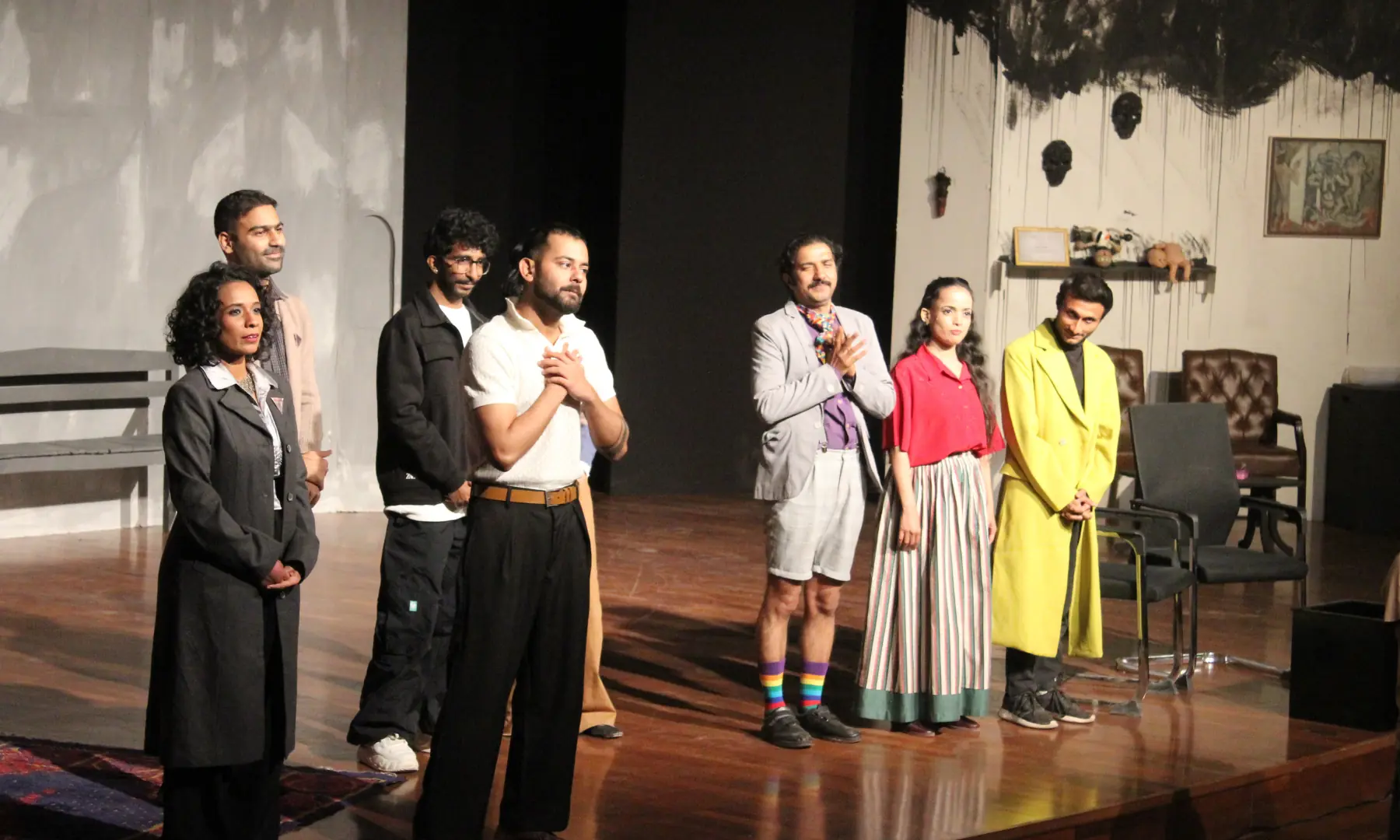
Following its pilot run in November, the play returned to Karachi for three days at the National Academy of Performing Arts, from December 19 to 21. Directed and written by Ahmed, who also played a leading role, the cast included Manal Siddiqui, Zulfiqar Ghouri, Ameed Akber, Iqra Kainat, and Saad Rasool.
The first scene opens with a married couple, Maria and Asher (played by Siddiqui and Ahmed), arguing nervously before an appointment at a doctor’s clinic. Unsure and anxious, they are, like many other married couples, forced to hide their frustrations behind a facade before leaving the house. “We’ve been waiting 13 months for this day. This is what we wanted the most, right?” Asher tells a reluctant Maria, to which she responds, “What if we go there and they decide to reject us?”
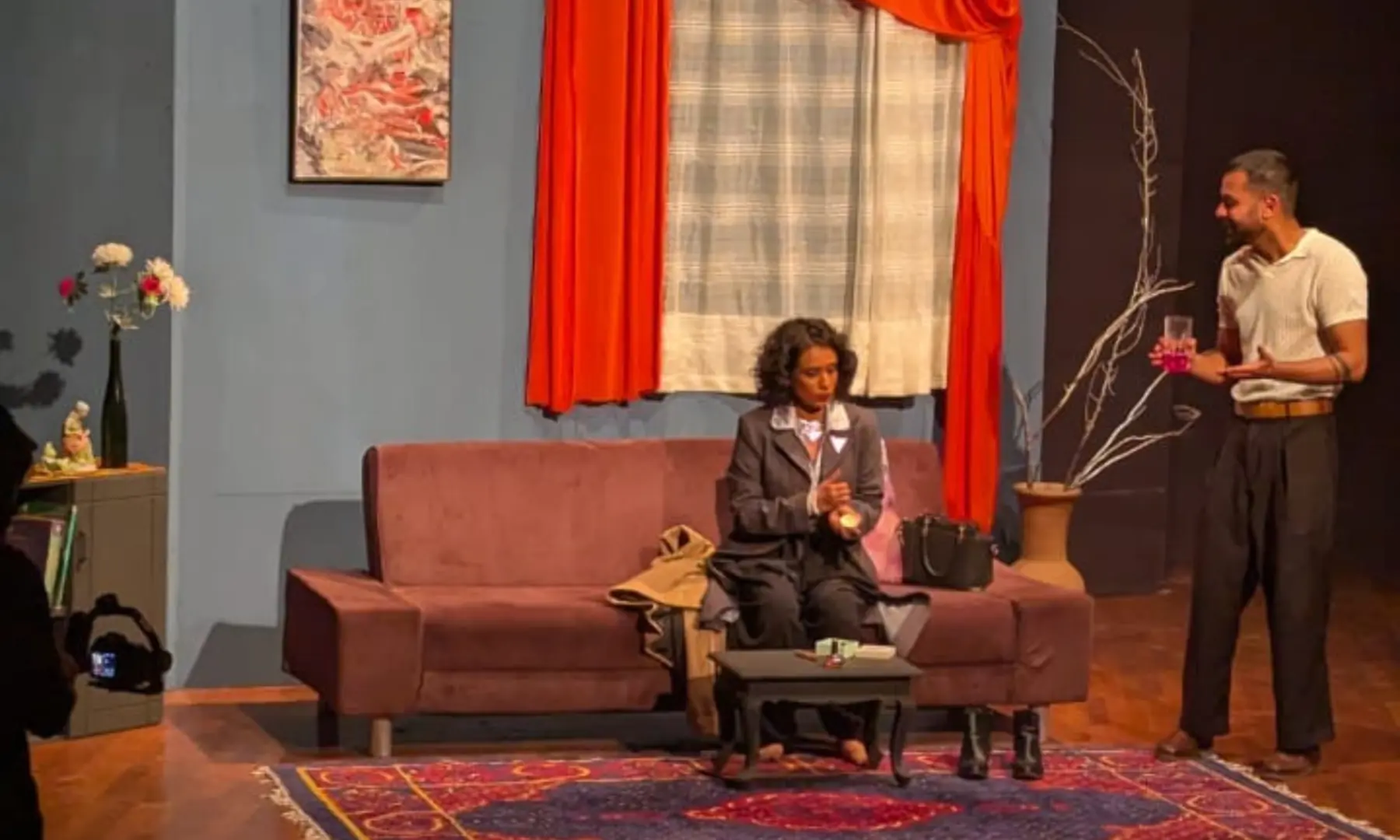
After a series of seemingly trivial squabbles, ranging from Asher’s business deals to vague references to the “stoppage,” Asher reassures Maria of their decision. “It’s okay; we’re good people,” he says.
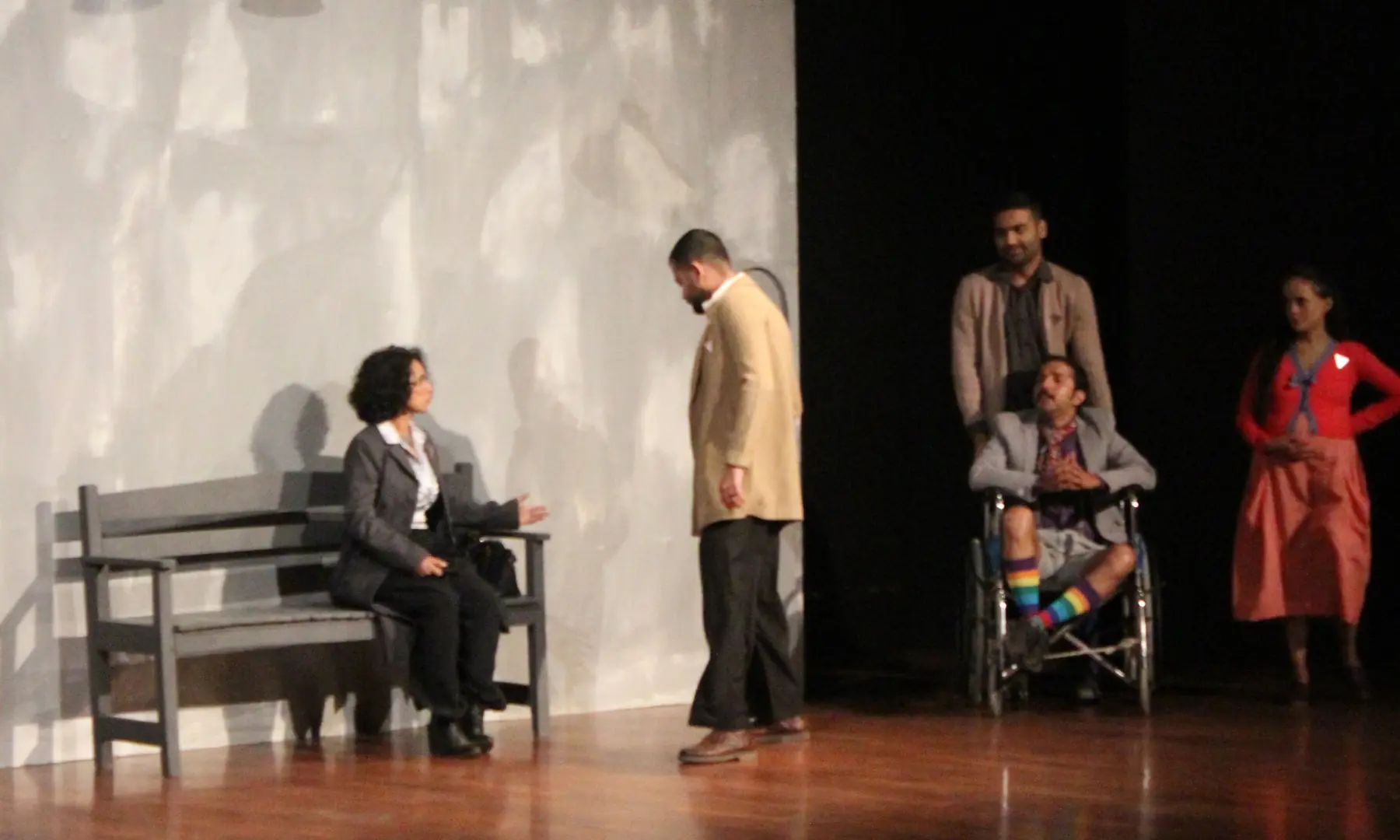
The play then shifts to the next scene, opening with Asher humming Frank Sinatra’s ‘Fly Me to the Moon’ as he paces back and forth while the two wait at the doctor’s clinic.
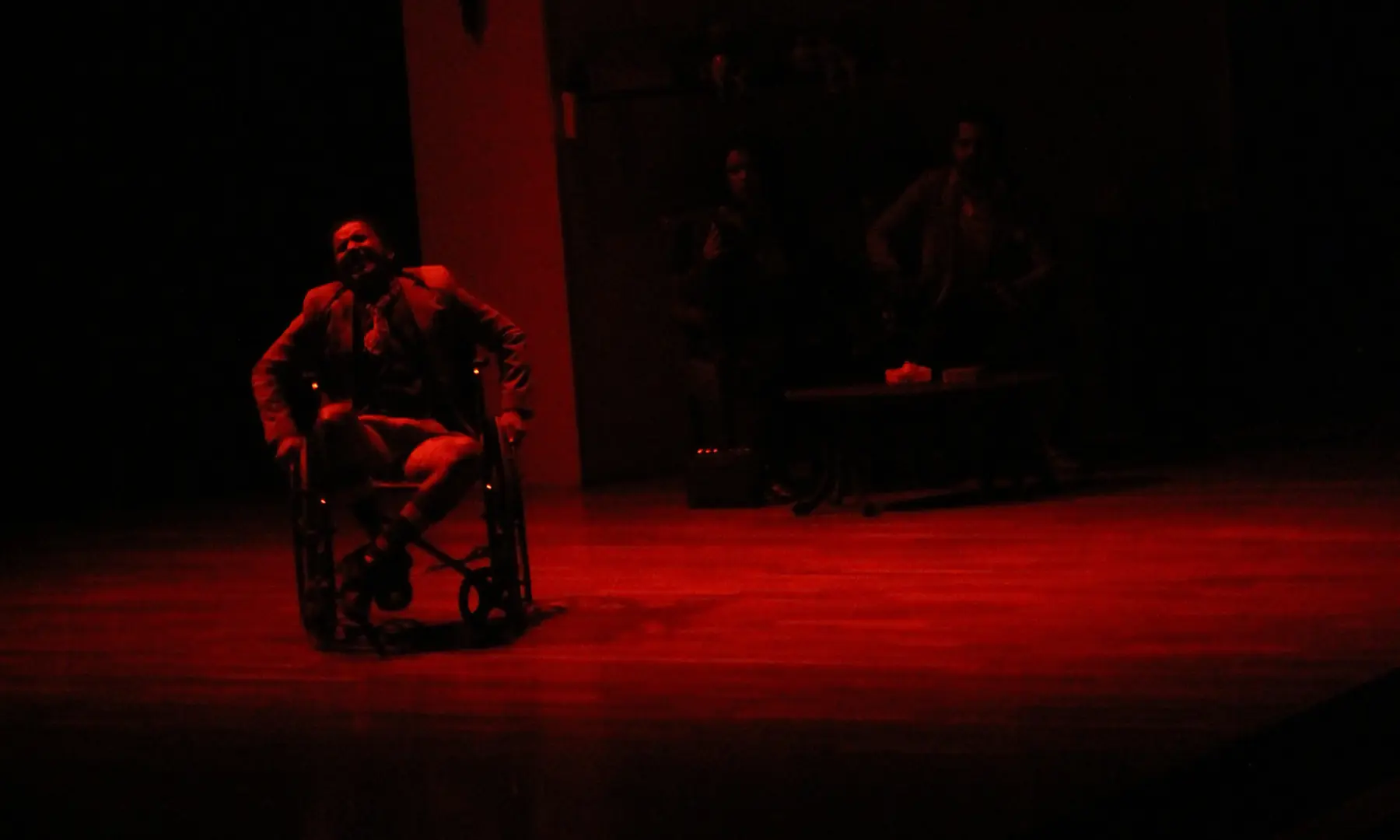
“All these sounds and movements are making me more anxious. Will you please stop it?” Maria tells Asher as their mundane bickering continues in the waiting area. The exchange is interrupted when the doctor, played by Ghouri, enters in a wheelchair. He is accompanied by two unnamed characters (Kainat and Rasool), a couple who have successfully conceived and now serve as a quiet contrast to Maria and Asher’s uncertainty. The doctor’s arrival shifts the mood of the scene: unpredictable and uncanny, he’s easily one of the play’s most striking presences.
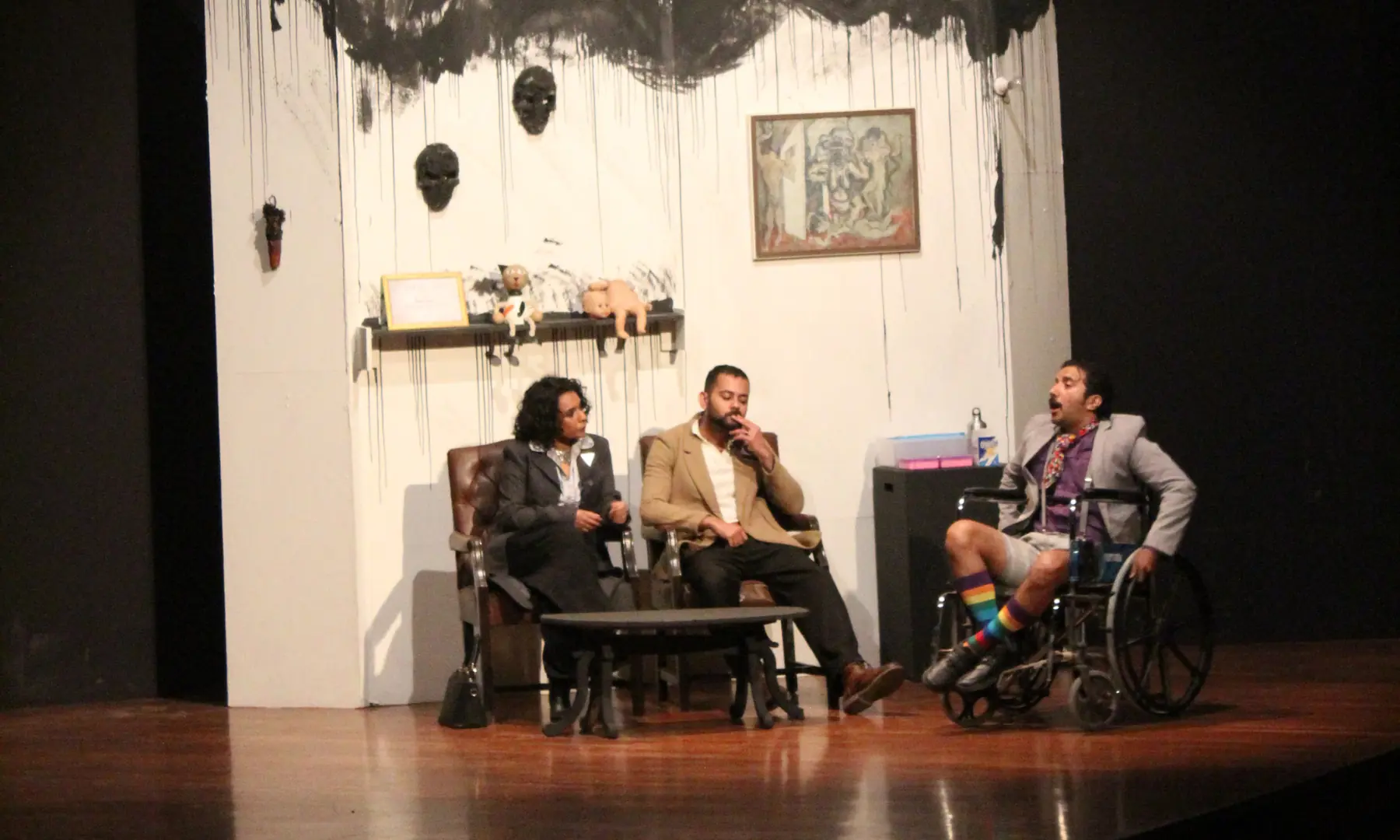
The third scene spells out the rules of the world it has been hinting at all along. Finally, inside his room, the doctor begins by announcing, “All your documents went through. That means we’re good to go.” In an unusually loud and high-pitched voice, he says, “I’m sure you’ve read the rules of the process from the email I sent you. BUT, it is our policy to go over them again before we begin this process.”
At this point, the audience is both intrigued and amused, caught between the doctor’s over-the-top performance and the mysterious process he’s describing.
“As a couple looking to conceive a child, you’ve agreed to take part in the process. And as you know, the process is one government’s answer to the phenomenon called… the stoppage,” a line delivered in a shriek that makes Asher gag.
“The selected couples must go through a 60-minute interview with the representatives of the children who may or may not choose to be born into their lives,” the doctor continues. “In this interview, the candidates must convince the other party why they’re best suited to bring a child into the world, into your homes, give them a satisfactory life, and help the child become a functioning adult.”
The rules continue to pile up. “No electronic devices are allowed in the communication room. No metal objects are allowed. The door, once locked, will open only on two conditions. Either if the time is up or if you guys have been accepted.”
When Asher asks for a hint about what happens inside, the doctor refuses. “Well, I wish I could help you with that, but that’s not how it works. Look, guys, once the door is locked, anything that is said inside the room stays inside the room.”
With the tension built up, the lights now dim to a deep blue, and the audience brims with anticipation as the story shifts to its final scene (which Ahmed later described to me as the play’s “magnum opus”). Here, Asher and Maria confront the voice of a possible future child, embodied by a ‘box’ (voiced by Akber), who asks, almost painfully, “Are you guys good people?”
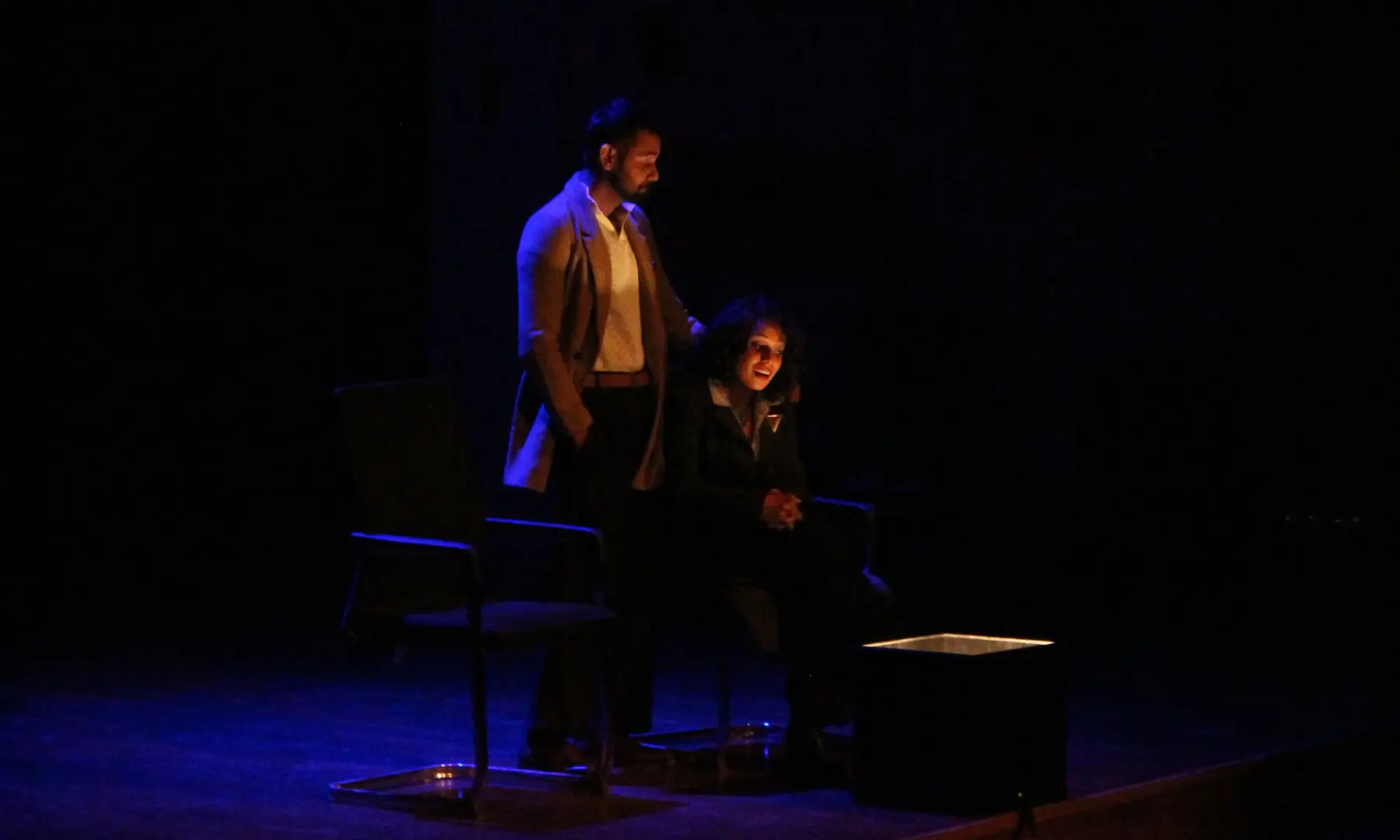
The conversation quickly evolves into an intense exchange, with the ‘box’ asking about Asher and Maria’s lives, what they do and whether they can provide a life worthy of being chosen.
“I’m a banker,” Asher says. “We help a lot of people. You see, son, when people need money, they go to one of my banks, and we give them something called a loan. It’s how we help them.”
With the box sceptical, Asher paints a vision of a life of comfort and privilege for their future child: “You’ll want for nothing. I’ve made sure of it. You won’t have to go through the obstacles me or your mother had to go through. Think about it. You’ll have the finest education money can buy. Just think about it, son.”
But the dialogue remains painfully honest, as the ‘box’ replies: “And with it will come all the burden of your success. Everything that you are; everything that you couldn’t be. Everything that I am not, but you would want me to be.”
As the conversation drags on, the audience learns secrets about Asher and Maria’s lives, their poor choices and past regrets, and the tension shifts once again into a squabble between the two, their frustrations and vulnerabilities laid bare. The only difference now is that the ‘box’ acts as a quiet mediator. The scene culminates with the ‘box’ turning neither green nor red, in contrast to what the doctor said, but instead with loud sirens and a glitch that leaves a million questions unanswered.
The hour-long performance draws to a close with ‘Golden Brown’ by The Stranglers playing in the hall, leaving the audience in reflective silence.
The idea of the play, Ahmed told me, came to him over tea while sitting alone. “Gen Z often says, ‘We never asked to be born.’ I thought, what if a child could actually question their parents, asking, ‘Are you good people?’ That’s where the idea started,” he said. “Initially, the script was just this conversation. But I quickly realised it wouldn’t be engaging enough, so I created a world around it.”
Ahmed developed the play around six months ago, though he wrote the initial draft in just 15 days. “When you write, you have to justify everything,” he explained. “You have to anticipate the questions the audience might ask, as well as the questions you have as a writer. That’s why the play is structured as a ‘walking story,’ with the set divided into three main sections, moving the characters from point A to B, C, and D before ending in the final scene with the ‘box’, which Maria and I speak to.”
Ahmed described the pilot run of the play in November as a test for both himself and the cast. “I was directing and acting, which is tricky. I had to act as a third eye sometimes, even using proxies for myself during rehearsals.”
When asked why the play was performed in English despite the risk of excluding the local audience, Ahmed explained that the idea was to write something with a potentially wider, more global reach, while also being reflective of himself. “What does Bilal represent?” he asked. “It was a do-or-die for me.”
All photos provided by Bilal Ahmed.
Comments