
Sharmeen Obaid Chinoy’s Stories She Tells highlights tales of women, for women, by women


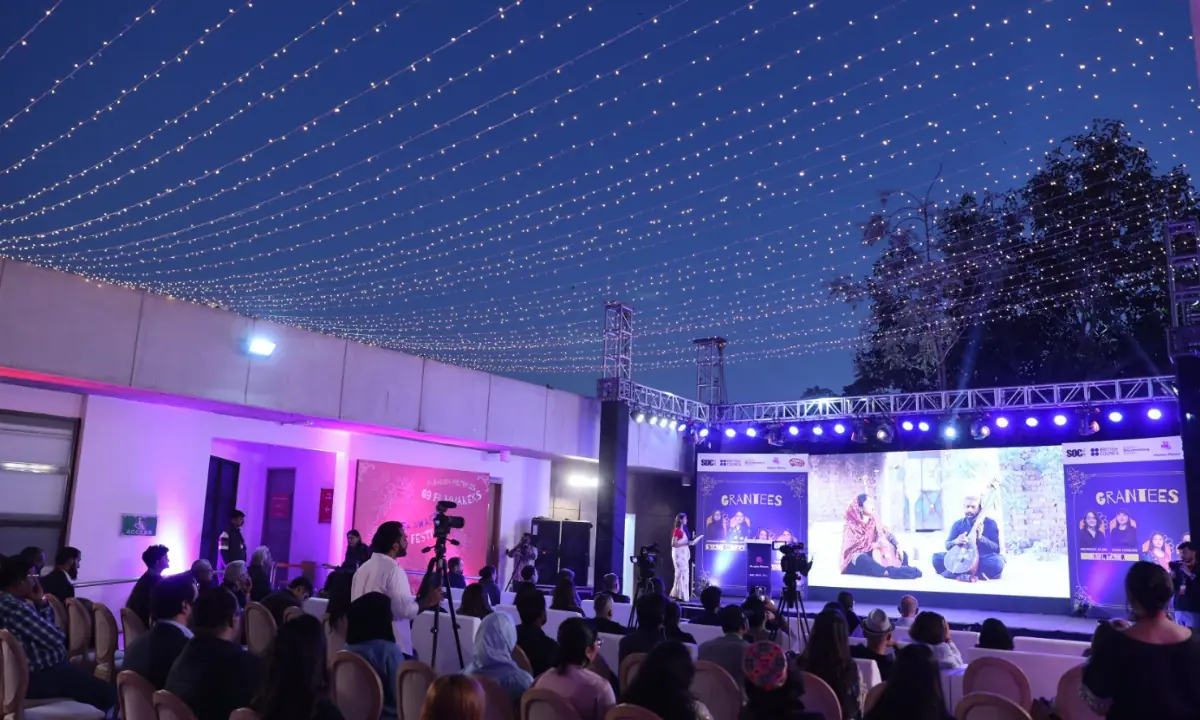
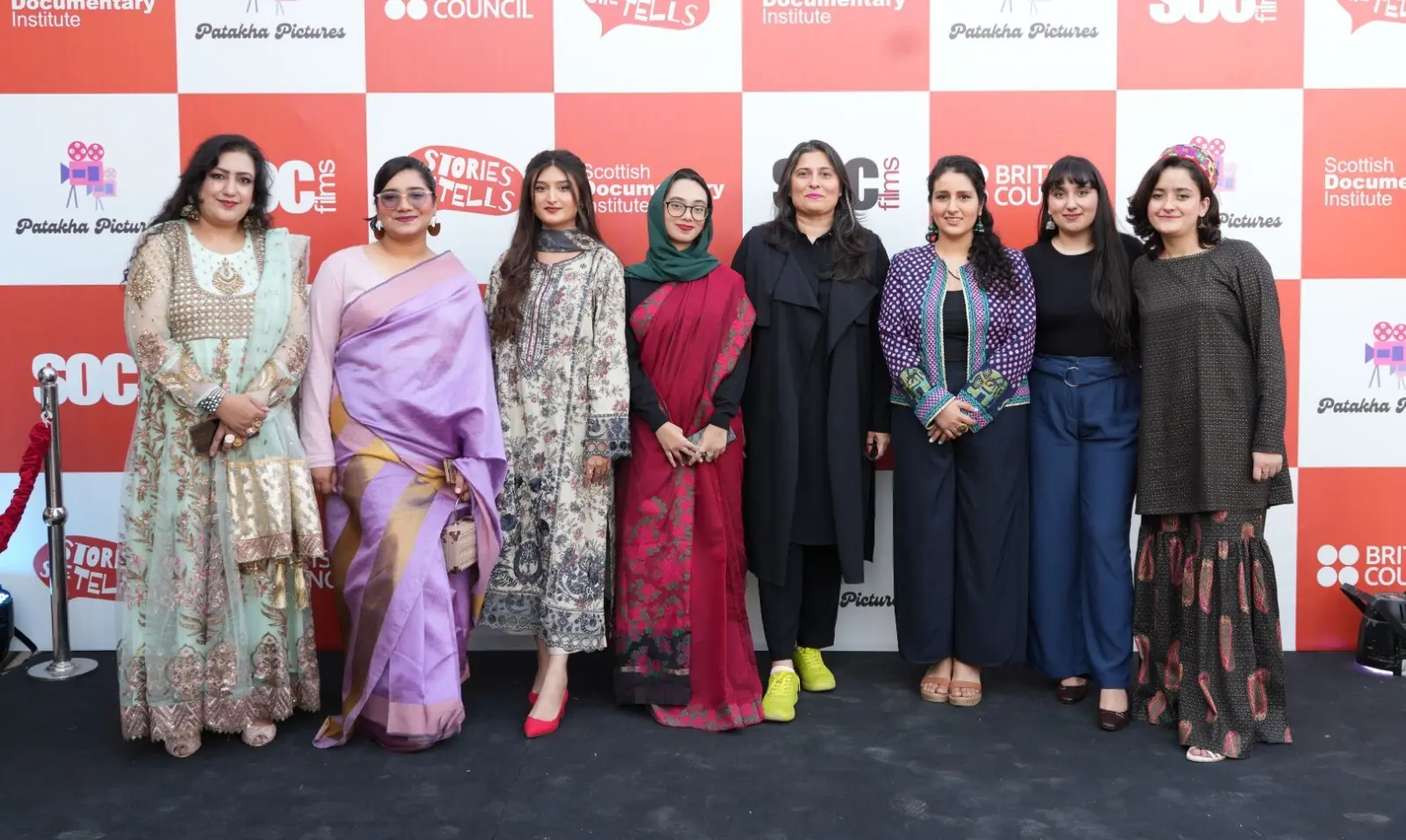
The British Deputy High Commission in Karachi lit up on Wednesday evening with patakhas (firecrackers). No, there wasn’t some grand pyrotechnics display; Sharmeen Obaid Chinoy’s Patakha Pictures was celebrating the eight young, female filmmakers who had completed the Stories She Tells mentorship programme.
Celebrities, diplomats and journalists gathered to celebrate stories and storytellers as the beaming programme participants showcased the trailers for the four films they made over the last six months. Each story dealt with a unique and overlooked experience of being a woman in Pakistan.
The filmmakers, hailing from Chitral, Lahore, Multan and Quetta, worked in pairs under the mentorship of Dr Noe Mendelle, founder of the Scottish Documentary Institute.
In her opening remarks, Chinoy spoke about the challenges women filmmakers face, saying, “They all have a patakha, a firecracker in them, they want to tell their stories, all they don’t have is the infrastructure. What Patakha Pictures is doing, is creating that infrastructure for them.” She said the programme takes its participants “from ideation to post-production” and then “gives them media training and helps them apply to film festivals”.
Patakha Pictures’ 69 mentees have had their films screened at over 50 film festivals at home and abroad, bagging “dozens of awards”, she told the audience.
After her remarks, the two-time Oscar winner took to the stage with each of the four teams showcasing their films and had a chat about what makes their story so special.
Syeda Abqurah Shaukat & Faryal Diwan — Saaz, Dhi, Azaadi
The first pair to come on stage were Shaukat and Diwan from Karachi. As the trailer for their film Saaz, Dhi, Azaadi (instrument, daughter, freedom) played behind them, the audience was transported from Karachi’s busy streets to the revered shrine of Bhit Shah and back to the bustling metropolis. The film followed one of the very few women playing the tambooro — a sacred instrument played at shrines.
Shaukat told the crowd they learnt about Mahi Jeeva, the first woman to play the tanbooro, whose story only survives as oral history. She said that’s exactly why it was important to “preserve [these stories] for our next generations”.
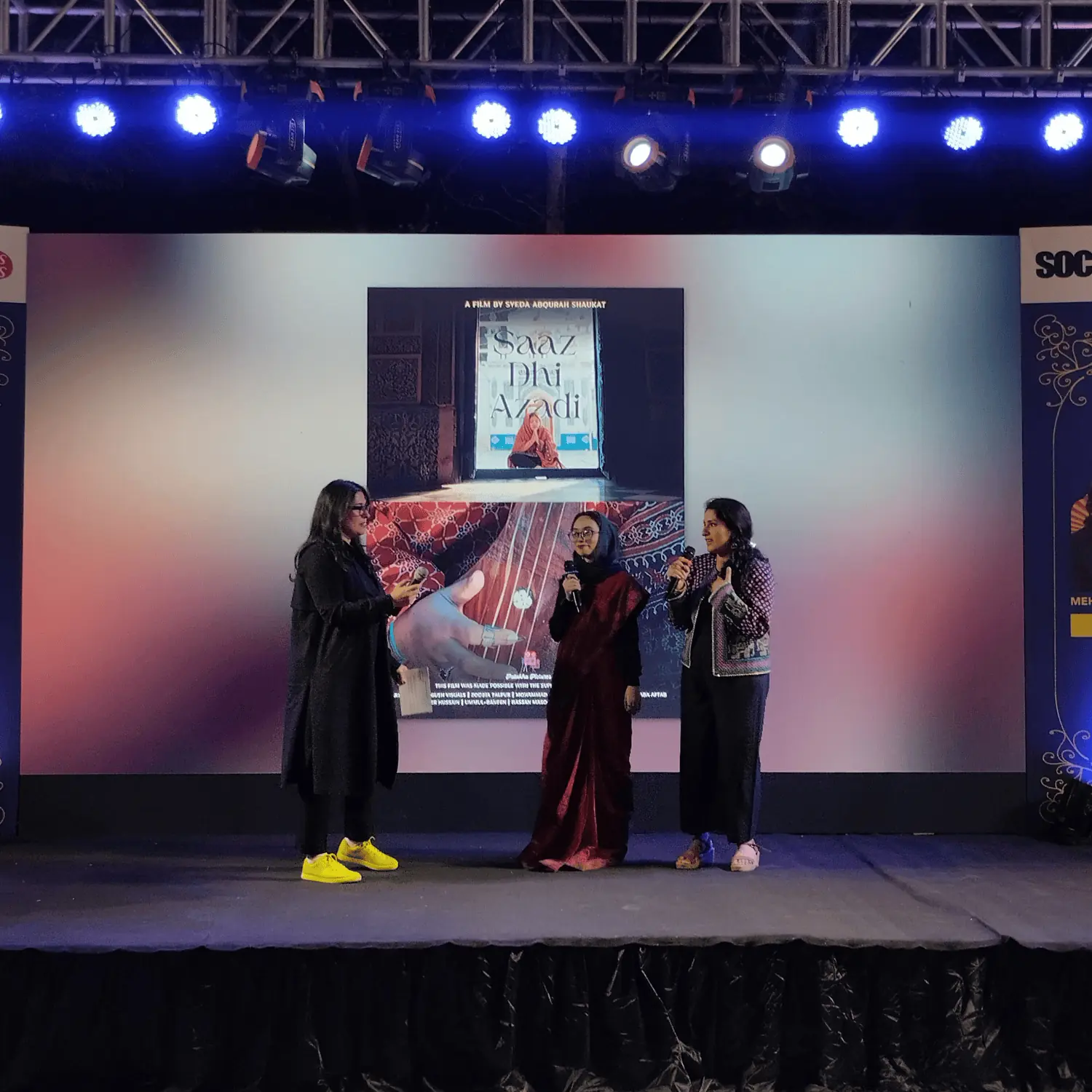
Speaking about the protagonist of their film, she said the character was “quite intriguing” as someone who exists as two versions of herself. In Karachi, she’s a rebel who rides around the city on a motorcycle and in Bhit Shah, she respects the traditions and sanctity of the place, dreaming of practicing her art in the shrine someday.
Diwan said the experience was “quite chaotic” with its “unpredictable schedules and things coming up”. “As somebody who’s an aspiring traditional performer, dancer and musician, I am hoping this film encourages women to continue what they’re doing and not let the barriers that exist stop them,” she said.
Talking to Images, Shaukat said she had wanted to explore the story behind the tambooro ever since she was introduced to the instrument during her participation in Images’s Her Story project in 2023. She was glad to have gotten the opportunity to bring her idea to life with Patakha Pictures.
Sumbal Khokhar & Fizza Kanwal — Eagle Woman of Balochistan
Eagle Woman of Balochistan took a much darker turn, leading the audience to Quetta, where siyaah-kaari (honour killing) is a rampant concern with law enforcement agencies either unwilling or unable to stop it.
The film followed Hameeda, a social justice advocate fighting for the rights of Balochistan’s women to life and justice. A quest that transformed the protagonist into a symbol of hope and resistance.
Kanwal, a journalist and activist herself, said there were points when she was afraid while filming, “Being a sensitive issue, it was tricky.” She said there was often “no connectivity” and “roads were blocked” because of the unstable security situation in the province.
Her ultimate goal was “to shake up the judicial system of Pakistan,” she said, and ask the question, “If we have all the evidence, why is justice delayed?” She told Chinoy the fellowship enabled filmmakers from Balochistan to tell stories that they “would not have been able to articulate verbally or physically”.
Mehrosh Alam & Sana Hussain — Muntazir
The third trailer of the evening opened with a hauntingly beautiful noha, recited by Sundari Khan, a transgender noha khwan from Lahore, lending her voice to the grief of the people assembled before her.
Answering a question from Chinoy on what led them to the story, Hussain said they were initially looking to make a film on the female noha khwans of Lahore and they’d even conducted interviews for the project when they were introduced to Khan. Alam added that they wanted to explore the “intersection of gender and religion” in Khan’s life.
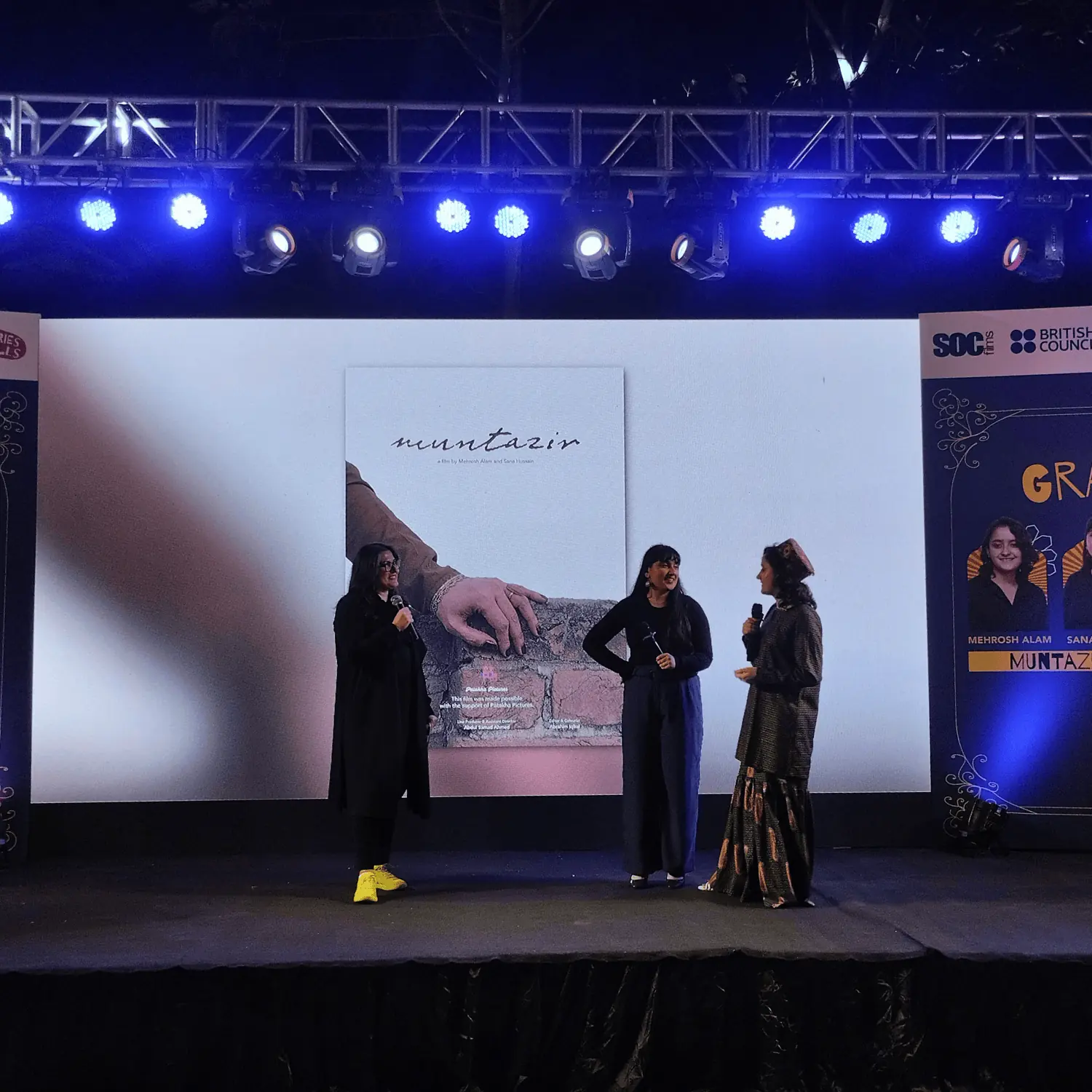
Hussain told the audience that Khan’s story has its challenges stemming from her gender, but “she finds community through her noha khwani”. Alam agreed with Chinoy in saying that a dichotomy exists between the different aspects of Khan’s life; she may face a lack of acceptance because of her gender and work, but she is deeply respected for her nohas.
Speaking to Images later in the evening, Alam recounted that the project was always about “the historically and religiously important stories [noha khwans] are bringing to us, but…their own stories as well.”
She said they met Khan through a friend and instantly knew they wanted to focus on “the various layers, of religion, of her profession — singing and dancing — and her gender as a trans woman”.
Mahjabeen Abid & Maryam Missal — Malangni
The last trailer took us to Multan’s infamous theatres, where Malangni follows a 44-year-old performer, Aasia, at the closing end of her days on stage. The story explores themes of age, loneliness and the stigmas surrounding theatre performances in South Punjab.
Speaking about the challenges of documenting a sphere dominated by men and created specifically for the male gaze, Abid said she “wished our parents were here today, so they could finally understand what we’ve been up to for six months”.
When Chinoy asked about first impressions, she said the first time she tried to take a rickshaw to the theatre, she had to spend a considerable amount of time explaining what she wanted to do at the theatre to the rickshaw driver. Even the theatre owner was surprised to see two women filming at his male-centric establishment.
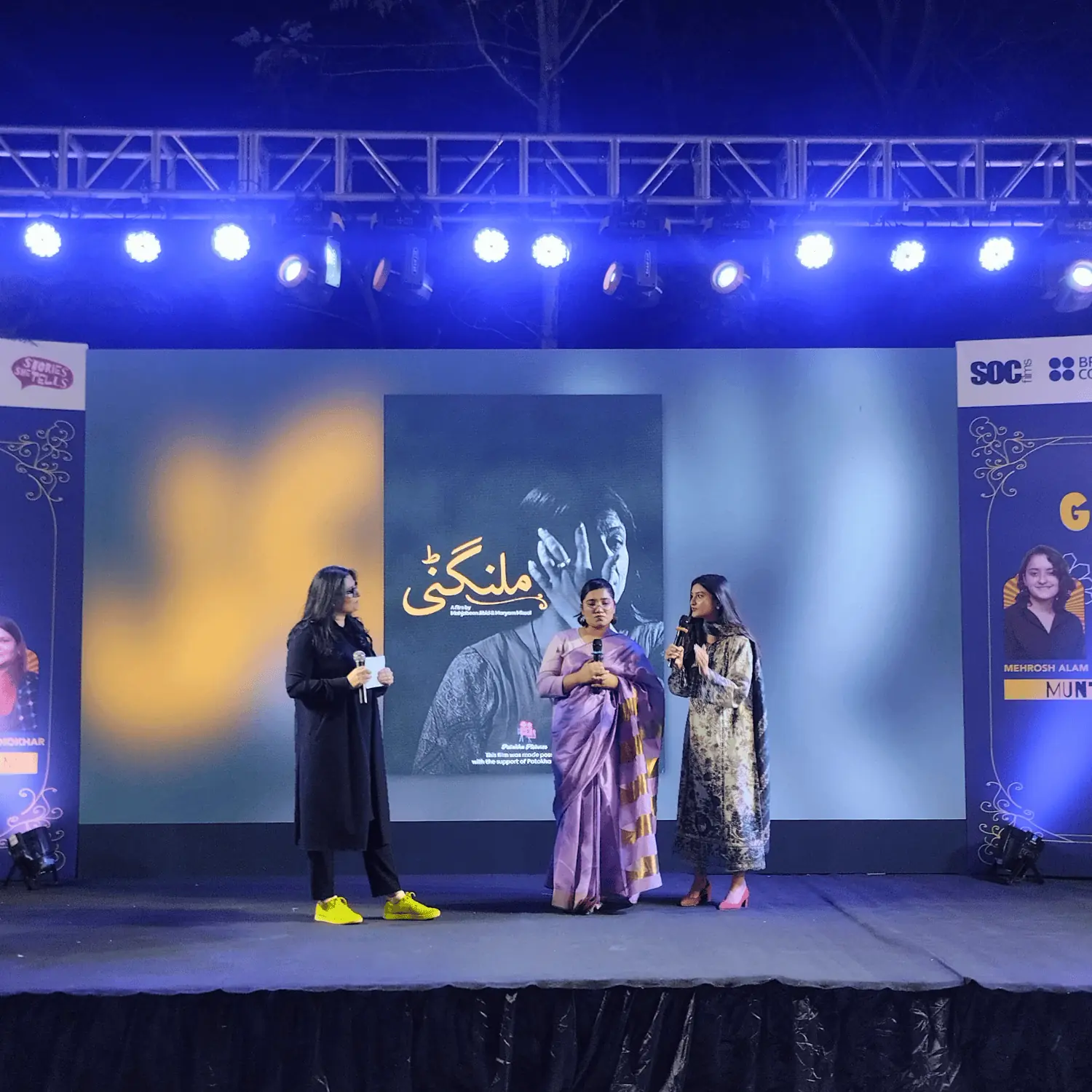
Missal said, in the world of these theatres, these performers had very little autonomy with what they did on stage. “If it was 20 per cent these women, it was 80pc the men controlling them,” she said. She said she felt “strong empathy” for these “women who had blisters on their feet and [whose] knees would get bruised every day [from] jumping up and down on stage in front of these men”.
Abid said half the story is “isolation, silence, solitude… literally milk boiling and the interactions between Aasia and a goat, because all she has is a goat… and the rest is glam, spotlight, colours, entertainment, applause, men. These are two worlds we looked at and 80pc of Aasia’s life is isolation.”
Missal summed it all up with a quote from the movie — “The audience that once ran around in search of Aasia, she is now chasing that audience which no longer comes to see her on stage.”
Abid said she left broadcast journalism because she never had the creative liberty to cover the human stories behind news stories, especially when it came to theatre. She said that’s what she got out of Patakha Pictures, “the expertise and freedom needed to tell these stories”.
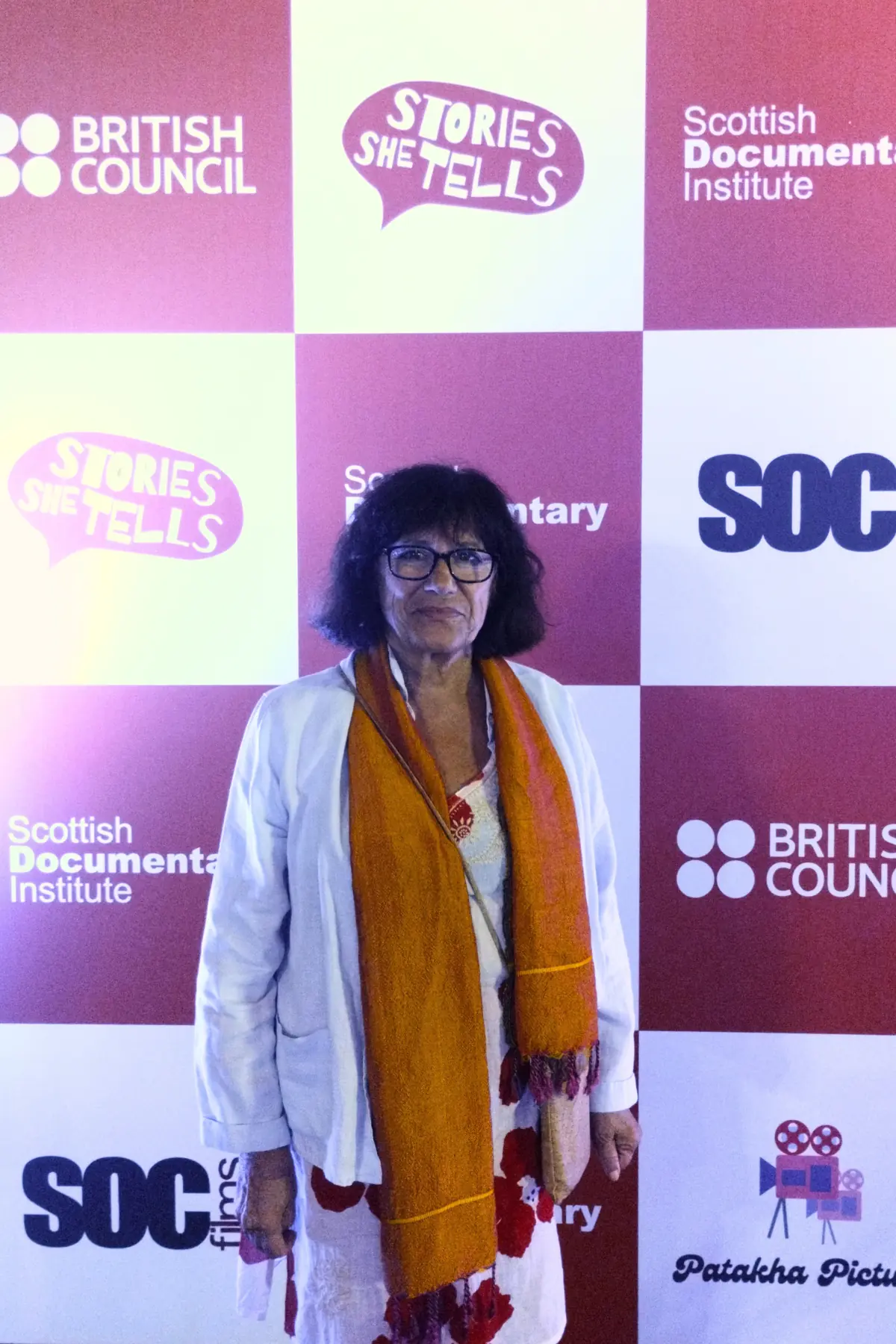
Dr Mendelle, who was mentoring Patakha Pictures participants for the fourth time this year, said it was important for “women from different countries to come together to build the next generation and the next generation and the next generation”. In the “accelerated world” we live in, where “everything is 140 characters and no more,” she said “we needed documentaries more than ever”.
Speaking to Images, Dr Mendelle said Chinoy’s SOC Films had the same philosophy as her Scottish Documentary Institute. Patakha Pictures, she said, makes sure to pick “ordinary people” for its cohorts to try and get a “grassroots understanding” of the stories of Pakistan.
“It’s not about showing extraordinary stories — it’s showing the reality. Because, only through that reality can we actually understand what the true identity of Pakistan is,” she explained.
When asked about the future of Pakistani filmmaking, Dr Mendelle said, “it is very exciting,” adding that the trailers shown at the event proved that filmmakers in the country aren’t just good in a technical sense, they’re very creative.
Charles Goodman, the US Consul-General in Karachi, told Images he was “very excited to be [at the event],” and mentioned the cooperation between SOC Films and the US mission in Pakistan for previous editions of Patakha Pictures. He said it was “important to give young people, especially young women, a leg up into this… creative field, so that we can hear their creative voices and see their work”. He added that the awards won by previous mentees show the programme works, not just for the filmmakers, but the industry as a whole.




Comments